


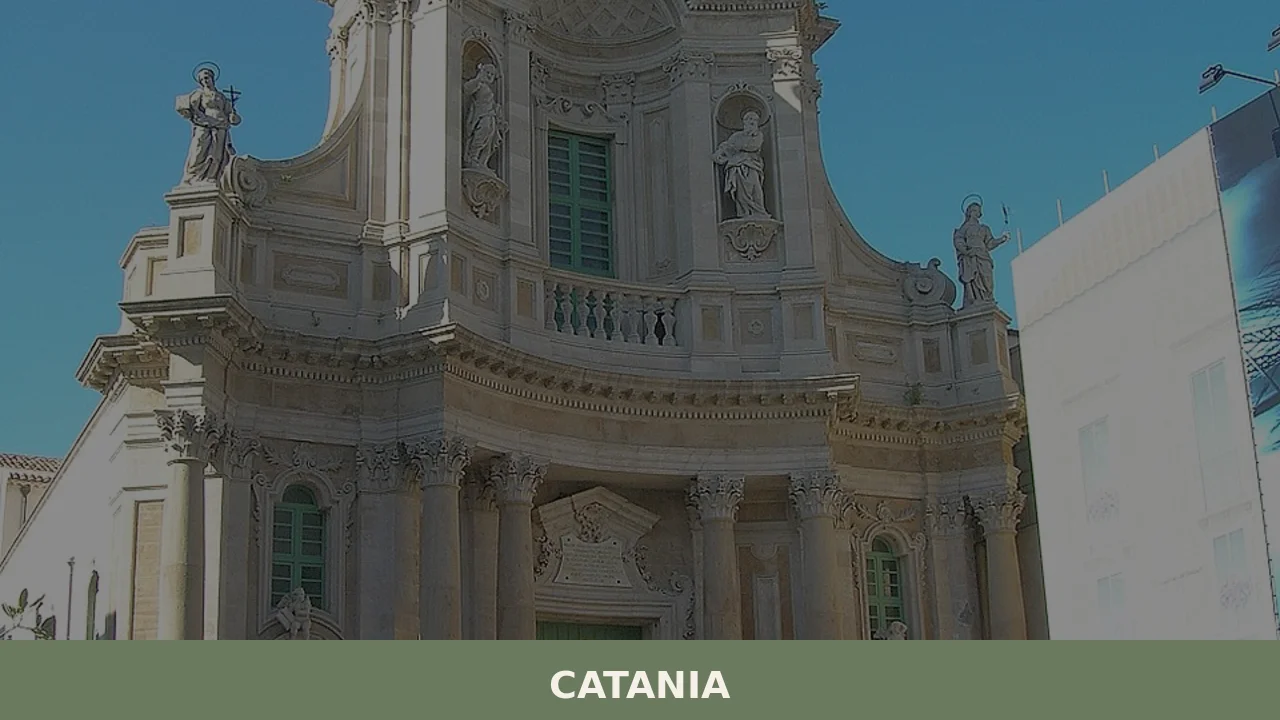
Catania
Discover Catania, a captivating village in Sicily, Italy. Explore its rich history, stunning architecture, local culture, and hidden gems waiting to be found.
Discover Catania
Catania greets visitors with figures that leave little room for imagination: nearly 291,000 inhabitants, a position just 7 metres above sea level, and Mount Etna looming over every urban view.
Anyone wondering what to see in Catania will find a city that has endured repeated destruction — lava flows, earthquakes, successive foreign rulers — and has rebuilt itself each time, layering eras and styles into a dense, contradictory urban fabric.
The feast of Sant’Agata, patron saint of the city, celebrated every year on 5 February, is among the most widely attended in Sicily and alone makes it worth planning a dedicated trip.
History and Origins of Catania
Catania’s history reaches back to the Greek period: the city was founded in 729 BC by Chalcidian settlers from Naxos, who called it Katane — a name most likely derived from a Sicel term meaning something rough or jagged, possibly a reference to the volcanic nature of the land.
Over the following centuries the city came under Syracusan control, when Hieron I of Syracuse deported the original population and repopulated it with Peloponnesian colonists, temporarily renaming it Etna.
Only after Hieron I’s death did the inhabitants return and reclaim the ancient name.
With the Roman conquest in 263 BC during the First Punic War, Catania became a municipium and later a Roman colony, gaining growing commercial importance thanks to its port and its position along Mediterranean trade routes. The eruption of Etna in 121 BC caused serious damage to the city — an event that would repeat itself in different forms over the centuries that followed.
During the Imperial period, Catania was considered one of the most prosperous cities in Sicily, with baths, an amphitheatre and significant public buildings, many of which still lie beneath the modern urban surface.
The figure of Agatha, a Catanian Christian martyr of the third century AD, is closely bound to the city’s religious history: according to tradition, the young woman refused the advances of the praetor Quintianus and was tortured and killed around 251 AD, subsequently becoming patron saint of Catania and a symbol of resistance.
The medieval period saw Catania under Arab rule from 827, then Norman rule from 1071 under Roger I, who initiated a period of urban and religious renewal.
Swabian rule under Frederick II strengthened the city’s role as a seat of learning: in 1434, Alfonso V of Aragon founded the University of Catania, the first in Sicily.
The earthquake of 1693, which devastated all of eastern Sicily, marks the most dramatic turning point in the city’s modern history.
Catania was almost entirely destroyed and rebuilt from scratch in Baroque style during the eighteenth century, under the direction of architect Giovanni Battista Vaccarini, who designed the urban layout that is still recognisable in the historic centre today.
This Baroque core has been recognised by UNESCO as a World Heritage Site since 2002, together with other towns in the Val di Noto.
What to See in Catania: Main Attractions
Piazza del Duomo and the Elephant Fountain
The city’s monumental centrepiece is Piazza del Duomo, home to the Fontana dell’Elefante — Catania’s symbol, created in 1736 by Giovanni Battista Vaccarini. The fountain rests on a Baroque base and supports a Roman-era lava stone elephant topped by an Egyptian obelisk. The square is framed by the Cathedral of Sant’Agata, the Porta Uzeda and the Palazzo degli Elefanti, which serves as the City Hall.
Together they form one of the most coherent examples of Sicilian Baroque urban planning, designed after the 1693 earthquake according to principles of symmetry and visual staging.
Cathedral of Sant’Agata
The Cathedral of Sant’Agata, dedicated to the city’s patron saint, was built over the remains of the Roman Achillian Baths.
The original construction dates to the Norman period in the eleventh century, but the current building is the result of the eighteenth-century reconstruction that followed the 1693 earthquake.
The Baroque façade is the work of Vaccarini. Inside, the relics of Sant’Agata are preserved in a precious gold and silver reliquary bust. The crypt contains the remains of Roman structures as well as the tombs of bishops and Aragonese rulers.
It is worth pausing in the central nave to observe the sequence of Roman columns reused within the medieval structure.
Roman Theatre and Odeon
In the city’s medieval quarter, a short distance from the cathedral, stand the remains of Catania’s Roman Theatre, built during the Imperial period, probably in the second century AD, with a capacity of around 7,000 spectators. Beside it stands the Odeon, a smaller structure used for musical rehearsals and recitations.
Both buildings are partially absorbed into medieval and modern constructions, creating a visible stratigraphic layering. Excavations have uncovered columns, tiers of seating and decorative fragments that give a clear sense of the original scale of the complex.
Castello Ursino
Castello Ursino was built between 1239 and 1250 on the orders of Frederick II of Swabia as a royal fortress.
The square structure with circular corner towers is one of the best-preserved examples of Swabian military architecture in Sicily. Originally the castle stood on a rocky spur directly above the sea; the Etna eruption of 1669 produced a lava flow that reached the coastline, separating the castle from the sea and radically altering the surrounding urban landscape.
Today it houses the Civic Museum, with collections of sculpture, painting, ceramics and archaeological finds.
The Pescheria and the Historic Market
The Pescheria di Catania, open every morning from Monday to Saturday in Piazza Pardo, just behind Piazza del Duomo, is one of the liveliest fish markets in Sicily.
The market takes place in the open air on a site once occupied by the ancient harbour, now dry land as a result of the seventeenth-century lava flows. The stalls display the Mediterranean catch: swordfish, tuna, sea urchins, octopus, clams and shellfish.
Those researching what to see in Catania beyond the monumental circuit will find here a genuine everyday dimension of Catanian urban life, with a sensory intensity that is hard to replicate elsewhere.
Local Cuisine and Products of Catania
Catanian gastronomy reflects the city’s geographical position: a Mediterranean port, close to Etna with its fertile volcanic soils, and marked by the overlapping influences of Greek, Arab, Norman and Spanish rule.
The cuisine of Catania is robust and direct, built on a small number of high-quality ingredients.
The Pescheria market is the logical starting point for understanding how fresh fish shapes the local culinary tradition, but Catanian cooking has also developed a solid tradition of dishes based on vegetables, pulses and the produce of Etna.
Among the dishes found in the restaurants of the historic centre, pasta alla Norma is the most widely recognised: maccheroni or rigatoni dressed with tomato, fried aubergine, fresh basil and grated aged salted ricotta.
The name is attributed to a remark by the Catanian writer Nino Martoglio, who reportedly compared the dish to the celebrated opera by Vincenzo Bellini — the composer born in Catania in 1801 — exclaiming “It’s a Norma!”.
Catanian arancine, known locally in the masculine form arancini, are distinguished by their conical shape and filling of meat ragù, peas and caciocavallo cheese.
Capuliato, a condiment made from finely chopped dried tomatoes preserved in oil with oregano and chilli, is a product available at local markets and traditional food shops.
Two products linked to the Catania area appear in the national register of certified traditional agri-food products. Cotognata (PAT) — municipalities: Catania — is a dense sweet preparation obtained by cooking quince flesh with sugar, traditionally poured into clay moulds and left to set.
It is one of the oldest sweets in the Sicilian tradition, with roots in medieval Arab confectionery.
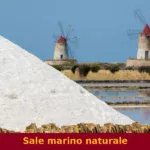
Natural sea salt (PAT) — municipalities: Catania — is obtained through the evaporation of seawater in coastal salt pans and represents a product of long-standing artisan production in the Etnean and coastal Sicilian territory.
For those who want to take local products home, the Mercato di Piazza Carlo Alberto, known as “A Fera ‘o Luni” (the Monday Fair), is held every Monday morning and is one of the city’s largest neighbourhood markets, with stalls selling groceries, spices, cheeses and seasonal produce.
The Pescheria in Piazza Pardo is open Monday to Saturday in the early morning. Traditional pastry shops in the historic centre sell cotognata and almond paste sweets, granita and brioches — the classic Catanian breakfast, taken with coffee or lemon granita.
Festivals, Events and Traditions of Catania
The Feast of Sant’Agata, celebrated every year from 3 to 5 February, is Catania’s most important religious and popular event and, according to data from Church authorities, one of the three most widely attended religious celebrations in the world.
On the evening of 3 February, the procession of the candelore sets off: enormous votive constructions in carved and gilded wood, carried on the shoulders of representatives of the craft guilds, parade through the streets of the centre.
On 4 February a pontifical mass is held, and in the evening the procession of the Sant’Agata reliquary bust follows a route of several hours through the historic centre, accompanied by hundreds of thousands of devotees dressed in the traditional white sackcloth and black cap.
On 5 February, the day of Sant’Agata’s martyrdom, the procession reaches its climax with the return of the reliquary to the cathedral to the sound of fireworks.
The culinary tradition of the feast includes the preparation and distribution of minnuzze di Sant’Agata, shortcrust pastry sweets shaped like a female breast, covered in white icing and topped with a candied cherry, recalling the martyrdom suffered by the saint.
In addition to the patron feast, Catania hosts an annual International Film Festival and various events linked to the figure of Vincenzo Bellini, whose operas are regularly performed at the Teatro Massimo Bellini, inaugurated in 1890.
When to Visit Catania and How to Get There
The best time to visit Catania runs from March to June and from September to November.
During these months temperatures are mild, the historic centre is less congested than at the summer peak of July and August, and many cultural events are concentrated in spring and autumn. Those wishing to attend the Feast of Sant’Agata should plan their visit for the days between 3 and 5 February, bearing in mind that attendance is extremely high and accommodation availability drops sharply in the preceding weeks.
The Catanian summer is hot and humid, with temperatures frequently exceeding 35 degrees, but the seafront and the beaches to the south of the city — such as Playa — provide an easily accessible alternative.
Those arriving by air use Catania-Fontanarossa International Airport, around 7 km from the city centre, served by urban buses and taxis.
It is Sicily’s busiest airport and offers connections to the main Italian and European airports. By train, Catania Central Station is served by Trenitalia with direct links to Palermo, Messina, Syracuse and Rome.
By car, the A18 motorway (Messina–Catania) and the A19 (Palermo–Catania) converge on the metropolitan area with well-signposted exits towards the centre.
The Municipality of Catania publishes traffic updates and parking information on its official website.
Parking in the historic centre is challenging: the nearest multi-storey car parks to Piazza del Duomo are located near the Porto area and along Via Etnea.
Those planning a broader Sicilian itinerary might consider extending their trip to inland Sicilian villages such as Cefalà Diana, with its Arab-Norman bath complex among the best preserved on the island, or Poggioreale, a village left in ruins by the 1968 earthquake that offers an alternative perspective on the natural disasters that have marked Sicilian history — a theme that also runs through Catania’s own story, rebuilt after 1693.
Those travelling further inland might include Contessa Entellina or the nearby Campofiorito as stops on a route crossing Sicily from east to west, combining the metropolitan energy of Catania with the slower pace of smaller inland centres.
Where to Stay in Catania
Catania’s accommodation offer is broad and varied, suited to different types of visitor.
The Baroque historic centre is home to numerous boutique hotels and bed & breakfasts set within eighteenth-century historic palazzi, often with views over internal courtyards or terraces looking out towards Etna.
The Via Etnea and Corso Italia area has the highest concentration of mid-range properties. Those looking for more affordable options will find a range of holiday apartments in the San Berillo Vecchio and Quartiere Latino neighbourhoods. For longer stays or for families travelling together, agriturismi on the slopes of Etna — reachable in under 30 minutes from the centre — offer a quieter alternative to the urban environment.
In Sicily More villages to discover
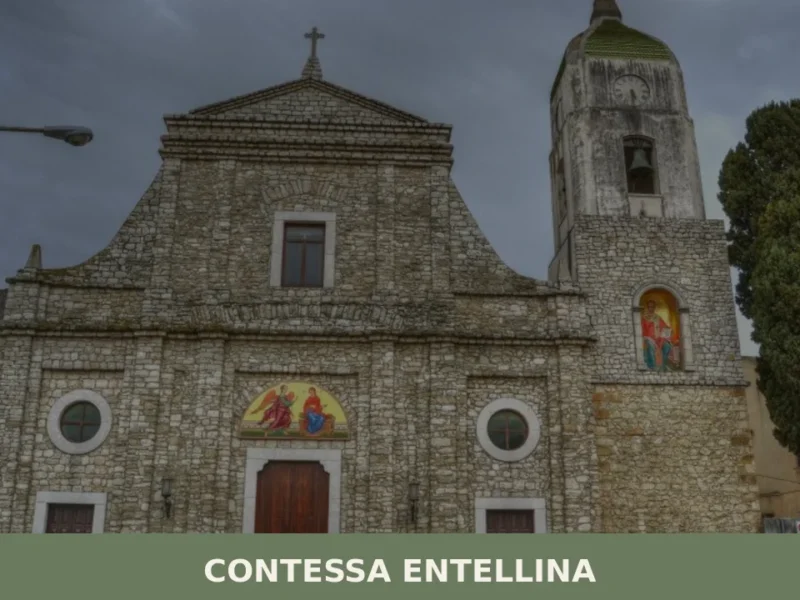
Contessa Entellina
Discover what to see in Contessa Entellina: Arbëreshë heritage, Rocca d'Entella ruins, Byzantine-rite churches, local food, and practical travel tips.
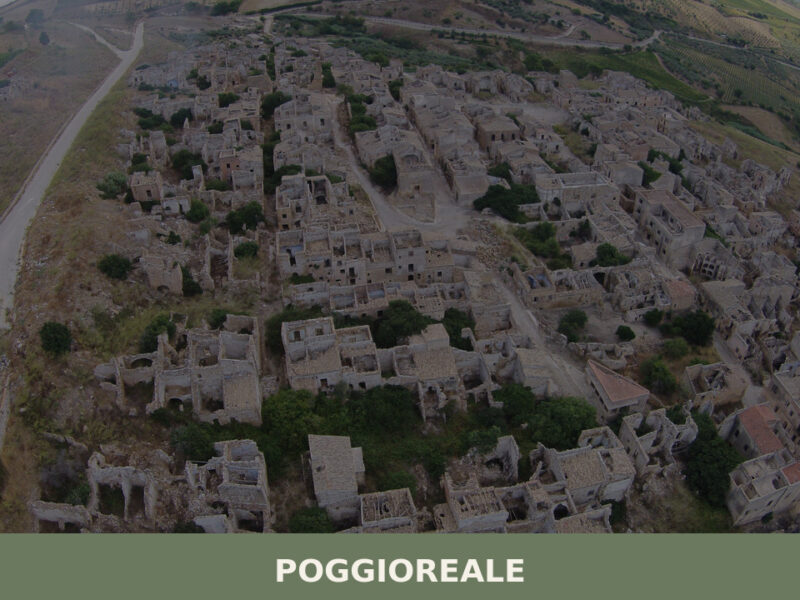
Poggioreale
Morning light falls across cracked stone walls and doorways that open onto nothing but sky. In Poggioreale, silence is the dominant sound — the kind that presses against your ears and demands attention. This small community of roughly 1,505 inhabitants sits in the western interior of Sicily, within the province of Trapani, where the Belìce […]
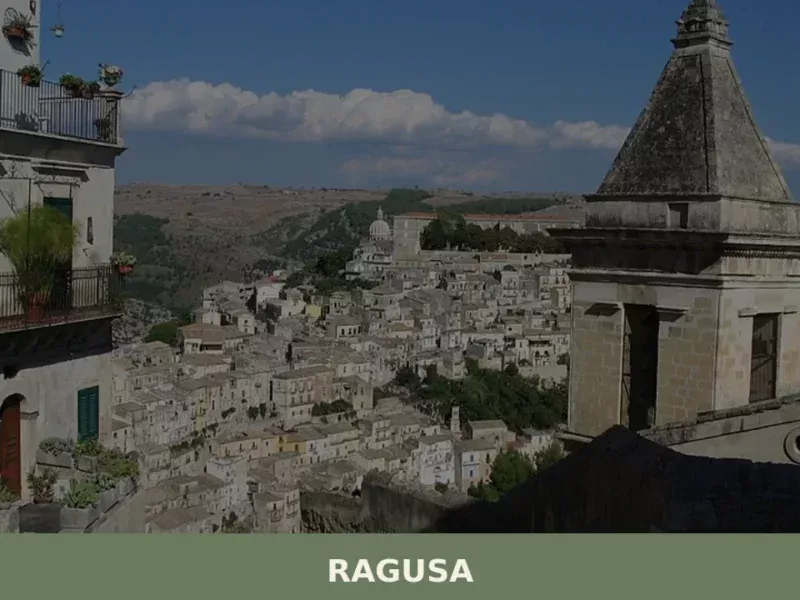
Ragusa
What to see in Ragusa, a UNESCO city at 520m with 70,000 residents: explore Ibla, San Giorgio, Giardino Ibleo and Cotognata PAT. Plan your visit now.

📝 Incorrect information or updates?
Help us keep the Catania page accurate and up to date.