


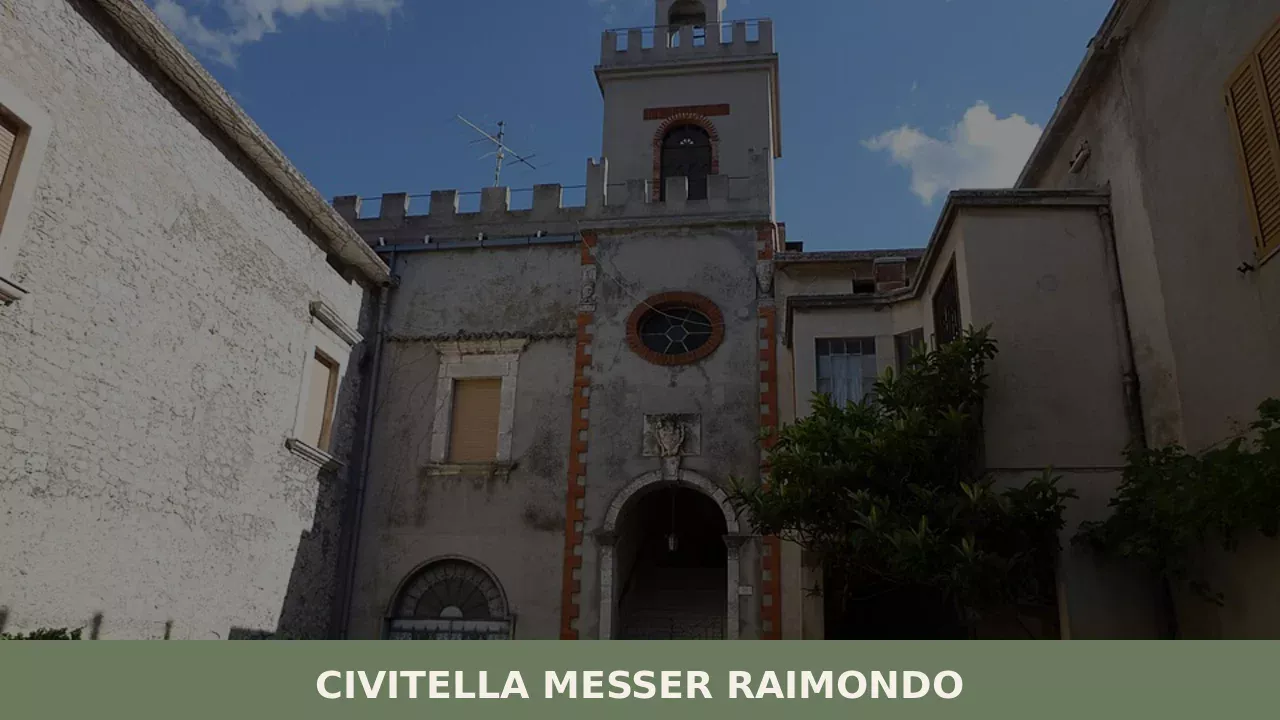
Civitella Messer Raimondo
Civitella Messer Raimondo has 769 inhabitants and sits at 613 metres above sea level, on the eastern slope of the Maiella massif, in the province of Chieti. The village’s name still bears that of a medieval feudal lord — Raimondo — who shaped its political fortunes between the 13th and 14th centuries. Understanding what to […]
Discover Civitella Messer Raimondo
Civitella Messer Raimondo has 769 inhabitants and sits at 613 metres above sea level, on the eastern slope of the Maiella massif, in the province of Chieti. The village’s name still bears that of a medieval feudal lord — Raimondo — who shaped its political fortunes between the 13th and 14th centuries. Understanding what to see in Civitella Messer Raimondo means crossing a territory where the Apennine ridge descends towards the river valleys of the Aventino, through beech and oak forests, local stone walls, and an urban layout that preserves the original fortified settlement’s structure.
History and origins of Civitella Messer Raimondo
The place name “Civitella” derives from the Latin civitas, indicating a small fortified centre. The addition “Messer Raimondo” refers to a feudal lord from the Counts of Manoppello family, who held control over this section of the Aventino valley during the Angevin period, between the late 13th and early 14th centuries. The earliest documented reference to the village dates back to the Middle Ages, when the settlement served as an outpost along the routes connecting the Adriatic coast to the mountain passes of the Maiella.
Over the centuries, the fief passed through the hands of various noble houses of the Kingdom of Naples. The local economy was based on transhumant pastoralism — with flocks travelling the drove roads towards the Tavoliere delle Puglie plains — and on the cultivation of cereals and legumes on the hillside terraces. The historic centre still maintains its concentric layout around the highest part of the village, where the original defensive core once stood, following a pattern common to the fortified villages of inland Abruzzo. For further information on the municipal history, you can consult the official website of the Municipality.
After the Unification of Italy, like many mountain settlements in Abruzzo, Civitella experienced significant waves of emigration towards the Americas and, in the post-World War II period, towards the industrial cities of northern Italy. The demographic trend followed a steady downward curve throughout the 20th century, bringing the current population below eight hundred.
What to see in Civitella Messer Raimondo: 5 main attractions
1. Church of Sant’Erasmo
Dedicated to the village’s patron saint, Saint Erasmus of Formia, the parish church features a stone façade with a carved portal. The single-nave interior houses locally crafted sacred furnishings and a high altar that documents the devotion to the patron saint of sailors, a cult widespread along the entire Abruzzo coast that also spread to inland centres.
2. Historic centre and medieval layout
The old core follows a concentric plan with narrow streets and stairways built from local limestone. The houses, pressed closely against one another, feature thick walls and small openings — construction solutions dictated by the harsh mountain climate. Covered passageways and underpasses connect the different levels of the village, creating a network of vertical routes that remains legible today.
3. Remains of the fortified structure
In the upper part of the village, the remains of medieval defensive structures can be identified: sections of perimeter walls and stone foundations that once marked the boundary of the original settlement. These elements, though fragmentary, make it possible to reconstruct the strategic function of the site as a control point over the Aventino valley and the routes linking the Maiella to the coast.
4. Trails towards the Maiella
From the municipal territory, hiking trails ascend the eastern slope of the Maiella, passing through beech forests and high-altitude clearings. The trail network connects to the system of the Maiella National Park, now recognised as a UNESCO Global Geopark. Altitudes range from 600 metres in the valley floor to pastures above 1,500 metres, with elevation gains suitable for hikers of varying experience.
5. Aventino Valley
The Aventino river flows below the village and has shaped its geological landscape. The valley features calcareous rock formations, riparian vegetation, and water access points historically used for irrigating farmland. In spring and autumn, the valley offers favourable conditions for observing Apennine wildlife, including diurnal raptors and wild ungulates.
Local cuisine and regional products
The cuisine of Civitella Messer Raimondo reflects the agro-pastoral tradition of mountain Abruzzo. First courses are based on handmade pasta — sagne, maccheroni alla chitarra, ricotta-filled ravioli — dressed with lamb ragù or tomato sauce. Sheep meat, a legacy of transhumant culture, appears in the form of arrosticini and lamb cooked under the coppo, a slow-cooking technique using a metal lid covered with embers. Among legumes, chickpeas and mountain lentils are recurring ingredients in winter soups.
The extra virgin olive oil produced in the hilly areas of the province of Chieti has been awarded PDO status as “Colline Teatine”. At the altitude of Civitella, raw-milk pecorino cheeses and sulla and wildflower honey are also produced, linked to the wild flora of the Maiella. The small restaurants in the municipality and neighbouring towns offer menus tied to the seasons: porcini mushrooms and truffles in autumn, wild herbs in spring.
When to visit Civitella Messer Raimondo: the best time
The most suitable season runs from May to October. In spring, the wildflower blooms on the Maiella meadows and mild temperatures — between 10 and 20 degrees — favour hiking. Summer brings long, dry days, with temperatures that rarely exceed 28 degrees thanks to the altitude. Autumn is the season of colourful beech forests and the harvesting of mushrooms and chestnuts. The patron saint festival of Sant’Erasmo, celebrated on 2 June, is the village’s main religious and community event, featuring a procession and a communal meal.
Winter, from December to March, brings overnight temperatures below zero and possible snowfall. The village is accessible even in this season, but the higher-altitude trails require appropriate equipment. Those looking for what to see in Civitella Messer Raimondo during the colder months can focus on the historic centre and use the village as a base for reaching the nearby ski resorts on the Maiella.
How to reach Civitella Messer Raimondo
By car, from the A25 Roma-Pescara motorway, take the Torre de’ Passeri exit and continue along the provincial road towards the Aventino valley; the drive from the exit to the village is approximately 30 kilometres, taking around 40 minutes. From the A14 Adriatica motorway, the most convenient exit is Lanciano-Val di Sangro, from where you head inland for about 35 kilometres.
The nearest railway station is Palena or Cansano, on the Sulmona-Carpinone line, but the service is limited and requires a transfer by road. The reference airport is Pescara-Abruzzo, approximately 80 kilometres away. From Rome the distance is around 200 kilometres, from Naples around 230. Parking availability within the built-up area is limited; it is advisable to leave your vehicle in the parking areas outside the historic core.
Other villages to visit in mountain Abruzzo
Inland Abruzzo is dotted with settlements that share the same matrix as Civitella: small mountain communities with a feudal past, stone architecture, and a direct relationship with the surrounding Apennine massifs. To the northwest, in the L’Aquila basin, Fontecchio overlooks the Aterno valley with its 14th-century fountain and medieval walls still visible in the urban fabric. It is a settlement worth a detour for anyone travelling through the Abruzzo hinterland from east to west.
To the south, in the Peligna valley, Bugnara commands the Sulmona plain from an elevated position, with the church of Santa Maria della Neve and the remains of its castle. Both villages, like Civitella Messer Raimondo, belong to that network of mountain settlements that emigration reduced in population but not in physical structure, leaving intact urban layouts that document centuries of Apennine life.
In Abruzzo More villages to discover
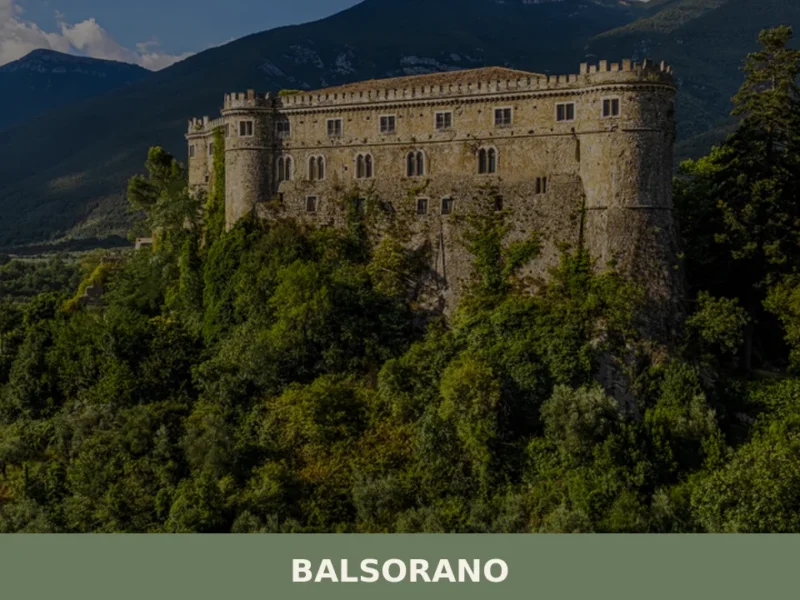
Balsorano
The Val Roveto divides southern Abruzzo from Lazio along a fault line that has determined earthquakes, migrations and feudal borders for over seven centuries. Balsorano occupies the valley floor and the hillside at 340 metres above sea level, with its 3,617 inhabitants spread between the upper historic centre — Balsorano Vecchio — and the modern […]
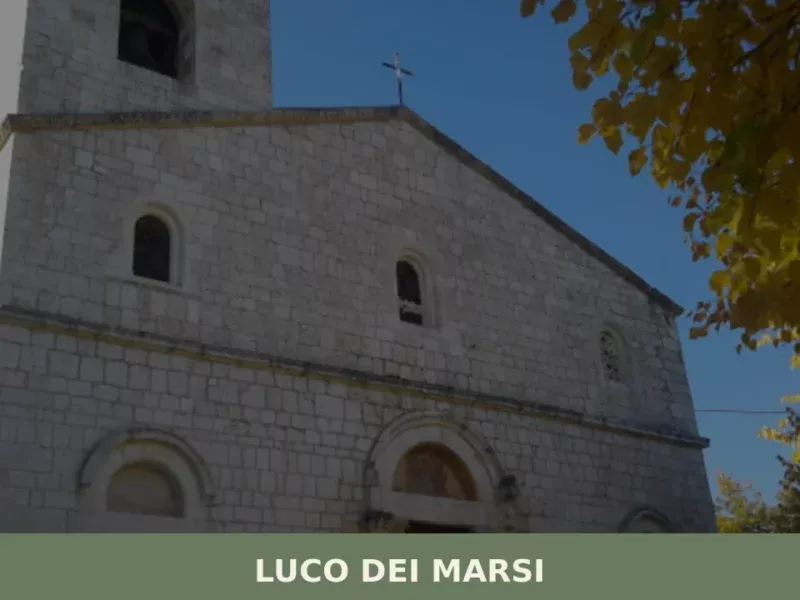
Luco dei Marsi
At 680 metres above sea level, on the eastern edge of what until 1875 was the surface of Lake Fucino — the largest lake in peninsular Italy, drained by Prince Alessandro Torlonia — stands Luco dei Marsi, a municipality of 5,857 inhabitants in the province of L’Aquila. The plain that today stretches as far as […]
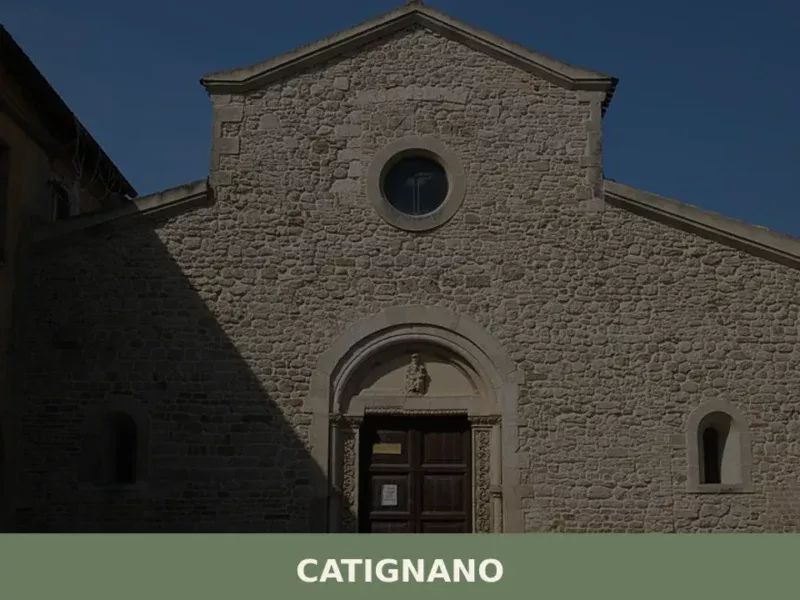
Catignano
Catignano has a current population of 1,227, spread across a hilly territory at 365 metres above sea level in the province of Pescara. The municipality extends along a ridge separating the Nora and Cigno valleys, two watercourses that flow into the Pescara river. Those looking for what to see in Catignano will find a rural […]






📝 Incorrect information or updates?
Help us keep the Civitella Messer Raimondo page accurate and up to date.