


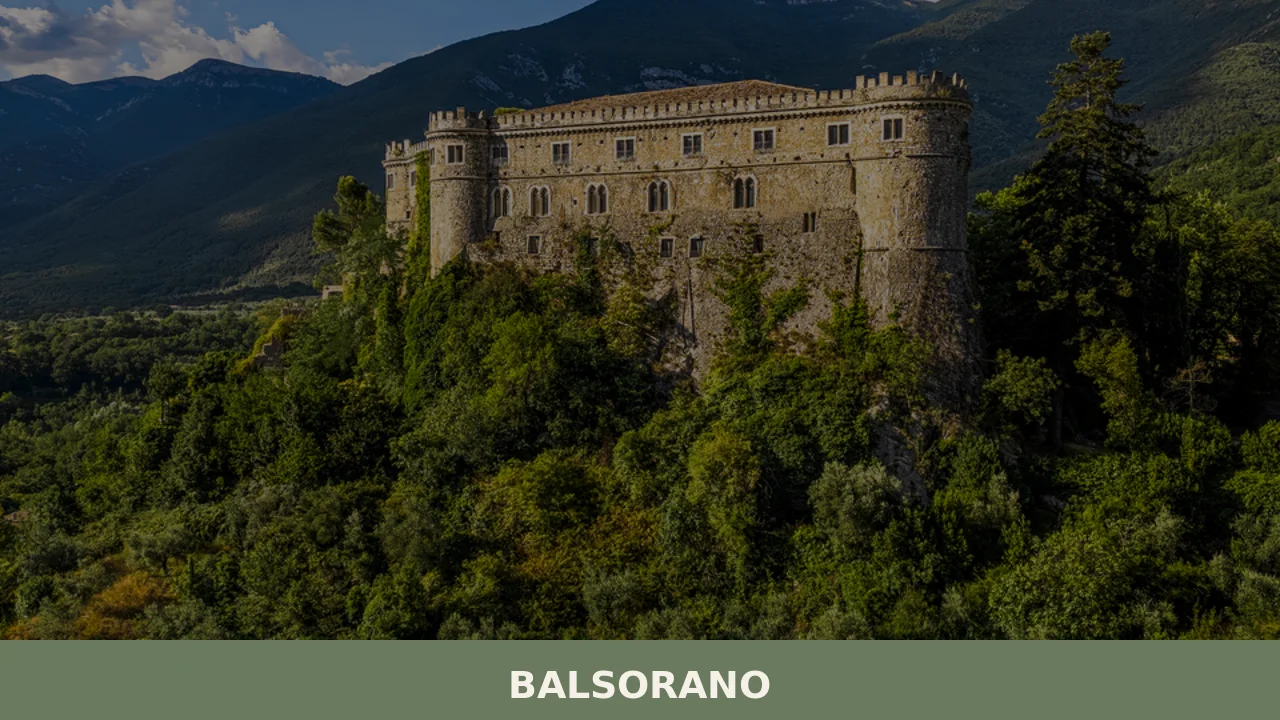
Balsorano
 Hills
Hills
The Val Roveto divides southern Abruzzo from Lazio along a fault line that has determined earthquakes, migrations and feudal borders for over seven centuries. Balsorano occupies the valley floor and the hillside at 340 metres above sea level, with its 3,617 inhabitants spread between the upper historic centre — Balsorano Vecchio — and the modern […]
Discover Balsorano
The Val Roveto divides southern Abruzzo from Lazio along a fault line that has determined earthquakes, migrations and feudal borders for over seven centuries. Balsorano occupies the valley floor and the hillside at 340 metres above sea level, with its 3,617 inhabitants spread between the upper historic centre — Balsorano Vecchio — and the modern expansion along the main road. Asking what to see in Balsorano means travelling along the frontier between two regions, two dialects, two distinct geological landscapes, where the River Liri marks the transition from the limestone Apennines to the clay basins of the Ciociaria.
History and origins of Balsorano
The name first appears in 10th-century documents in the form Vallis Sorana, referring to the valley that leads towards Sora, a town in northern Lazio. The etymology reflects the border position: for centuries, Balsorano was the last outpost of the Kingdom of Naples before the Papal States. In 1096 the territory was under the Norman control of the Counts of the Marsi, who built an initial fortified structure on the hill to oversee transit along the Liri valley.
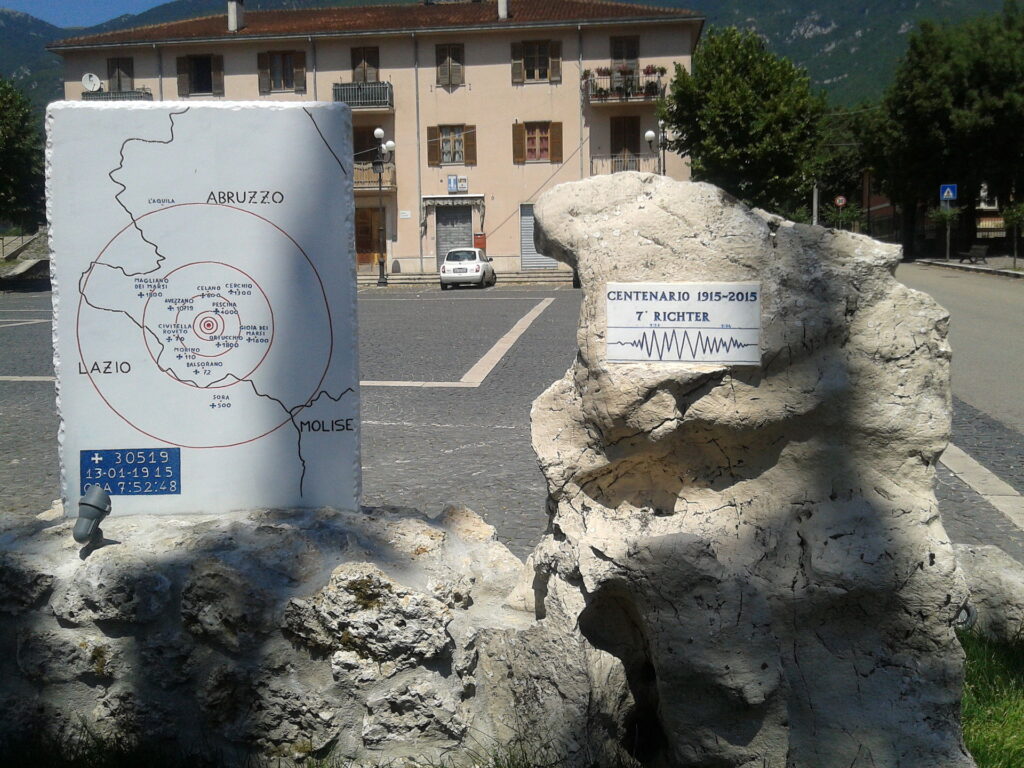
The fief passed to the Piccolomini family in the 14th century, then to the d’Avalos in the 15th century. In 1654, during the war between France and Spain, the village suffered sackings documented in contemporary chronicles. The Marsica earthquake of 13 January 1915, with its epicentre in Avezzano, also devastated Balsorano Vecchio: much of the population moved downhill, creating the modern settlement that now extends along the state road 82. The reconstruction radically altered the urban layout, leaving the upper village in a state of partial abandonment that persisted until recovery efforts in recent decades.
The patron saint is San Giorgio (Saint George), whose feast day still marks the community calendar. The border position has produced a hybrid linguistic identity: the local dialect displays both Abruzzese and Ciociaro features, a phenomenon studied by linguists at the University of L’Aquila as an example of a transition zone between intermediate southern dialects and extreme southern dialects.
What to see in Balsorano: 5 main attractions
1. Castello Piccolomini
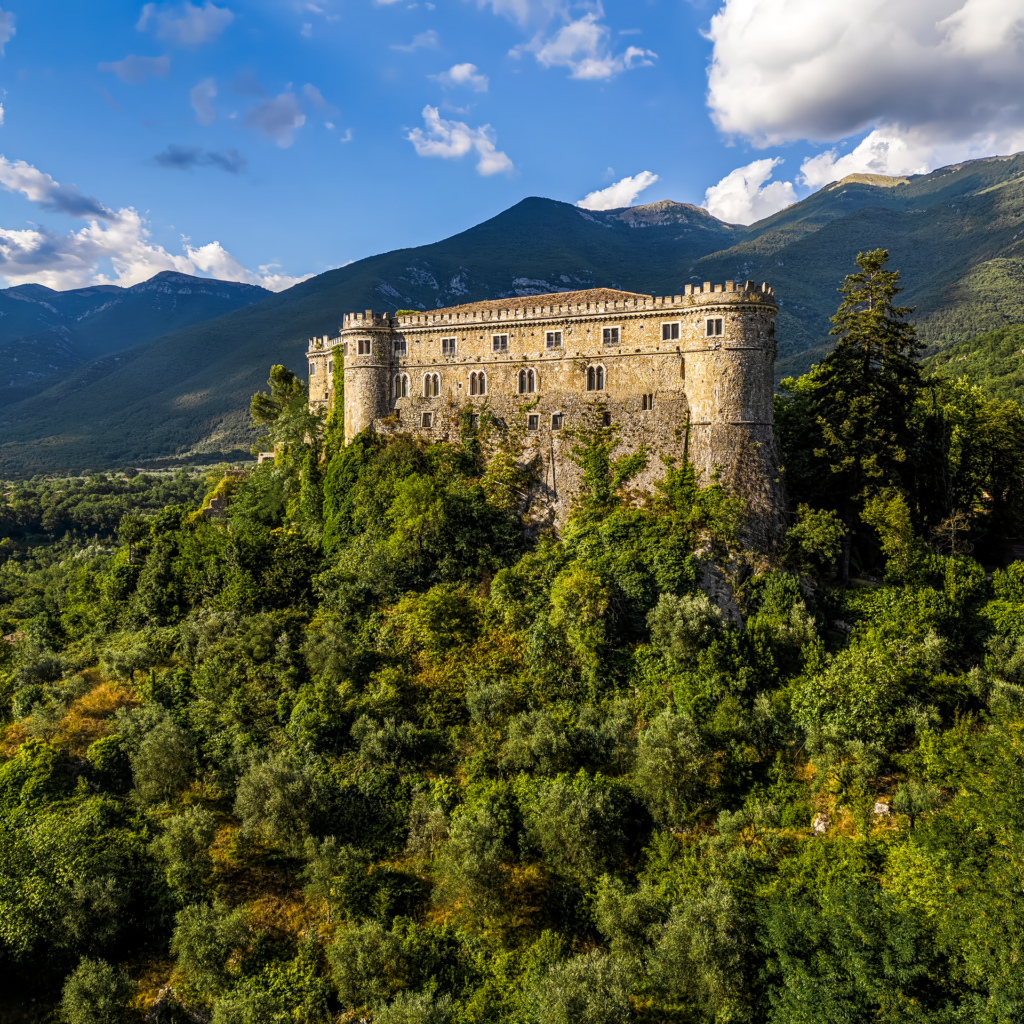
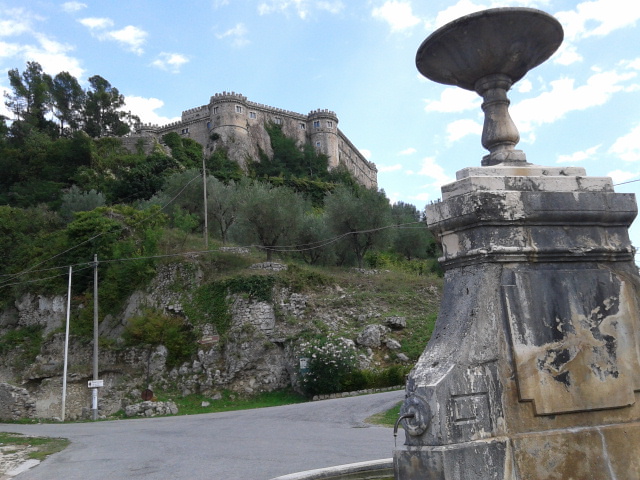
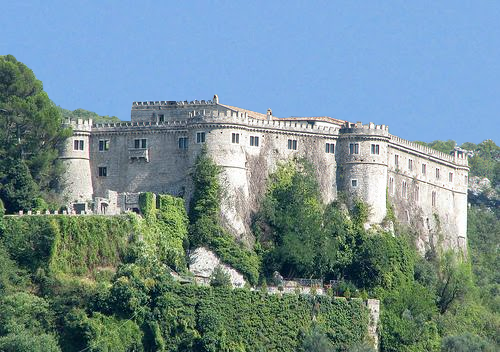
Built by the Counts of the Marsi and expanded by the Piccolomini family in the 15th century, the castle dominates Balsorano Vecchio with a quadrangular plan and four cylindrical corner towers. It was partially restored after the 1915 earthquake. Today it is privately owned but visible from outside; the south façade retains a stone portal with a noble coat of arms and a curtain wall reaching ten metres in height.
2. Balsorano Vecchio
The original core of the village, on the hill above the modern centre, preserves its medieval layout with houses in local limestone, buttress arches between buildings and narrow stairways climbing towards the castle. Several buildings still bear the marks of the 1915 earthquake. The ensemble constitutes an urban record of the earthquake and its consequences on the depopulation of Abruzzo’s mountain settlements.
3. Chiesa di San Giorgio Martire
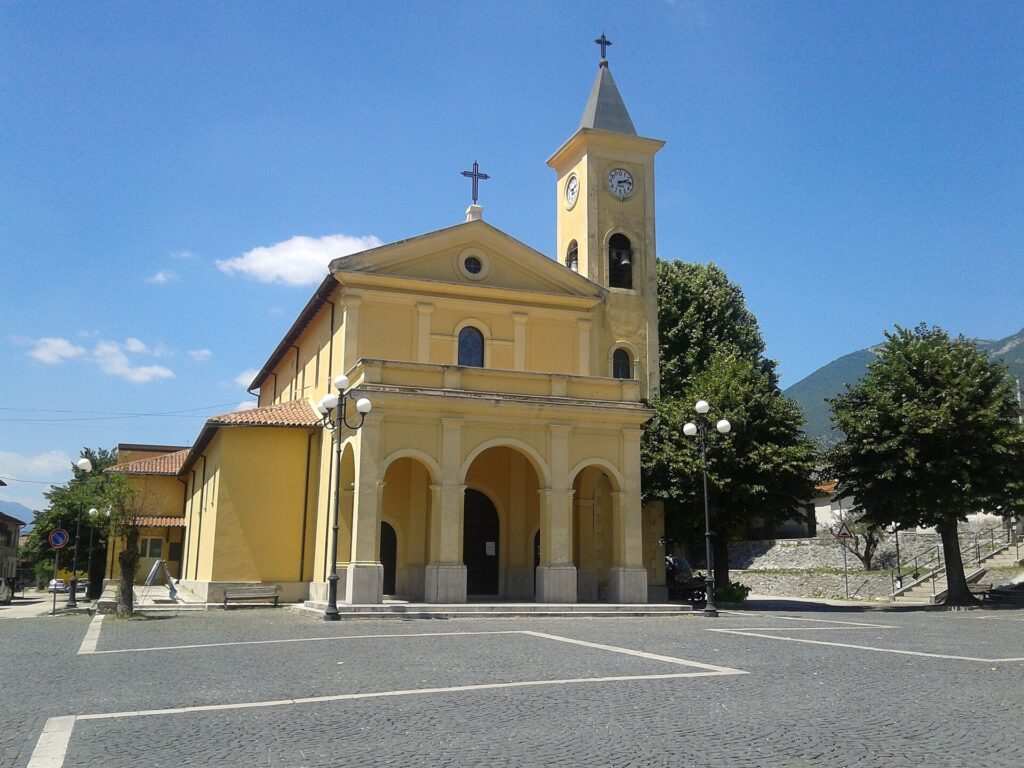
Dedicated to the village’s patron saint, the church was rebuilt after 1915 in the valley centre. The interior houses a wooden statue of Saint George and some sacred furnishings recovered from the original building. The façade features a simple triangular pediment in neo-Renaissance style, consistent with the architectural lines of post-earthquake reconstruction found throughout the Marsica.
4. Riserva Naturale Zompo lo Schioppo
A few kilometres from Balsorano, in the territory of the neighbouring municipality of Morino, lies the highest natural waterfall in the central Apennines, with a drop of approximately 80 metres. The regional nature reserve protects an area of beech forest and mixed woodland where over 40 species of wild orchids have been documented. From Balsorano it can be reached by car in fifteen minutes.
5. Liri Valley and riverside trails
The River Liri crosses the valley floor below Balsorano with a course that remains relatively intact from an environmental standpoint. Trails run along the banks, accessible on foot or by bicycle, and also used for sport fishing. The stretch between Balsorano and Sora offers a visible geological cross-section of the limestone formations that separate the Marsica from the Latin valley.
Local cuisine and regional products
Balsorano’s cuisine reflects its position on the border between Abruzzo and Lazio. Traditional local dishes combine Abruzzese fresh pasta — in particular sagne, irregular strips of water-and-flour dough — with sauces based on wild greens gathered along the slopes of the Val Roveto: field chicory, borage, sow thistle. Fettuccine with porcini mushrooms, abundant in the woods above the village between September and November, are a recurring seasonal dish. Lamb, prepared on the grill or cacio e ovo (with egg and cheese), follows the pastoral tradition of the Marsica.
Among local products are extra virgin olive oil, produced from an indigenous cultivar grown at the lower altitudes of the valley, and chestnut honey from apiaries positioned in the beech forests above 600 metres. In the autumn months it is common to find Val Roveto chestnuts in the small shops of the centre, sold fresh or processed into flour. Local trattorias offer menus tied to seasonal availability, with prices that reflect a local economy not yet geared towards mass tourism.
When to visit Balsorano: the best time of year
The Val Roveto has a transitional climate between the Apennine type and the sub-Mediterranean climate of the Latin valley. Summers are hot on the valley floor, with temperatures regularly exceeding 30 degrees in July and August, while the upper village benefits from slightly lower temperatures thanks to its elevation and aspect. Spring, from April to June, is the most suitable period for hikes towards Zompo lo Schioppo and along the hill trails: the waterfall reaches its maximum flow with the last spring rains and snowmelt.
The feast of San Giorgio, celebrated on 23 April, is the main event in the local calendar, with a procession through the centre and a programme of civic events. In autumn, between October and November, food festivals dedicated to woodland products — chestnuts and mushrooms — enliven several towns in the Val Roveto, including Balsorano. Winter is the least frequented period: short days and cold nighttime temperatures limit hiking possibilities, but offer conditions for visiting without any crowding whatsoever.
How to get to Balsorano
Balsorano has a railway station on the Avezzano–Roccasecca line, operated by Trenitalia, with direct connections to Avezzano (approximately 40 minutes) and, with a change, to Roma Tiburtina. The station is located on the valley floor, a few minutes’ walk from the modern centre.
- By car from Rome: A1 motorway to the Frosinone exit, then SS 214 and SS 82 through Sora. Distance approximately 120 km, travel time one hour and forty minutes.
- By car from L’Aquila: A25 motorway to Avezzano, then SS 82 along the Val Roveto. Distance approximately 95 km, one hour and twenty minutes.
- By car from Naples: A1 towards Rome, Cassino exit, then SS 509 and SS 82. Distance approximately 150 km, two hours.
- Nearest airport: Roma Fiumicino (approximately 150 km) or Roma Ciampino (approximately 130 km).
The official website of the Municipality of Balsorano publishes updated information on road conditions and events. For further details on the history and geography of the area, the dedicated Wikipedia page offers a well-documented overview.
Other villages to discover in Abruzzo
Visitors to Balsorano who wish to explore inland Abruzzo will find a network of smaller centres that share the same frontier condition — between provinces, between river basins, between protected areas. To the south-east, in the province of Chieti, Castiglione Messer Marino sits above 1,000 metres on the plateau dividing the Sangro valley from northern Puglia. The centre preserves a compact urban structure with buildings in local stone and a textile craft tradition documented since the 18th century — a mountain setting different from the Val Roveto but with the same relationship between altitude, isolation and preservation of the historic fabric.
On the Pescara side of the Apennines, Carpineto della Nora occupies a hinge position between the Majella and the Gran Sasso, along the course of the River Nora. The village has a demographic scale similar to Balsorano’s and shares with it a belonging to a valley-floor Abruzzo that lives on agriculture, small industry and a tourism sector still in its infancy. Both centres represent nodes of a minor geography that the motorway network overlooks but that local railways — slow, infrequent, functioning — continue to connect.
📷 Photo Gallery — Balsorano
Nearby Villages near Balsorano
In Abruzzo More villages to discover
Civitella Messer Raimondo
 Mountain
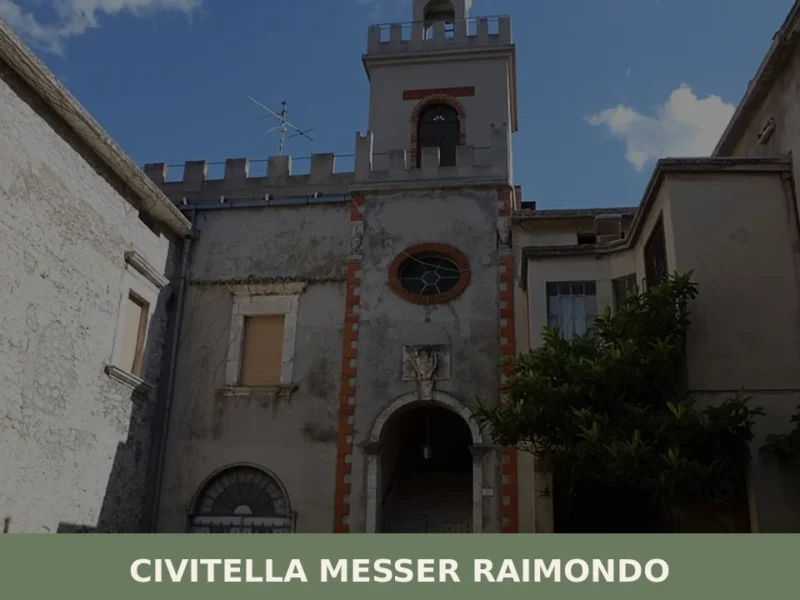
Civitella Messer Raimondo has 769 inhabitants and sits at 613 metres above sea level, on the eastern slope of the Maiella massif, in the province of Chieti. The village’s name still bears that of a medieval feudal lord — Raimondo — who shaped its political fortunes between the 13th and 14th centuries. Understanding what to […]
Prezza
Mountain
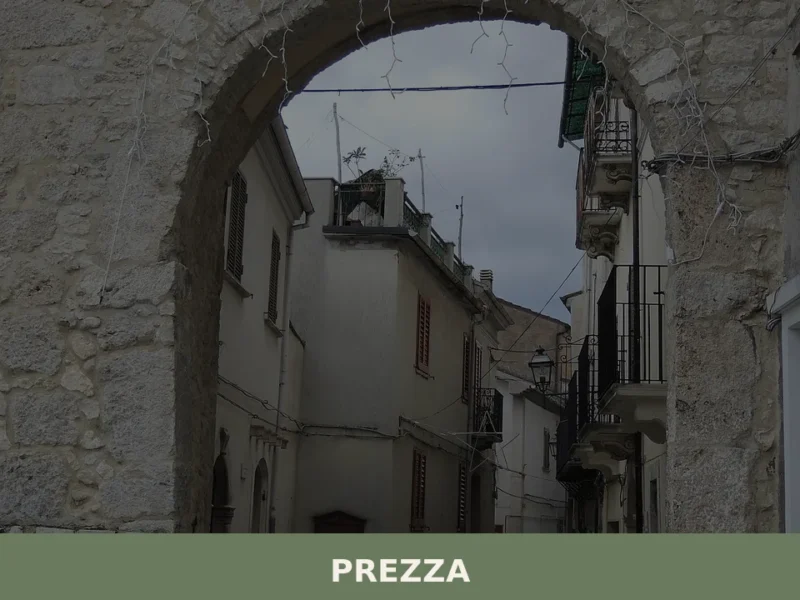
What to see in Prezza, Italy: explore a medieval hilltop comune at 480 m, the Praesidium Winery, and the Church of Santa Lucia. Discover Abruzzo's Valle Peligna.
Catignano
Hills
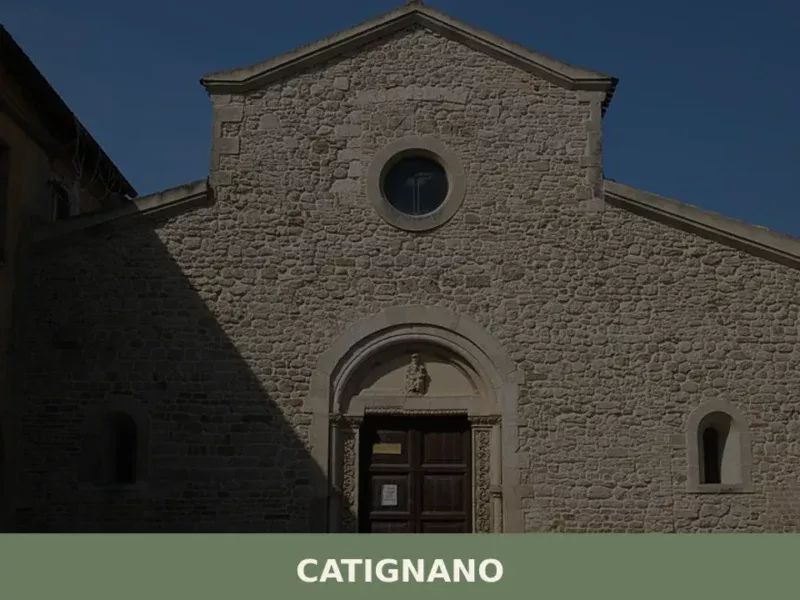
Catignano has a current population of 1,227, spread across a hilly territory at 365 metres above sea level in the province of Pescara. The municipality extends along a ridge separating the Nora and Cigno valleys, two watercourses that flow into the Pescara river. Those looking for what to see in Catignano will find a rural […]
Fraine
Mountain
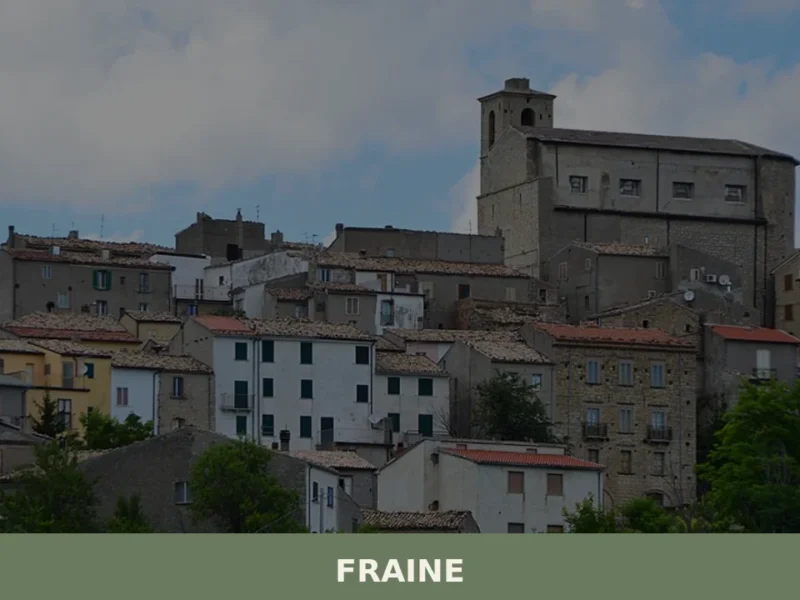
At 751 meters above sea level, in the Chieti area, lies Fraine, a municipality with a population of 261 inhabitants. This village, whose history dates back to the 10th-11th century, serves as an observation point over the Alto Vastese territory. For those wondering what to see in fraine, the town offers a journey through the […]
Massa d’Albe
Mountain
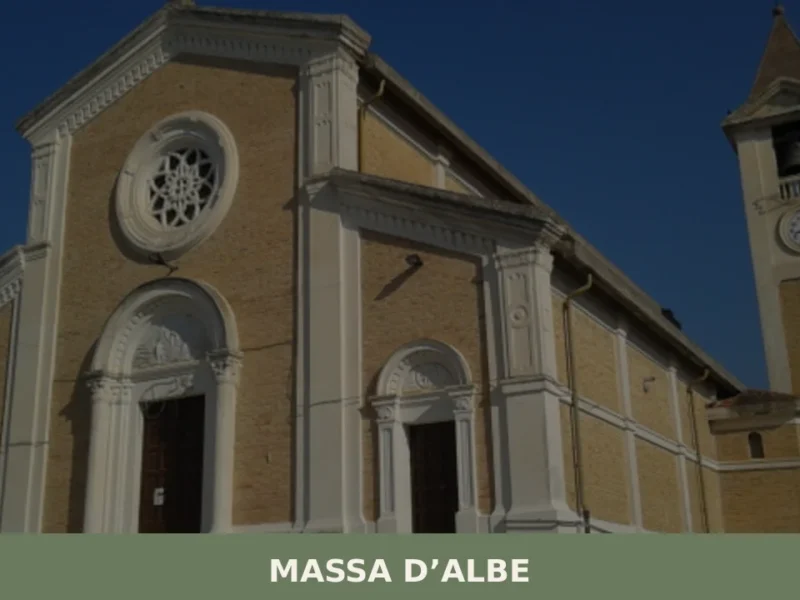
What to see in Massa d'Albe: 5 attractions including Roman ruins, medieval churches and views over Fucino. Complete guide to visiting this Abruzzo village.
San Giovanni Lipioni
Hills
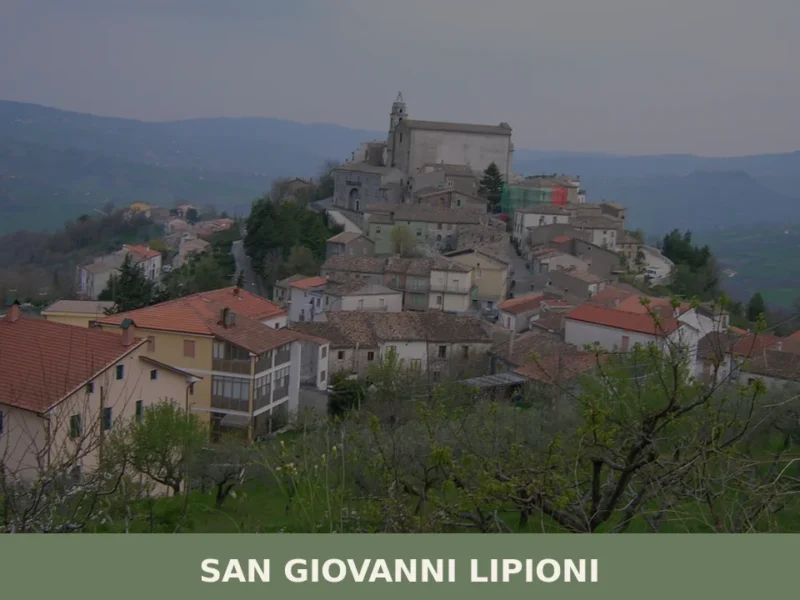
What to see in San Giovanni Lipioni, Abruzzo, Italy: explore a village at 545 m, its 17th-century church, ventricina salami and May pageant. Discover it now.
Fontecchio
Mountain
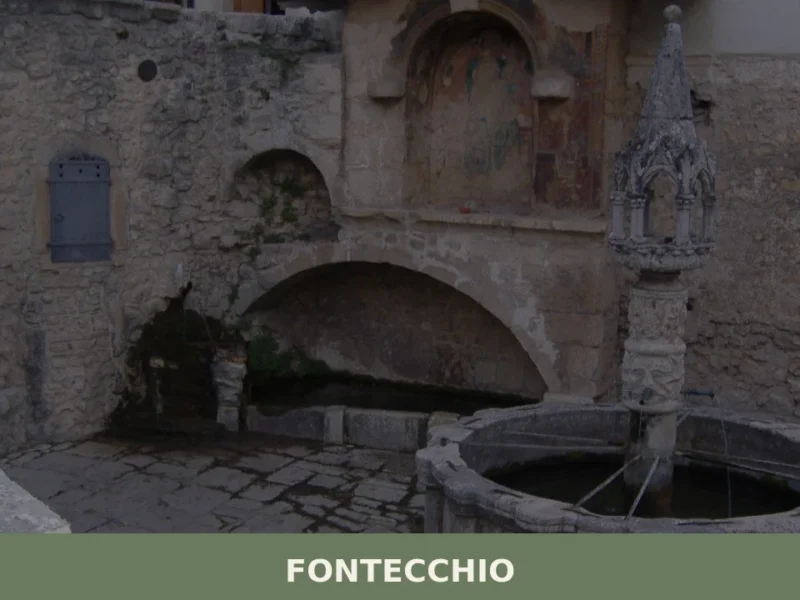
The fourteenth-century fountain with a fourteen-spouted stone basin, dated 1355, still marks the centre of Fontecchio’s main square — a village of 291 inhabitants at 668 metres above sea level in the middle Aterno Valley, province of L’Aquila. Anyone wondering what to see in Fontecchio should start right here, at this hydraulic structure that has […]
Caporciano
Mountain
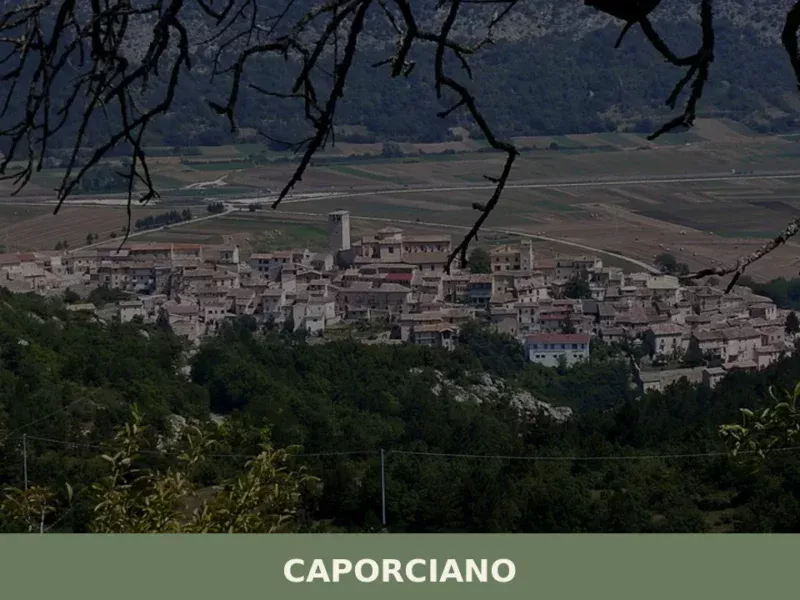
Caporciano, a small village near L'Aquila between history and nature: discover what to see, how to get there and the top places to visit. Plan your trip.
Bugnara
Hills
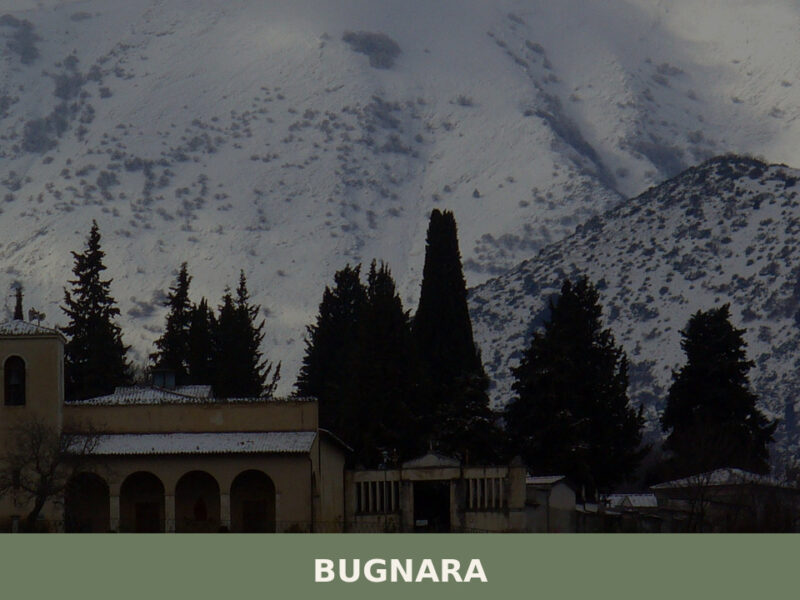
Morning light falls across the Sagittario valley in long, amber strokes, catching the limestone walls of a settlement that has watched over this corridor of central Abruzzo for the better part of a millennium. Bells from a church tower mark the hour, their sound flattening against the surrounding slopes before fading. The streets are narrow, […]
Vasto
 Sea
Sea
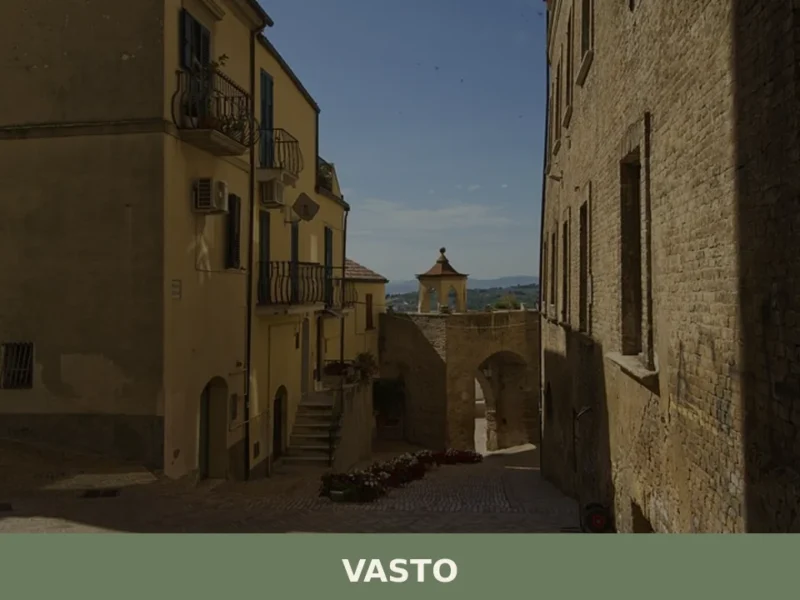
With 40,692 inhabitants, Vasto stands on the Abruzzo Adriatic coast, a town that from its promontory at 144 meters above sea level observes a stretch of sea that was a crossroads of cultures and trades. For those wondering what to see in vasto, the answer unfolds among Roman vestiges, Renaissance architecture, and views of the […]




🏡 Know Balsorano better than we do?
If you’re a local or have been there, your knowledge matters: add what’s missing or fix a detail on this page.