


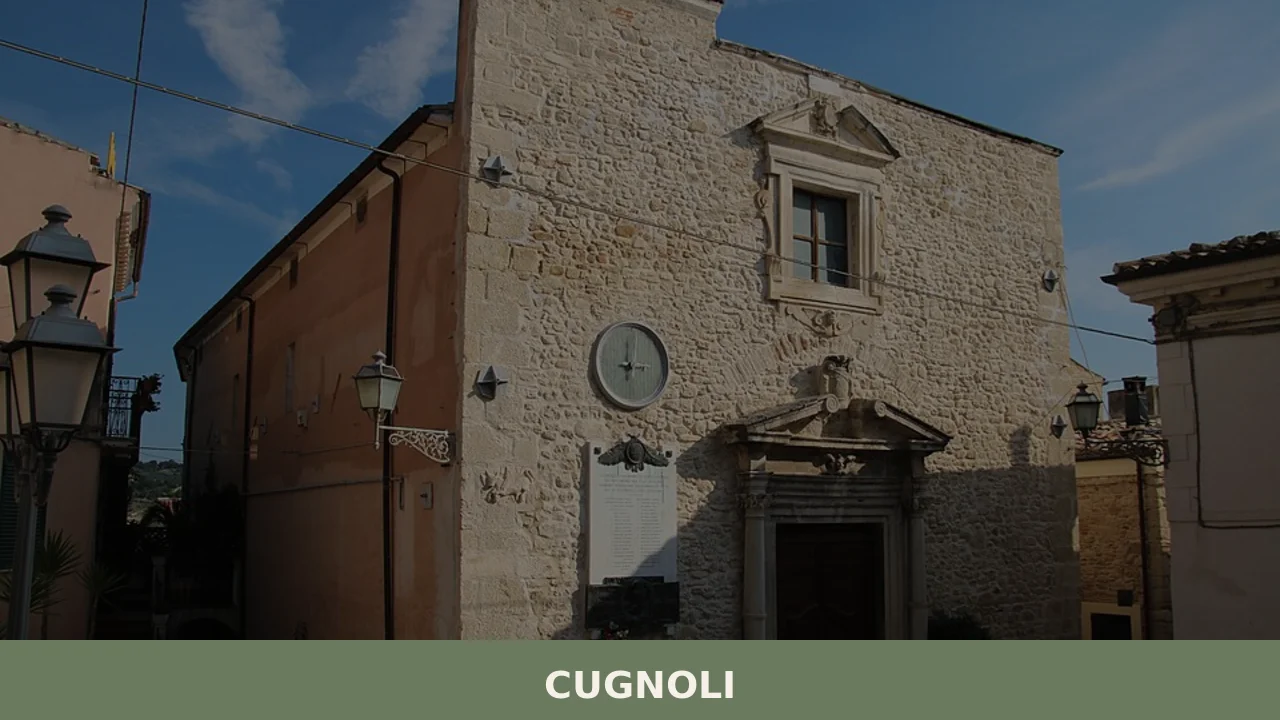
Cugnoli
At 331 meters above sea level, in the heart of the province of Pescara, lies Cugnoli, a settlement of 1,336 residents known for its hilly location. The village, whose history dates back to Roman times, as suggested by the etymology of its name (probably from Cunula, meaning small cradle or basin), offers a direct experience […]
Discover Cugnoli
At 331 meters above sea level, in the heart of the province of Pescara, lies Cugnoli, a settlement of 1,336 residents known for its hilly location. The village, whose history dates back to Roman times, as suggested by the etymology of its name (probably from Cunula, meaning small cradle or basin), offers a direct experience of Abruzzese life, blending agriculture and traditions. For those wondering what to see in cugnoli, a walk through its streets reveals an urban fabric that has preserved elements of its past, despite transformations over centuries, including seismic events that reshaped part of its profile, such as the 1706 earthquake which caused significant damage. The locality serves as an observation point over the surrounding agricultural landscape, characterized by olive groves and vineyards that define the slopes.
History and Origins of Cugnoli
The earliest records related to the Cugnoli area date back to the Roman era, a period when the territory was likely dedicated to agriculture and the establishment of small settlements. The origin of the name itself, Cunula, suggests a connection to the morphology of the land, a basin or a small valley that offered shelter and fertility. With the decline of the Roman Empire and the advent of the Middle Ages, the village adopted a more defensive configuration, with the construction of fortifications necessary for protection against incursions and for territorial control.
Over the centuries, Cugnoli was part of various feudal jurisdictions, passing under the dominion of noble families who influenced its social and economic development. Evidence of this period is the presence of civil and religious structures that, despite undergoing modifications, retain traces of past eras. The 17th century, in particular, was a period of significant challenges for the village, culminating in the 1706 earthquake that caused extensive destruction and required reconstruction efforts which shaped the current appearance of many buildings.
What to see in Cugnoli: 5 essential attractions
An itinerary in Cugnoli allows for a close look at the architectural heritage and views that define the character of the village. Here are five places of interest:
1. Church of Santo Stefano Protomartire
Dedicated to the patron saint of the village, the Church of Santo Stefano Protomartire is the main place of worship. Its current structure is the result of several construction phases and restorations, particularly after the 1706 earthquake. The interior houses sacred artworks and furnishings that convey the local community’s devotion. The facade, with simple decorative elements, integrates into the urban setting.
2. Caracciolo Palace
Caracciolo Palace represents an example of the noble civil architecture that characterized Cugnoli. While not as imposing as other historical Abruzzese residences, its presence testifies to the feudal period and the influence of dominant families on the village. Today, the palace features sober lines but maintains a certain decorum that distinguishes it from surrounding dwellings.
3. Umberto I Square
The main square of the village, Umberto I Square, is the center of social life and a gathering point for residents. Some of the most significant buildings face this square, and local events and celebrations often take place here. The square offers an open space to observe the daily rhythm of the town and enjoy a perspective on the surrounding architecture.
4. Monumental Fountain
Located at a strategic point in the village, the Monumental Fountain is an element of urban design that has played both a practical and symbolic role. Built in the past for water supply, today it is a visual landmark; its forms and materials reflect the construction style of the period in which it was made, often using local stone.
5. View of the Pescara Valley
From the highest part of the village, or from specific easily accessible panoramic points, a view of the Pescara Valley unfolds. This perspective allows visitors to appreciate the formation of the Abruzzese territory, with its cultivated hills, fields, and small settlements distributed along the river’s course. It is a suitable place to observe the landscape in varying light conditions.
Typical Cuisine and Local Products
The gastronomy of Cugnoli, like that of the province of Pescara and hilly Abruzzo, is deeply connected to local produce and farming traditions. Among the most representative dishes, pasta alla chitarra, often served with rich and flavorful meat sauces, stands as a cornerstone of local cuisine. There are also legume soups, such as those based on lentils or beans, often enriched with wild herbs gathered from the surrounding fields. “Maccheroni alla molinara,” a long and thick pasta typical of the area, is another dish to seek out, often served with wild boar or lamb ragù.
Regarding local products, the olive groves surrounding Cugnoli produce quality extra virgin olive oil, a fundamental ingredient in every dish. The vineyards, in turn, yield robust wines such as Montepulciano d’Abruzzo DOC and Trebbiano d’Abruzzo DOC, which suitably accompany meals. Among baked goods, wood-fired homemade bread is a constant, while typical holiday sweets, like “cellipieni” or “ferratelle,” offer a taste of the confectionery tradition. The patron saint festival of San Stefano, on September 19th, can be an opportunity to savor some of these specialties in a festive setting.
When to Visit Cugnoli: The Best Time
Cugnoli’s hilly climate makes the village pleasant to visit in various seasons. Spring, with its blooming fields and mild temperatures, offers a lively landscape and ideal conditions for walks. Autumn, with the warm colors of the vegetation and the olive and grape harvest season, also represents an inviting period. Cooler days are suitable for exploring the historic center and savoring local cuisine.
Summer can be warm, but the location at 331 meters above sea level ensures some ventilation. The most significant event in the local calendar is the Feast of Santo Stefano, celebrated on September 19th. This occasion can offer the opportunity to experience a moment of local tradition, with religious ceremonies and, at times, related events.
How to Get to Cugnoli
Cugnoli is primarily accessible via the road network. Those coming from the A25 motorway (Rome-Pescara) can exit at Alanno-Scafa and continue for a few kilometers following signs for the village. From Pescara, the distance is approximately 30 kilometers, which takes about 30-40 minutes by car. The nearest airport is Abruzzo Airport (PSR) in Pescara, offering national and international connections.
For those who prefer the train, the nearest railway stations are along the Pescara-Rome line, such as Manoppello Scalo or Alanno. From these stations, it is necessary to arrange a local bus service or a taxi to reach Cugnoli. The village’s location, slightly set back from major thoroughfares, requires the use of a private vehicle for greater flexibility in travel.
Other Villages to Discover in Abruzzo
Abruzzo is a territory rich in villages, each with its own historical and landscape particularities. After visiting Cugnoli, exploration can continue to other centers that keep the memory of the past and local traditions alive. Among these, Brittoli, also in the province of Pescara, offers an example of a hilly village with a history linked to agriculture and the surrounding environment. Here one can observe rural architecture and enjoy views of the valley below, in a setting that suggests a less hurried pace of life.
Moving inland in the region, south of L’Aquila, is Alfedena. This village, with a history dating back to Samnite and Roman settlements, stands out for its mountain location, surrounded by a different natural environment, near the Abruzzo, Lazio e Molise National Park. A visit to Alfedena allows for a comparison of the different facets of the Abruzzese landscape and the traditions that have developed in distinct geographical settings. For further information, you can consult the Cugnoli on Wikipedia page, the official Municipality website, and the Abruzzo section on Italia.it.
In Abruzzo More villages to discover
Brittoli
Brittoli has 258 inhabitants today — fewer than it takes to fill a regional railway carriage. Yet this small settlement at 779 metres above sea level, in the western part of the province of Pescara, retains a building fabric that dates in part to the 12th century and a strategic position on the ridge separating […]
Lama dei Peligni
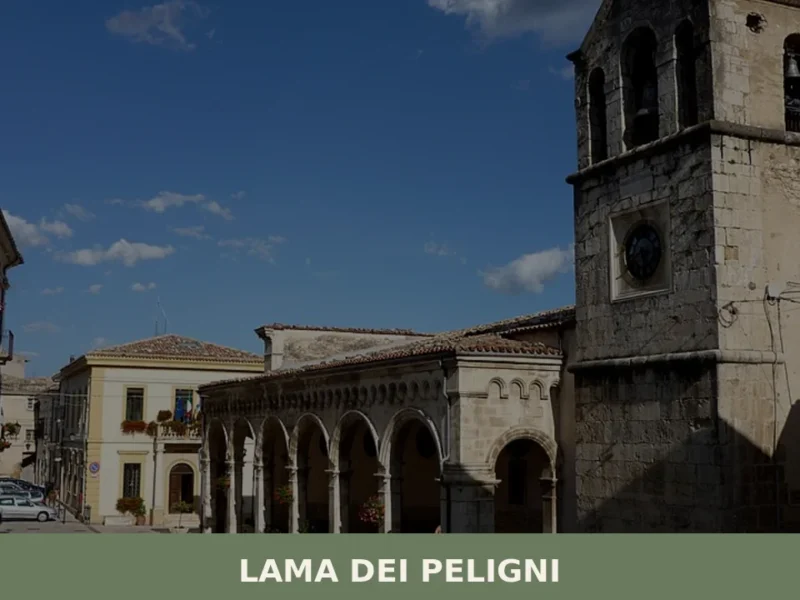
What to see in Lama dei Peligni: village at 669 m, Grotta del Cavallone, Majella National Park trails and arrosticini PAT. Plan your visit with this complete guide.
Corfinio
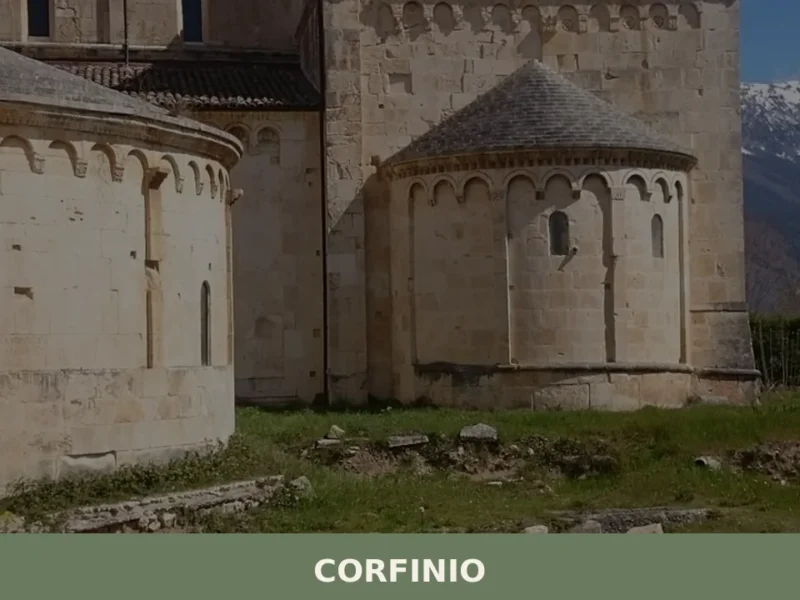
In 91 BC, the Italic peoples chose Corfinium as the capital of the Italic League during the Social War against Rome: for several months, this city in the Peligna Valley was renamed Italica and minted its own coins bearing the image of a bull trampling the Roman she-wolf. Today the village has 1,081 inhabitants, sits […]






📝 Incorrect information or updates?
Help us keep the Cugnoli page accurate and up to date.