


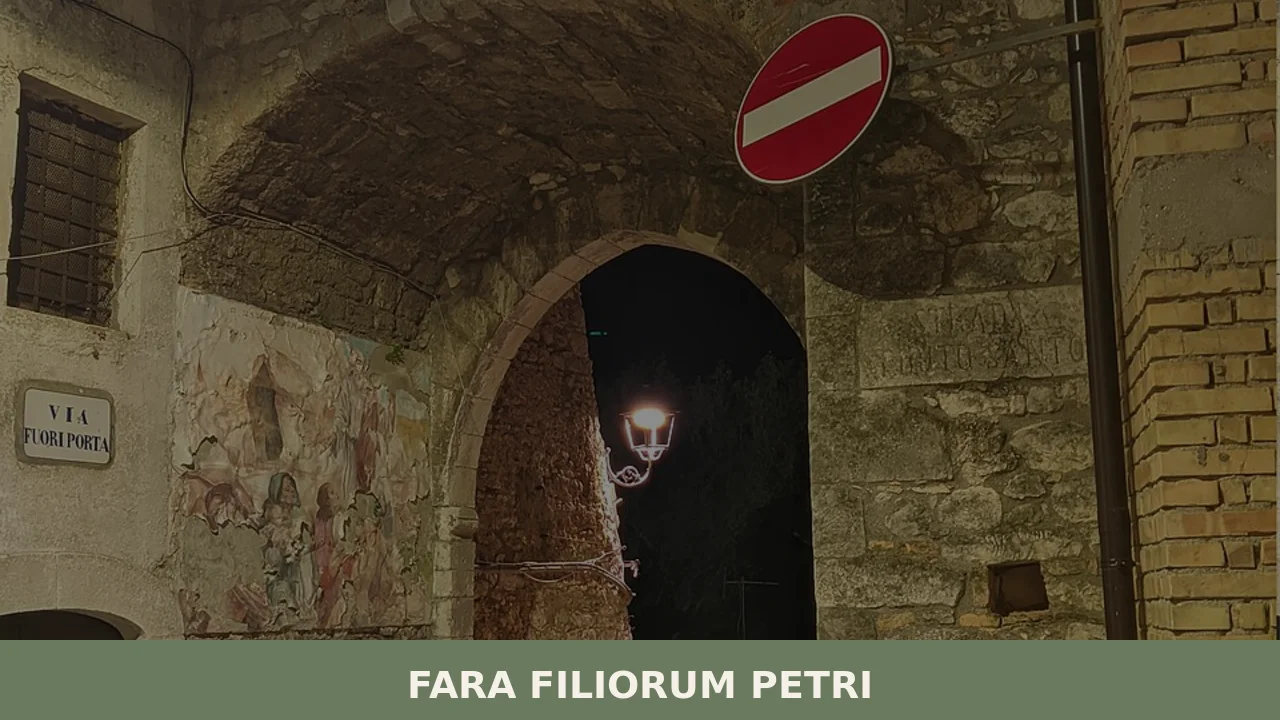
Fara Filiorum Petri
Fara Filiorum Petri, a municipality in the province of Chieti with 1,942 inhabitants, stands at 227 meters above sea level. The toponym itself, of complex origin, suggests historical layering: “Fara” refers to Lombard settlements, while “Filiorum Petri” is linked to the feudal family of Filiorum Petri, who held control in subsequent eras. This duality names […]
Discover Fara Filiorum Petri
Fara Filiorum Petri, a municipality in the province of Chieti with 1,942 inhabitants, stands at 227 meters above sea level. The toponym itself, of complex origin, suggests historical layering: “Fara” refers to Lombard settlements, while “Filiorum Petri” is linked to the feudal family of Filiorum Petri, who held control in subsequent eras. This duality names a place where the imprint of the past is readable in the urban fabric. For those wondering what to see in Fara Filiorum Petri, the village offers a perspective on the agrarian and religious history of the Abruzzo foothills, distant from the Apennine peaks but close to the dynamics of the plain.
History and origins of Fara Filiorum Petri
The name of Fara Filiorum Petri encapsulates its history. The first part, “Fara,” is a term of clear Lombard derivation, indicating a family or military group that settled in a territory, often with garrison functions. This type of settlement is widespread in various areas of Italy and testifies to the presence and social organization of the Lombards after their descent into the peninsula. The Lombard presence in the area is documented and has left traces in local toponymy.
The second part, “Filiorum Petri,” refers to the feudal family of Filiorum Petri, who acquired control of the territory in the medieval period. Historical documents attest to their lordship from at least the 12th century, when they were vassals of the Counts of Chieti. The structure of the village, with its oldest core, reflects the defensive and organizational needs typical of the feudal period, with buildings that have layered around a center of power. The evolution of the municipality then saw the agricultural development of the surrounding plain, which shaped the economy and life of the inhabitants in subsequent centuries.
What to see in Fara Filiorum Petri: 5 attractions
Church of San Salvatore
The parish church of San Salvatore represents the main place of worship in the village. Its current structure is the result of modifications and reconstructions over the centuries, but it retains elements that testify to its ancient foundation. Inside, sacred artworks and liturgical furnishings are preserved, illustrating the devotion and artistic history of the Fara community.
Church of Sant’Antonio Abate
Dedicated to the village’s patron saint, Saint Anthony the Abbot, this church is particularly significant for the community. It is the focal point of the January 17th celebrations, the day of the patron saint’s feast, which culminates with the lighting of the “Farchie.” The building, despite its architectural simplicity, is a reference point for the religious and popular traditions of Fara Filiorum Petri.
Palazzo Lupi
Located in the historic core, Palazzo Lupi is an example of civil architecture that reflects the status of local noble families. The building features a facade with details that recall construction styles from different eras, a result of transformations over time. It represents a point of interest for understanding the urban and social evolution of the village.
Palazzo Valignani (Town Hall)
The current seat of the Municipality of Fara Filiorum Petri is housed within Palazzo Valignani, a historic residence that testifies to the prestige of one of the territory’s most influential families. The palace, with its size and central location, is a distinctive element of the urban landscape and a symbol of local administration.
Festa delle Farchie
Although not a building, the Festa delle Farchie is one of the most identity-defining and spectacular events to observe in Fara Filiorum Petri. Every January 16th, in honor of Saint Anthony the Abbot, imposing reed towers are erected and set ablaze, in a collective ritual rooted in ancient propitiatory and religious practices. This event attracts visitors and keeps a centuries-old tradition alive.
Typical cuisine and local products
The cuisine of Fara Filiorum Petri, like that of the Chieti hinterland, is deeply linked to the products of its plain and surrounding hills. Among the first courses, “maccheroni alla chitarra,” often seasoned with mixed meat ragù, and “sagne e fagioli,” a hand-cut fresh pasta, stand out. Extra virgin olive oil, produced from local cultivars, is a fundamental element that characterizes many dishes, from bruschetta to dressings. There are also artisanal cured meats, such as ventricina, although more typical of the Vastese area, and fresh and aged pecorino cheeses, from nearby pastures.
Among the main courses, lamb and pork are prominent, cooked in various traditional preparations. Typical desserts include “cellipieni,” half-moons filled with grape jam or cooked must, and “bocconotti,” small filled tarts. Wine production features indigenous grape varieties such as Montepulciano d’Abruzzo and Trebbiano d’Abruzzo, which accompany local meals. Summer festivals often celebrate these specialties, offering the opportunity to savor recipes handed down from generation to generation.
When to visit Fara Filiorum Petri: the best time
The ideal time to visit Fara Filiorum Petri depends on the traveler’s specific interest. For those wishing to immerse themselves in the most heartfelt traditions, January 16th and 17th represent a crucial time, coinciding with the Festa delle Farchie and the celebration of Saint Anthony the Abbot. On these days, the village comes alive with an ancient and spectacular ritual, offering a unique perspective on local culture.
For an experience more linked to mild weather and outdoor activities, spring and autumn offer pleasant temperatures and an agrarian landscape rich in colors. Summer, although warm, can be an opportunity to participate in any village festivals that enliven the evenings, celebrating typical local products. It is advisable to check the local events calendar to best plan your visit.
How to get to Fara Filiorum Petri
Reaching Fara Filiorum Petri is possible via several routes. By car, from north or south, you can take the A14 Adriatica motorway, exiting at Pescara Sud or Val di Sangro, then continuing on provincial roads towards the village. From the west, the A25 Rome-Pescara motorway offers the Chieti exit, from which you continue for about 20-25 kilometers.
For those who prefer the train, the nearest railway stations are Chieti Scalo or Pescara Centrale, both connected by local bus services that allow you to reach Fara Filiorum Petri. The reference airport is Abruzzo Airport (PSR), located in Pescara, about 30-35 kilometers away, from which it is possible to rent a car or use public transport.
Other villages to discover in Abruzzo
Abruzzo presents a variety of villages that offer different perspectives on the historical and landscape heritage of the region. After visiting Fara Filiorum Petri, the itinerary can continue inland, where settlements with different historical and landscape characteristics are encountered, often linked to the mountain or hill environment.
Among these, one can consider a stop in Arsita, a village in the Gran Sasso and Monti della Laga National Park, which offers a different naturalistic context and mountain-related traditions. Another option is Brittoli, also in the Gran Sasso area, known for its location and its rural architecture, which complete the picture of Abruzzese historic centers.
For more information, you can consult:
In Abruzzo More villages to discover
Filetto
Filetto, a settlement of 854 inhabitants, is located at 403 meters above sea level in the heart of the province of Chieti. This settlement, documented in historical sources dating its presence back to the medieval era, extends across a hill overlooking the Foro Valley. Its urban layout reflects the layering of different periods, with buildings […]
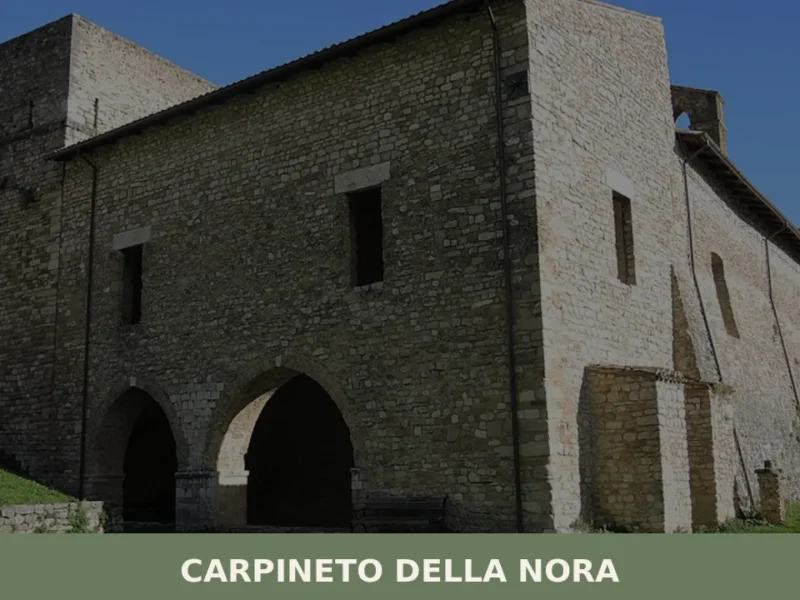
Carpineto della Nora
At 535 metres above sea level, on the ridge separating the Nora valley from the Pescara plain, Carpineto della Nora has a current population of 536 — a number that has halved since post-war censuses. Anyone looking into what to see in Carpineto della Nora will find a settlement built entirely from local stone, spread […]
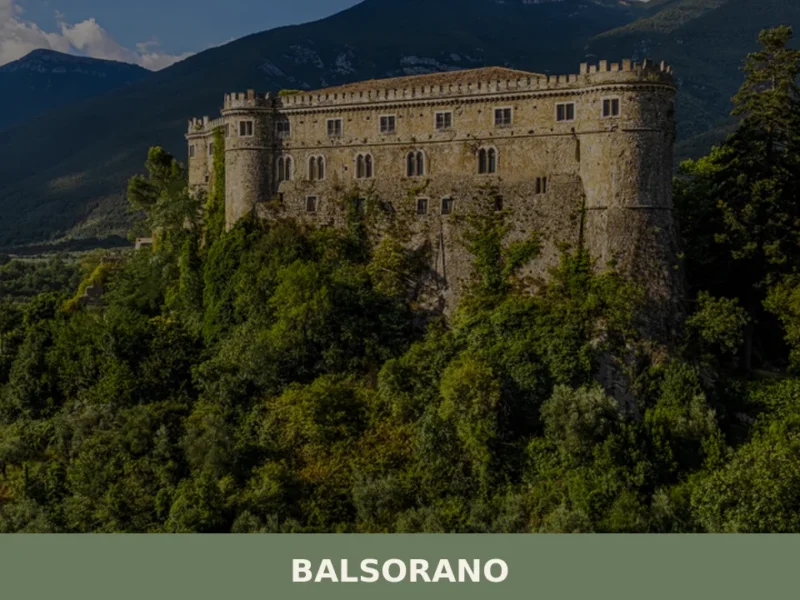
Balsorano
The Val Roveto divides southern Abruzzo from Lazio along a fault line that has determined earthquakes, migrations and feudal borders for over seven centuries. Balsorano occupies the valley floor and the hillside at 340 metres above sea level, with its 3,617 inhabitants spread between the upper historic centre — Balsorano Vecchio — and the modern […]






📝 Incorrect information or updates?
Help us keep the Fara Filiorum Petri page accurate and up to date.