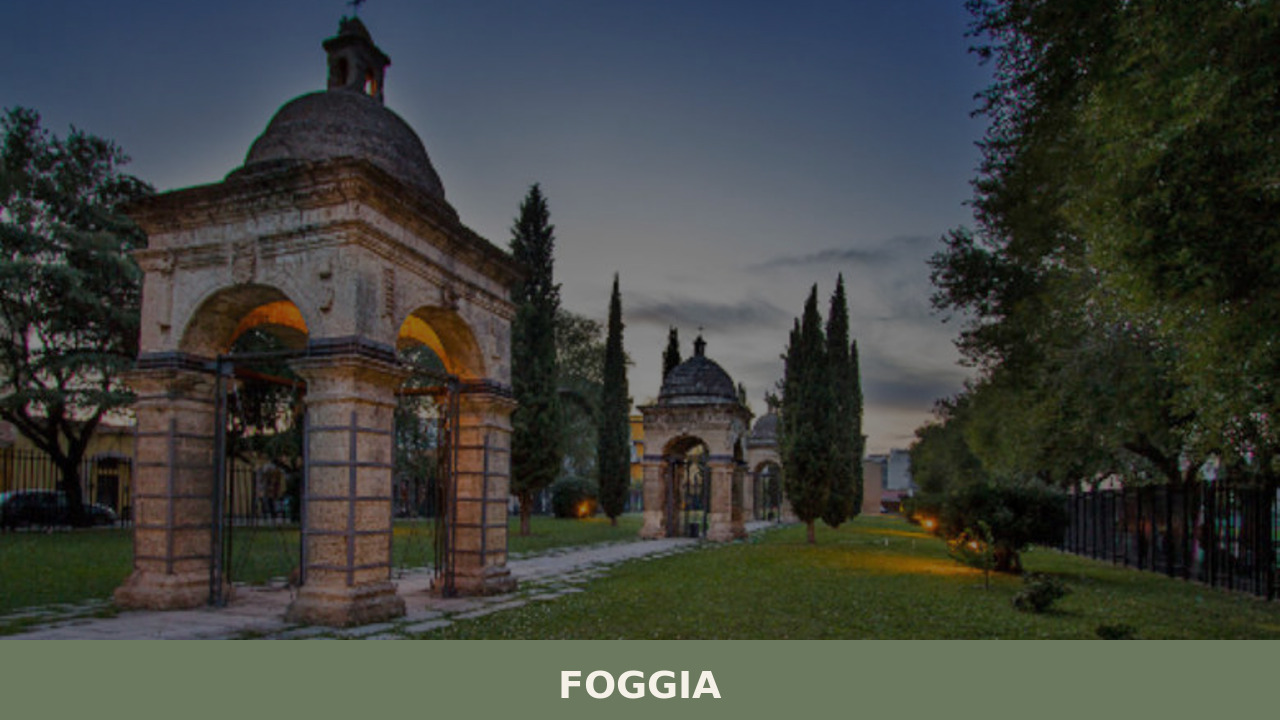
Foggia, capital of the Capitanata, holds medieval traces, Daunian artefacts, and the culinary traditions of Italy’s largest wheat plain. A guide to its overlooked layers.
At dawn, the Tavoliere plain catches the first light in long, flat sheets of gold that reach the edges of Foggia before a single shop shutter rattles open. The air carries wheat dust and the distant clang of a railway coupling — two constants in a city built on grain and connection. With roughly 145,000 inhabitants and an elevation of just 76 metres above sea level, this is the capital of the Capitanata, a place where the immense flatness of the landscape shapes daily life. Knowing what to see in Foggia means looking past first impressions and into layers of history that few Italian cities can match.
Foggia’s origins are debated, but the name likely derives from the Latin fovea, meaning pit or cistern — a reference to underground grain storage pits that once dotted the plain. The city’s identity was forged in the Middle Ages when Emperor Frederick II of Hohenstaufen chose it as the site of one of his palatial residences in the early thirteenth century. Frederick held court here, hunted with falcons across the Tavoliere, and elevated the settlement into a centre of imperial administration. The remnants of his palace — reduced to fragments over centuries of earthquakes and rebuilding — remain one of the most significant medieval traces in southern Italy.
In 1447, King Alfonso V of Aragon established the Dogana delle Pecore, the Custom of the Sheep, a vast taxation system governing transhumance across the Mezzogiorno. Foggia became the administrative heart of this pastoral economy, regulating the movement of millions of sheep along the tratturi, ancient drove roads that linked the mountains of Abruzzo to the winter pastures of Puglia. This institution shaped the city’s fortunes for over three centuries and left a deep imprint on the region’s social structure and landscape.
The twentieth century dealt Foggia a severe blow. During World War II, Allied bombing campaigns in 1943 targeted the city’s strategic rail junction and nearby airfields, destroying large portions of the historic centre and killing thousands of civilians. Much of what stands today was rebuilt in the postwar decades, which explains the city’s modern grid layered over older foundations. Yet fragments of the medieval and Baroque past survive in churches, archways, and the cathedral — each one carrying greater weight because so much else was lost.
Foggia’s cathedral was originally built in the twelfth century in a Romanesque-Puglian style. An earthquake in 1731 destroyed much of the structure, and it was reconstructed with a Baroque upper facade grafted onto surviving Romanesque lower walls. Inside, the venerated Byzantine icon known as the Icona Vetere, or Sacred Panel, remains the spiritual centrepiece — a dark, ancient image said to have been found in a pond by shepherds in the eleventh century.
This modest stone archway embedded in a later building on Via Arpi is all that visibly remains of Frederick II’s imperial palace. A carved eagle and an inscription mark the entrance. It is easy to walk past, but pausing here means standing at the threshold of what was once one of the most important seats of power in medieval Europe — a doorway to an entire vanished world.
Completed in the early seventeenth century at the end of a ceremonial Via Crucis marked by seven stone crosses, this church complex represents one of the most distinctive Counter-Reformation ensembles in Puglia. The five adjacent chapels, aligned in a row along the street, create an unusual processional architecture. The carved stone facades show a provincial Baroque exuberance that rewards close inspection.
Housed in the Palazzo Arpi, the civic museum collects archaeological finds from the Tavoliere — Neolithic pottery, Daunian stelae carved with geometric figures, and artefacts from the Roman settlement of Arpi, one of the largest cities of pre-Roman Puglia. The Daunian stelae, with their abstract human forms and narrative incisions, are unlike anything else in the peninsula and deserve unhurried attention.
Just south of the city, this regional park preserves a rare fragment of the lowland forest that once covered portions of the Tavoliere. The sanctuary of the Madonna dell’Incoronata, set within the oaks, has been a pilgrimage site since the eleventh century. The contrast between the dense tree canopy and the open plain visible from the park’s edges is striking — a reminder of what this landscape looked like before centuries of wheat cultivation reshaped it.
The cooking of Foggia is rooted in the Tavoliere’s identity as Italy’s granary. Durum wheat defines the table: orecchiette, troccoli (a thick, ridged pasta cut with a grooved rolling pin), and pancotto — stale bread revived with greens, garlic, and olive oil — are daily staples rather than restaurant novelties. Lamb and mutton, legacies of the transhumance economy, appear braised, grilled, or slow-cooked in cutturiddi, a stew seasoned with wild herbs. The local caciocavallo podolico cheese, made from the milk of the ancient Podolica cattle breed, has a sharp, complex flavour that intensifies with ageing. Puglia’s regional tourism board lists several DOP and IGP products from the province, including extra-virgin olive oil and the red wines of the Daunia hills.
In the city centre, trattorias along Via Arpi and Corso Vittorio Emanuele serve these dishes without ceremony — paper tablecloths, house wine in glass carafes. The daily markets, particularly the one in Piazza Mercato, sell seasonal vegetables from the surrounding plain: broad beans, wild chicory, cardoncelli mushrooms, and lampascioni — the small bitter onion bulbs that are almost a regional signature. Eating in Foggia is an exercise in plainness done well, where the quality of raw ingredients does most of the work.
The Tavoliere is one of the hottest parts of Italy in summer, with July and August temperatures regularly exceeding 35°C on the open plain. Foggia absorbs and radiates that heat. Spring — specifically April and May — is the most comfortable period, when the wheat fields are still green and the city’s streets are pleasant for walking. Autumn, particularly October, brings a second window of mild temperatures and clearer light. The Feast of the Madonna dei Sette Veli, the city’s patron saint celebration, occurs in late March and fills the centre with processions, markets, and concerts. The pilgrimage to the Incoronata sanctuary in late April draws tens of thousands from across the Capitanata. Winters are cool and occasionally foggy — appropriate for a city whose name some etymologists link to mist — but rarely harsh.
Foggia sits on the Autostrada A14 (Bologna–Taranto), making it accessible by car from Bari (approximately 130 km south) and Naples (roughly 170 km west via the A16 motorway). The city’s railway station is a major junction on the Adriatic line, served by Trenitalia’s Frecciarossa and Intercity services; Rome is about three hours by fast train, Bari under ninety minutes. The nearest commercial airport is Gino Lisa on Foggia’s southern edge, though it has limited scheduled service. Bari Karol Wojtyła Airport, roughly 150 km away, offers the widest range of domestic and European connections. From the Gargano promontory to the north, Foggia is the natural gateway — most travellers heading to the coast or the mountains pass through its station or motorway exits.
The province of Foggia stretches from the flat Tavoliere to the rugged heights of the Subappennino Dauno and the limestone cliffs of the Gargano coast. Heading south into the mountains, the small hilltop settlement of Anzano di Puglia offers a complete change of scale and atmosphere — a place where narrow stone lanes and panoramic views over rolling hills replace the wide horizons of the plain. It is the kind of village where the older residents still gather in the piazza at dusk, and where the rhythms of rural life feel largely unbroken.
To the northeast, on the Gargano coast, Mattinata sits in a natural amphitheatre of olive groves descending toward a white-pebble shoreline. The contrast with Foggia could not be sharper: sea air replaces wheat dust, limestone replaces clay. Together, these villages and the provincial capital form a triangle that captures the geographic range of the Capitanata — from the interior plain to the mountain ridge to the Adriatic edge — and any serious exploration of Puglia’s north benefits from visiting all three.
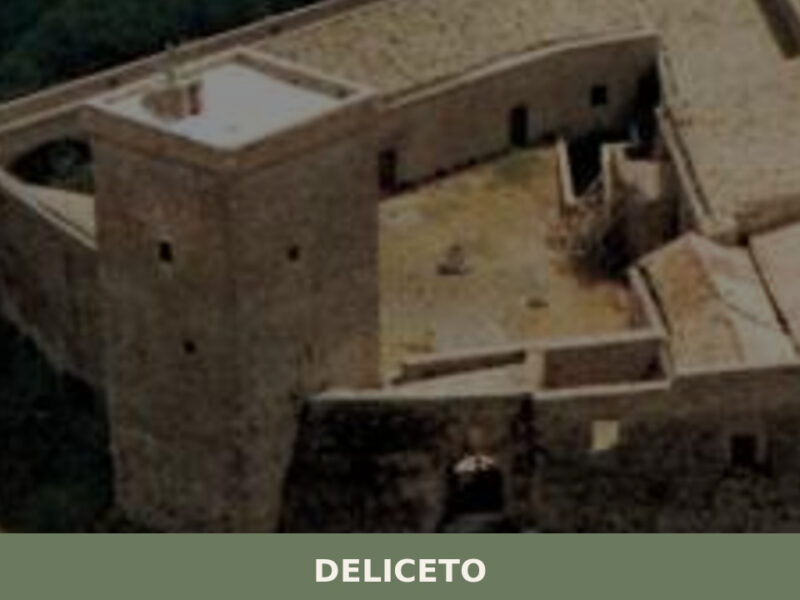
Deliceto rises at 575 metres on a ridge of the Subappennino Dauno, commanding the Tavoliere plain. A Norman castle, layered churches, and a stone-built historic centre define this compact Puglia hill village.
A ridge-top village above the Tavoliere plain in Foggia province, San Paolo di Civitate holds Roman ruins, Norman battlefield history, and an unhurried agricultural life.
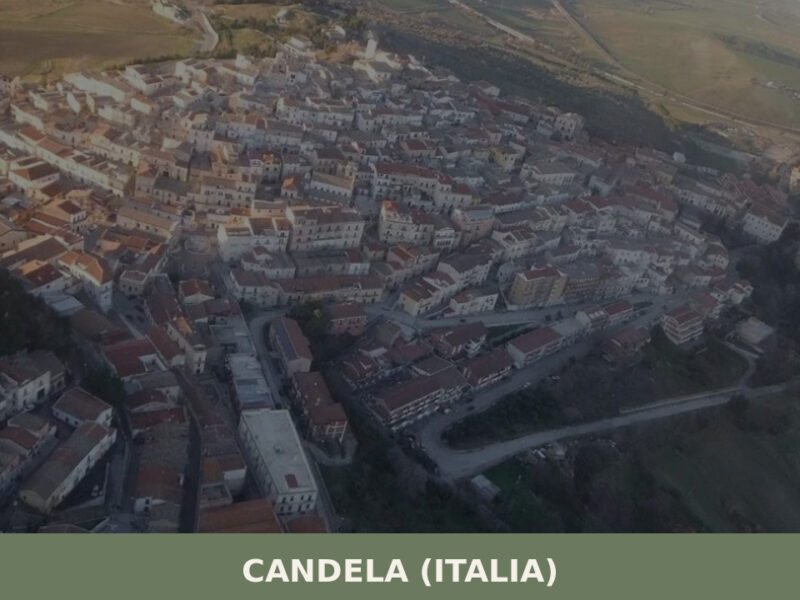
Discover Candela, a charming hilltop village in Puglia's Daunia hills. Explore medieval alleys, stunning panoramas, and authentic southern Italian flavours.
📝 Incorrect information or updates?
Help us keep the Foggia page accurate and up to date.


