


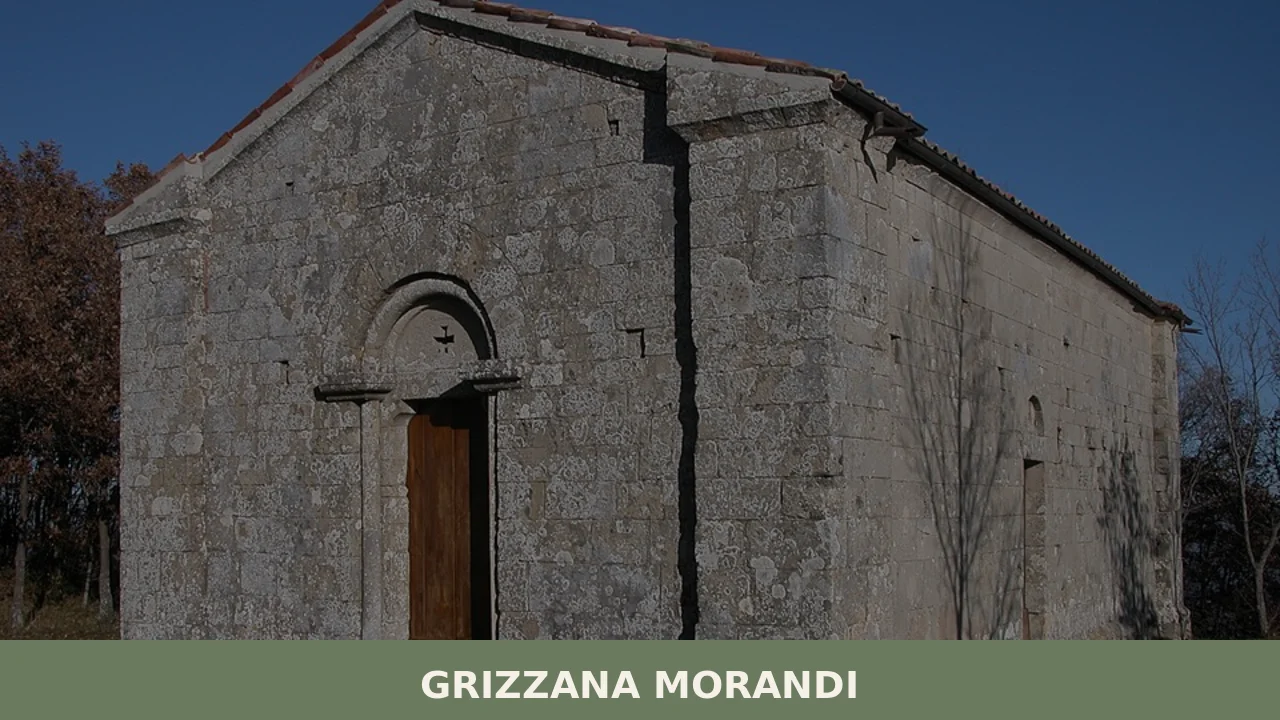
Grizzana Morandi
In 1929, the Bolognese painter Giorgio Morandi travelled to Grizzana for the first time — a scattered municipality in the Emilian Apennines that he would return to every summer for over thirty years. From the barns and tower-houses of this valley, he painted hundreds of landscapes, transforming the clay badlands and mountain ridgelines into universal […]
Discover Grizzana Morandi
In 1929, the Bolognese painter Giorgio Morandi travelled to Grizzana for the first time — a scattered municipality in the Emilian Apennines that he would return to every summer for over thirty years. From the barns and tower-houses of this valley, he painted hundreds of landscapes, transforming the clay badlands and mountain ridgelines into universal subjects of twentieth-century art. In 1985, the municipality added the painter’s surname to its official name: since then, it has been called Grizzana Morandi. Understanding what to see in Grizzana Morandi means crossing geological layers, Romanesque architecture, Gothic memories, and a relationship between landscape and painting unmatched anywhere else along the Bolognese Apennine ridge.
History and origins of Grizzana Morandi
The place name Grizzana first appears in notarial documents from the 10th century linked to the territory of the Diocese of Bologna.
The most widely accepted etymological theory traces the name to the Latin root “Gratianum” or “Gratiana”, referring to a Roman landed estate, probably connected to the gens Gratius. Some local scholars have proposed a Lombard origin, but the medieval archival documentation — partially preserved in the State Archive of Bologna — favours the late-Roman derivation. The area has been inhabited since the Bronze Age, as evidenced by finds in the nearby Reno valley and archaeological sites identified by the Regional Superintendence along the ridge between the Setta and Limentra streams.
During the Middle Ages, the territory was divided among several feudal lordships. The Alberti counts, a powerful comital family of Lombard origin based in Prato, controlled large portions of the Bolognese Apennines between the 11th and 13th centuries, including the castles and towers scattered across the heights of Grizzana. In 1219, the Commune of Bologna began a gradual erosion of mountain feudal powers, incorporating these lands into its own contado.
The territory suffered the consequences of the struggles between Guelphs and Ghibellines, and later the devastation of the Black Death in 1348, which severely struck the Apennine communities and drastically reduced their population. During the 15th century, the area stabilised under Bolognese administration, assuming a marginal but strategic role as a transit zone towards Tuscany.
The most traumatic historical event for Grizzana remains the Marzabotto massacre of 29 September – 5 October 1944, which also involved hamlets within the municipal territory. Troops of the 16th SS Panzergrenadier Division Reichsführer massacred hundreds of civilians in the localities of Monte Sole, an area that partly falls within the municipality of Grizzana Morandi.
The Monte Sole Historical Park, established in 1989, spans the municipalities of Marzabotto, Monzuno and Grizzana Morandi, and is today a place of remembrance recognised at European level. In the post-war period, the municipality experienced severe depopulation: from over 6,000 inhabitants in the 1950s, it has fallen to the current 3,939 residents, following a trajectory common to many villages of the Emilian Apennines.
What to see in Grizzana Morandi: 5 top attractions
1. Rocchetta Mattei
Built from 1850 onwards at the behest of Count Cesare Mattei, inventor of electrohomeopathy, Rocchetta Mattei stands on a rocky spur in the hamlet of Savignano, on the right bank of the Limentra river. The building is a unique case in Italian architecture: it blends Moorish elements inspired by the Alhambra in Granada, Gothic arches, neo-medieval decorations and Byzantine-style interiors, all built in successive phases until Mattei’s death in 1896.
After decades of neglect and an extensive restoration promoted by the Carisbo Foundation and the Municipality of Grizzana Morandi, the castle reopened to the public in 2015. Guided tours — by reservation — allow visitors to pass through the chapel, the courtyard of the lions and the count’s chamber, spaces that have no parallel in the regional architectural landscape.
2. Monte Sole Historical Park
The Monte Sole Historical Park covers approximately 6,300 hectares across the municipalities of Marzabotto, Monzuno and Grizzana Morandi, at altitudes ranging from 200 to 826 metres at the summit of Monte Sole. The park protects both its environmental heritage — chestnut woods, oak forests, upland meadows — and the sites connected to the 1944 massacre. The ruins of the churches of Casaglia and San Martino, the Caprara cemetery and the School of Peace, managed by the Monte Sole School of Peace Foundation, form a memorial route documented by information panels and oral archives. The hiking trails cross a hilly landscape where the structure of Apennine farming settlements is still legible, with drying huts, stone threshing floors and dry-stone walls.
3. Giorgio Morandi’s house-studio at Campiaro
In the hamlet of Campiaro, a few kilometres from the main town, stands the house where Giorgio Morandi spent his summers from 1929 to 1963, the year before his death. The building, a typical rural Apennine construction in stone, preserves the room the painter used as a studio, from which he observed the landscapes later translated into his paintings. The Municipality and the Emilia-Romagna Region promoted the restoration of the site as a museum space. From the first-floor window, one can recognise the outline of the badlands and hills that appear in dozens of paintings now exhibited at the Museo Morandi in Bologna, MoMA in New York and the Tate in London. The visit allows you to align the painter’s gaze with the actual landscape, an experience of rare critical value.
4. Pieve di Santa Maria Assunta in Vimignano
The Pieve di Vimignano dates back to the 12th century and is one of the best-preserved Romanesque buildings in the Bolognese Apennines. The structure, in local sandstone, has a single-nave plan with a semicircular apse oriented to the east, following medieval liturgical convention. The main portal is decorated with geometric motifs carved in stone. Inside, there are figured capitals and a stone holy water font datable to the 13th century. The pieve long served as the religious centre of a vast parish territory encompassing several hamlets. Today it can be reached along a dirt road through chestnut woods, a walk of about twenty minutes from the nearest parking area, which conveys the sense of isolation in which medieval Apennine communities lived.
5. Medieval tower of Montovolo and Sanctuary
The Montovolo complex, situated at 903 metres above sea level, comprises the Sanctuary of the Beata Vergine della Consolazione and the remains of a medieval tower that once commanded the Setta valley. The position was strategic: from here, the passage between Bologna and Tuscany through the Futa pass could be monitored. The sanctuary, rebuilt several times over the centuries, houses a wooden crucifix venerated since the 14th century. The ascent on foot from Grizzana to Monte Montovolo follows a marked trail of approximately three kilometres with an elevation gain of 350 metres, and offers an open view across the entire Apennine ridge, from the crests of Corno alle Scale to the Bolognese plain on days of optimal visibility.
What to eat in Grizzana Morandi: local cuisine and products
The cuisine of the Bolognese Apennines has rural roots and developed around the resources of chestnut woods, mountain pastures and terraced vegetable gardens. Unlike the Emilian plain, where the availability of soft wheat and pork shaped a richer gastronomy, here the tradition is more essential and closely tied to the seasons. The chestnut tree, for centuries called the “bread tree”, formed the dietary staple of the mountain population up until the post-war period.
The cuisine of Grizzana Morandi shares this foundation with the entire ridge between the Reno and Setta valleys, and reflects Tuscan influences due to the proximity of the Mugello.
Among the traditional local dishes, tagliatelle al ragù hold pride of place on the Sunday table, made with hand-rolled pasta and dressed with Bolognese ragù in its mountain version, which calls for a longer cooking time and a sparing use of tomato. Crescentine — also known as tigelle — are small discs of leavened dough cooked between terracotta or cast-iron plates, filled with a mixture of lard, garlic and rosemary known as cunza. During the cold months, chestnut polenta is prepared, served with ricotta or with pan-fried pancetta — a dish that documents the centrality of the chestnut in the area’s historical diet.
The Bolognese Apennines produce porcini mushrooms gathered in the woods between September and November, and Parmigiano Reggiano — whose PDO production area extends to the mountain zones of the Province of Bologna — is found here in its mountain varieties, aged at least twenty-four months, with a grainier texture and a more intense flavour compared to the lowland version. Chestnut honey, dark with a slightly bitter taste, is produced during the summer months when the chestnut groves flower along south-facing slopes.
Dried chestnuts, once stored in drying huts for the winter, are still processed to obtain flour used in the preparation of sweets such as castagnaccio and fritters.
The patronal feast of San Michele Arcangelo, on 29 September, is an occasion for food markets and gastronomic stalls. In autumn, various food festivals in the hamlets celebrate the mushroom and chestnut harvest, with stands where woodland products can be purchased directly from local foragers. The area’s restaurants offer seasonal menus that follow the harvest calendar: early spring vegetables, mushrooms and truffles in autumn, game meats in winter. The weekly market in Grizzana provides a point of purchase for cheeses and cured meats from surrounding farms.
As for wines, the territory of Grizzana Morandi does not fall within a dedicated DOC wine production zone, but the Province of Bologna includes the Colli Bolognesi DOC appellation, which covers Pignoletto, Barbera and Cabernet Sauvignon grown on the lower hillside slopes. In local trattorias, you will find bottles of Pignoletto dei Colli Bolognesi, a sparkling or still white wine with a fresh, slightly almond-like flavour, well-suited to accompany crescentine and local cold cuts.
When to visit Grizzana Morandi: the best time of year
Spring, from April to June, is the most suitable period for those planning to walk the trails of the Monte Sole Park and reach Montovolo on foot: daytime temperatures range between 15 and 22 degrees, the woods are in full bloom and the upland meadows are carpeted with wild orchids.
Rocchetta Mattei, which follows a seasonal opening calendar with visits by reservation, is generally accessible from the March weekend through to November. In summer, between July and August, the altitude of 547 metres ensures temperatures 4–5 degrees lower than on the Bolognese plain, though weekends can be crowded.
Autumn is perhaps the most compelling season: between September and November the chestnut groves change colour, food festivals multiply across the hamlets, and the mushroom harvest draws walkers from across the province. The feast of San Michele Arcangelo, on 29 September, marks the start of the autumn season with religious celebrations and markets. Winter is the quietest period: snow appears sporadically above 700 metres, many accommodation facilities close, but those seeking silence and bare landscapes will find ideal conditions for visiting Morandi’s places without other visitors, observing the contours of the hills in the same winter light the painter studied through his studio windows.
How to get to Grizzana Morandi
From Bologna, Grizzana Morandi is approximately 50 kilometres away, reachable in about one hour along the SS64 Porrettana state road, which follows the Reno valley in the direction of Porretta Terme.
The motorway alternative involves taking the Sasso Marconi exit on the A1 Autostrada (toll booth approximately 30 km from the village), then continuing south on the SS64. From Florence, the distance is approximately 110 kilometres via the A1 with the Rioveggio or Sasso Marconi exit. Bologna’s Guglielmo Marconi Airport is 55 kilometres away, reachable in just over an hour by car.
The Bologna–Porretta Terme railway line, operated by Trenitalia as a regional service, has a stop at Grizzana, active along the historic route inaugurated in 1864. Regional trains connect Bologna Centrale to Grizzana in approximately 50 minutes with hourly frequency on weekdays. From the railway station, the centre of the main town can be reached on foot in ten minutes. For those arriving without a car, the TPER bus service connects the main hamlets, but services are limited on holidays: it is advisable to check timetables on the official website of the Municipality or on the TPER platform before departure.
Other villages to discover in Emilia-Romagna
Visitors to Grizzana Morandi who wish to continue exploring the Emilian Apennines can head west, into the Province of Piacenza, where the landscape shifts register from the Bolognese clay formations to the narrow river valleys of the Trebbia and Aveto.
Cerignale is one of the least populated municipalities in Italy, a handful of stone houses close to the Trebbia torrent. Reachable from Grizzana Morandi in approximately two hours by car through the Bolognese and Piacenza mountains, Cerignale represents the extreme of Apennine depopulation, yet it retains an intact building fabric and a silence that has attracted new residents seeking rural life.
Even further west, on the border between Emilia-Romagna and Liguria, Zerba rivals Cerignale for the title of the region’s smallest municipality. Located in the upper Trebbia valley at over 800 metres above sea level, Zerba offers hiking trails towards Monte Lesima and the Ligurian-Emilian ridge.
A three-to-four-day itinerary could start from Grizzana Morandi, cross the Bolognese Apennines to Porretta Terme, climb towards the Trebbia valley via Cerignale and end at Zerba, covering approximately 180 kilometres of mountain roads and composing a complete narrative of the Emilian Apennines, from the memories of Morandi and the Resistance to the high-altitude pastures where Emilia fades into Liguria. For further reading on the territory’s history, the Wikipedia entry on Grizzana Morandi and the Touring Club Italiano portal offer additional documentary references.
In Emilia-Romagna More villages to discover
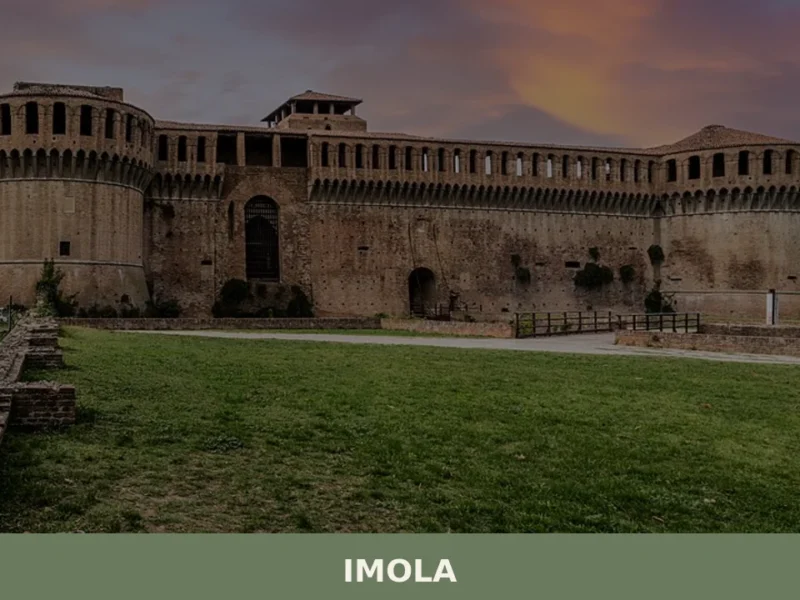
Imola
In 1953, on the track of the Autodromo Enzo e Dino Ferrari, Formula One cars raced in the Italian Grand Prix, placing Imola firmly in international motorsport history. But this city of 69,121 inhabitants, spread out at 47 metres above sea level along the banks of the River Santerno, had already existed for two thousand […]
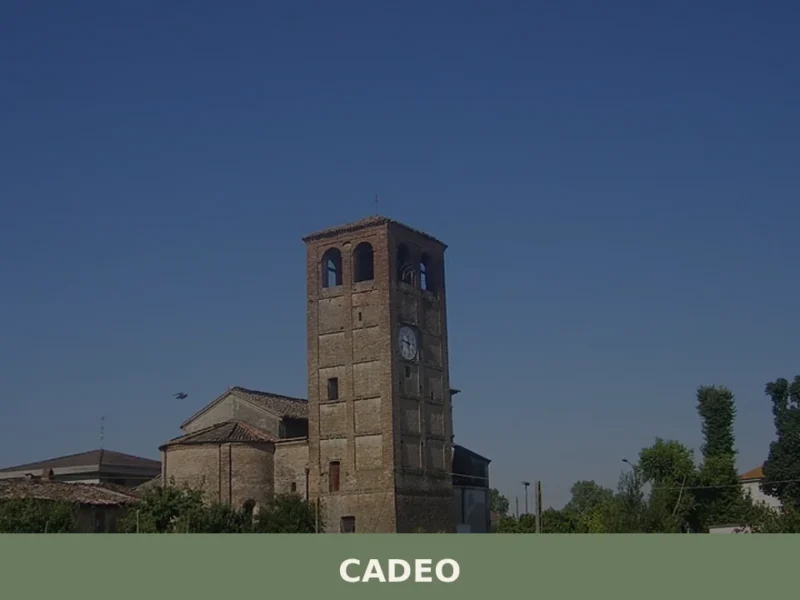
Cadeo
What to see in Cadeo: a Piacenza plain town at 65m with 6,035 residents. Discover Romanesque churches, historic villas and DOP cured meats. Plan your visit.
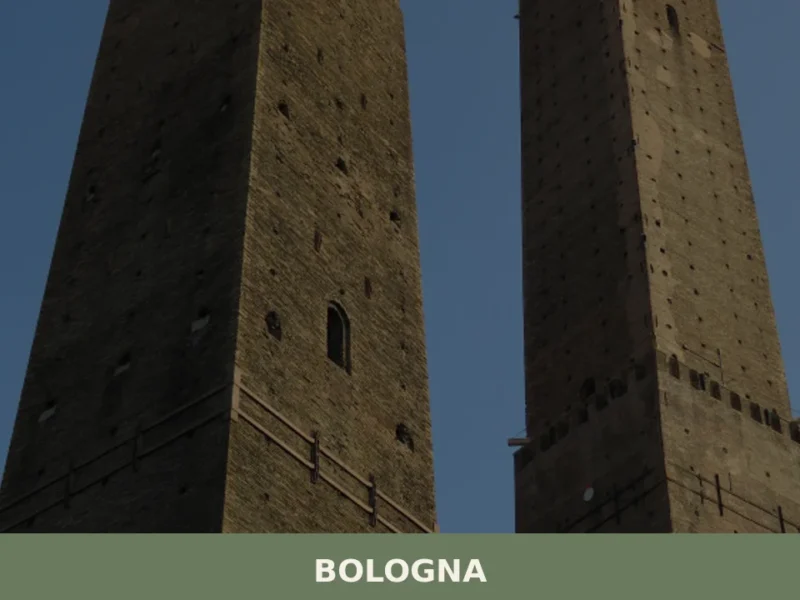
Bologna
What to see in Bologna: 388,000 inhabitants, UNESCO porticoes and the Two Towers. Plan your visit with our guide to tortellini, Mortadella IGP and top museums.


📝 Incorrect information or updates?
Help us keep the Grizzana Morandi page accurate and up to date.