


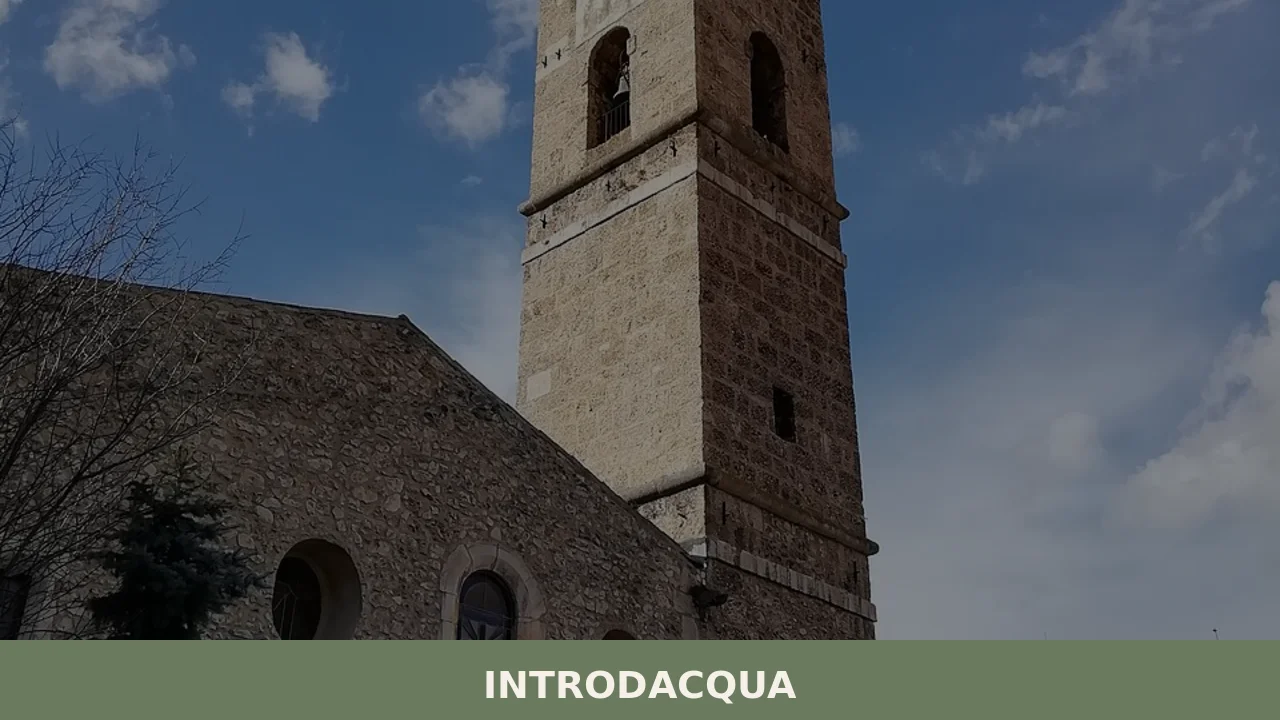
Introdacqua
At 642 metres above sea level, at the exact point where three watercourses — the Gizio, the Nera and the San Callisto — converge in the Peligna valley, stands Introdacqua, whose Latin name Intro Acquas records this confluence of waters. The village has a current population of 2,117 and retains an urban layout reflecting at […]
Discover Introdacqua
At 642 metres above sea level, at the exact point where three watercourses — the Gizio, the Nera and the San Callisto — converge in the Peligna valley, stands Introdacqua, whose Latin name Intro Acquas records this confluence of waters. The village has a current population of 2,117 and retains an urban layout reflecting at least eight centuries of layered development. Anyone wondering what to see in Introdacqua will find a territory where water has shaped the economy, topography and architecture, from public fountains to mills along the Gizio, to terraced gardens fed by medieval irrigation channels.
History and origins of Introdacqua
The place name Intro Acquas appears in medieval documents from the 11th century onward, but human settlement in the area dates back to the Italic period: the Peligna valley was the territory of the Peligni, an Oscan people whom Rome subjugated in the 3rd century BC after the Samnite Wars. The village’s position, on the eastern edge of the Sulmona basin, placed it along the routes connecting the Adriatic coast with the Apennine interior. The castle, of which sections of wall survive in the upper part of the settlement, was built between the 11th and 12th centuries, when Introdacqua was a fief of the Counts of Valva, later passing under the control of the Caldora family in the 15th century and subsequently the d’Aquino family.
In 1706, the Maiella earthquake damaged part of the village’s structures, necessitating reconstruction work that altered the appearance of several churches. During the 18th and 19th centuries, Introdacqua was an active centre for transhumant pastoralism along the drove roads descending towards the Tavoliere delle Puglie. The economy relied on wool processing, irrigated agriculture and oil production — the olive presses along the watercourse were still operating into the early decades of the 20th century. Post-war emigration drastically reduced the population, which in the 1951 census exceeded 4,000 residents, nearly double the current figure. For further information on the history of the municipality, you can consult the official website of Introdacqua.
The patron saint of the village is San Feliciano the Martyr, whose feast day still marks the civic and liturgical calendar of the community. The church dedicated to him represents the devotional focal point of the town and one of the key reference points of local identity.
What to see in Introdacqua: churches, towers and fountains
Ruins of the medieval castle
In the highest part of the village stand the remaining structures of the 11th–12th century fortification. Stretches of perimeter walls and the base of a circular tower are still visible. The position offers a direct vantage point over the Sulmona basin and the Maiella massif, useful for understanding the defensive and territorial surveillance function the castle served.
Church of San Feliciano
Dedicated to the village’s patron saint, this church features a stone portal and a single-nave interior with side altars remodelled after the seismic damage of the 18th century. Inside are wooden statues and paintings from the Abruzzese school. The façade, in its simplicity, is the first element you encounter when walking along the village’s main street.
Church of the Madonna delle Grazie
Located in the lower part of the settlement, it has a 15th-century architectural layout with later modifications. The apse retains traces of votive frescoes. The square bell tower is one of the vertical elements that define the village’s profile as seen from the provincial road climbing up from the valley.
The public fountains
Introdacqua has a system of stone fountains distributed at various points throughout the settlement, fed by the watercourses that cross the municipal territory. These structures — some with basins for washing and watering livestock — document the functional relationship between the village and its water resources, the very element that gave the town its name.
The old town centre and the mills
The streets of the old settlement follow the contours of the terrain with stone stairways and covered passages between houses. Along the course of the Gizio, in the lower part, the structures of former water mills can be identified — no longer operational but still legible in their architectural form. The route through the limestone houses reveals the spatial organisation of a centre linked to pastoralism and irrigated agriculture.
Food and local products of Introdacqua
The cuisine of Introdacqua belongs to the gastronomic repertoire of the Peligna valley and the Sulmona area, with certain distinctive features tied to the availability of water and the position at the boundary between mountain and valley floor. Traditional first courses include maccheroni alla chitarra, cut using a frame strung with metal wires and served with lamb ragù, and sagne e fagioli, a thick soup of irregularly shaped pasta with borlotti beans cooked in a clay pot. Arrosticini — skewers of diced sheep meat grilled on a fornacella — feature at every local festival and trattoria in the area. Lamb is also prepared cacio e ovo, an Easter recipe with a thick sauce of beaten eggs and grated pecorino. Among the desserts, confetti di Sulmona, produced in the nearby city (just 8 km away), are an integral part of local celebrations. Zafferano dell’Aquila DOP (L’Aquila saffron), cultivated on the Navelli plain to the north, reaches the village kitchens and is used in risottos and desserts.
The territory produces Montepulciano d’Abruzzo DOC and Trebbiano d’Abruzzo DOC, while local cheeses include pecorino di Scanno, aged in caves, and scamorza, both fresh and smoked. Aglio rosso di Sulmona (Sulmona red garlic), grown in the Peligna basin, is a biodiversity heritage product used in the preparation of sauces and preserves. Farro di Pratola Peligna (Pratola Peligna spelt), produced in the surrounding countryside, goes into winter soups. In local shops you can also find ferratelle (or pizzelle), thin wafers cooked in a double-plated iron and flavoured with anise. Centerba, a herb-based liqueur typical of Abruzzo, closes the meal on convivial occasions. The feast of San Feliciano and the summer festivals are the occasions when this local production comes together at outdoor stalls and kitchens, with dishes prepared according to traditional Peligna recipes.
When to visit Introdacqua: the best time
The altitude of 642 metres ensures cooler summers compared to the Adriatic coastal plain: average temperatures in July and August range between 18 and 28 degrees, making the summer period well suited for exploring the village and the surrounding trails. The feast of San Feliciano, celebrated on 24 January, is the main liturgical and civic event: processions, bonfires and communal food preparation enliven the village in the depths of winter, when snow may cover the surrounding peaks and temperatures drop below zero. Spring — from April to June — is the period when vegetation along the watercourses reaches its fullest growth and the terraced gardens come back to life.
Autumn brings the olive harvest and pressing at local mills, as well as the grape harvest in the vineyards of the basin. October and November, with clear days and dry air, allow sharp views of the Maiella massif to the east and Mount Morrone to the north-east. Anyone planning to combine the visit with other villages in the area should allow at least two days, using Sulmona as a base — the city is 8 km away and offers accommodation and transport connections. For up-to-date information on events and local activities, you can consult the Wikipedia page dedicated to Introdacqua.
How to get to Introdacqua
By car, Introdacqua is reached from the A25 Roma–Pescara motorway, Sulmona–Pratola Peligna exit, continuing for about 10 km along the provincial road in the direction of Scanno. From Rome the distance is approximately 150 km (one hour and forty minutes’ drive), from Pescara approximately 110 km (one hour and twenty minutes). The nearest railway station is Sulmona, served by the Rome–Sulmona–Pescara line and by the Transiberiana d’Italia (Sulmona–Isernia), one of the most well-known scenic railways in the peninsula. From Sulmona, local buses and taxis connect to the village. The nearest airport is Abruzzo Airport in Pescara, approximately 115 km away. Rome Fiumicino Airport is approximately 190 km away. The village is easily explored on foot, with parking available in the lower part of the settlement, from which the old town centre can be reached in a few minutes’ walk. The Touring Club Italiano includes the Peligna valley among its recommended itineraries for inland Abruzzo.
Other villages to discover in Abruzzo
For those looking to explore the Abruzzese hinterland beyond the Peligna valley, the territory offers dozens of villages with different histories and layouts. Cansano, a few kilometres south-east of Introdacqua, sits on the slopes of Mount Morrone and retains a limestone old town with a compact structure linked to transhumant pastoralism. Its territory includes the archaeological site of the Italic village of Ocriticum, which documents the presence of the Peligni in the area as early as the pre-Roman era.
Moving towards the province of Chieti, in the Val Sinello, you reach Carunchio, a mountain village at about 640 metres — practically the same altitude as Introdacqua — but with a different landscape and economy, marked by proximity to the sea and olive cultivation. Comparing these two centres illustrates the geographic and cultural variety of inland Abruzzo, where a few dozen kilometres of distance correspond to marked differences in dialect, cuisine and the organisation of urban spaces.
In Abruzzo More villages to discover
Guilmi
What to see in Guilmi, a hill village at 674 m in Chieti province with 408 residents. Visit the Church of San Nicola, the medieval centre and taste PAT products from the Frentani area.
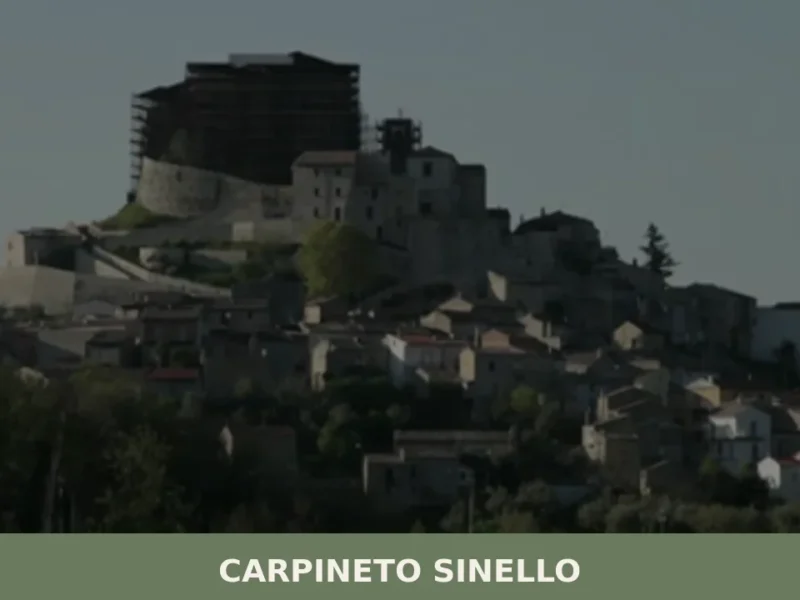
Carpineto Sinello
At 381 metres above sea level, on the ridge line separating the Sinello valley from the Appello stream valley, Carpineto Sinello has just 480 inhabitants today — less than a fifth of the nearly two thousand recorded in early twentieth-century censuses. The demographic data tells the story of a hilltop centre in the Chieti area […]
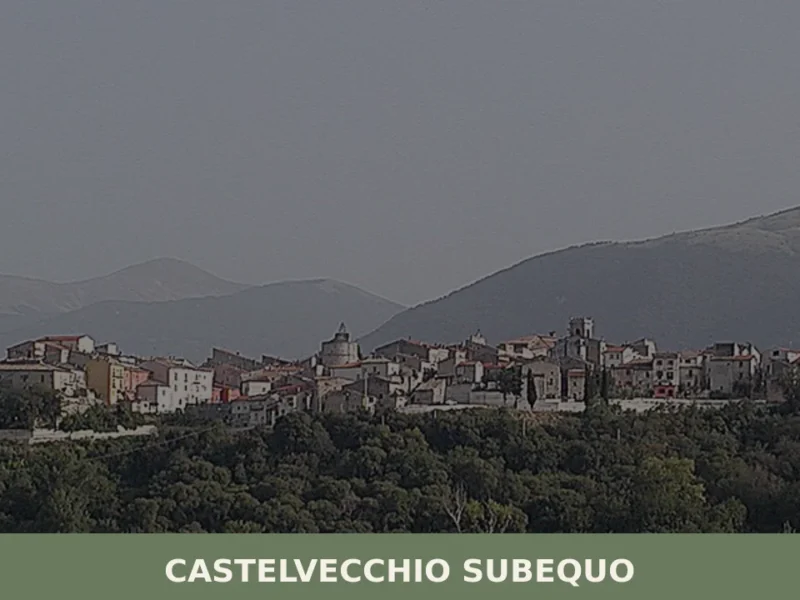
Castelvecchio Subequo
The convent of San Francesco in Castelvecchio Subequo preserves a cycle of fourteenth-century frescoes attributed to painters of the Giottesque school, among the few surviving examples in the central Apennine area. This fact alone is enough to justify a detour from the nearby A25 motorway towards a town of 832 inhabitants, at 490 metres above […]


📝 Incorrect information or updates?
Help us keep the Introdacqua page accurate and up to date.