


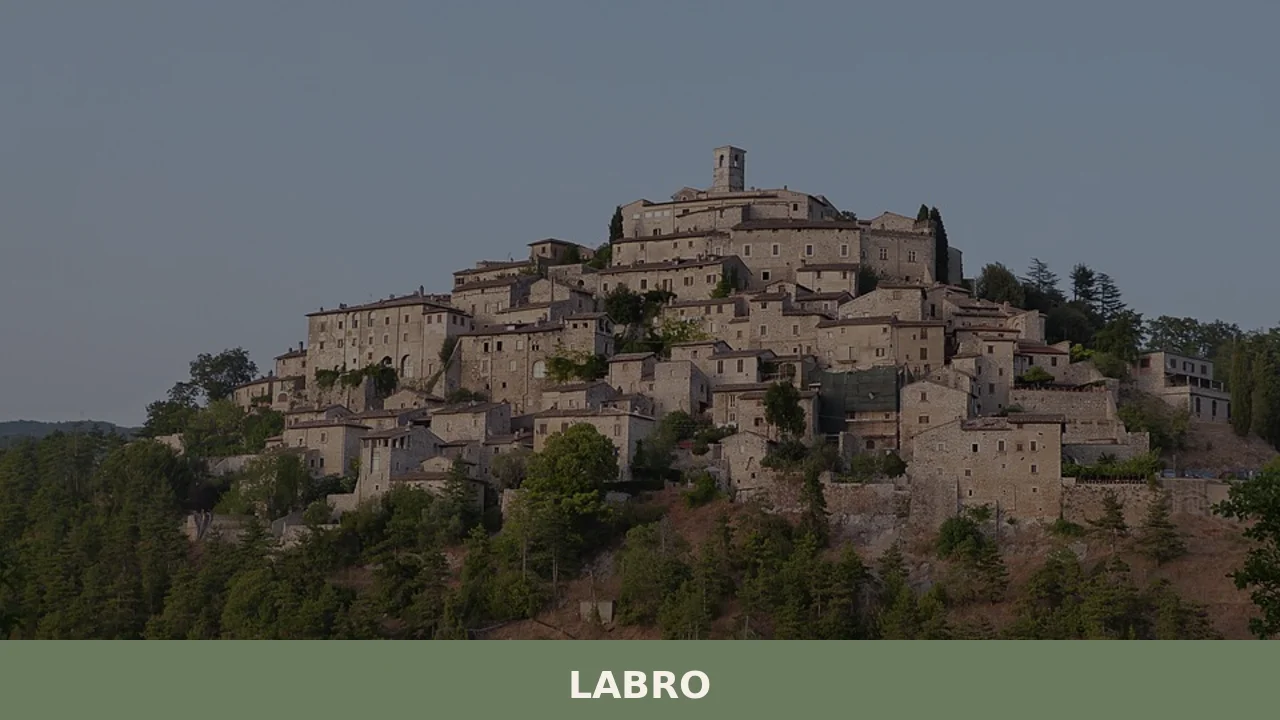
Labro
What to see in Labro: medieval castle, Lake Piediluco views and PAT-certified guanciale in a 360-person village at 628 m. Plan your visit to this Rieti province gem.
Discover Labro
Labro has a population of 360 and sits at an altitude of 628 metres, in the heart of the province of Rieti, overlooking Lake Piediluco.
The village belongs to a territory with continuous human presence since the medieval period, and anyone wondering what to see in Labro will find a concentration of medieval architecture, lakeside scenery and quality local food products.
Its small size is deceptive: every alley, every doorway and every tower reflects centuries of history built stone by stone, in an area that connects Lazio to the border with Umbria.
History and Origins of Labro
The earliest documented references to the name Labro date from the medieval period, when the castle and village were under the control of the powerful noble families competing for dominance over the upper Valle del Velino.
The territory, strategically positioned at 628 metres above sea level and close to the Lake Piediluco basin, was the subject of several feudal investitures during the twelfth and thirteenth centuries.
The urban layout visible today reflects the typical settlement model of medieval defensive villages: houses built against the walls, watchtowers, and a compact plan designed to withstand sieges.
In the late Middle Ages, the village passed through the hands of various Lazio noble dynasties before entering the orbit of the Papal State, which maintained control over this part of Lazio for several centuries.
Dependence on the Holy See left a lasting mark on local ecclesiastical organisation, leading to the construction and consolidation of religious buildings that still serve as the main points of reference in the village today.
During the modern era, Labro experienced the gradual depopulation that affected many Apennine communities — a process accelerated in the nineteenth century by Italian unification and the administrative reorganisation of the Rieti area.
In the twentieth century, Labro underwent a significant transformation thanks to a restoration project promoted by a Belgian entrepreneur, Henry Waterkeyn, who from the 1960s onwards purchased a large portion of the village’s buildings and launched a systematic programme of architectural recovery.
This initiative, documented by numerous historical and tourism sources, transformed Labro from a near-abandoned settlement into a reference point for the conservation of medieval built heritage, and helped establish this small centre in the province of Rieti as an important case study in the broader debate on the recovery of Italy’s historic villages.
What to See in Labro: Main Attractions
Labro Castle
The castle dominates the entire urban fabric of the village and represents the most architecturally significant structure in the historic centre. Dating from the medieval period, it was modified on several occasions over the centuries, acquiring the distinctive features that characterise it today: corner towers, thick perimeter walls and a monumental entrance leading into the inner courtyard.
The restoration work carried out in the latter half of the twentieth century restored the building’s historical legibility, making it one of the most notable examples of castle architecture in the province of Rieti.
It is worth pausing outside to observe how the castle interacts with the surrounding built fabric.
The Medieval Walls and Watchtowers
Labro’s perimeter walls survive largely in their original form, with stretches of curtain wall and several watchtowers that punctuate the village’s profile above the valley below.
Walking along the outer edge of the walls reveals the defensive logic that shaped the construction of the village: each tower was positioned to ensure visibility over Lake Piediluco and the access routes into the Rieti basin. The restoration work consolidated the wall surfaces without altering their appearance, preserving the local limestone masonry that defines the historic built fabric of this territory.
The Church of San Pancrazio
Dedicated to the village’s patron saint, the Church of San Pancrazio is Labro’s principal place of worship and the focal point of the community’s religious life.
The patron saint’s feast day falls on 12 May, when the building becomes the centre of local celebrations. The church has a simple structure, consistent with the understated character of religious architecture in Lazio’s mountain villages, and contains decorative elements and furnishings that document centuries of local devotion.
Anyone exploring what to see in Labro from the perspective of religious heritage should not overlook this building, which holds the collective memory of the entire community.
The View over Lake Piediluco
From the upper part of the village and the natural viewpoints that open along the perimeter walls, Lake Piediluco extends in its entirety towards the Umbrian border.
The lake — the second largest in Lazio — offers a lakeside landscape that changes with the seasons and the light of the day, and represents one of the most important geographical features for understanding Labro’s historical role as a point of control over the routes towards the Valle del Nera.
The position at 628 metres provides an elevated perspective from which the entire shape of the lake basin and the surrounding hills can be read clearly.
The Restored Historic Centre
The historic centre of Labro as a whole constitutes a unified attraction, the result of the systematic restoration programme begun in the 1960s. The alleyways, stone doorways, external staircases and covered passages form a coherent system that conveys the image of a medieval settlement recovered with philological rigour.
Every architectural element — from the eaves to the window surrounds — received careful attention during the restoration works.
Anyone spending time exploring what to see in Labro on foot through the historic centre will encounter a sequence of architectural views that document the traditional building techniques of the Rieti area.
Local Cuisine and Products of Labro
The cuisine of the Labro area belongs to the gastronomic tradition of the province of Rieti, a territory that has historically built its food culture around pork, pulses and sheep’s cheese.
The mountain setting and proximity to the Apennines encouraged a food culture centred on preservation and transformation: cured meats, semi-hard cheeses and preparations based on local cereals have been at the heart of the Rieti table for centuries. The proximity to the Umbrian border has introduced culinary influences that appear in certain fresh pasta preparations and pulse soups.
Among the most representative dishes of the area are spelt and borlotti bean soups, cooked with a lard soffritto and flavoured with rosemary and garlic.
Pasta all’amatriciana, which has its roots in the nearby town of Amatrice, features on many tables across the Rieti area and uses guanciale as its essential ingredient.
Lamb alla cacciatora, prepared with olives, capers and tomato, is a typical second course for feast days, while aged sheep’s cheeses are traditionally served at the end of a meal with chestnut honey or wild-berry preserves.
Among the recognised-designation products associated with this territory, certified sources confirm the presence of three PAT products (Traditional Agri-food Products): Cacio fiore (PAT) — municipalities: Labro, Rieti, Leonessa, Amatrice; Guanciale (PAT) — municipalities: Labro, Rieti, Amatrice, Leonessa, Accumoli; Guanciale amatriciano (PAT) — municipalities: Amatrice, Accumoli, Labro, Leonessa.
Cacio fiore is a fresh cheese produced by vegetable rennet coagulation, made from whole sheep’s milk using rennet extracted from wild artichoke or thistle flowers.
Guanciale, cut from the pig’s cheek, is cured with salt, black pepper and local spices for a period that varies according to family tradition.
The best season to find these products sold directly by producers is autumn, when several agri-food fairs dedicated to cured meats and cheeses from the central Apennines are held in the surrounding area. The local markets of the province of Rieti offer direct access to producers, who sell aged guanciale and cacio fiore mainly in the weeks between October and December. Visitors to the village in spring, around the feast of San Pancrazio on 12 May, may find stalls selling local products in the squares of the historic centre.
Festivals, Events and Traditions of Labro
The principal religious event in Labro is the feast of San Pancrazio, celebrated on 12 May each year.
San Pancrazio, a Christian martyr venerated throughout the Catholic tradition, is the village’s patron saint, and his feast day marks one of the most significant moments in community life.
The celebrations include a solemn mass in the parish church dedicated to him, followed by a procession through the streets of the historic centre, with the statue of the saint carried on the shoulders of the faithful.
The participation of the local community — which numbers 360 inhabitants — gives the celebration a gathered, direct quality that is far removed from the large-scale events of urban centres.
The village’s traditions are intertwined with the agricultural calendar and the seasonal rhythms of the Rieti Apennines. The festivities associated with the pig-processing cycle, traditionally concentrated in November and December, serve as a moment of social gathering rooted deep in local rural culture. On these occasions, the production of guanciale and other traditional cured meats becomes a collective activity, with families coming together to follow practices passed down from generation to generation.
The patron saint festivals of nearby villages, including those celebrated across the Rieti area during summer, offer further opportunities for visitors wishing to follow the local traditions calendar.
When to Visit Labro and How to Get There
The best time to visit Labro runs from spring through to late autumn.
Spring, particularly between April and May, brings mild temperatures, the chance to attend the patron saint’s feast on 12 May, and a lakeside landscape renewed by the season.
Summer temperatures remain moderate thanks to the altitude of 628 metres, and July and August are the busiest months for visitors combining a trip to the village with a day at Lake Piediluco. Autumn is the ideal season for those seeking local products: cheeses and cured meats are at their best, and the September and October light brings out the colours of the Apennine landscape.
For up-to-date information on events and municipal services, the Labro municipal website is the official reference point.
By car, the most direct route from the A1 Milan–Naples motorway uses the Orte exit, while the A24 Rome–L’Aquila motorway offers the Rieti Est exit, approximately 15 kilometres from the village. Travellers coming from Rome should follow the Via Salaria to Rieti and then take the SP79 towards Piediluco.
The nearest railway station is Terni, about 12 kilometres from Labro as the crow flies, connected to the national rail network and reachable from Roma Termini in under an hour and a half.
For those travelling by air, the most convenient departure point is Rome Fiumicino Airport, approximately 120 kilometres away, from which the village can be reached in around one hour and forty minutes via the ring road and then the A1 to Orte.
Other Villages to Explore in Lazio
Those who have enjoyed discovering what to see in Labro and wish to continue exploring Lazio’s small historic centres have several worthwhile options within the same region.
North of Viterbo, Lubriano is a Tuscia village overlooking the Valle dei Calanchi, characterised by a well-preserved medieval urban fabric and a geologically distinctive landscape, with tufa cliffs descending towards the valley floor.
Also in the Viterbo area, Barbarano Romano stands out for its position on a tufa spur and for its proximity to the Marturanum Regional Park, which offers nature trails through Etruscan necropolises and oak woodland.
Moving towards the Tiber valley, Bassano in Teverina is a medieval centre that retains its original walls and a clearly legible castle set within the Tuscia hill landscape, while Villa San Giovanni in Tuscia offers the experience of a smaller village that still sees relatively little mass tourism, with small-scale historic buildings and a close relationship with the surrounding agricultural landscape.
Combining these villages into a multi-day itinerary through northern Lazio is entirely practicable by car, with manageable distances between each centre and the opportunity to move between different landscapes — from the volcanic Viterbo area to the Apennine corridor of the Rieti province — without covering great distances.
In Lazio More villages to discover
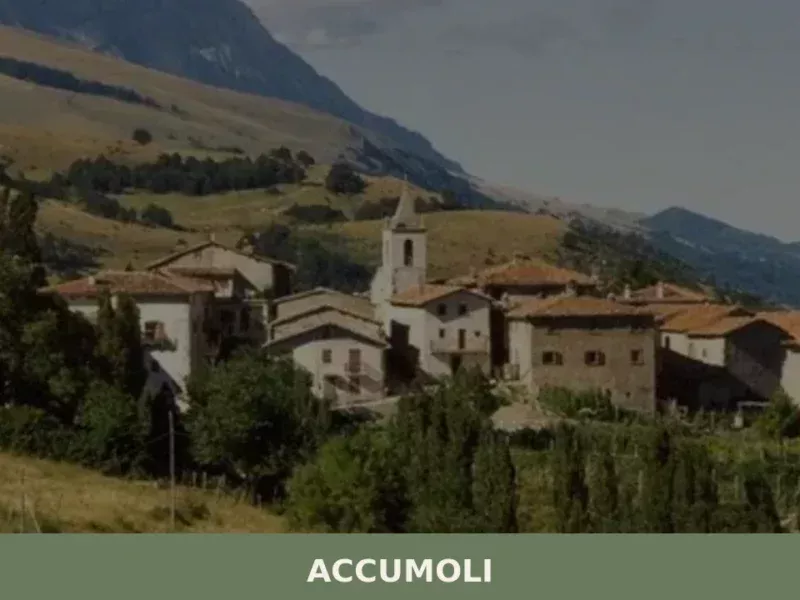
Accumoli
A chill, thin air descends with the late afternoon sun, drawing long shadows across the uneven cobblestones of the piazza. The scent of woodsmoke, faint but persistent, mingles with the dry fragrance of ancient stone. At 855 meters above sea level, the village of Accumoli, nestled within the Rieti province of Lazio, feels like a […]
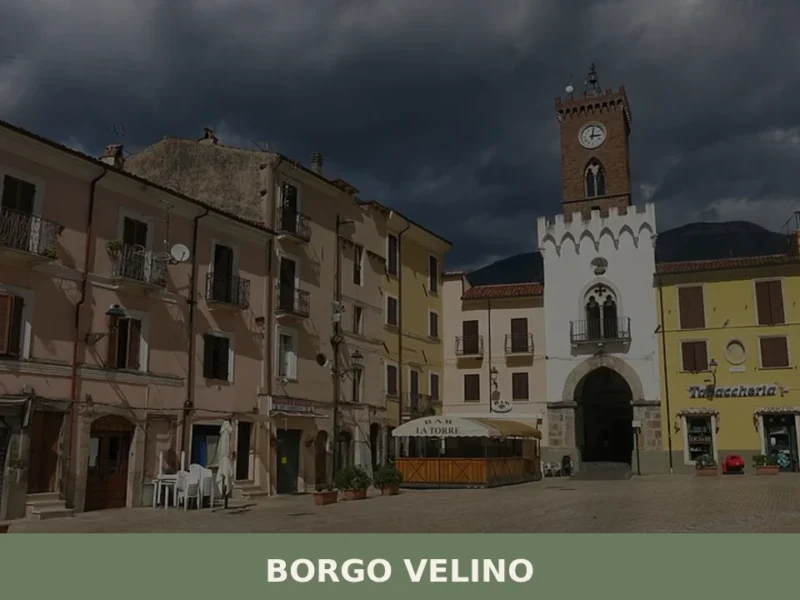
Borgo Velino
What to see in Borgo Velino: discover 5 key attractions in this village of 996 inhabitants at 460m. Explore Palazzo Brancaleoni and taste Cacio fiore. Plan your visit now.
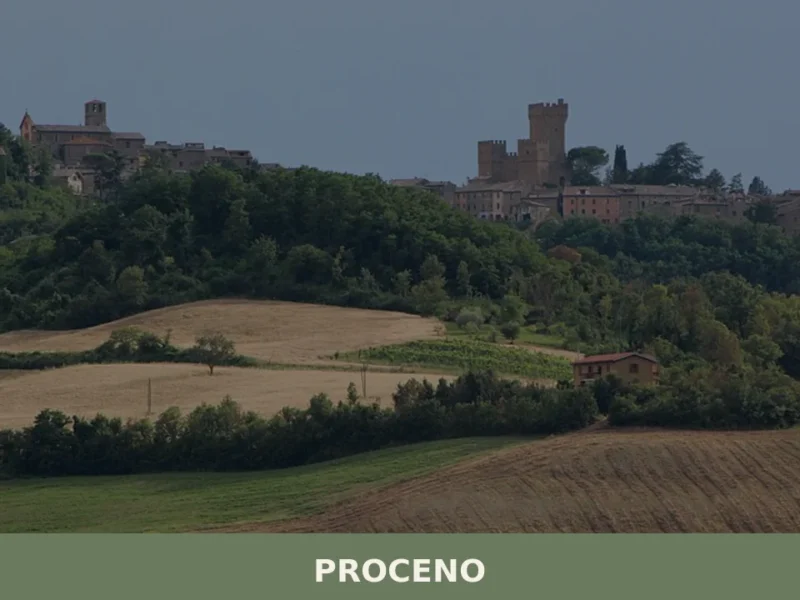
Proceno
A 418 meters above sea level, in northern Lazio, the village of Proceno developed around a Fortress documented as early as the 12th century. This architectural element, central to the settlement’s development, still defines the structure of the historic center today. With a population of 519 inhabitants, Proceno is part of the Viterbo Tuscia region, […]


📝 Incorrect information or updates?
Help us keep the Labro page accurate and up to date.