


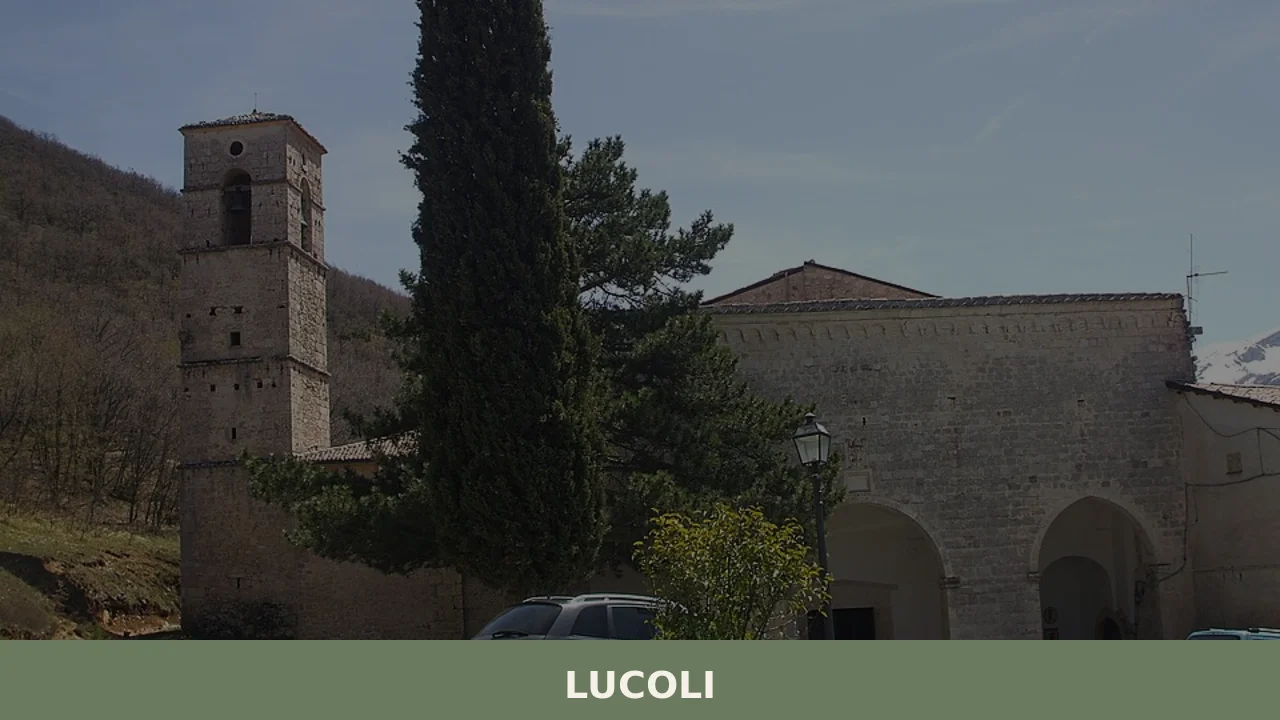
Lucoli
Lucoli is not a compact town centre but a scattered municipality: 839 inhabitants spread across seventeen hamlets along the southern slopes of the Gran Sasso and the Velino-Sirente mountain group, at 956 metres above sea level in the province of L’Aquila. Understanding what to see in Lucoli means crossing a vast, fragmented territory where each […]
Discover Lucoli
Lucoli is not a compact town centre but a scattered municipality: 839 inhabitants spread across seventeen hamlets along the southern slopes of the Gran Sasso and the Velino-Sirente mountain group, at 956 metres above sea level in the province of L’Aquila. Understanding what to see in Lucoli means crossing a vast, fragmented territory where each cluster preserves a church, a fountain, a wash house — fragments of a rural organisation that the 2009 earthquake severely damaged and that reconstruction is slowly restoring.
History and origins of Lucoli
The name Lucoli probably derives from the Latin lucus, meaning sacred wood, a reference consistent with the dense beech and oak forests that still cover much of the municipal territory today. The first documented mention dates to the Norman-Swabian period, when the area fell within the holdings of the Benedictine Abbey of San Giovanni Battista, founded according to sources in the 12th century. The Cistercian monks managed the economic and spiritual life of the area for centuries, reclaiming land, regulating the use of pastures and organising transhumance towards the Tavoliere delle Puglie plain.
In the 14th century, Lucoli came under the administrative system of L’Aquila, as one of the locali of the contado, contributing to the foundation and defence of the city of L’Aquila. This relationship with the provincial capital profoundly shaped the territory’s economy: timber, wool and cheeses made their way downhill along drovers’ roads and mule tracks, while goods and regulations arrived from L’Aquila. The earthquake of 1703 caused severe damage to religious buildings, many of which were rebuilt in Baroque forms. The earthquake of 6 April 2009 repeated that pattern with devastating effects, rendering several historic buildings unusable, some of which are still undergoing restoration.
The patron saint festival of San Giovanni Battista, celebrated on 24 June, remains the main collective event of the municipality and has roots directly linked to the dedication of the Benedictine abbey.
What to see in Lucoli: 5 main attractions
1. Abbey of San Giovanni Battista
Founded in the 12th century by the Benedictines and later taken over by the Cistercians, the abbey stands in the hamlet of Collimento. The façade retains a round-arched Romanesque portal, while the interior — remodelled after the 1703 earthquake — features stucco altars and an 18th-century organ. The damage caused by the 2009 earthquake required structural interventions that are still partially underway.
2. Church of San Menna in Colle di Lucoli
Dedicated to the hermit saint venerated in the Marsica and Vestina areas, the church preserves a medieval layout with masonry in ashlar blocks of local stone. The building, modest in size, has a single nave and traces of votive frescoes datable to between the 15th and 16th centuries. Its position, on a rise open towards the plain, affords a wide view over the L’Aquila basin.
3. The hamlet system and historic fountains
Travelling through Lucoli’s seventeen hamlets means observing a catalogue of Apennine rural architecture: stone houses with external staircases, communal ovens, cast-iron and stone fountains dating from the 19th and early 20th centuries. Each cluster is small — some hamlets have fewer than twenty residents — but maintains a recognisable layout with a square, a church and a drinking trough.
4. Velino-Sirente trails and Monte Ocre
The municipal territory borders the Sirente-Velino Regional Park and includes hiking routes that climb towards Monte Ocre (1,450 m) and the ridges of the Velino. The trails pass through beech forests, clearings used for summer grazing and areas where the presence of the Apennine wolf has been documented. In winter, some itineraries are suitable for cross-country skiing and snowshoeing.
5. Campo Felice and the ski areas
The Campo Felice ski resort, reachable from the territory of Lucoli, offers approximately thirty kilometres of slopes between 1,500 and 2,064 metres in altitude. Operating since the late 1960s, it is one of the most popular ski areas in the central Apennines. In summer the lifts become a starting point for high-altitude hikes towards the karst plateau of Le Rocche.
Food and local products
The cuisine of Lucoli follows the repertoire of L’Aquila’s mountain cooking: legume soups — lentils and grass peas grown in family vegetable gardens — handmade pasta such as sagne and maccheroni alla chitarra, dressed with mutton ragù or tomato sauce. Arrosticini, prepared with cubed sheep meat and cooked on narrow charcoal grills called furnacelle, appear at every hamlet festival. The local pecorino, made with milk from flocks raised on the Sirente pastures, is aged in natural caves and cellars for three to six months.
Notable products from the territory include mountain honey — wildflower and sulla varieties — and saffron from the Navelli plateau, a PDO product cultivated in the neighbouring L’Aquila area. The gathering of porcini mushrooms and summer black truffle supplements the family economy between summer and autumn. The trattorias and agriturismos in the municipal territory are few but work almost exclusively with short-supply-chain ingredients.
When to visit Lucoli: the best time
Winter, from December to March, is the season for those seeking snow: Campo Felice generally opens its lifts in the second half of December, and snowfalls at one thousand metres are frequent between January and February. The average winter temperature hovers around 0 °C in the valley floor, with lows that regularly drop below -5 °C.
Summer offers the opposite conditions: between June and September daytime temperatures rarely exceed 28 °C, making the territory well suited for hiking and mountain biking. The feast of San Giovanni Battista on 24 June is the most widely attended event. In autumn, the beech forest covering the slopes above the hamlets changes colour between October and November, with a dominance of intense reds and yellows visible even from the provincial road connecting Lucoli to L’Aquila.
How to reach Lucoli
- By car: from the A24 Roma–L’Aquila motorway, take the L’Aquila Ovest exit, then follow the SS 17 towards Lucoli. Distance from the toll booth: approximately 15 km, around 20 minutes’ drive. From Rome the total journey is about 120 km (one hour and thirty minutes). From Pescara, via the A25 and A24, approximately 110 km.
- By train: the nearest railway station is L’Aquila, served by the Terni–L’Aquila–Sulmona regional line. From there it is necessary to continue by car or with local transport services.
- By air: the closest airport is Pescara (Abruzzo Airport), approximately 120 km away. Rome Fiumicino Airport is about 150 km away.
What to see in Lucoli and in nearby villages in Abruzzo
Those exploring the L’Aquila hinterland can extend their itinerary northwards, where Barete lies just a few kilometres from Lucoli along the road heading up towards Amatrice. Its territory, also marked by the 2009 earthquake, offers a complementary cross-section of the rural architecture of the L’Aquila basin, with inhabited clusters arranged along the Aterno valley.
For those wishing to combine mountains and coast, the distance between Lucoli and the Teramo shoreline can be covered in under two hours. Alba Adriatica, on the northern Abruzzo coast, represents the other geographical extreme of the region: a sandy beach, a cycling promenade and an economy geared towards seaside tourism. The contrast with Lucoli’s 956 metres is stark and illustrates the variety of a territory that shifts from high-altitude pastures to the coastline in just a few kilometres.
In Abruzzo More villages to discover
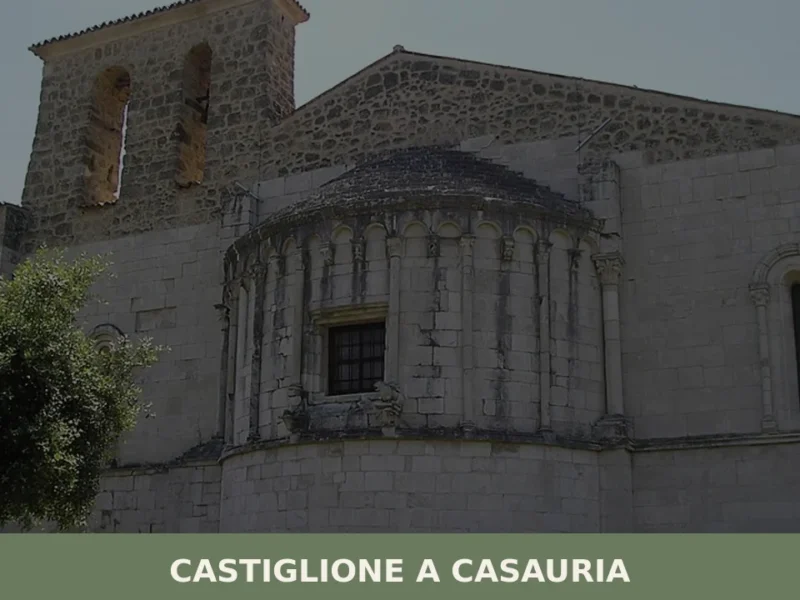
Castiglione a Casauria
The Abbey of San Clemente a Casauria, founded in 871 by Emperor Louis II, stands just a few hundred metres from the town centre and ranks among the most important Romanesque monuments in central Italy. It is this monastic presence that defines the identity of Castiglione a Casauria, a village of 701 inhabitants in the […]
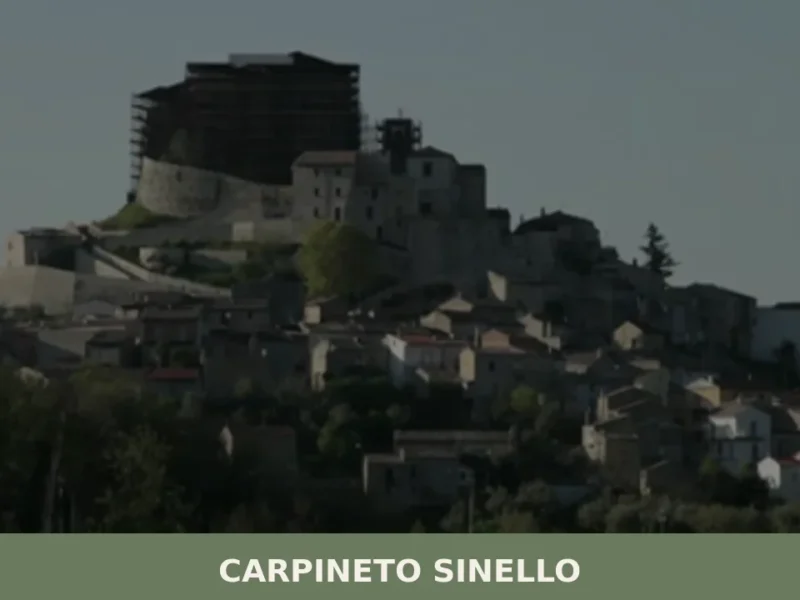
Carpineto Sinello
At 381 metres above sea level, on the ridge line separating the Sinello valley from the Appello stream valley, Carpineto Sinello has just 480 inhabitants today — less than a fifth of the nearly two thousand recorded in early twentieth-century censuses. The demographic data tells the story of a hilltop centre in the Chieti area […]
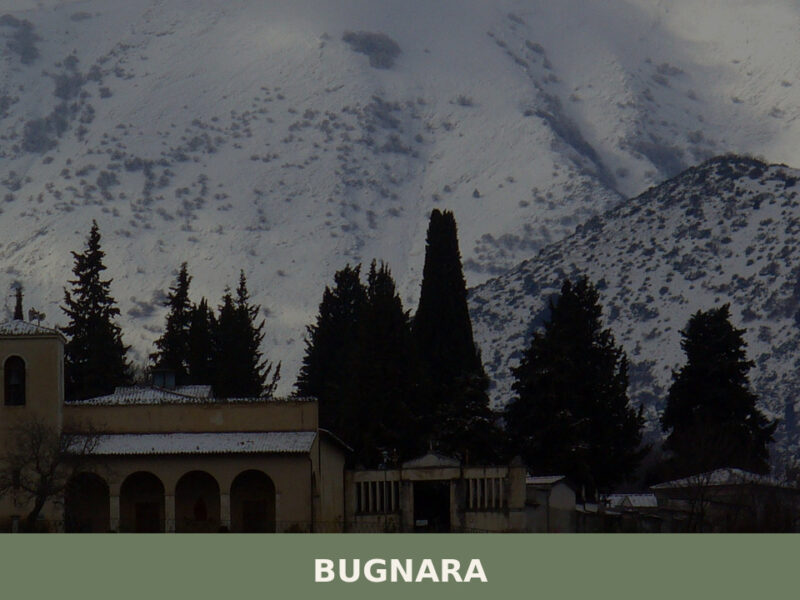
Bugnara
Morning light falls across the Sagittario valley in long, amber strokes, catching the limestone walls of a settlement that has watched over this corridor of central Abruzzo for the better part of a millennium. Bells from a church tower mark the hour, their sound flattening against the surrounding slopes before fading. The streets are narrow, […]


📝 Incorrect information or updates?
Help us keep the Lucoli page accurate and up to date.