


Alba Adriatica
 Sea
Sea
Until 1956, this locality did not exist as an independent municipality: it was a hamlet of Tortoreto, known as Tortoreto Stazione because of the railway stop on the Adriatic line. The administrative separation created a coastal town that today has 12,760 inhabitants spread across a territory sitting just 5 metres above sea level. Understanding what […]
Discover Alba Adriatica
Until 1956, this locality did not exist as an independent municipality: it was a hamlet of Tortoreto, known as Tortoreto Stazione because of the railway stop on the Adriatic line. The administrative separation created a coastal town that today has 12,760 inhabitants spread across a territory sitting just 5 metres above sea level. Understanding what to see in Alba Adriatica means engaging with a short but dense history, built on the fine sand of the Teramo coastline and on a seafront promenade that in the 1960s reshaped the tourism profile of the entire Abruzzo shoreline.
History and origins of Alba Adriatica
The birth of the municipality dates back to a referendum in 1956, when the residents of Tortoreto’s coastal area voted for administrative autonomy. The chosen name — Alba Adriatica — has no ties to the Roman era; it was a deliberate decision by the new municipal council, which wanted to evoke a beginning, a dawn facing the sea. The patron saint is Saint Euphemia of Chalcedon, a fourth-century martyr whose feast day falls on 16 September and traditionally marks the close of the summer season.
Before gaining autonomy, the territory was a nearly uninhabited stretch of coast, used for agriculture and linked to the inland hilltop settlement of Tortoreto Alto. The construction of the Bologna–Lecce railway in the second half of the nineteenth century transformed the area: a first residential cluster developed around the station, then grew with the arrival of seaside tourism in the post-war period. During the 1950s and 1960s, population growth was rapid, fuelled by the hotel industry and by the proximity to the Marche region, which brought streams of holidaymakers from the province of Ascoli Piceno.
Today Alba Adriatica belongs to the province of Teramo and retains a predominantly tourism-driven identity. The urban fabric reflects its young age: there are no medieval old towns, but rather a regular grid of streets running parallel to the sea, typical of recently founded towns along the Adriatic coast.
What to see in Alba Adriatica: 5 attractions and places to discover
1. The Lungomare Marconi
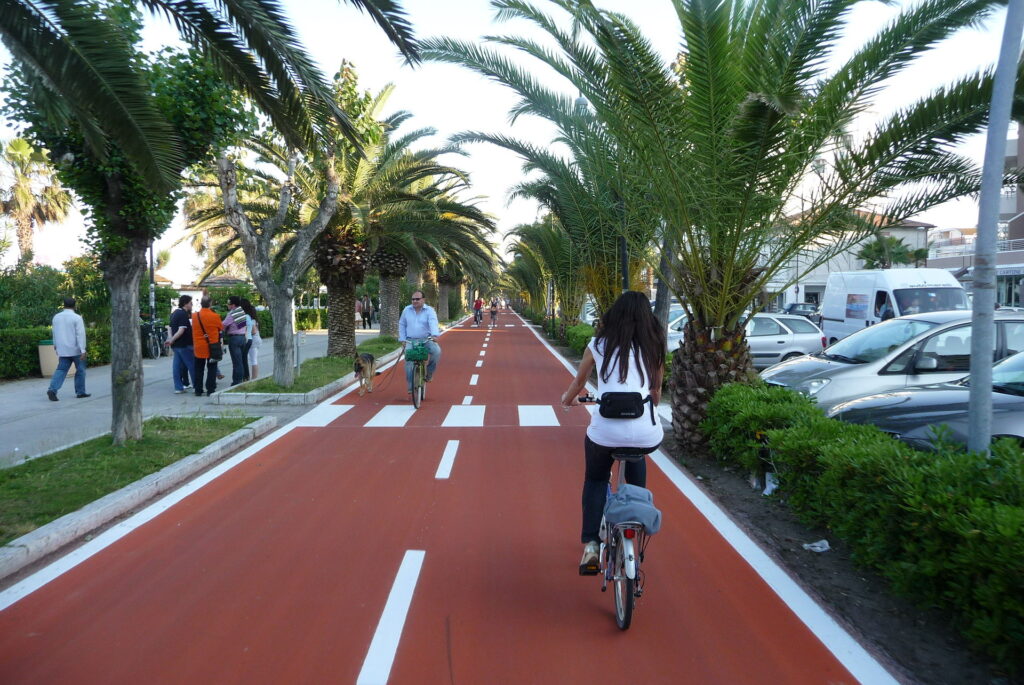
Over three kilometres of pedestrian promenade lined with palm trees and tamarisks, connecting Alba Adriatica to Tortoreto Lido without interruption. The cycle path integrated into the route is one of the main axes of the Adriatic cycleway. In the evenings, between June and September, the wooden kiosks along the central stretch become gathering spots where people eat fried fish in paper cones with their feet in the sand.
2. The beach and the Blue Flag
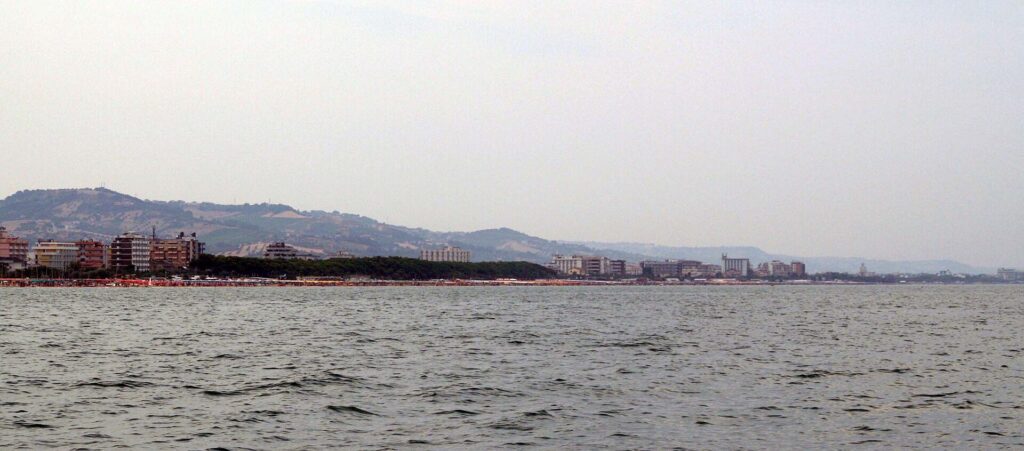
The fine-sand beach with its shallow seabed has been awarded the Blue Flag by the Foundation for Environmental Education on multiple occasions. The shoreline slopes with minimal gradient, which means the water stays shallow for several dozen metres — a fact that explains the strong presence of families with children. Stretches of free public beach alternate with private bathing establishments in an almost geometric regularity.
3. The Municipal Pine Grove
A green area of maritime pines located in the southern part of the municipality, alongside the railway. It is not a natural woodland: it was planted in the 1960s as a windbreak barrier. Today it is equipped with walking paths, play areas, and picnic tables. During the summer it hosts open-air film screenings organised by the municipality. In winter it is one of the few spaces where you can walk away from the concrete.
4. The Tower of Charles V (Martinsicuro)
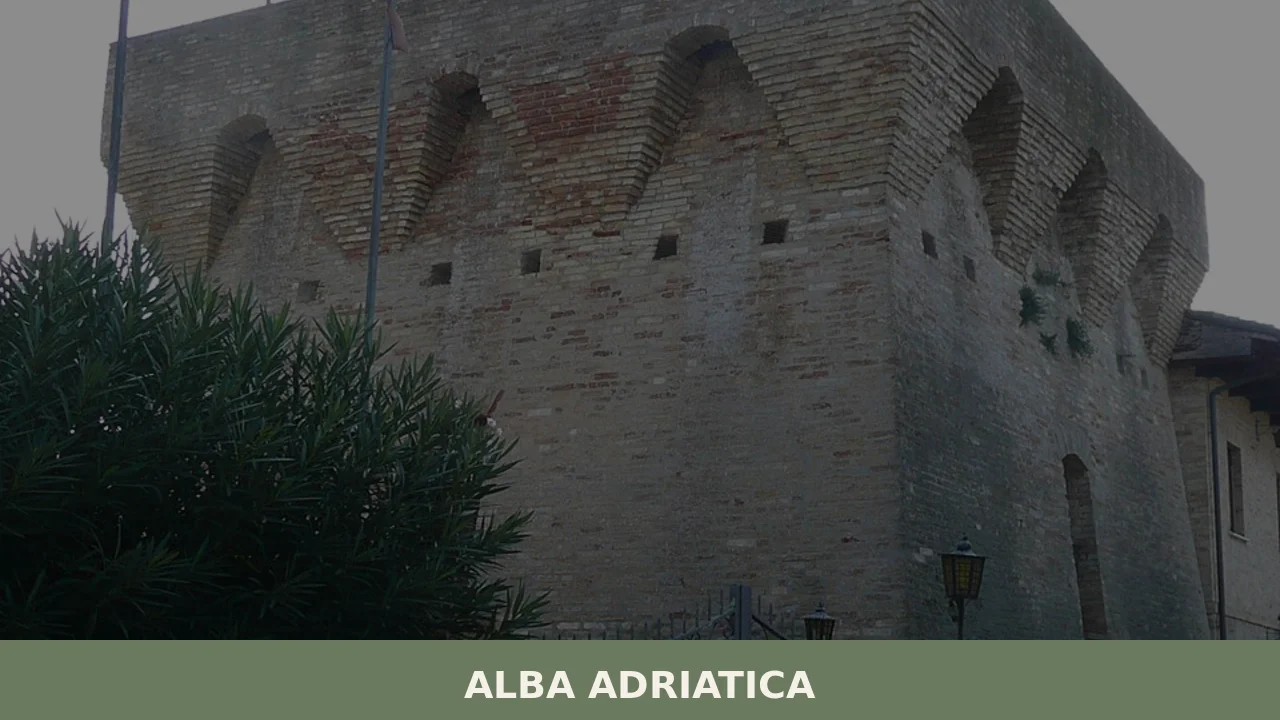
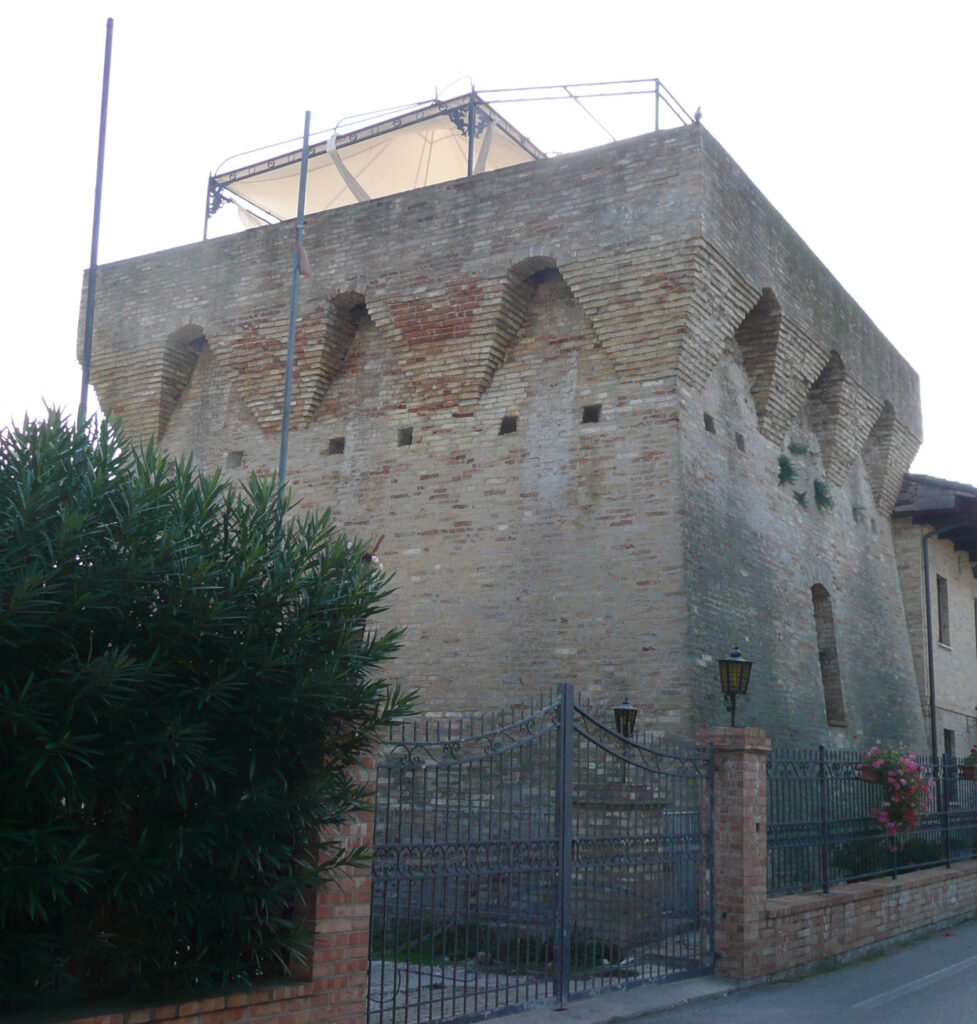
Less than two kilometres from the northern boundary of Alba Adriatica, in the neighbouring municipality of Martinsicuro, stands a sixteenth-century coastal tower built by order of Charles V of Habsburg as a defence against Ottoman raids. It is one of the best-preserved watchtowers along the Teramo coastline, now used as a venue for temporary exhibitions and small archaeological displays featuring artefacts from the ancient settlement of Truentum.
5. The Covered Market and the commercial district
The weekly Saturday morning market occupies several streets in the centre with stalls selling fruit and vegetables from the Val Vibrata and the Teramo countryside. It is not a monumental attraction, but it is the place where you can observe the daily life of the municipality: vendors selling olive ascolane, pecorino cheeses from the surrounding hills, beachwear, hardware. A precise inventory of what this coast produces and consumes.
Local cuisine and regional products
The cuisine of Alba Adriatica is a border cuisine, suspended between the Abruzzo seafaring tradition and the influences of the Marche’s Piceno area. The most common dish in the seafront restaurants is brodetto alla vastese, interpreted here with local variations: tomato, peppers, and mixed inshore fish — sole, red mullet, cuttlefish, scorpionfish — cooked in a terracotta pan without a soffritto base. Olive ascolane, fried and served as a starter, appear on menus as frequently as fish, a sign of the geographical proximity to Ascoli Piceno.
In the inland hills, just a few kilometres away, extra virgin olive oil is produced from the Dritta and Leccino varieties, along with Montepulciano d’Abruzzo and Trebbiano d’Abruzzo wines under controlled designation of origin. In the area’s restaurants, scrippelle ‘mbusse — thin crêpes soaked in hen broth and sprinkled with pecorino — represent the link with the inland Teramo culinary tradition. The summer food festivals along the coast frequently feature mixed fried seafood and lamb arrosticini, prepared on narrow channel-shaped charcoal grills according to the traditional Abruzzo format.
When to visit Alba Adriatica: the best time of year
The official bathing season runs from June to September. July and August record the highest visitor numbers: beach establishments operate at full capacity and the seafront comes alive with evening markets, concerts, and events organised by the Pro Loco. Water temperature exceeds 24°C between July and the first half of September. Those who prefer the beach without crowds will find favourable conditions in the first half of June and in September, when accommodation facilities apply reduced rates and air temperature stays around 25°C.
In winter the resident population drops noticeably and many commercial activities close. The promenade remains accessible and the pine grove offers a sheltered route, but the dining and entertainment options contract. The patron saint feast of Saint Euphemia, on 16 September, coincides with the final days of the season and includes a procession, fireworks over the sea, and a fair with stalls along the main avenue.
How to reach Alba Adriatica
By car, the nearest motorway exit is Val Vibrata on the A14 Bologna–Taranto, approximately 8 kilometres from the centre. From Rome the journey takes around two and a half hours via the A24 to Teramo and then the SS 259 towards the coast, or alternatively via the A1 and A14 passing through Pescara. From Bologna, you travel south along the A14 for approximately 350 kilometres.
Alba Adriatica’s railway station is on the Adriatic Bologna–Lecce line and is served by regional trains. Intercity and Freccia services stop at San Benedetto del Tronto, approximately 15 kilometres to the north, or at Giulianova, approximately 20 kilometres to the south. The nearest airport is Pescara, approximately 75 kilometres away, with domestic flights and some seasonal European routes. Ancona-Falconara airport is approximately 120 kilometres away.
Other villages to explore in Abruzzo
Visitors to the Teramo coast who want to experience a different Abruzzo — vertical, mountainous, built in stone — can reach Caramanico Terme in just over an hour, in the Orfento valley on the eastern side of the Majella massif. There the landscape changes radically: deep limestone gorges, sulphurous waters, and a compact old town squeezed between the two rivers that carved out the valley. The distance between the beach at Alba Adriatica and the thermal springs of Caramanico is the most effective summary of Abruzzo’s geographical variety — from sea level to over 600 metres of altitude in less than one hundred kilometres.
Further afield, in the inland Abruzzo of the province of L’Aquila, Goriano Sicoli occupies a slope of the Subequana valley, its stone houses lined up along the gradient of the terrain. It is a settlement of just a few hundred inhabitants, tied to transhumance and sheep farming, and it represents the exact opposite of the Adriatic coast: a rural economy, restrained architecture, silence. Visiting both — Alba Adriatica and the mountainous Abruzzo — provides a complete picture of a region that in just a few kilometres shifts from sand to rock, from mass tourism to the solitude of the inland valleys.
📷 Photo Gallery — Alba Adriatica
Getting there
Via Cesare Battisti, 64011 Alba Adriatica (TE)
Nearby Villages near Alba Adriatica

In Abruzzo More villages to discover
Nocciano
 Hills
Hills
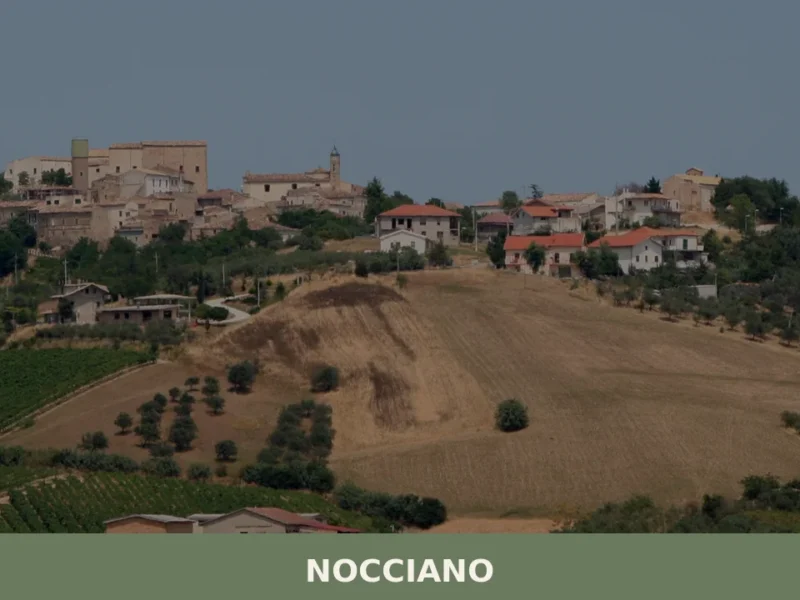
What to see in Nocciano? Discover the 5 must-see attractions of this historic village in Abruzzo, from the Castle to the old town. Plan your visit!
Bucchianico
Hills
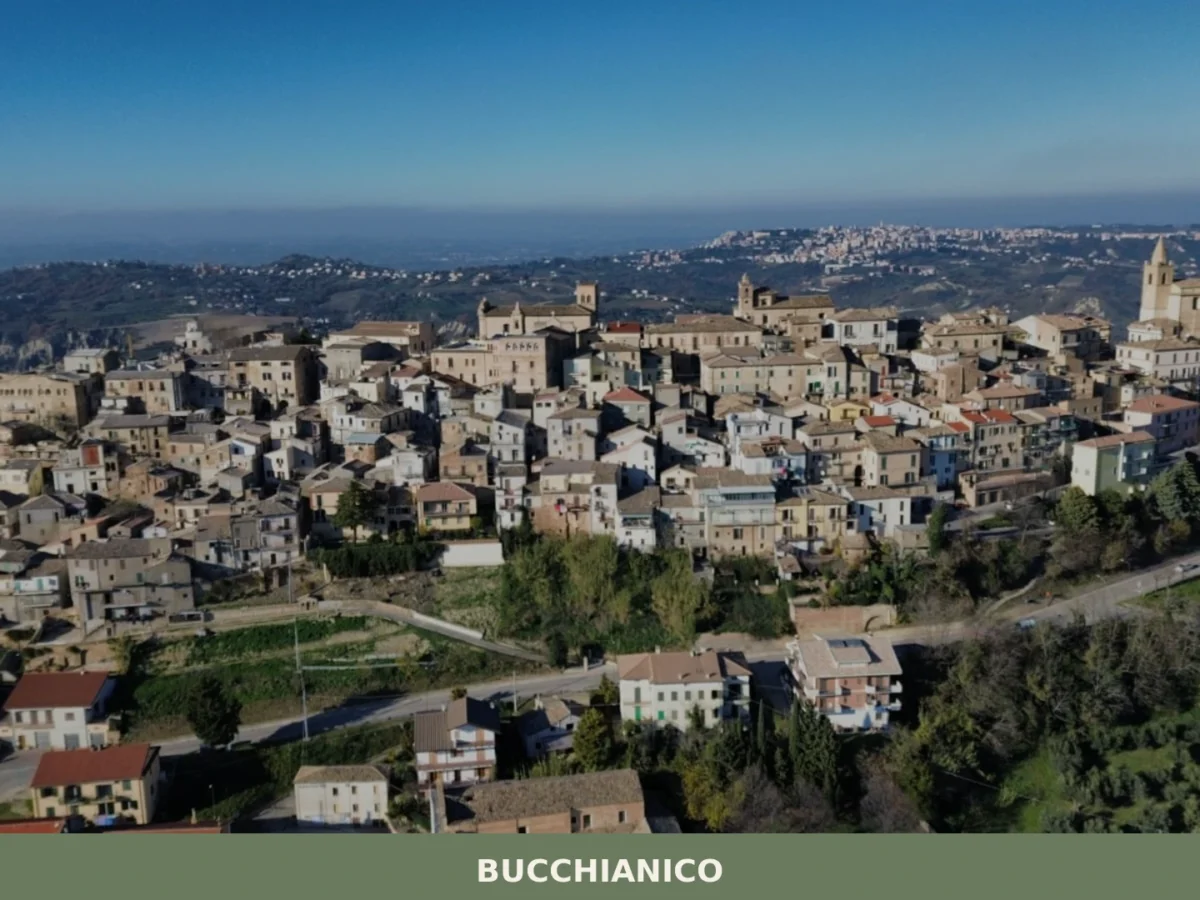
What to see in Bucchianico, Abruzzo, Italy: explore 5 top attractions, local olive groves, the legacy of Saint Camillus de Lellis. Discover the best of this Chieti hill town.
Collarmele
 Mountain
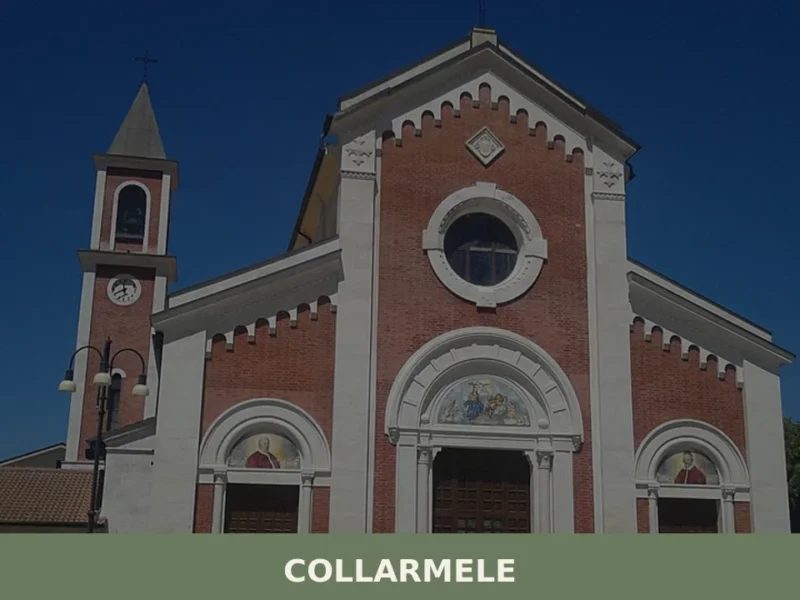
What to see in Collarmele: discover 5 must-see attractions and local specialities like Arrosticini and Confetti di Sulmona.
Lettopalena
Mountain
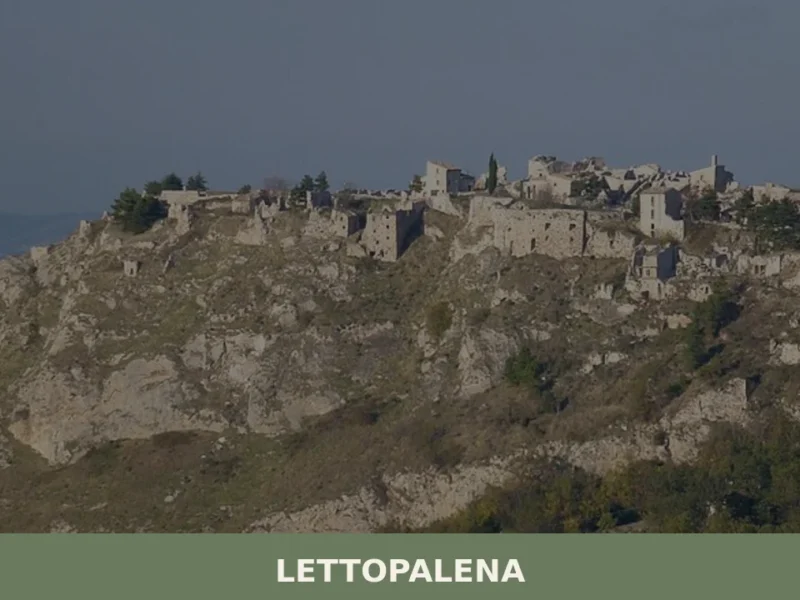
Discover the charm of Lettopalena Village in Abruzzo, Italy. Explore its rich history, culture, and scenic beauty. Plan your visit to this hidden Italian gem today!
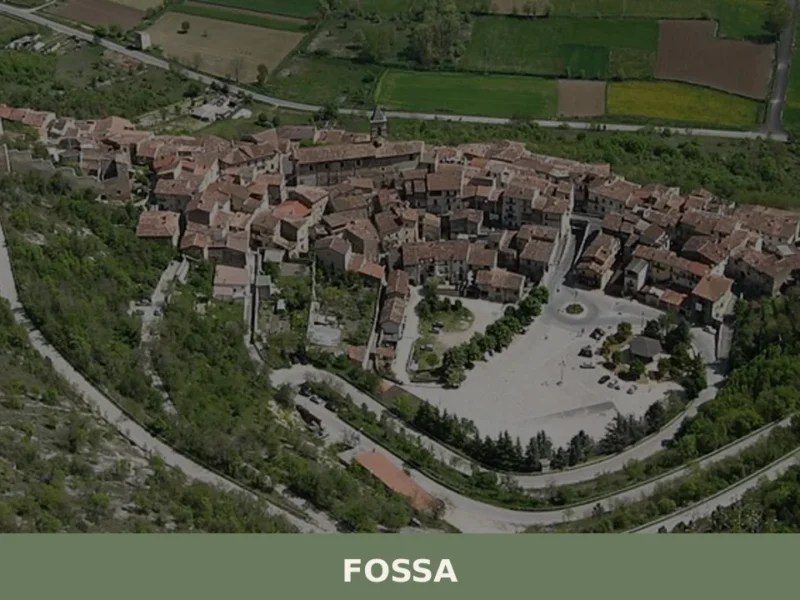
Fossa
Mountain
The Vestine necropolis of Fossa, unearthed in 1992 along the state road 17, revealed over six hundred tombs dating from the 9th to the 1st century BC — a discovery that rewrote our understanding of pre-Roman central Italy. Anyone wondering what to see in Fossa will find a solid starting point here: a village of […]
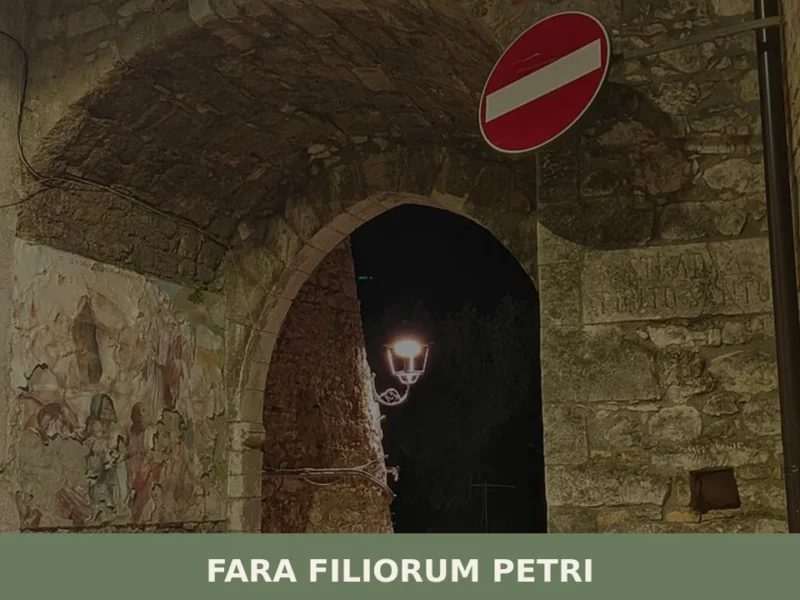
Fara Filiorum Petri
Hills
Fara Filiorum Petri, a municipality in the province of Chieti with 1,942 inhabitants, stands at 227 meters above sea level. The toponym itself, of complex origin, suggests historical layering: “Fara” refers to Lombard settlements, while “Filiorum Petri” is linked to the feudal family of Filiorum Petri, who held control in subsequent eras. This duality names […]
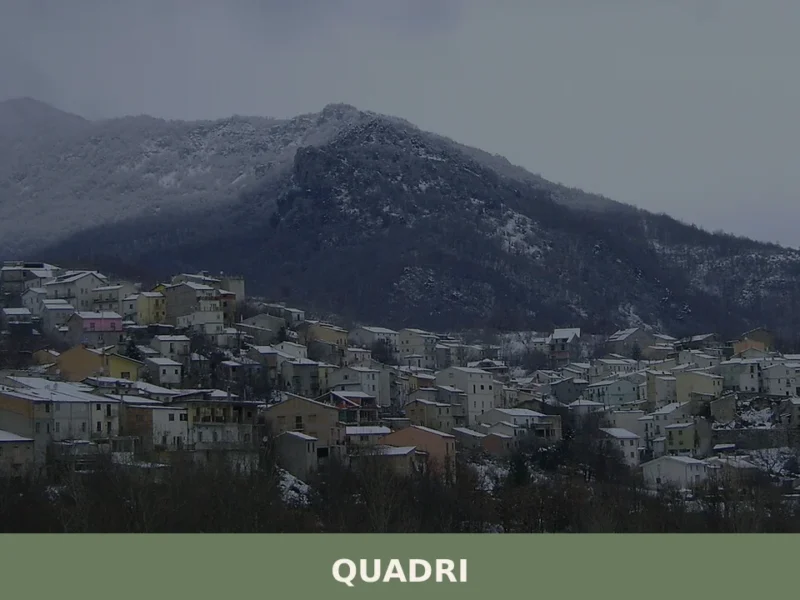
Quadri
Mountain
The limestone of the alleyways climbs straight up toward the ridge, and from up there the valley opens onto slopes where beech forests give way to pastures. Quadri belongs to the province of Chieti, in the heart of inland Abruzzo, at an altitude that isolates the village from the main transit routes and keeps it […]
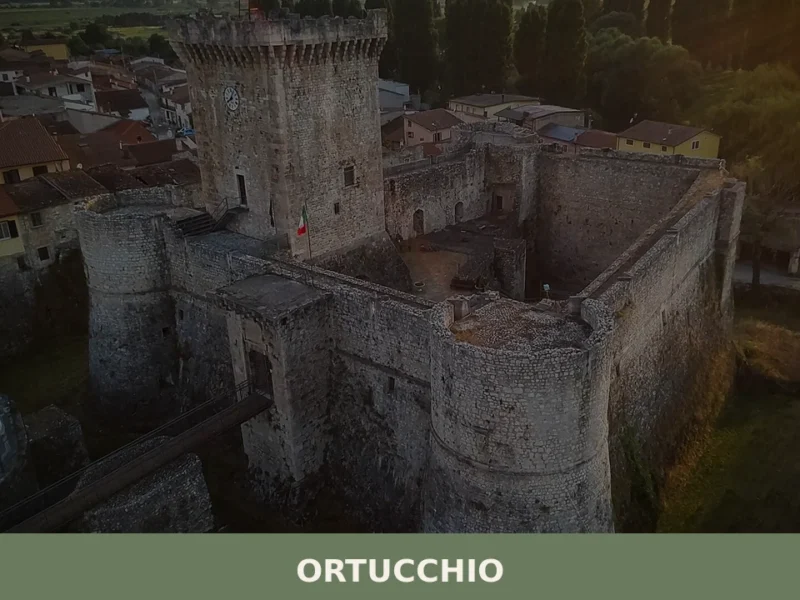
Ortucchio
Mountain
What to see in Ortucchio? Explore Piccolomini Castle and the historic center. Discover the natural beauty of this Marsican village in Abruzzo. Plan your visit!
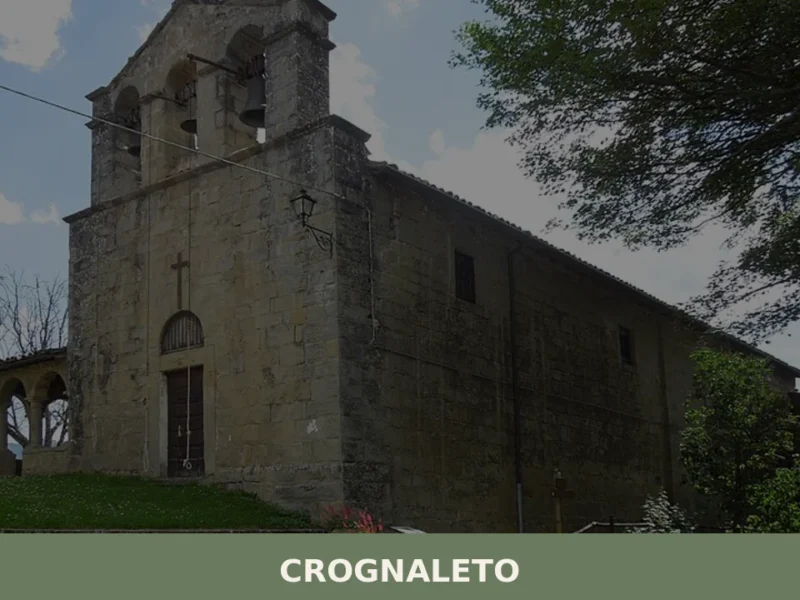
Crognaleto
Mountain
What to see in Crognaleto, Italy: Discover this 1,094m altitude village in Abruzzo. Explore the Monti della Laga and Gran Sasso National Park.
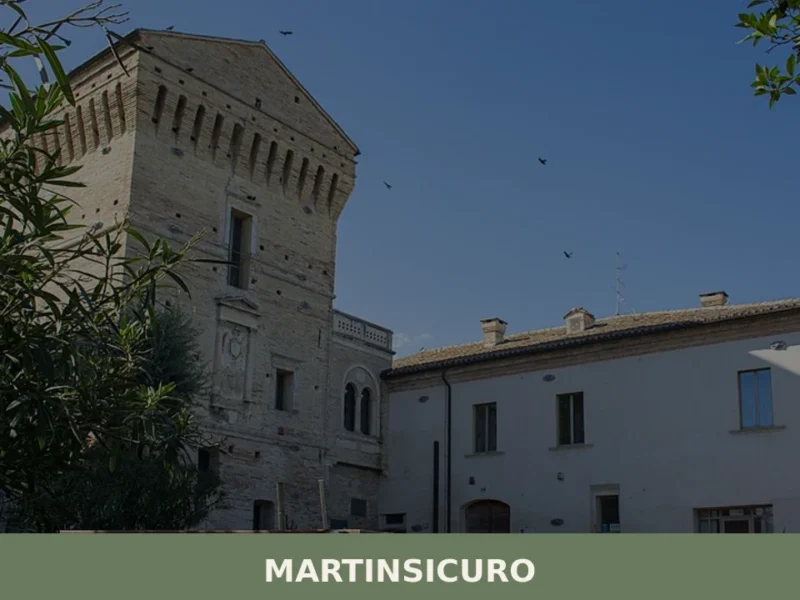
Martinsicuro
Sea
Martinsicuro, located 2 meters above sea level in the province of Teramo, has a population of 16,270 inhabitants. Its development is directly linked to the Adriatic coast and the presence of the Tronto river mouth. For those wondering what to see in Martinsicuro, the core interest lies in its identity as a seaside town that […]




🏡 Know Alba Adriatica better than we do?
If you’re a local or have been there, your knowledge matters: add what’s missing or fix a detail on this page.