


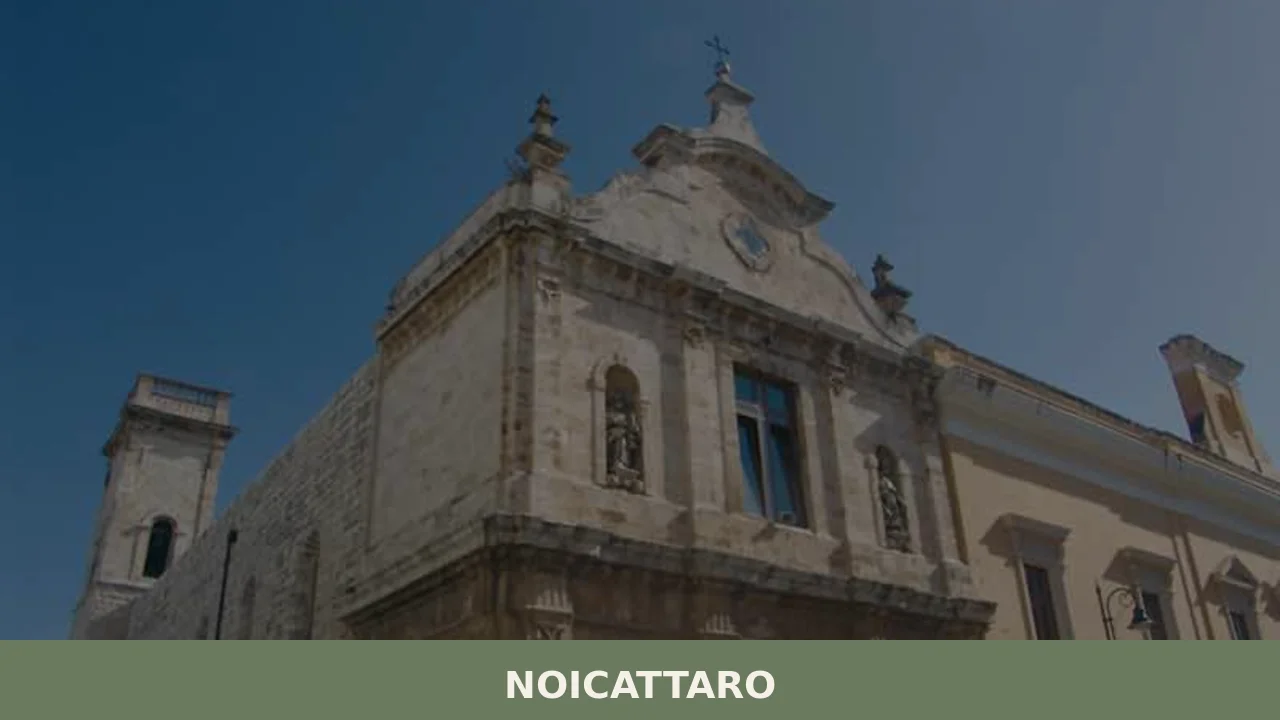
Noicattaro
What to see in Noicattaro: town at 100m in the province of Bari. Medieval crypt, concentric old town, masserie and PAT cuisine. Plan your visit now.
Discover Noicattaro
In 1299, Charles II of Anjou granted the fief of Noja — as it was then known — to the Del Balzo family, marking the beginning of a long feudal era that would transform a modest Norman hamlet into a significant agricultural and commercial centre in the lower Bari area. Today, with its 25,850 inhabitants and an altitude of 100 metres above sea level, Noicattaro retains a concentric old town whose layout is still clearly readable from above, with ring-shaped streets revolving around the main parish church.
Understanding what to see in Noicattaro means traversing at least seven centuries of layered history, from the medieval crypt to the nineteenth-century masserie that dot the surrounding countryside, just a few kilometres from the Adriatic coast.
History and origins of Noicattaro
The current place name dates back to 1863, when the municipality abandoned its historical name of Noja — probably derived from the Latin nux, walnut, referring to the widespread cultivation of walnut trees in the area — adding the suffix “cattaro”, linked according to some hypotheses to the presence of communities originating from Kotor (Cattaro), in modern-day Montenegro, or more likely to a corruption of “Cattara”, the name of a neighbouring ancient hamlet.
The etymological debate remains open: local historian Vito Antonio Melchiorre documented at least four variants of the place name in Angevin registers, from “Noia” to “Noya” and “Noha”. In any case, the earliest written record of the hamlet dates to the 11th century, in a Norman document mentioning the territory among the holdings of the County of Conversano.
The feudal period left a deep mark on the urban layout. After the Del Balzo family, the fief passed in the 15th century to the Carafa family, who maintained jurisdiction until the 1600s. In 1531, during the Italian Wars, French troops sacked the town, damaging part of the defensive walls. A turning point came in 1656, when the plague devastated the population, reducing it to just a few hundred souls.
The demographic recovery was slow: as late as the 1742 census, fewer than three thousand inhabitants were recorded.
The real leap occurred between the 19th and 20th centuries, with the agricultural expansion linked to the cultivation of table grapes and almond trees, which transformed Noicattaro from a farming village into a fruit and vegetable production centre with trade connections to Bari and the port of Mola di Bari.
Among the notable figures associated with the town, Giovanni Ferrara deserves mention — a seventeenth-century priest and scholar who compiled one of the earliest ecclesiastical chronicles of the Nojan territory.
In the 20th century, Noicattaro became known for the production of handcrafted papier-mâché nativity scenes, an activity that reached its peak in the 1950s and still defines the local productive identity today.
The annexation to the Kingdom of Italy in 1861, followed by the name change two years later, formally closed the feudal chapter, but the social structure of the town — with its landowning families, religious confraternities, and ties to the seasonal cycle — remained essentially unchanged until the post-war period, when urban expansion towards the southeast began to reshape the town’s profile.
What to see in Noicattaro: 5 top attractions
1. Chiesa Matrice di Santa Maria della Pace
The main parish church of Noicattaro faces the central square of the old town and represents the religious nucleus around which the entire urban layout developed. The current building, rebuilt in the 18th century over a pre-existing thirteenth-century structure, features a Baroque façade with a portal in local limestone and a three-nave interior.
The bell tower, visible from several points across the surrounding countryside, reaches approximately thirty metres in height.
Inside, seventeenth-century canvases and a polychrome marble high altar are preserved. The church also houses the statue of the Madonna del Carmine, patron saint of Noicattaro, carried in procession on the Sunday following 16 July. It is worth visiting to observe the contrast between the restrained exterior and the ornate interior decoration.
2. Old town and concentric urban layout
The old town of Noicattaro stands out for its concentric ring-shaped layout, an urban configuration that can still be clearly read today by walking the streets that spiral around the parish church. The narrow alleys, designed to slow down potential raids, retain connecting arches between houses, external stone staircases, and small shared courtyards that once served as communal living spaces.
Many dwellings in the innermost ring display tuff-stone portals dating to the 16th and 17th centuries, often decorated with coats of arms of local families.
Walking along Via Castello and Via Putignano offers a continuous sequence of architectural layers: Norman masonry at the base, Angevin extensions, nineteenth-century additions above. The best experience is in the early morning, when the raking light highlights the irregular stone surfaces.
3. Crypt of the Chiesa del Carmine
Beneath the Chiesa del Carmine, located in the north-western part of the old town, lies a hypogean crypt that attests to religious use of the site since at least the 13th century. The underground space, rediscovered during restoration works in the 20th century, preserves traces of votive frescoes in a Byzantine-influenced style, with figures of saints whose colours have faded but remain identifiable.
The vault, carved into the calcarenite bedrock, shows the marks of the tools used for excavation. The constant humidity and cool temperature create an atmosphere radically different from the church above. The crypt can be visited upon request to the parish and is a direct record of medieval religiosity in the Bari area, less well known than that of the Salento but equally stratified.
4. Palazzo Ferrara and the noble residences
Along the main streets of the old town stand several noble residences dating from the 16th to the 18th century, built by the landowning families who controlled the area’s agricultural production. Palazzo Ferrara, one of the most recognisable, features a rusticated portal and a balcony with an eighteenth-century wrought-iron railing. Other notable buildings are visible along Corso Vittorio Emanuele, where local stone façades alternate Rococo decorations with more restrained Neoclassical elements.
These palazzi are not museums, but observing them from the outside conveys a picture of a hierarchical, deeply rooted agrarian society where wealth was expressed through carved stone and the height of the windows on the piano nobile.
5. Masserie of the Nojan countryside
The rural territory surrounding Noicattaro is dotted with fortified and semi-fortified masserie, built between the 16th and 19th centuries as centres of production and defence. Some, such as those along the road to Rutigliano, retain cylindrical watchtowers, wells with stone wellheads, and underground olive presses where oil was produced using animal-powered millstones.
The countryside is characterised by clay-limestone soils cultivated with table grapes, almond trees, and olive trees, with dry-stone walls marking property boundaries. Several masserie now operate as agritourism or hospitality establishments, allowing visitors to explore the original working spaces. The agricultural landscape of this part of the province of Bari is one of the most coherent expressions of the relationship between rural architecture and intensive cultivation in southern Italy.
What to eat in Noicattaro: local cuisine and traditional products
The cuisine of Noicattaro belongs to the gastronomic tradition of central-southern Puglia, where the availability of durum wheat, vegetables, olive oil, and sheep meat has shaped a repertoire of hearty dishes, calibrated to the demands of agricultural labour.
The proximity to the sea — the coast is less than ten kilometres away — has also introduced fish into the local diet, although the area’s vocation remains primarily cereal and fruit-based. The housewives of Noja passed down preservation techniques — oil-curing, sun-drying, fermentation — that met the need to maintain food supplies during the winter months.
This dual character, terrestrial and maritime, defines the nature of the local table.
Among the dishes most deeply rooted in domestic tradition is Acquasale (PAT), a preparation of peasant origin based on stale bread soaked with water, dressed with fresh tomatoes, onion, oregano, and extra virgin olive oil. It is a recovery dish, conceived to avoid wasting bread from previous days, and is consumed mainly in summer, when tomatoes reach full ripeness.
The simplicity of the ingredients demands excellent raw materials: the bread must be made from re-milled semolina, baked in a wood-fired oven, and the oil must have that bitter and peppery aftertaste typical of Apulian cultivars. In some families, capers and olives are added, but the most common version in Noicattaro remains the essential one.
Among the products recognised as PAT (Prodotti Agroalimentari Tradizionali — Traditional Agri-food Products) of Puglia and present in the gastronomic tradition of the province of Bari, several preparations also appear on Nojan tables. Africani (PAT) are small sweets made from almond paste coated in dark chocolate, rounded in shape and intense in flavour, found in pastry shops throughout the Bari area.
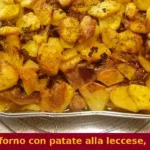
Agnello al forno con patate alla leccese (PAT), also known as Auniceddhru allu furnu, is a main course reserved for special occasions: the lamb is slow-cooked with potatoes, cherry tomatoes, onions, and grated pecorino cheese until a golden crust forms.
Wild asparagus (PAT), gathered in spring from fields and along dry-stone walls, is eaten in frittatas or boiled with oil and lemon, while asparagus preserved in oil (PAT) is the conserved version, prepared between April and May for consumption throughout the year.
The best opportunity to taste these products is the feast of the Madonna del Carmine, on the Sunday following 16 July, when food stalls and restaurants in the old town offer menus tied to tradition. During the summer, food festivals dedicated to local fruit and vegetable products are also held, particularly celebrating table grapes, the crop that drove Noicattaro’s economic fortune in the 20th century. The weekly market, held on Saturday mornings, is the most direct place to buy fresh cheeses, taralli, loose olive oil, and seasonal vegetables.
The town’s butchers offer cuts of lamb and kid goat particularly suited to oven cooking according to the traditional recipe.
On the beverage side, the territory of Noicattaro falls within the production area of red and rosé wines based on Primitivo and Negroamaro, the dominant grape varieties in the belt between Bari and Taranto.
The area does not have its own DOC designation but falls under the IGT Puglia appellation and borders the zone of Primitivo di Gioia del Colle DOC, produced just a few kilometres inland. Anisetta (PAT), an anise-based liqueur widespread throughout Puglia, traditionally closes festive meals, served cold or at room temperature. Amaro del Gargano (PAT), although of Gargano origin, is readily available in wine shops across the province as a regional digestif.
When to visit Noicattaro: the best time
The most suitable period to visit Noicattaro runs from April to June and from September to October. In spring, temperatures range between 15 and 25 degrees, the countryside is green, and wild asparagus is in full harvest. Summer, especially July and August, brings temperatures that frequently exceed 35 degrees, making visits to the old town more tiring during the middle of the day, but the advantage is the coincidence with the patronal feast of the Madonna del Carmine, which turns the town into a stage of processions, illuminations, and market stalls.
Those who prefer calm should choose September, when the heat eases and the table grapes reach maturity.
Winter in Noicattaro is mild compared to the rest of mainland Italy, with lows rarely dropping below 5 degrees, but social and gastronomic life slows down.
The Christmas period, however, offers a specific reason to visit: the tradition of handcrafted nativity scenes, heirs to the local papier-mâché school, brings exhibitions and displays to the old town between December and January. For those combining their visit with the sea, the nearest beach — Torre a Mare, a district of Bari — is about eight kilometres away and offers a low rocky coastline suitable for swimming from June to September. In short, the Sunday after 16 July remains the date of greatest interest for anyone who wants to see Noicattaro at its most collective and participatory.
How to reach Noicattaro
Noicattaro is located along the Strada Statale 100, which connects Bari to Taranto, approximately 18 kilometres southeast of the Apulian capital.
Those arriving by motorway on the A14 Bologna–Taranto should exit at the Bari Sud toll station and continue on the SS100 towards Taranto for about 10 kilometres. From Taranto, the distance is approximately 80 kilometres, covered in just over an hour. The municipality’s location is central relative to both the coastal strip and the Murgia hinterland, making Noicattaro a frequent transit point for those travelling between the coast and the hills.
The Noicattaro railway station, served by the Ferrovie del Sud Est (FSE), connects the town to Bari Centrale with a travel time of approximately 25–30 minutes, with frequent services during daytime hours.
The nearest airport is Karol Wojtyła Airport in Bari-Palese, approximately 25 kilometres away, reachable by car in 30 minutes via the Bari ring road. From central Bari, urban and suburban buses run by AMTAB and FSE provide connections even without a private vehicle.
For those arriving from other regions, high-speed trains stop at Bari Centrale, from where the transfer to Noicattaro takes less than half an hour.
Other villages to discover in Puglia
Those exploring Noicattaro who wish to deepen their knowledge of lesser-visited Puglia can extend their radius towards two towns that offer complementary perspectives. Cerignola, in the province of Foggia, is the centre of the Tavoliere plain and represents the other face of Apulian agriculture: here, wheat fields and expanses of centuries-old olive trees dominate, with an old town marked by the cathedral and the Palazzo Ducale.
The distance from Noicattaro is approximately 130 kilometres, covered in about an hour and forty minutes along the A14.
Pairing the two towns allows a comparison between the coastal-hilly agricultural model of the Bari area and the cereal-based model of the Capitanata, two rural economies that have produced very different architectures, landscapes, and food traditions.
For those seeking a mountain landscape and a radically different cultural identity, Panni, a small village in the Monti Dauni in the province of Foggia, offers an experience opposite to that of Noicattaro: here the altitude exceeds 800 metres, winters are harsh, and the community — of Franco-Provençal origin — has preserved linguistic and cultural traits unique within the Apulian panorama.
The distance is approximately 180 kilometres, but the route crosses the entire region from southeast to northwest, passing through the Tavoliere and climbing towards the Apennines. Combining Noicattaro and Panni in a multi-day trip means crossing Puglia in its true variety: from the Adriatic coast to the inland highlands, from the white calcarenite of the Bari area to the grey stone of the Dauni mountains, from red Primitivo wine to mountain chestnuts.
In Apulia More villages to discover
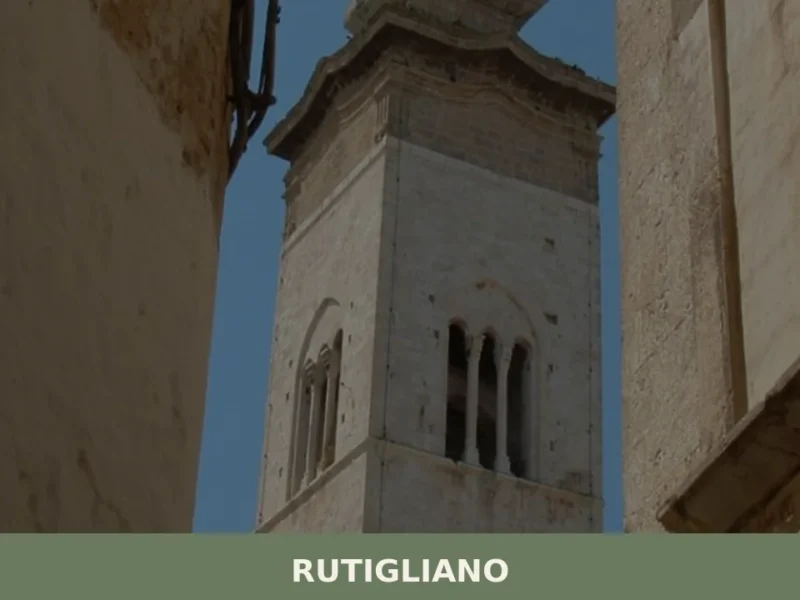
Rutigliano
What to see in Rutigliano, a town at 125 m in Puglia. Terracotta whistle museum, Norman tower, Peucetian necropolis and PAT cuisine. Plan your visit now.
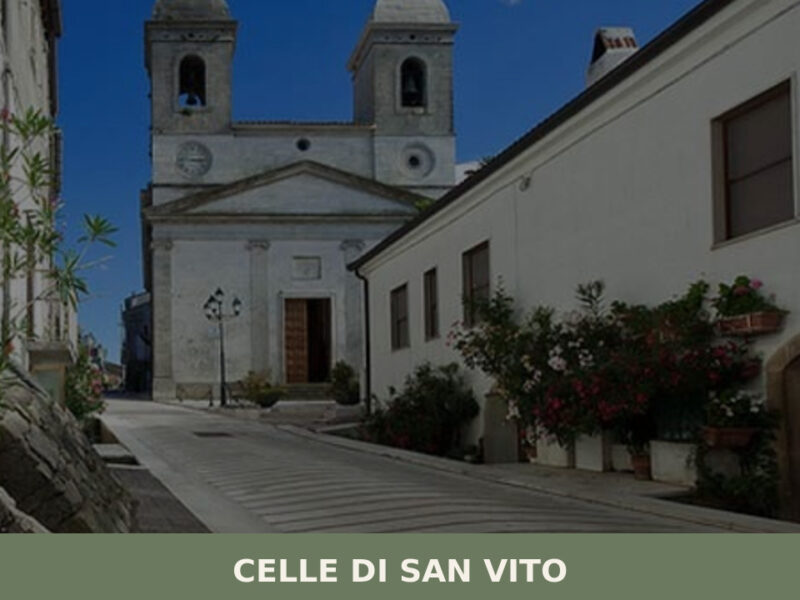
Celle di San Vito
A 148-resident Franco-Provençal enclave at 726 metres in the Daunia sub-Apennines. Discover what to see in Celle di San Vito, from medieval stone lanes to linguistic heritage.
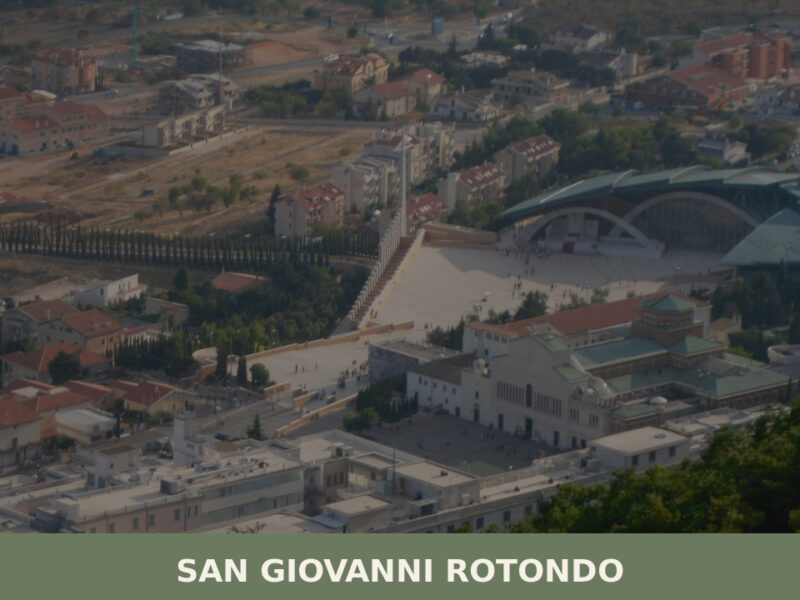
San Giovanni Rotondo
San Giovanni Rotondo, in the Apulian Gargano, combines faith, medieval history, and nature. Discover the must-see attractions, traditional dishes, and tips for visiting Padre Pio's hometown.
📝 Incorrect information or updates?
Help us keep the Noicattaro page accurate and up to date.