


Onano
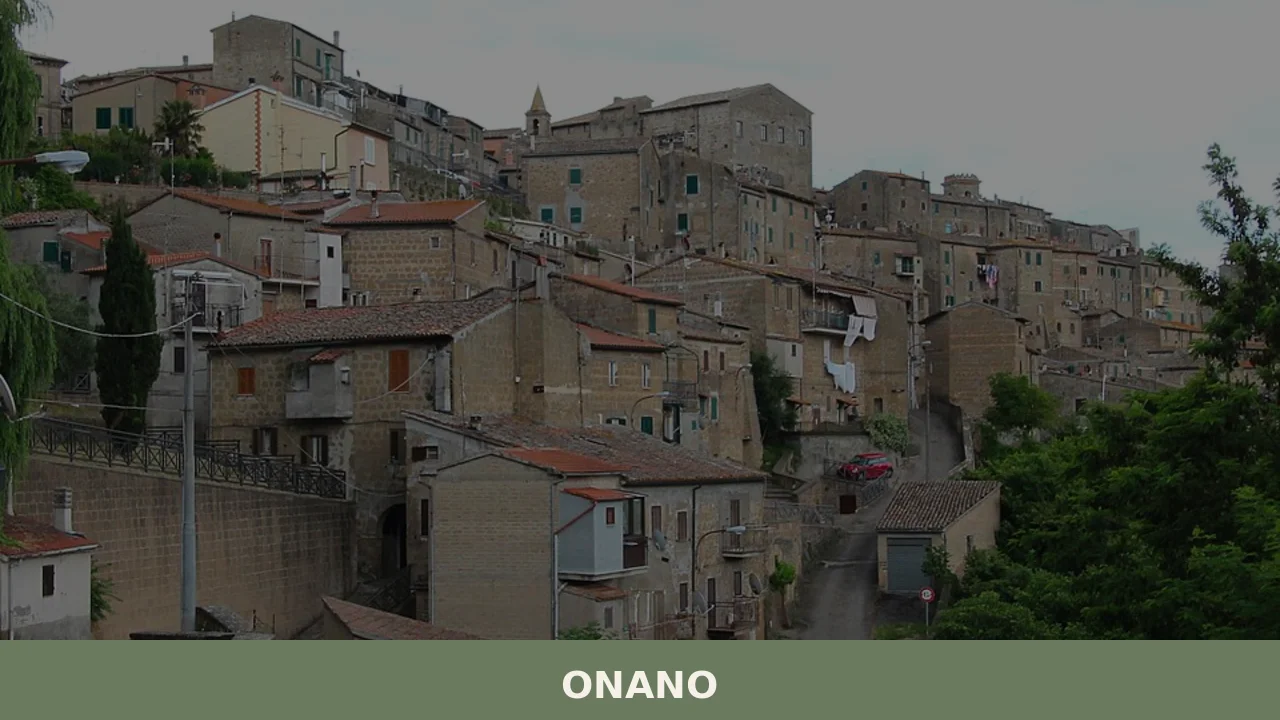
Onano has 898 inhabitants and sits at 485 metres above sea level on the southern slopes of Lake Bolsena, in the province of Viterbo. The municipal territory, stretching across lentil fields and oak groves, borders both Umbria and Tuscany — a point of triple regional convergence that has shaped the town’s economic and linguistic history. […]
Discover Onano
Onano has 898 inhabitants and sits at 485 metres above sea level on the southern slopes of Lake Bolsena, in the province of Viterbo. The municipal territory, stretching across lentil fields and oak groves, borders both Umbria and Tuscany — a point of triple regional convergence that has shaped the town’s economic and linguistic history. Anyone looking into what to see in Onano will find a compact centre, organised around a sixteenth-century baronial palace and a network of straight streets that reveal a deliberate Renaissance urban plan.
History and origins of Onano
The earliest documented references to Onano date back to the twelfth century, when the settlement appears in the registers of the Patrimony of Saint Peter in Tuscia. Some scholars have traced the place name to Etruscan origins, a hypothesis consistent with the village’s position within the territory of ancient Velzna (present-day Orvieto), though no definitive epigraphic evidence exists. During the Middle Ages, the area came under the control of the lords of Bisenzio and subsequently the Monaldeschi della Cervara, the powerful Orvietan family that extended its dominion over much of the Upper Tuscia.
In 1489 the fief was purchased by the Sforza di Santa Fiora family, a collateral branch of the Sforza of Milan. It was during this period that Onano took on its current urban layout, with the comital palace at its centre and streets arranged in a regular pattern. The Sforza retained possession until the eighteenth century, when the fief reverted to the Apostolic Chamber. The parish church, dedicated to Saints John the Baptist and John the Evangelist, preserves a sixteenth-century structure with later Baroque additions.
The patron saint, Saint Tryphon, is honoured by the community with a feast that holds civic as well as religious significance. The cult of this saint, widespread in various parts of Tuscia and southern Lazio, has historically been linked to the protection of harvests — a detail that says much about the local agricultural economy, which remained central until the post-war period.
What to see in Onano: 5 main attractions
1. Palazzo Madama (Palazzo Sforza)
Built in the second half of the fifteenth century at the behest of the Sforza di Santa Fiora, the palace dominates the central square with a stern tuff façade. The building served as a feudal residence for nearly three centuries. Today it houses the municipal offices. The inner courtyard features a loggia with round arches and a peperino cistern, elements consistent with the aristocratic architecture of Renaissance Tuscia.
2. Church of Saints John the Baptist and John the Evangelist
The main place of worship in the village, this church has a single-nave plan with side chapels added between the sixteenth and seventeenth centuries. Inside, there are canvases from the Roman school and an eighteenth-century organ. The façade, built in tuff ashlar blocks and free of excessive decoration, reflects the construction style typical of the volcanic area around Lake Bolsena.
3. Porta del Borgo and the town walls
Of the original defensive system, legible sections of the town walls and an access gate to the historic core remain. The walls, made from locally quarried tuff blocks, follow the perimeter of the medieval settlement. The surviving height of the preserved sections and the thickness of the curtain walls indicate a function of active defence, not merely symbolic, in a territory long disputed between Orvieto and the Papacy.
4. The lentil landscape
The Onano lentil is a local variety cultivated in the surrounding volcanic soils, at altitudes between 400 and 600 metres. The fields, visible along the municipal roads leading out of the centre, flower between May and June with colours shifting from pale green to yellow. It is a rain-fed crop, dependent on the spring rainfall pattern, which defines the agricultural calendar of the town.
5. Public fountains and wash houses
Distributed throughout the centre and its immediate surroundings, several peperino drinking fountains mark the historic water points of the village. Some retain adjacent washing basins, which were in use until the 1960s. These structures, functional before decorative, document the collective management of water resources in a territory where springs are conditioned by volcanic geology.
Local cuisine and regional products
Onano’s most renowned product is the lentil, small in size and thin-skinned, grown without irrigation in soils of volcanic origin. It cooks quickly compared to other varieties and does not require prolonged soaking. It appears in winter soups — often with pork rind — and in summer side dishes served at room temperature with extra-virgin olive oil from the Viterbo area. The lentil festival, organised by the Municipality, is the main gastronomic event on the local calendar.
Onano’s cuisine belongs to the tradition of the Upper Tuscia of Viterbo: acquacotta with wild greens, handmade pasta (especially umbrichelli, a dough of water and flour without eggs), and pork processed into cured meats. The local bread, baked in a wood-fired oven with soft wheat flour, has a dark crust and a dense crumb. The area also produces olive oil, predominantly from the Canino and Frantoio cultivars, and wine from Grechetto and Procanico grapes, varieties widespread across the Lake Bolsena growing area.
When to visit Onano: the best time of year
The most suitable season runs from May to October. In late July and August, events connected to the lentil harvest bring a considerably higher number of visitors than the annual average. Spring — April and May — is the period when the cultivated fields are in their growing phase and daytime temperatures range between 15 and 22 degrees, favourable conditions for walking the country roads around the centre.
Winter is harsh by Lazio standards: the altitude of 485 metres and exposure to northerly winds produce frequent lows below zero between December and February. The feast of Saint Tryphon falls during the winter period and represents the main community gathering of the cold season. Those planning to visit Onano during this time should be aware that some dining and accommodation services operate on reduced hours or by reservation only.
How to reach Onano
Onano can be reached via the Cassia Bis regional road (SR 2) heading towards Acquapendente, then turning off onto the SP 113. From Viterbo the distance is approximately 55 kilometres, requiring about one hour by car. From Rome (A1 motorway exit at Orvieto or Orte) the journey is approximately 150 kilometres, with a travel time of around one hour and forty-five minutes.
The nearest railway station is Orvieto, on the Rome–Florence line, approximately 30 kilometres away. The reference airport is Rome Fiumicino, about 170 kilometres away. Public transport connections are limited to Cotral provincial bus services, with reduced frequency on public holidays. For those arriving from the north, the Fabro exit on the A1 motorway is approximately 25 kilometres away.
What to see in Onano and in nearby villages in Lazio
The Upper Tuscia of Viterbo is an area with a significant concentration of small historic centres, each with a distinct architectural and landscape character. Visitors to Onano can extend their itinerary southwards, where the Lazio territory offers villages with different historical layers. Barbarano Romano, in the province of Viterbo, stands close to the Etruscan rock-cut necropolises of San Giuliano — a complex of tombs carved into the tuff that documents funerary practices between the seventh and fourth centuries BC, set in a geological and vegetational context profoundly different from the volcanic landscape of Onano.
Towards the Tiber valley, Bassano in Teverina occupies a tuff ridge overlooking the river gorge. The structure of the old nucleus, compact and defensive, follows a settlement logic different from Onano’s regular layout: here the relationship with the terrain’s morphology is more constraining, and the houses follow the profile of the cliff. The two villages, just over sixty kilometres apart, offer a direct comparison between two models of rural urbanisation in northern Lazio.
In Lazio More villages to discover
Arlena di Castro
With its 839 registered inhabitants and an elevation of 260 metres above sea level, Arlena di Castro occupies a tuff plateau in the Tuscia area of the Viterbo province, just a few kilometres from the border with the Lazio Maremma. The municipal territory preserves traces of Etruscan presence documented by necropolises and ceramic materials found […]
Accumoli
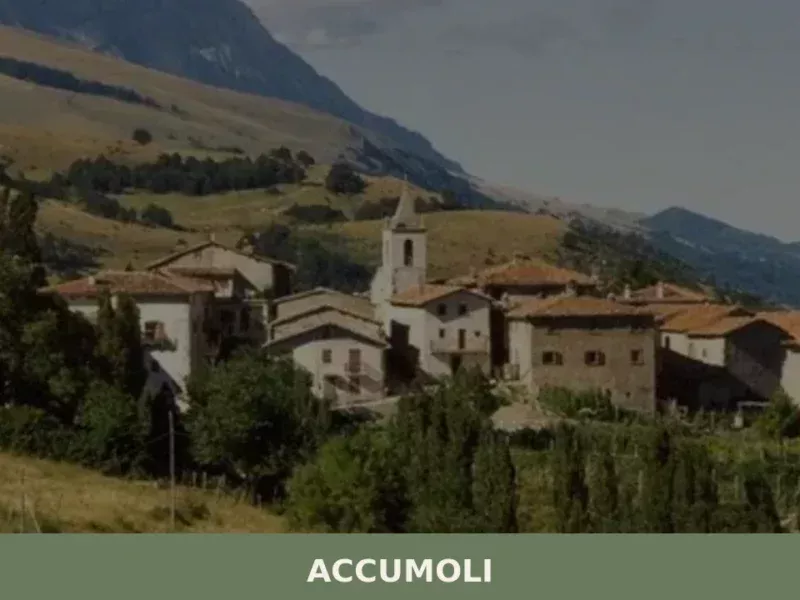
A chill, thin air descends with the late afternoon sun, drawing long shadows across the uneven cobblestones of the piazza. The scent of woodsmoke, faint but persistent, mingles with the dry fragrance of ancient stone. At 855 meters above sea level, the village of Accumoli, nestled within the Rieti province of Lazio, feels like a […]
Marcetelli
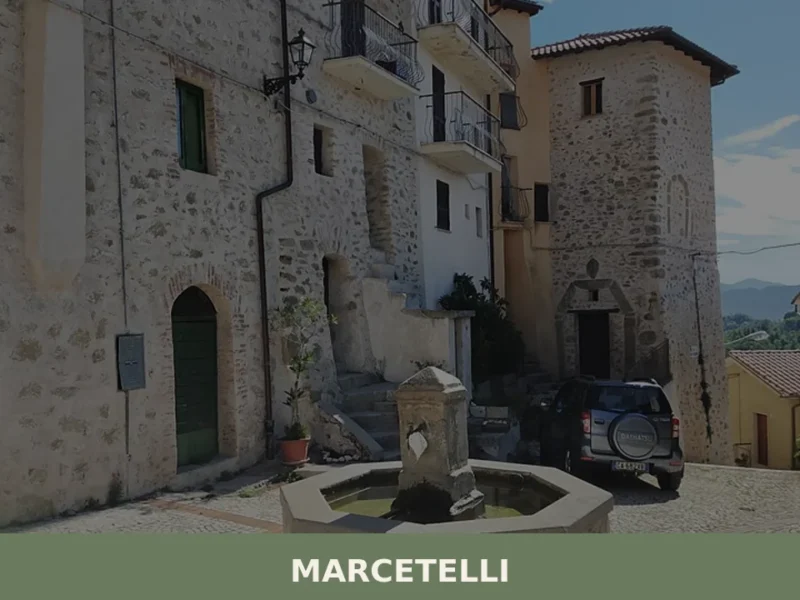
What to see in Marcetelli, a village at 930m in Rieti province with 82 residents. Explore Lago del Salto, the Church of San Venanzio and PAT-certified Guanciale amatriciano. Plan your visit now.





📝 Incorrect information or updates?
Help us keep the Onano page accurate and up to date.