A ridge-top village above the Tavoliere plain in Foggia province, San Paolo di Civitate holds Roman ruins, Norman battlefield history, and an unhurried agricultural life.
Morning light hits the limestone facades along Corso Vittorio Emanuele and the air carries the dry scent of wheat fields stretching toward the Fortore valley. A church bell marks the hour — unhurried, absorbed into the silence that follows. At 187 metres above sea level, this small settlement in the province of Foggia occupies a low ridge above the Apulian Tavoliere, where agricultural plains meet the first folds of the Sub-Appennino Dauno. Understanding what to see in San Paolo di Civitate begins here, at this threshold between flatland and hill country, where 5,460 residents maintain a way of life tied to grain, olive oil, and deep local memory.
The name itself is a palimpsest. “Civitate” refers to the ancient Roman settlement of Civitate, a fortified town that once stood a few kilometres to the north, near the banks of the Fortore river. It was here, in 1053, that the Battle of Civitate took place — a decisive confrontation in which Norman forces defeated a papal army led by Pope Leo IX, an event that reshaped the political balance of southern Italy and accelerated Norman control over the Mezzogiorno. The ruins of that older settlement gradually emptied over the centuries, and the population migrated to a more defensible position on higher ground. The current village grew around the cult of Saint Paul the Apostle, from which it takes the first half of its name.
Through the medieval and early modern periods, San Paolo di Civitate passed through the hands of various feudal lords, a common trajectory for small centres across the Capitanata. Its economy was shaped by the vast grain-producing plains of the Tavoliere, which made Foggia province one of the breadbaskets of the Kingdom of Naples. The village retained a largely agricultural identity, its rhythms dictated by sowing and harvest, olive pressing and sheep transhumance along the ancient tratturi — the grass-covered drove roads that once connected highland pastures in Abruzzo and Molise to the lowland grazing grounds of Puglia.
The dual name — saint and lost city — gives the village a particular character. It is a place defined as much by what once existed nearby as by what stands today, a reminder that in this part of Italy, the landscape holds centuries of layered occupation beneath its surface.
The main parish church dominates the old centre, dedicated to the village’s patron saint. Its facade reflects successive periods of rebuilding common to churches in the Capitanata, where earthquakes have repeatedly forced reconstruction. Inside, devotional statues and altarpieces document centuries of local faith. The bell tower, visible from the surrounding plains, serves as the village’s most recognisable vertical landmark.
A few kilometres north of the modern village, near the Fortore river, lie the remains of the Roman and early medieval town of Civitate. This is the site of the famous 1053 battle between Norman and papal forces. Little stands above ground today, but the terrain — low mounds, scattered ceramic fragments, the alignment of old walls — rewards those who understand what they are walking over. The site is largely open countryside, best visited with historical context in hand.
Among the civil buildings that line the main street, Palazzo Ferrante represents the architectural presence of the local landowning class. Its stone portal and upper-floor balconies are typical of 18th- and 19th-century noble residences in Foggia province — functional rather than ostentatious, built for families whose wealth came from wheat and olive oil rather than court favour.
The Fortore river runs through the territory north of San Paolo di Civitate, carving a wide valley that marks the border between Puglia and Molise. The riparian landscape supports resident and migratory birdlife, and the valley offers walking routes through terrain that shifts from cultivated fields to wilder scrubland along the riverbanks. In late spring, wildflowers cover the uncultivated margins.
The old centre is compact and walkable. Corso Vittorio Emanuele forms the main axis, lined with low stone buildings, small shops, and the occasional wrought-iron balcony heavy with geraniums in summer. Side streets narrow quickly, leading to quieter residential quarters where domestic routines — laundry strung between windows, tomato passata drying on tables in September — remain visible and unrehearsed.
San Paolo di Civitate sits squarely in the grain belt of the Tavoliere, and wheat shapes the table. Handmade pasta — orecchiette, cavatelli, troccoli — is a staple, dressed with slow-cooked ragù, turnip tops, or simply with good olive oil and dried chilli. The broader region produces some of Italy’s finest extra virgin olive oil, and the territory around Foggia contributes significantly to that output. Local bakeries turn out large loaves of pane di grano duro — durum wheat bread with a thick crust and dense, golden crumb — a product that keeps for days and improves with age.
During autumn and winter, look for dishes built around legumes: fava bean purée with chicory, chickpea soups, and lentils cooked with bay leaf and pork rind. Local wine production is modest compared to Salento further south, but the Daunia area grows Nero di Troia and Bombino Nero grapes, which produce honest, tannic reds suited to hearty food. Restaurants and trattorias in the village are few but unpretentious, serving portions calibrated for working appetites rather than aesthetic presentation.
Late spring — April through early June — offers the best conditions. The wheat fields surrounding the village turn from green to gold, the air is warm without the punishing heat that settles over the Tavoliere in July and August, and the Fortore valley is at its most alive with wildflowers and birdlife. Autumn, particularly October, brings a second good window: olive harvest season begins, temperatures cool, and the light takes on the low, amber quality that defines the southern Italian countryside in its quieter months.
Summer can be oppressive on the plains, with temperatures regularly exceeding 35°C and few trees to offer shade outside the village centre. The feast day of San Paolo, celebrated on 29 June, draws the community into the streets for a procession, market stalls, and evening fireworks — a brief, intense window into collective village life. Winter is quiet, cold by Puglian standards, and better suited to those who prefer solitude and empty landscapes.
San Paolo di Civitate lies along the SS16 state road in northern Puglia, approximately 40 kilometres north of Foggia. By car from the A14 Adriatica motorway, take the exit at San Severo and follow signs northward — the drive takes roughly 20 minutes. From Foggia, the journey is about 40 minutes by road. The nearest mainline railway station is at San Severo, which is served by Trenitalia services connecting to Foggia, Bari, and Bologna. From San Severo, local bus services or a short taxi ride cover the remaining 15 kilometres. The closest airport is Bari Karol Wojtyła (approximately 170 km south), though Foggia’s smaller Gino Lisa airfield lies closer for limited regional connections. Those arriving from Naples (approximately 200 km west) cross the Apennines via the A16 motorway before joining roads across the Tavoliere.
The territory between the Tavoliere plain and the Dauno Sub-Appennine ridge contains a network of small communities, each shaped by its specific altitude, exposure, and history. Southwest of San Paolo di Civitate, climbing into the mountains that form Puglia’s western spine, the village of San Marco la Catola occupies a dramatically different landscape — higher, cooler, forested — where life has long been oriented toward chestnut woods and sheep grazing rather than wheat. The contrast between the two villages illustrates how sharply conditions change across short distances in this corner of southern Italy.
To the south, deeper into the Tavoliere flatlands, Carapelle shares San Paolo’s agricultural vocation but sits at lower elevation, fully immersed in the open plain. Visiting both villages in sequence — one on the ridge, one on the flat — gives a tangible sense of how the Tavoliere functions as a geographic and cultural system, its settlements spaced along ancient routes that once connected grain stores to markets, upland pastures to lowland fields.
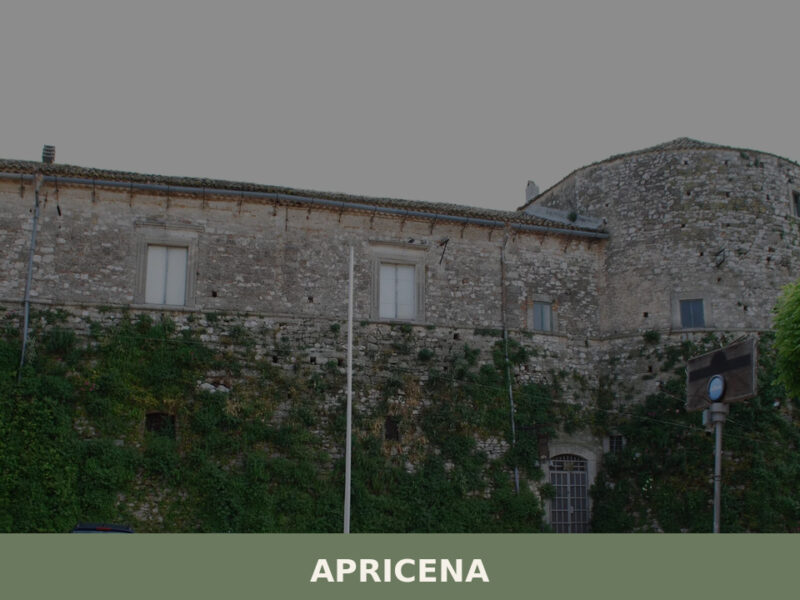
Discover Apricena, a stone-quarrying town in Puglia's Gargano area. Explore medieval heritage, local cuisine, and authentic Southern Italian charm.
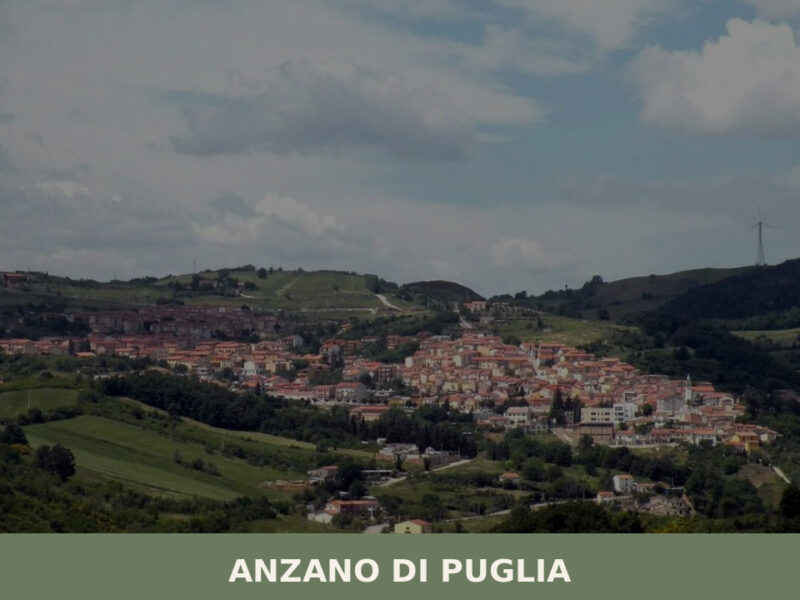
A tiny hilltop village at 760 m in the Daunia Mountains, Anzano di Puglia enchants with stone lanes, sweeping panoramas, and authentic mountain cuisine.
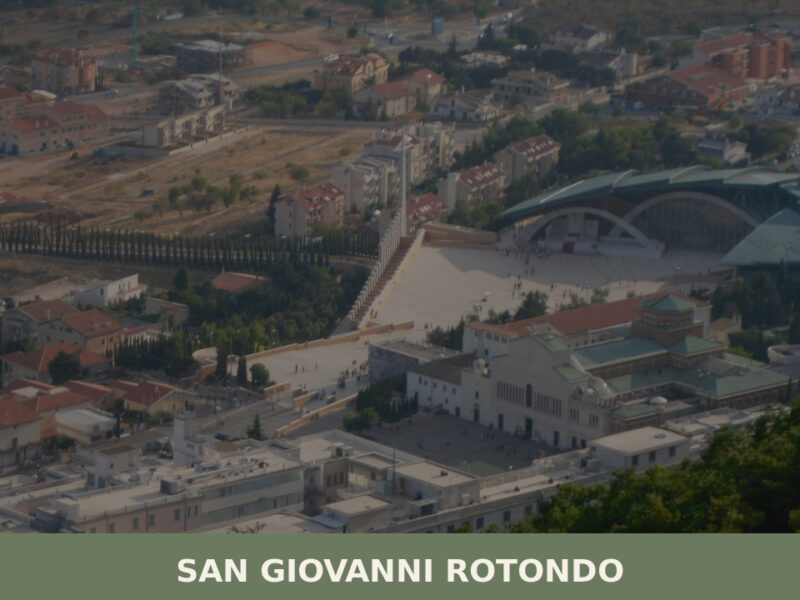
San Giovanni Rotondo, in the Apulian Gargano, combines faith, medieval history, and nature. Discover the must-see attractions, traditional dishes, and tips for visiting Padre Pio's hometown.
📝 Incorrect information or updates?
Help us keep the San Paolo di Civitate page accurate and up to date.


