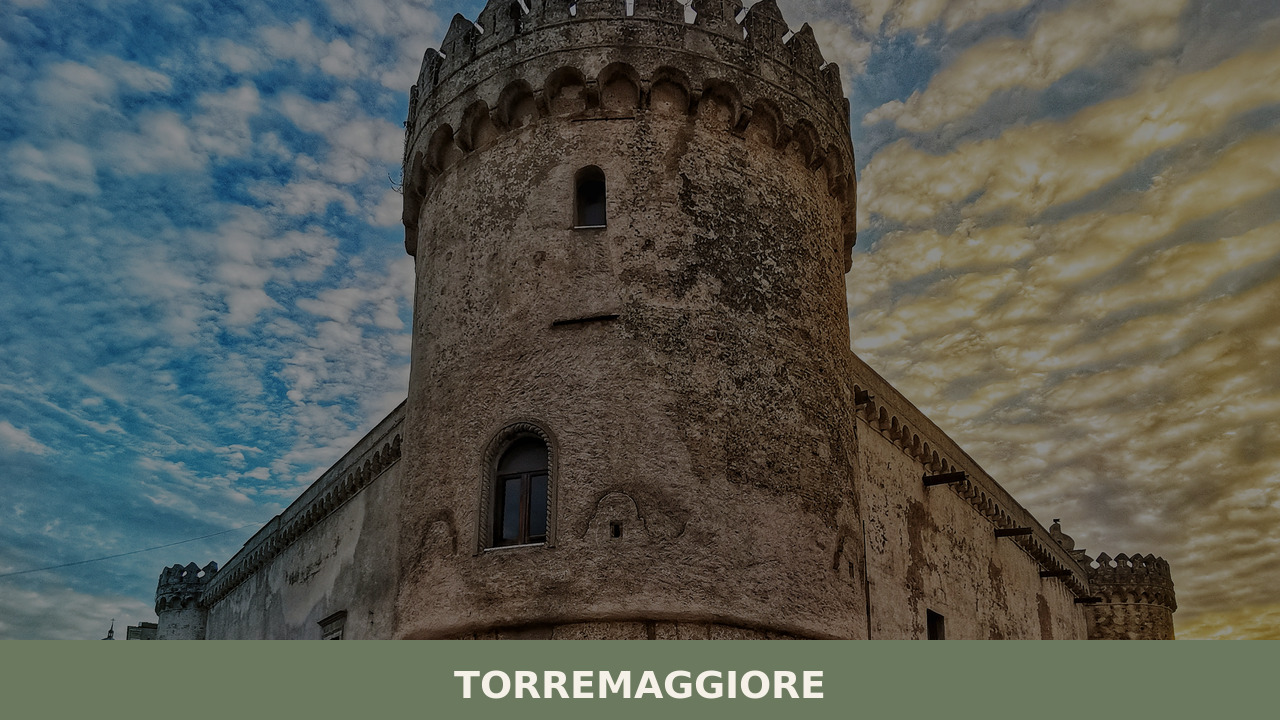
A complete guide to Torremaggiore in northern Puglia — its medieval castle, the ruins of Fiorentino, local food traditions, and practical travel information.
Morning light falls flat and golden across the Tavoliere plain, and by seven o’clock the shadow of a thirteenth-century castle cuts a hard diagonal across Via Castello. A woman pulls open the shutters of a ground-floor apartment, and the smell of bread — baked in a wood-fired oven that has been here longer than anyone can date — drifts into the street. This is Torremaggiore, a town of 16,514 inhabitants set at 169 metres above sea level in the province of Foggia, where the northern edge of Puglia meets the foothills of the Daunia Apennines. If you are planning what to see in Torremaggiore, begin here, in these early hours, when the town belongs entirely to itself.
The origins of Torremaggiore are tangled in the archaeology of the vanished settlement of Fiorentino — a Norman fortified town built in the eleventh century, now reduced to excavated foundations on a low hill a few kilometres to the southwest. It was at Fiorentino, on 13 December 1250, that Frederick II, Holy Roman Emperor, died. The event remains the most historically significant moment associated with this territory, linking a small agricultural settlement in the Capitanata to the grand convulsions of medieval European power. When Fiorentino declined — likely due to earthquakes and shifting trade routes — its population gradually migrated to the area around a Benedictine abbey, where a new settlement consolidated under the name Torremaggiore, possibly derived from a prominent defensive tower (torre maggiore, “the greater tower”) that marked the site.
Through the Angevin and Aragonese periods, the town passed between feudal lords. The De Sangro family held it for centuries, shaping its built environment and leaving behind the castle that still defines the town’s skyline. Torremaggiore experienced the same cycles of earthquake, plague, and reconstruction common to many towns in the Foggia plain, but its position along routes connecting the coast to the interior gave it a persistent economic role as a market centre for grain, olives, and livestock.
The modern town carries these layers without sentimentality. Baroque church facades abut twentieth-century residential blocks. Fragments of medieval wall are embedded in later construction. History here is not curated for display — it is simply present, worn into the fabric of everyday use.
The castle sits at the town’s highest point, a quadrilateral structure with cylindrical corner towers dating largely to the fifteenth century, though its foundations are older. The De Sangro family transformed it from a military stronghold into a baronial residence. Inside, vaulted rooms now host municipal offices and occasional exhibitions, but the courtyard — with its worn stone staircase and carved heraldic shields — still reads as a feudal seat of power.
The main parish church, dedicated to Saint Nicholas, dominates the central piazza with a façade rebuilt after seismic damage. The interior holds carved stone altars and wooden choir stalls that reflect the provincial Baroque style of the Capitanata. Pay attention to the side chapels, where local families commissioned devotional paintings across several centuries, creating an uneven but revealing visual record of patronage.
A few kilometres outside town, the excavated ruins of Fiorentino mark the place where Frederick II died. The site is spare — low walls, the outline of a cathedral, fragments of domestic structures — but its documentary value is considerable. Excavation campaigns, particularly by French archaeologists in the late twentieth century, have revealed details of daily life in a Norman-Swabian settlement that no standing monument could provide.
Originally part of a Celestine monastic complex, this church preserves a quiet interior with stone columns and a restrained decorative scheme. The adjoining cloister, partially intact, offers a sense of the enclosed religious life that once coexisted with the feudal economy of the surrounding countryside. It is one of the town’s less visited buildings, which is precisely what makes it worth entering.
The old town is compact enough to walk in an hour, but dense enough to reward slow attention. Narrow streets open onto small squares where elderly residents still gather on benches in the afternoon. Piazza della Repubblica serves as the civic centre, flanked by municipal buildings and cafés. The architecture is modest — no grand palazzi — but the proportions of the streets and the patina of the stonework give the quarter a coherent, lived-in character.
Torremaggiore sits in the heart of the Tavoliere, one of southern Italy’s most productive agricultural plains. Durum wheat has been the dominant crop for centuries, and the bread of this area — dense, golden-crusted, baked in large loaves — is a staple that still defines daily meals. Olive oil production is equally central; the Peranzana olive, cultivated widely in the northern Foggia province, yields an oil with a grassy, slightly peppery flavour that appears on virtually every table. Local pasta shapes include orecchiette and troccoli, the latter a thick, ridged noodle typically dressed with a slow-cooked lamb or tomato ragù.
Vegetable dishes reflect the agrarian calendar: lampascioni (wild hyacinth bulbs), cardoncelli mushrooms, chicory, and broad beans prepared as purée alongside dried bread or pasta. The town’s restaurants and trattorie are unpretentious, family-run establishments where portions are large and menus change with the season. Look for local Cacc’e mmitte di Lucera, a DOC red wine produced in the surrounding territory, which pairs well with the rich, oil-based cooking of the area.
The Tavoliere plain experiences hot, dry summers and cool, occasionally wet winters. July and August bring temperatures that frequently exceed 35°C, and the town empties as residents seek the coast or the cooler Gargano hills. The most comfortable months for walking and exploring are April through June and September through October, when daytime temperatures hover between 18°C and 28°C and the light across the plain has a particular clarity. Spring brings the wheat fields to their brightest green; autumn turns the olive groves silver-grey as the harvest begins.
The town’s principal religious festival, the Festa di San Sabino, draws crowds from surrounding villages and provides an opportunity to see local traditions — processions, band music, street food stalls — in their unself-conscious, communal form. Market days bring agricultural vendors into town, and the atmosphere on those mornings is the closest the Tavoliere comes to its older, pre-industrial rhythms. For practical purposes, note that many smaller establishments close during the early afternoon, and visiting churches outside of scheduled Mass times may require asking at the parish office.
Torremaggiore is located approximately 30 kilometres northwest of Foggia, the provincial capital. By car, the most direct route from the A14 motorway (Adriatica) is via the Poggio Imperiale or San Severo exit, followed by provincial roads across the plain — a drive of roughly 20 minutes from the motorway. From Foggia, the SS16 and connecting roads reach Torremaggiore in about 35 minutes. The nearest railway station with regular service is San Severo, on the main Adriatic rail line, approximately 12 kilometres to the northeast; from there, local buses connect to Torremaggiore. The nearest airport is Foggia “Gino Lisa,” which handles limited traffic, while Bari Karol Wojtyła Airport — the main gateway to Puglia — lies approximately 170 kilometres to the southeast, reachable in about two hours by car via the A14. Naples Capodichino Airport is roughly 200 kilometres to the west.
The territory around Torremaggiore rewards lateral exploration. To the northeast, the road climbs toward the Gargano promontory and reaches San Nicandro Garganico, a hilltop settlement on the edge of the Gargano National Park where the landscape shifts abruptly from open plain to forested limestone plateau. The contrast between the two places — the flat, wheat-coloured expanse around Torremaggiore and the vertical, tree-covered terrain of San Nicandro — captures the geographic diversity that makes this corner of Puglia difficult to categorise.
Inland, to the south, the small community of Casalnuovo Monterotaro occupies a quieter, more isolated position among the Daunia hills. It is the kind of place where the pace of life has barely been touched by tourism, and where the landscape — rolling, treeless, marked by clay ravines called calanchi — has a raw, almost lunar quality. Together, these three towns form a loose triangle across the northern Puglia hinterland, each offering a distinct version of a region that most visitors only experience along the coast.
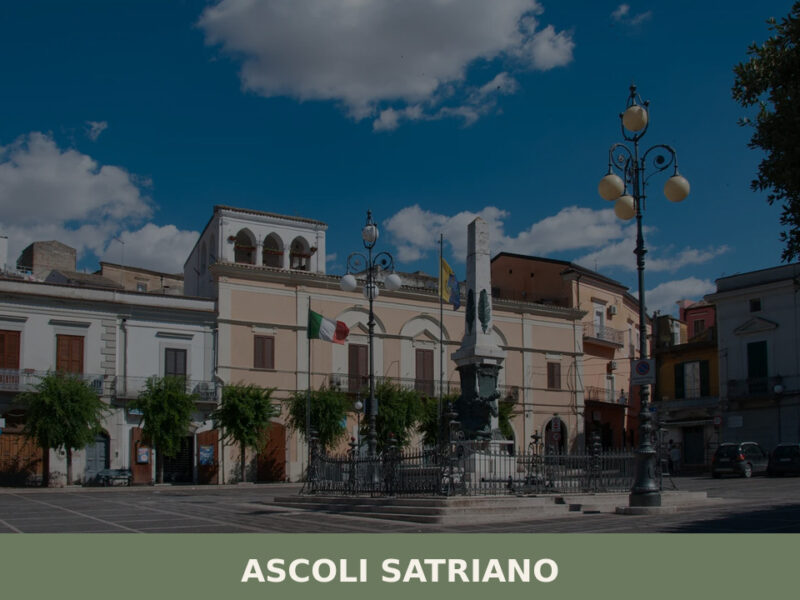
Discover Ascoli Satriano, an ancient hilltop village in Puglia's Daunia hills. From Roman bridges to Daunian treasures, here's your complete guide.
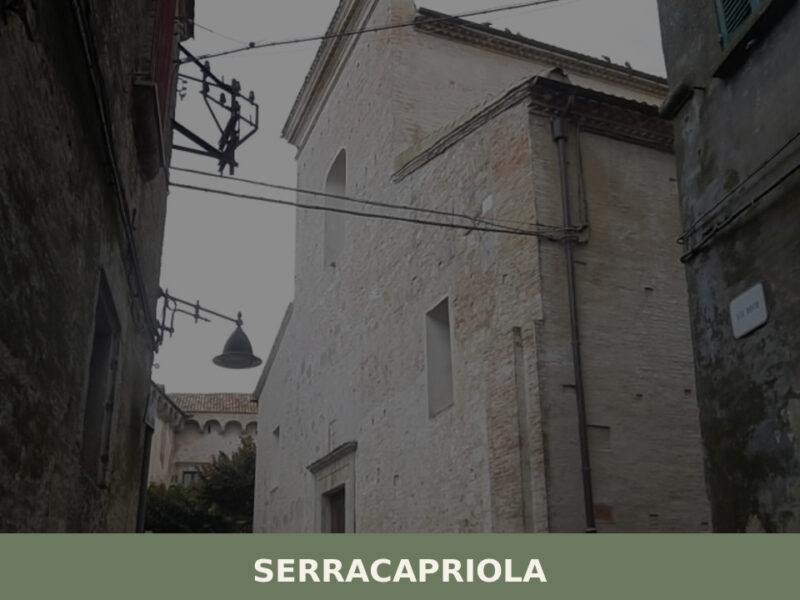
A hilltop village of 3,656 people overlooking the Fortore valley in Foggia province. Serracapriola offers a Norman castle, medieval alleys, and honest Puglian cooking far from the crowds.
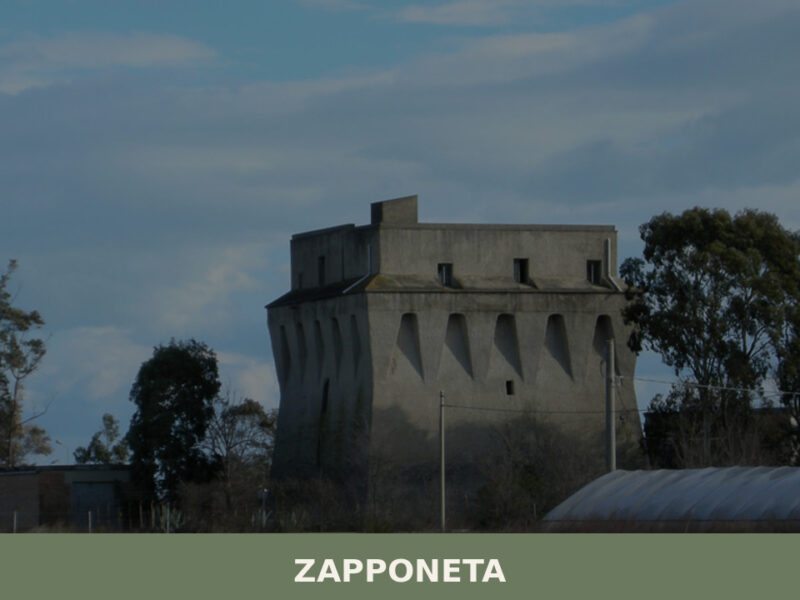
A flat Adriatic village at two metres above sea level, Zapponeta sits where the Tavoliere plain meets the coast. Salt, wind, and wheat define this quiet corner of Foggia province.
📝 Incorrect information or updates?
Help us keep the Torremaggiore page accurate and up to date.