


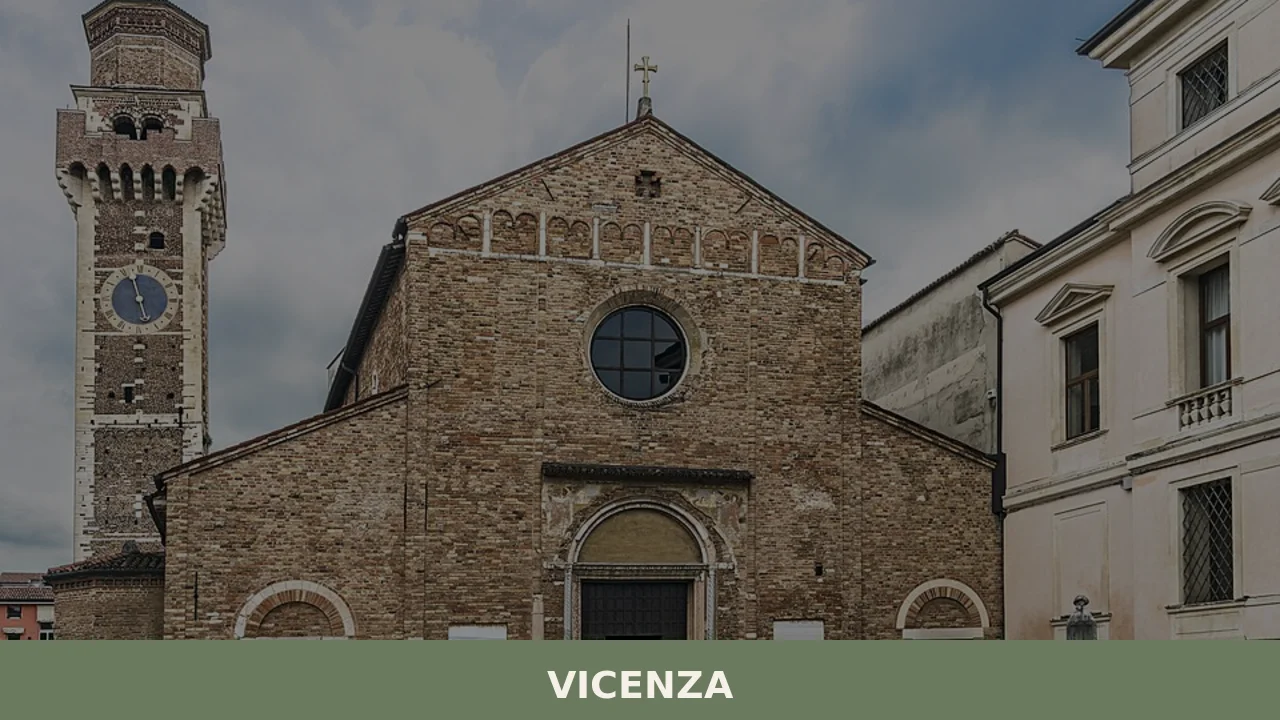
Vicenza
Village of Vicenza: Explore 1 architectural masterpiece, the Olympic Theatre, and taste traditional baccalà. Plan your Italy trip now!
Discover Vicenza
The city of Vicenza, with its 113,639 inhabitants and an altitude of 39 m above sea level, is located in the center of the Venetian plain, representing a historical and cultural crossroads of considerable importance.
Universally recognized as the “City of Palladio” for the exceptional architectural heritage left by the architect Andrea Palladio, Vicenza offers a travel experience rich in art and history.
Those who wish to discover what to see in Vicenza will find an itinerary ranging from magnificent Renaissance works to the evocative corners of the historic center, all elements that contribute to defining its unique identity.
Palladio’s influence is tangible in every corner, making a visit a journey through his artistic vision.
History and origins of Vicenza
The origins of Vicenza are rooted in the Roman era, when the city, known as Vicetia, was an important center on the Via Postumia connecting Genoa to Aquileia.
Although its foundation is attributed to the Paleoveneti, it was with the arrival of the Romans in the 2nd century BC that the urban core began to develop significantly, acquiring the status of municipium in 89 BC.
During the imperial period, the city prospered thanks to its strategic position and the fertility of the surrounding territory, as evidenced by the still visible remains of the ancient forum and Roman theater.
Romanization brought with it infrastructure and an administrative structure that laid the foundations for future development.
After the fall of the Western Roman Empire, Vicenza suffered barbarian invasions, with the Goths, Lombards, and Franks successively controlling the territory, leaving traces in local toponymy and culture.
In the 12th century, the city established itself as a free commune, actively participating in the struggles against Emperor Frederick Barbarossa and joining the Veronese League and then the Lombard League.
This period saw the construction of defensive walls, urban expansion, and the emergence of important noble families who contributed to shaping the political and economic landscape. Municipal autonomy was a moment of great vitality for the city, which distinguished itself by its capacity for self-governance.
The 15th century marked the beginning of one of Vicenza’s most glorious periods, with its annexation to the Republic of Venice in 1404, which guaranteed political and economic stability for almost four centuries.
It was under the Serenissima that the city experienced an exceptional artistic and cultural flourishing, thanks primarily to the work of Andrea Palladio, who between 1540 and 1580 revolutionized civil architecture with his palaces and villas.
Palladio’s influence transformed Vicenza into a model of classical beauty and harmony, earning it recognition as a UNESCO World Heritage site.
This connection with Venice allowed Vicenza to become a reference center for art and architecture, attracting artists and intellectuals from all over Europe.
The city, like other Venetian centers such as Palù, benefited from the stability and trade routes guaranteed by the Republic.
What to see in Vicenza: main attractions
For those wondering what to see in Vicenza, the city offers a fascinating journey through art and history, with a particular focus on the works of Andrea Palladio.
His creations, recognized as UNESCO World Heritage, form the beating heart of the tourist and cultural offerings.
From the majestic Basilica Palladiana to the theaters and villas, each attraction tells a piece of the architectural and social history of the place. A visit to these sites allows one to fully understand the greatness and innovation of the Renaissance master.
Basilica Palladiana
The Basilica Palladiana, an undisputed symbol of Vicenza, dominates Piazza dei Signori with its imposing structure.
Originally known as the Palazzo della Ragione, this medieval building underwent a radical intervention by Andrea Palladio starting in 1549.
The architect designed the addition of the famous white marble loggias, characterized by serlianas (or Palladian windows) that give the building an appearance of classical elegance and harmony.
Palladio’s genius managed to incorporate the pre-existing Gothic structure, including the Council Hall on the upper floor, creating a masterpiece that has influenced world architecture.
Its historical function as the seat of the city government and a commercial center is now accompanied by that of an exhibition space and a reference point for cultural events. Going up to the loggias allows one to enjoy a privileged view of the square and the surrounding palaces.
Teatro Olimpico
The Teatro Olimpico, conceived by Andrea Palladio in 1580 and completed by his pupil Vincenzo Scamozzi after the master’s death, is the oldest surviving indoor masonry theater in the world.
Built within the walls of the Castello del Territorio fortress, the theater is inspired by classical Roman models, but with surprising technical innovations.
The semicircular cavea, the proscenium decorated with statues and bas-reliefs, and above all the famous “streets of Thebes,” fixed wooden perspectives that create an illusion of scenic depth, are elements that leave visitors breathless.
Inaugurated in 1585 with the performance of Sophocles’ Oedipus Rex, the Teatro Olimpico is still used today for concerts and shows, offering a unique experience and a plunge into the Renaissance.
Guided tours often illustrate the complex mechanisms and illusionistic techniques used by the architects.
Villa Capra “La Rotonda”
Located just outside the city center, on a panoramic hill, Villa Capra known as “La Rotonda” is perhaps the most famous of the Palladian villas and an icon of Renaissance architecture.
Designed by Andrea Palladio starting in 1566 for Canon Paolo Almerico, the villa is a sublime example of symmetry and proportion.
Characterized by four identical facades, each with an Ionic pronaos reminiscent of a classical temple, and surmounted by a dome, La Rotonda is a perfectly balanced building.
Its elevated position offers a 360-degree view of the surrounding landscape, harmoniously integrating architecture with nature.
The interior features frescoes and decorations of great value, making the visit a complete experience of art and landscape. The villa can be visited on specific days, and it is advisable to check the opening hours on the official website.
Vicenza Cathedral (Cathedral of Santa Maria Annunciata)
The Cathedral of Santa Maria Annunciata, or Vicenza Cathedral, is the city’s main Catholic place of worship and a melting pot of architectural styles that reflect the different eras of its construction and reconstruction.
The current building features a 15th-century Gothic facade, while the dome and main portal are the work of Andrea Palladio, added in the 16th century.
The structure was severely damaged during World War II and subsequently restored, recovering much of its original beauty.
Inside, one can admire works of art by local artists and a series of richly decorated chapels, among which the Thiene Chapel, also designed by Palladio, stands out.
The cathedral represents an important example of religious architecture that has evolved through the centuries, maintaining a strong connection with the city’s history.
Sanctuary of the Madonna di Monte Berico
The Sanctuary of the Madonna di Monte Berico stands on the eponymous hill overlooking Vicenza, offering a spectacular view of the city and the surrounding plain.
The current building, a result of the fusion of two churches, a 15th-century Gothic one and a 17th-century Baroque one, is an important pilgrimage site.
Tradition tells of two Marian apparitions that occurred in 1428 and 1429, which led to the construction of the first sanctuary.
The interior is rich in works of art, among which stand out Bartolomeo Montagna’s “Pietà” and Paolo Veronese’s “Cenacolo” (The Last Supper), one of the Venetian painter’s masterpieces. Access to the sanctuary can be made via the evocative Scalinata di Monte Berico, flanked
Typical Cuisine and Products of Vicenza
Vicenza’s gastronomic tradition stands out for its heartiness and the use of simple yet flavorful ingredients, a result of a territory that stretches from the plains to the foothills of the Prealps.
Vicentine cuisine reflects historical influences, particularly the long dominion of the Republic of Venice, which introduced trade and exotic ingredients, such as baccalà (dried cod), which has become a cornerstone of the local table.
The proximity to rural and mountainous areas has also fostered the development of dishes based on meat, cheeses, and local produce, characterized by preparations that enhance the authentic flavor of the raw ingredients.
This blend of sea and land creates a gustatory balance typical of the Veneto region.
Among the symbolic dishes of Vicentine cuisine, Baccalà alla Vicentina holds a place of honor.
This is stockfish (dried cod, not salted cod) cooked slowly with onion, anchovies, milk, flour, and Grana Padano cheese, until it reaches a creamy consistency and an intense flavor. It is traditionally served with polenta, also a fundamental element of the local diet.
Another iconic dish is Bigoli con l’anatra, a fresh pasta similar to thick spaghetti, seasoned with a rich duck ragù.
This dish testifies to the preference for poultry meats and the ability to transform them into elaborate preparations. Also not to be missed are Risotto al radicchio, which takes advantage of the abundance of red radicchio in the area, and Sopa Coada, a pigeon and stale bread soup, once a festive dish.
Despite the absence of specific DOP or IGP certified products for the urban area of Vicenza, the province is renowned for several excellences.
Among cheeses, Asiago (DOP) is perhaps the most famous, produced on the Asiago Plateau in its “fresco” (pressed) and “stagionato” (aged) varieties.
You can also find cured meats such as Vicentina soppressa, a pork sausage with a delicate and spicy flavor, and olive oil from the Berici Hills, appreciated for its organoleptic qualities.
These products, while not exclusive to the provincial capital, are deeply rooted in the local gastronomic culture and represent an excellent opportunity to taste the flavors of the territory. Many restaurants and trattorias in the city center offer menus that highlight these ingredients.
Festivals, Events, and Traditions of Vicenza
Vicenza’s traditions are deeply connected to its history and spirituality, with events that mark the year and involve the entire community.
The main patron saint festival is dedicated to the Madonna of Monte Berico, the city’s principal patroness, and is celebrated on September 8th.
This date is a moment of great devotion, with pilgrimages to the sanctuary overlooking the city, solemn masses, and moments of reflection.
In the evening, the festival often culminates with fireworks displays that light up the sky above the hill, creating an evocative atmosphere. Popular participation is strong, with many Vicentines walking up the monumental staircase to honor the patroness.
The secondary patron saint is Saint Vincent of Saragossa, whose feast day is celebrated in January, but with a lesser impact compared to the Marian festival.
In addition to the patron saint festival, Vicenza hosts several events that enliven the city throughout the year.
Among these is the Vicenza in Lirica festival, held in autumn, which offers opera performances and concerts in historic venues like the Teatro Olimpico, attracting enthusiasts from all over Italy.
The Fiera di Vicenza (Vicenza Fair) is also home to important international trade fairs, particularly in the goldsmith sector, such as Vicenzaoro, which takes place several times a year.
These events help keep the city’s artisan and commercial tradition alive, projecting it into an international context.
For visitors, participating in these events offers a unique opportunity to immerse themselves in the cultural and productive life of the place, discovering lesser-known aspects of its identity.
When to visit Vicenza and how to get there
The best time to visit Vicenza is spring (April-June) and autumn (September-October), when the climate is mild and pleasant, ideal for strolling through the city center streets and visiting the numerous attractions without the summer heat or winter cold.
During these months, the city also comes alive with cultural and gastronomic events, and crowds are generally less intense compared to the peak summer season.
Summer can be hot and humid, but it offers the opportunity to participate in outdoor festivals and enjoy summer evenings.
For those seeking a quieter experience, the low season months can be ideal, although some attractions might have reduced hours. It’s always worth checking the events calendar on the official website of the Municipality of Vicenza before planning your trip.
Getting to Vicenza is easy thanks to its strategic location.
By car, the city is served by the A4 Milan-Venice motorway, with the Vicenza Ovest (West) and Vicenza Est (East) exits allowing easy access to the center.
From Milan, the journey takes about 2 hours and 30 minutes, while from Venice it takes approximately 45 minutes.
Vicenza’s train station is an important hub on the Milan-Venezia line, with numerous regional and intercity connections linking it to major Italian cities.
For those who prefer to fly, the closest airports are Venice Marco Polo Airport (VCE), about 60 km away, and Verona Villafranca Valerio Catullo Airport (VRN), also about 60 km away. Both offer connections with shuttles or trains to reach Vicenza.
For those traveling by train, it is advisable to consult the Trenitalia website for updated timetables and fares.
| Starting Point | Distance | Estimated Time |
|---|---|---|
| Venice | 70 km | 45-60 minutes |
| Verona | 55 km | 40-50 minutes |
| Milan | 200 km | 2 hours 15 minutes – 2 hours 45 minutes |
| Padua | 35 km | 30-40 minutes |
Where to stay in Vicenza
Vicenza offers a variety of accommodation options, suitable for different needs and budgets, allowing visitors to choose the solution most congenial to their type of trip.
In the historic center, you can find numerous boutique hotels and bed & breakfasts located in period buildings, offering a refined atmosphere and the convenience of reaching the main attractions on foot. These establishments are ideal for those who wish to fully immerse themselves in the city environment and experience staying in historical contexts.
The areas adjacent to the center, or the immediate outskirts, on the other hand, offer chain hotels and more modern solutions, often with private parking, suitable for those traveling by car or for business reasons.
For those seeking a more rural experience or wishing to explore the surroundings, agriturismos and country houses are available in the nearby hills, such as the Berici Hills, offering tranquility, contact with nature, and the opportunity to taste typical zero-kilometer products.
These solutions are particularly appreciated by families or by those who wish to combine cultural visits with moments of relaxation and outdoor activities.
Many of these establishments also feature swimming pools and internal restaurants, ensuring a comfortable and complete stay.
It is advisable to book in advance, especially during high season periods or in conjunction with important events, to ensure the best choice and the most advantageous rates.
Those visiting Vicenza and wishing to explore the cultural and landscape richness of Veneto can extend their itinerary to other villages in the region.
For example, a detour to Erbezzo or Velo Veronese can reveal the fascinating landscapes of the Lessini Mountains, offering an interesting contrast to the Vicenza plain.
Similarly, San Zeno di Montagna, with its panoramic position on Lake Garda, represents another option for those who love nature and evocative views, completing a diversified trip through the beauties of Veneto.
Photo Gallery of Vicenza
Do you have photos of Vicenza?
Share your photos of the village: the best ones will be added to the official gallery, with your credit.
Send your photosIn Veneto More villages to discover
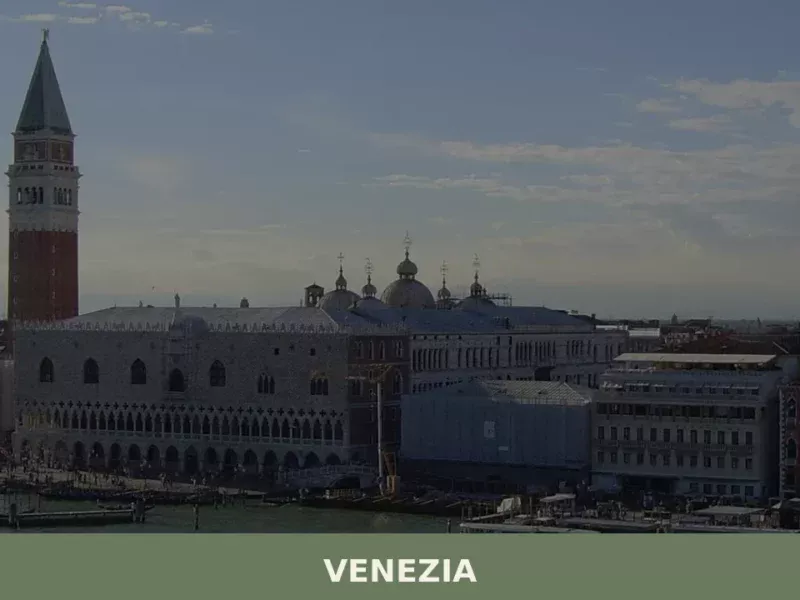
Venezia
With its 259,263 inhabitants, Venice stands out as one of the most significant centers in Veneto, presenting an altitude of 256 meters above sea level. This city, included in the Hill Villages category according to the classification provided, offers an invaluable historical, artistic, and cultural heritage. In this article History and Origins of Venice What […]
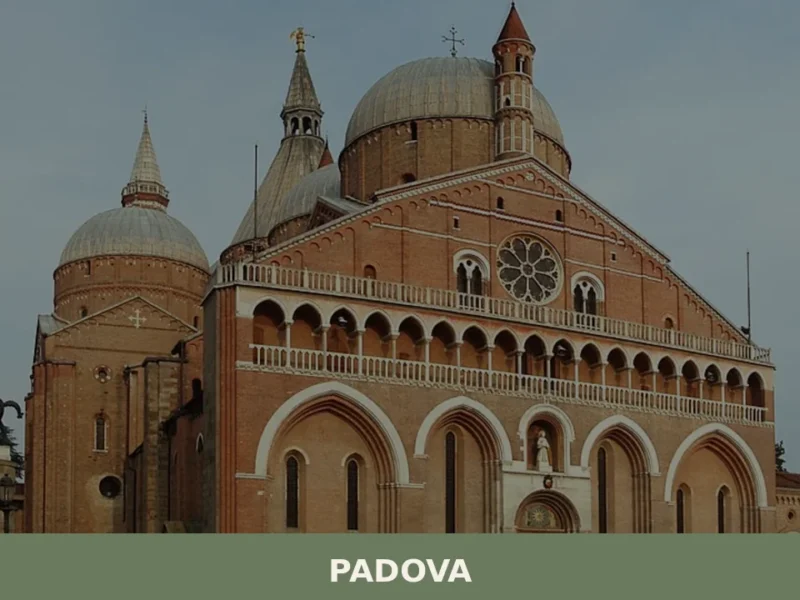
Padova
Padova, Italy: Explore 1 historic university city. Discover Giotto's frescoes at Scrovegni Chapel & the vast Prato della Valle. Plan your trip now!
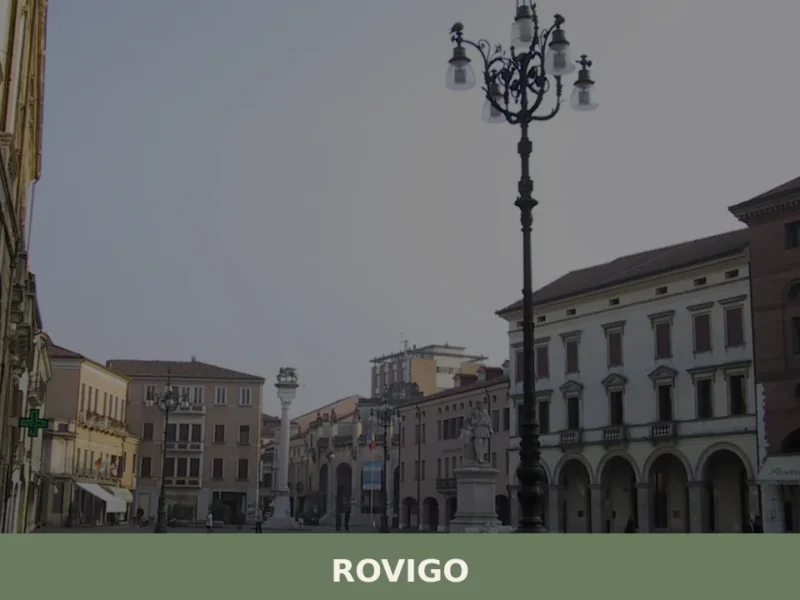
Rovigo
what to see in rovigo? Discover 5 top attractions in this city of 50,000 residents, from Rovigo Castle to La Rotonda. Explore the Polesine region.




📝 Incorrect information or updates?
Help us keep the Vicenza page accurate and up to date.