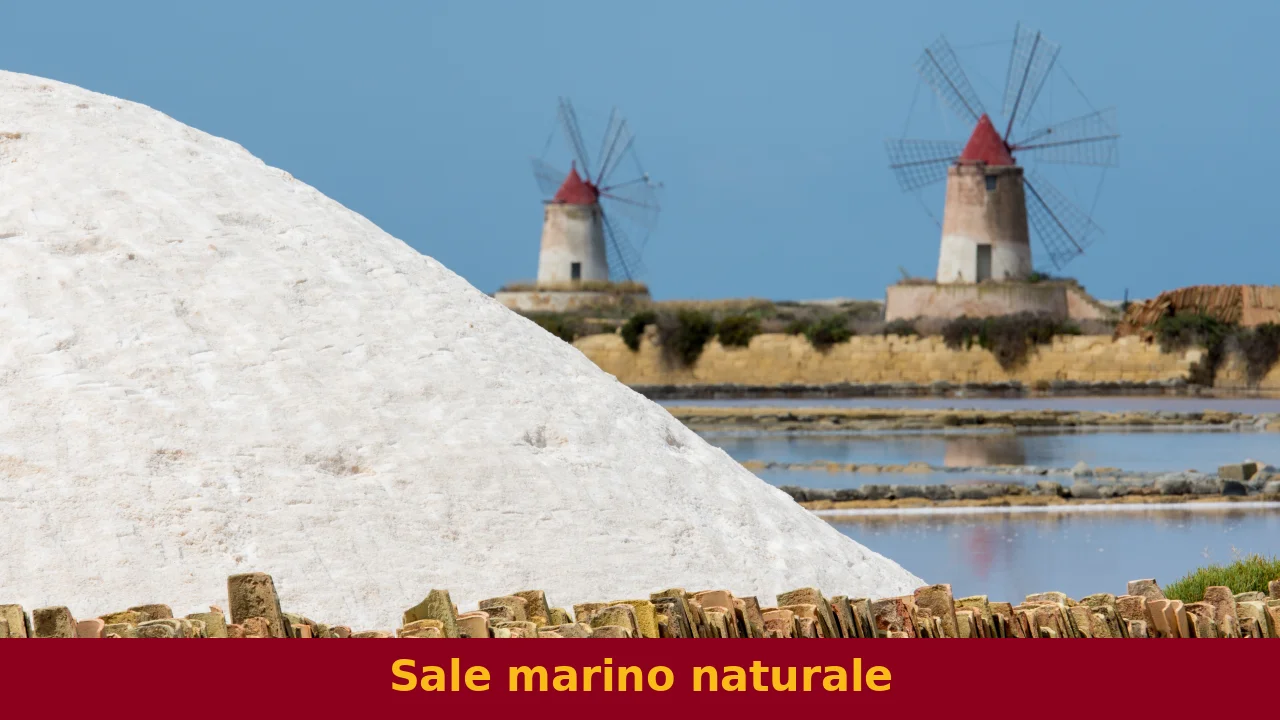
Every summer, between July and August, the salt pans of Trapani come alive for the harvest of sale marino naturale. This precious ingredient, the result of a process lasting months under the Sicilian sun, embodies an ancient art that renews itself season after season. It is not a mere condiment, but the outcome of a…
Every summer, between July and August, the salt pans of Trapani come alive for the harvest of sale marino naturale. This precious ingredient, the result of a process lasting months under the Sicilian sun, embodies an ancient art that renews itself season after season. It is not a mere condiment, but the outcome of a profound interaction between humans, the sea, and the unique climate of western Sicily. Its crystalline purity and unmistakable flavor attest to an unbreakable bond with the territory and its traditions, inviting discovery of a landscape where nature and culture merge.
sale marino naturale is an Italian product with Protected Geographical Indication (PGI), whose production is strictly limited to the province of Trapani, with particular emphasis on the territories of the municipalities of Trapani and Paceco. It is not a common refined table salt, but a crystal that carries the history and flavor of the Mediterranean, extracted using methods that preserve its integrity. Its specificity derives not only from the geographical area, but also from the ancient artisanal extraction and processing procedures that keep its organoleptic properties intact. Recognized as a traditional Sicilian agri-food product (PAT) and a Slow Food Presidium, Trapani’s sale marino naturale represents an excellence that enhances the island’s agri-food heritage and identity.
The history of salt production in Trapani has its roots in remote eras, long before the concept of “typical product” took shape. Already the Phoenicians, skilled navigators and traders, had intuited the strategic value of these windy and sunny coasts for salt extraction. Over the centuries, the art of salt cultivation has been refined, transforming from a simple subsistence practice into a fundamental economic activity for the region. Artisanal procedures, handed down for generations, have allowed the preservation of a unique know-how, which still characterizes the production of sale marino naturale today. The salt pans of Trapani, with their windmills and glittering basins, are not just a place of production, but a cultural landscape that recounts millennia of work, ingenuity, and a profound respect for the rhythms of nature. This historical continuity is an integral part of the product’s value.
The focal point of sale marino naturale production is the province of Trapani, with its epicenter in the municipalities of Trapani and Paceco. This area, overlooking the Mediterranean, benefits from an ideal microclimate: long hours of sunshine, constant winds (such as the Scirocco and Maestrale) that favor the evaporation of seawater, and clay soil suitable for creating the salt pans. A large part of the production takes place within the Riserva Naturale Orientata Saline di Trapani e Paceco (Oriented Nature Reserve of Trapani and Paceco Salt Pans), a protected area managed by WWF, where human activity integrates harmoniously with biodiversity conservation. This unique landscape, dotted with windmills and white salt mounds, offers evocative views and the opportunity to visit places like Erice, a medieval village that dominates the salt pans from above with its panoramic view, or the historic city of Marsala, famous for its namesake wine and its millennia-old salt pans that extend towards the Stagnone islands.
The production of sale marino naturale follows a natural and artisanal cycle that lasts approximately 5-7 months, utilizing exclusively the energy of the sun and wind. The process begins in spring, when seawater is channeled into a system of communicating basins of different depths and sizes. Through the combined action of the sun and wind, the water gradually evaporates, increasing its saline concentration. As salinity grows, the water passes from one basin to another, until it reaches the ‘saline’ or ‘crystallizing’ ponds, where sodium chloride begins to crystallize on the bottom.
The harvest traditionally takes place in the summer months, between July and August, when the salt is accumulated in large white mounds, often protected by clay tiles to preserve its purity. It is manual labor, requiring experience and profound knowledge of natural rhythms and weather conditions. It is interesting to note how, also thanks to the management of the Riserva naturale orientata Saline di Trapani e Paceco (Oriented Nature Reserve of Trapani and Paceco Salt Pans), the production of this precious salt has increased significantly, from approximately 50,000 to about 80,000 tons/year since its establishment, demonstrating how environmental protection can go hand in hand with product enhancement.
Trapani’s sale marino naturale stands out for its unique organoleptic characteristics, the result of its marine origin and artisanal production process, which does not involve aggressive refining. Unlike industrial salt, which undergoes treatments that impoverish its composition, Trapani salt retains a richness of essential minerals and trace elements, such as magnesium, potassium, calcium, and iodine, naturally present in seawater. This composition gives the salt a more complex and less aggressive flavor, with a sweet note that enhances its savoriness without masking other tastes. Its crystals are generally coarser and more irregular than fine table salt, with a consistency ranging from the granularity of coarse salt to the delicacy of fleur de sel. The color can vary from pure white to slightly pinkish or grayish hues, depending on the presence of microalgae and minerals, a sign of its naturalness and integrity. Its ability to dissolve slowly makes it ideal for gradually releasing flavor.
The versatility of Trapani’s sale marino naturale makes it a valuable ally in any kitchen, not just Sicilian. Its purity and balanced savoriness make it ideal for enhancing the natural flavors of ingredients, without overpowering them. It is perfect for cooking fish in a salt crust, where it forms a crust that maintains the fish’s moisture and flavor, for seasoning grilled meats, for flavoring fresh vegetables, or for preparing broths and soups. In Sicilian gastronomic tradition, Trapani salt is a fundamental ingredient for preparing iconic dishes such as swordfish alla ghiotta, sarde a beccafico, or simply for enriching freshly baked bread with a drizzle of local extra virgin olive oil. Its granularity also makes it suitable for brines or for preserving foods, such as olives, capers, or aged cheeses. Used as “fleur de sel” at the end of cooking, it adds a crunch and a touch of savoriness that elevates even the simplest dish, imparting a nuance of flavor that only quality salt can provide.
Trapani’s sale marino naturale is a unique product not only for its flavor, but for the entire narrative it carries. Its uniqueness derives from the combination of several factors: the ideal microclimate of the Trapanese coast, the ancient artisanal wisdom passed down for centuries, and the decision to preserve the salt pan ecosystem through the Riserva Naturale Orientata Saline di Trapani e Paceco (Oriented Nature Reserve of Trapani and Paceco Salt Pans). This is not an industrial salt, but the fruit of a harmonious interaction between humans and nature, a slow and respectful process that enhances biodiversity and the landscape. Its identity is closely linked to the territory, so much so that it is protected by a Protected Geographical Indication. It is a concrete example of how tradition can coexist with sustainability, offering a high-quality product that is also an emblem of an entire region and a complete sensory experience. Purchasing and using this salt means bringing a piece of Sicilian history and culture to the table.
Trapani’s sale marino naturale boasts important recognition that attests to its excellence and protection. It is a product with Protected Geographical Indication (PGI), a European mark that guarantees the salt has been produced, processed, and elaborated in a specific geographical area and according to strict regulations, ensuring its origin and qualities. Furthermore, it is included in the list of traditional products from SICILIA, a recognition from the Ministry of Agricultural, Food and Forestry Policies that highlights its historical and cultural value, linked to production practices consolidated over time. To crown these attestations, Trapani salt is also a Slow Food Presidium, a project that defends biodiversity and local gastronomic traditions, promoting ethical, sustainable, and small-scale production. These seals are not just labels, but guarantees of quality, authenticity, and a commitment to preserving a unique heritage, as also detailed on Wikipedia.
To savor and purchase sale marino naturale in its most authentic form, the ideal place is traditional products from SICILIA itself. In the cities of Trapani and Marsala, it is possible to directly visit the historic salt pans, buy salt at the producers’ sales points, and discover the different formats and granulometries, from fine salt to fleur de sel. Many companies also offer guided tours that allow visitors to understand the production process and admire the impressive landscape of the salt pans up close, often with the chance to observe pink flamingos. Local markets, such as Trapani’s fish market, or the neighborhood markets of Erice and surrounding areas, are another excellent opportunity to find the salt and other Italian traditional food products, meeting producers directly. Summer food and wine festivals in the province of Trapani often dedicate space to this ingredient, offering tastings and traditional dishes that enhance it. A trip to this part of Sicily is not complete without the sensory experience of touching, seeing, and tasting sale marino naturale, a true emblem of local taste and culture.
📷 Photo: Gianclaudio Marino · CC BY-SA 4.0 · All credits →
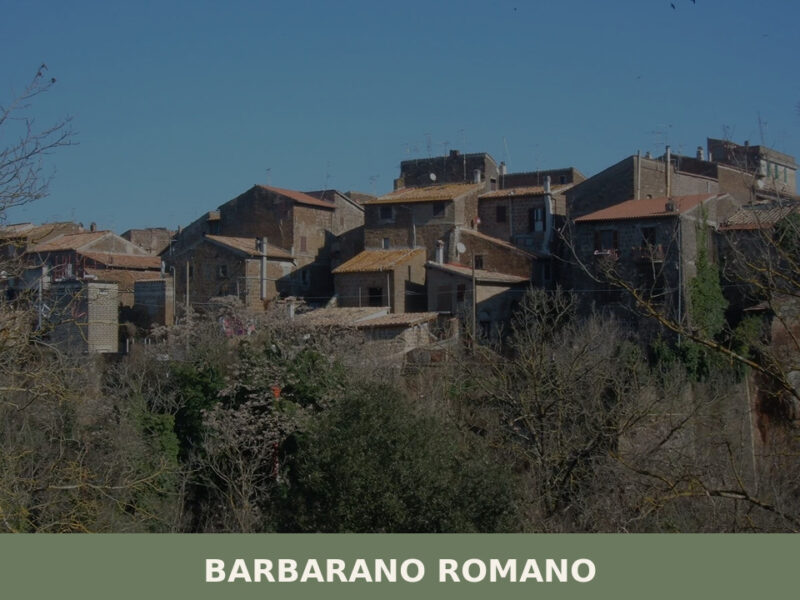
Morning light catches the volcanic tufa in shades of ochre and rust, and the only sound rising from the gorge below is the intermittent call of a jay echoing off ancient rock. Barbarano Romano sits on a plateau in the province of Viterbo, a settlement of barely a thousand souls whose streets still follow the […]
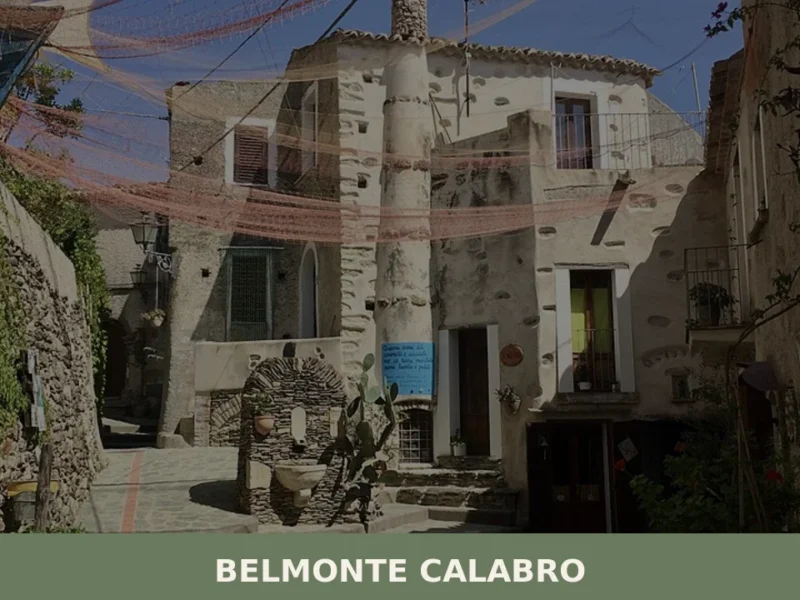
In 1270, Charles I of Anjou granted Drogone de Beaumont the fief that would give rise to the name Belmonte — from the French Beaumont, meaning beautiful mountain. Sitting at 262 metres above sea level on the Tyrrhenian side of the Cosenza province, the village today has 1,984 inhabitants and preserves a historic centre layered […]
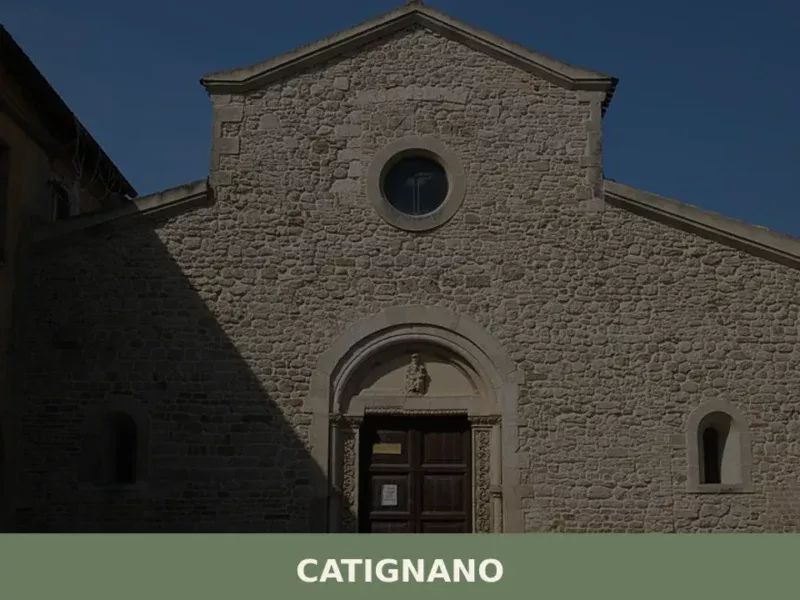
Catignano has a current population of 1,227, spread across a hilly territory at 365 metres above sea level in the province of Pescara. The municipality extends along a ridge separating the Nora and Cigno valleys, two watercourses that flow into the Pescara river. Those looking for what to see in Catignano will find a rural […]
📝 Incorrect information or updates?
Help us keep the Sale marino naturale page accurate and up to date.