
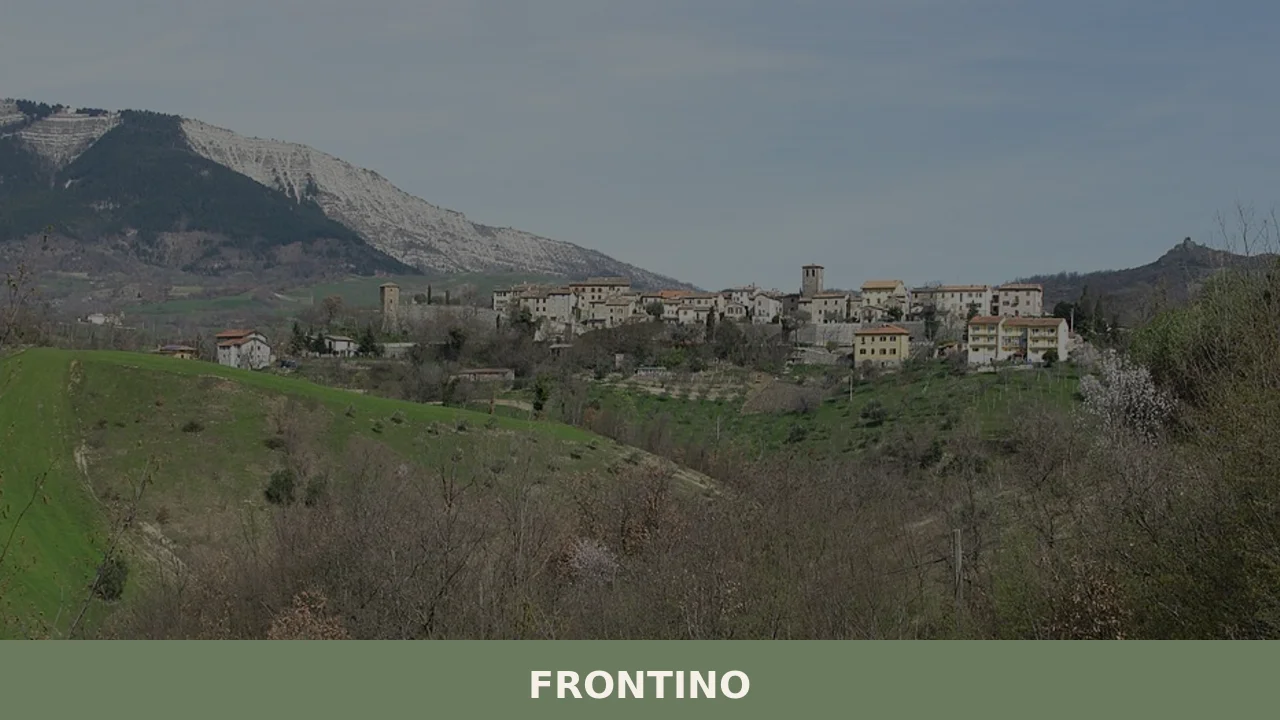
Frontino
Frontino has around 300 inhabitants today, spread across a hilly area in the province of Pesaro and Urbino at 519 metres above sea level, along the eastern slope of the Apennines separating the Marche from Tuscany and Romagna. The municipality, one of the least populated in the entire region, retains a compact and legible urban […]
Discover Frontino
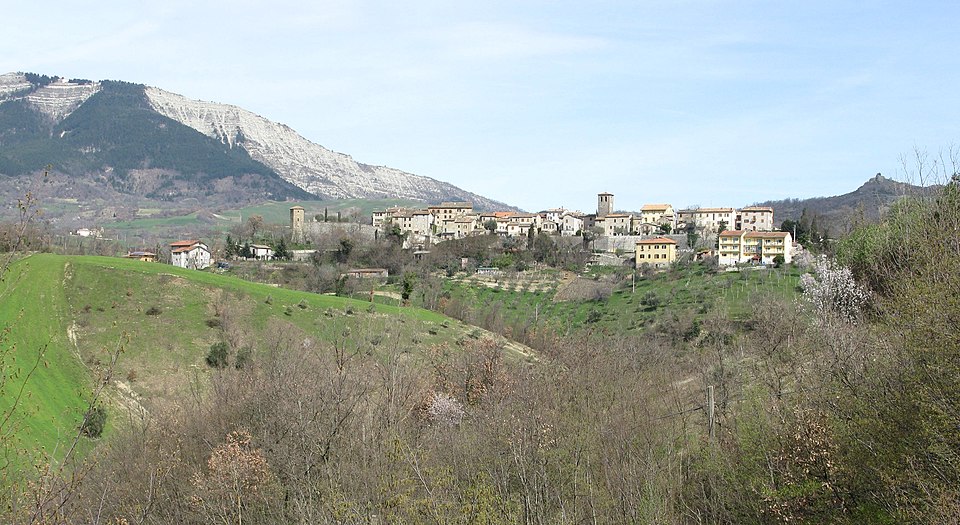
Frontino has around 300 inhabitants today, spread across a hilly area in the province of Pesaro and Urbino at 519 metres above sea level, along the eastern slope of the Apennines separating the Marche from Tuscany and Romagna. The municipality, one of the least populated in the entire region, retains a compact and legible urban layout, with defensive walls still visible and a built fabric reflecting centuries of communal life in the Montefeltro. Understanding what to see in Frontino means crossing a territory where Apennine geology, feudal history and monastic life have left concrete marks, still traceable on foot today.
History and origins of Frontino
The name Frontino derives, according to the most widely accepted hypothesis, from the position of the settlement relative to the hill ridge: “in fronte” (facing) the valley of the Mutino stream, a tributary of the Foglia. The first documented mention of the castle dates to the medieval period, when the territory fell within the sphere of the Counts of Carpegna, feudal lords who controlled much of the upper Montefeltro. With the expansion of the Montefeltro family — and later the Della Rovere — the village came under the Duchy of Urbino, following its political fortunes until the devolution to the Papal States in 1631.
The presence of the Convent of Montefiorentino, founded by the Franciscan Friars Minor in the 13th century, profoundly shaped local history. The conventual complex became a religious and cultural centre of significance for the entire area, and an altarpiece attributed to Giovanni Santi, Raphael’s father, was placed inside it. This fact positions Frontino within the network of artistic commissions of the Urbino Renaissance, a connection often overlooked in broader historiographical accounts. After Italian Unification, the municipality underwent a progressive depopulation linked to emigration towards coastal cities and the Po Valley, a phenomenon that drastically reduced the population throughout the 20th century, down to the current 300 residents.
In 2007, Frontino received the Bandiera Arancione (Orange Flag) from the Touring Club Italiano, a recognition awarded to small inland municipalities that maintain quality standards in hospitality and heritage preservation. This certification, verifiable on the Touring Club Italiano website, has helped draw attention to a territory otherwise marginal in Marche tourism routes.
What to see in Frontino: 5 main attractions
1. Convent of Montefiorentino
Founded in the 13th century by the Franciscans, the convent stands a short distance from the town centre. The adjoining church houses the Chapel of the Oliva Counts, decorated with Renaissance works including a panel attributed to Giovanni Santi. The architecture of the cloister, with round arches on columns of local stone, documents the monastic building techniques of the Apennine area. The complex is open to visitors and represents the main reason scholars and travellers come to Frontino.
2. Walled historic centre
The historic core retains sections of the medieval defensive walls and an entrance gate that can still be walked through. The sandstone houses, arranged along narrow, sloping streets, follow the morphology of the ridge. The civic tower, visible from various points in the valley, served as a lookout element in the Montefeltro’s defensive system. The compactness of the urban layout allows a complete visit in less than an hour.
3. Bread Museum
Frontino is home to a small museum dedicated to bread-making, an activity that in the upper Montefeltro has preserved traditional techniques linked to the use of communal wood-fired ovens. The exhibition documents the working tools — peels, kneading machines, dough troughs — and the production cycle from grain milling to baking. The museum forms part of a broader effort to promote the Apennine food practices of the province of Pesaro and Urbino.
4. Ponte Vecchio Mill
Along the course of the Mutino stream stands a restored water mill, with its wheel and grinding mechanisms still in working order. The structure, datable to between the 16th and 17th centuries, documents the central role of hydraulic power in the economy of Marche mountain communities. Its position along the valley floor allows visitors to observe the local geology: outcrops of sandstone and marl typical of the Montefeltro formation.
5. Trails towards Monte Carpegna
From the municipal territory, hiking trails lead upwards towards Monte Carpegna (1,415 m), the highest peak in the Montefeltro. The paths cross woods of Turkey oak, downy oak and hop hornbeam, with stretches where beech forest takes over above 900 metres. The trail network is marked by the CAI (Italian Alpine Club) and offers panoramic viewpoints over the Foglia valley and, on clear days, the Adriatic coast.
Cuisine and local products of Frontino
Frontino’s cuisine reflects its position at the border between Marche, Romagna and Tuscany. The most common dish is polenta made with stone-ground cornmeal, served with meat sauces or porcini mushrooms gathered in the surrounding woods. Cappelletti in brodo, common across the entire Montefeltro area, are prepared with a filling of mixed meats and cheese, and eaten during the winter holidays. Bread baked in wood-fired ovens, made without salt in keeping with central Italian tradition, accompanies everyday meals and is celebrated in the local museum. Among dairy products, pecorino di fossa — aged in pits dug into tufa — is part of a tradition shared with neighbouring Romagna.
The territory produces extra virgin olive oil from the Pesaro hill belt and Casciotta d’Urbino DOP, a semi-cooked cheese made from a blend of sheep’s and cow’s milk, whose production area covers the entire province. Among beverages, vino di visciola — made by macerating wild sour cherries in red wine — is a preparation documented in the Montefeltro area for at least two centuries. Restaurants and trattorias in the municipality and surrounding hamlets offer menus based on these ingredients, with generous portions and lower prices compared to the coast.
When to visit Frontino: the best time
Frontino’s climate is subcontinental Apennine in character: cold winters with temperatures frequently dropping below zero, and moderate summers with highs that rarely exceed 30 degrees. Snow can appear between December and March, making some secondary roads difficult to navigate. The most suitable period for a visit runs from May to October, when the trails are passable and the days long enough to allow both a visit to the village and an excursion in the surroundings.
The patron saint’s feast, dedicated to Saint Peter the Apostle, falls on 29 June and is the main community event of the year. During the summer, local food festivals celebrating local produce — polenta, mushrooms, chestnuts — draw visitors from neighbouring municipalities. Autumn, with the foliage of the Turkey oak and beech woods, offers favourable conditions for photography and hiking, while mushroom and chestnut gathering sustains the seasonal economy. For up-to-date information on events and accessibility, it is useful to consult the official website of the Municipality of Frontino.
How to reach Frontino
Frontino is reached by car from the Adriatic coast by following the E78 (Fano-Grosseto dual carriageway) to the Mercatale exit, then continuing on provincial roads for about 20 kilometres towards the Montefeltro. From Pesaro the distance is approximately 60 kilometres, covered in just over an hour. From Rimini, the journey takes around 70 minutes, crossing the Valmarecchia and the Carpegna area. From Arezzo, on the Tuscan side, the route is approximately 90 kilometres via Sansepolcro and the Bocca Trabaria Pass.
The nearest railway station is Pesaro, on the Adriatic Bologna–Ancona line. From Pesaro it is necessary to continue by private vehicle or by scheduled bus (Adriabus service), with limited frequencies especially on public holidays. The nearest airport is Federico Fellini in Rimini, approximately 80 kilometres away. Ancona-Falconara airport is about 120 kilometres away. To explore the geographical position and administrative data in more detail, you can consult the Wikipedia page dedicated to Frontino.
What to see in Frontino and nearby villages in the Marche
The Montefeltro is a border territory, marked by parallel valleys running down from the Apennines towards the Adriatic. Frontino sits within a network of small municipalities sharing feudal history, transitional dialects and an economy still tied to farming and shepherding. To the south-east, along the Foglia valley, Auditore preserves the remains of two fortresses — upper Auditore and the Castle of Pietrarubbia — and documents the strategic importance of strongholds in the Montefeltro defensive system. The road link between the two municipalities crosses a hilly landscape of cereal fields and small olive groves.
Moving westwards, into the Biscubio valley, Apecchio is another centre in the Pesaro Montefeltro, known for its craft beer production and for a ducal palace linked to the Ubaldini family. The two villages, roughly 30 kilometres apart, can be visited in the same day, combining Frontino’s monastic and artistic heritage with Apecchio’s food and drink offerings. Together, these municipalities present a concrete picture of the Marche hinterland: communities reduced in numbers, yet with a physical heritage — buildings, mills, trails, convents — still intact and readable in the landscape.
Getting there
📷 Photo Gallery — Frontino
In Marche More villages to discover
Ancona
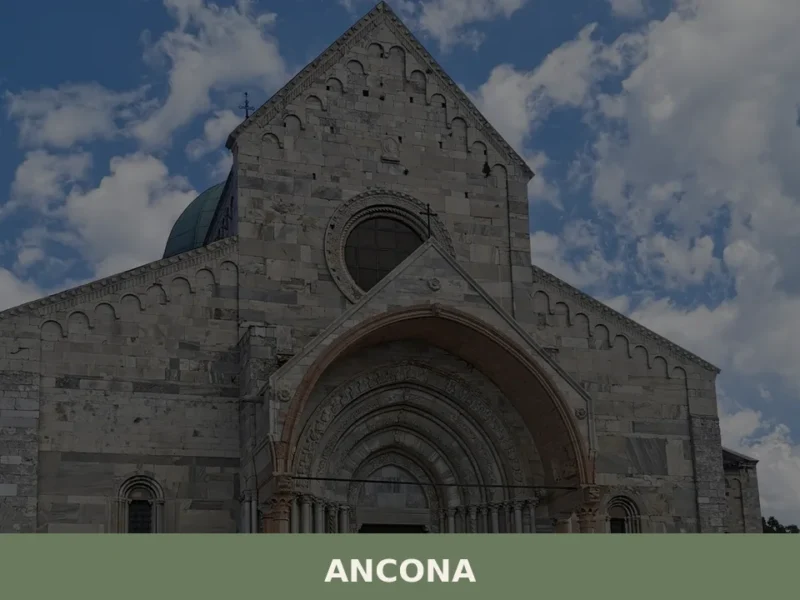
what to see in ancona, a city with 99,000 inhabitants. Discover 5 main attractions like the Duomo di San Ciriaco and Trajan's Arch. Plan your visit.
Monteciccardo
Monteciccardo first appears in a document from 1233 under the name Mons Sicardi, referring to a Lombard lord of whom no other trace survives. Standing at 384 metres above sea level, with its 1,643 inhabitants spread between the historic centre and scattered hamlets, the village commands a stretch of the Pesaro hills sloping down towards […]
Fratte Rosa
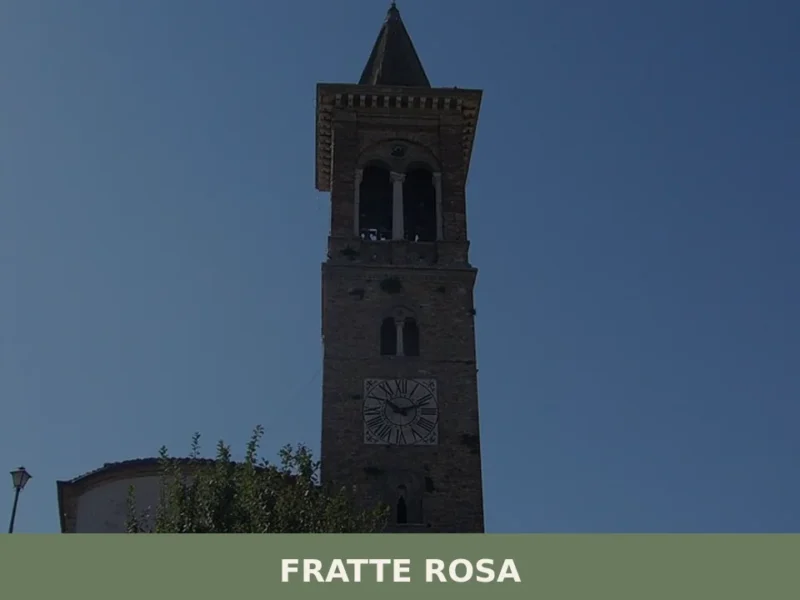
With its 847 inhabitants and an altitude of 419 meters above sea level, Fratte Rosa is located in the province of Pesaro and Urbino, a hilly area of the Marche region. The village’s name “Rosa” is historically linked to the color of a local clay, an essential component for the practice of pottery, documented in […]
🧀 Italian traditional products



📝 Incorrect information or updates?
Help us keep the Frontino page accurate and up to date.