Imagine standing in a narrow medieval street as a procession passes by — and the statue at its center is draped not in flowers or ribbons, but in live, writhing snakes. This is not a scene from a fantasy novel. This is la festa dei serpari, one of the most extraordinary and ancient rituals still practiced in Italy, held every year on the first Thursday of May in a small mountain village in the heart of Abruzzo. The village is Cocullo, and for one day each year it becomes the center of a world where paganism and Christianity, nature and devotion, fear and faith intertwine in a spectacle that has no equal anywhere on Earth.
La Festa dei Serpari: The Ancient Snake Festival of Cocullo
Every year, on the first Thursday of May, the otherwise quiet village of Cocullo transforms into something completely unlike itself. Thousands of pilgrims, tourists, photographers, and anthropologists converge on this tiny borgo perched at 1,000 meters above sea level in the province of L’Aquila, drawn by one of the most visceral and unforgettable rituals in the Western world.
The protagonists of the day are the serpari — the snake catchers. These are local men, and sometimes women, who spend the weeks before the festival venturing into the surrounding mountains and forests to capture non-venomous snakes, primarily four-horned snakes (Elaphe quatuorlineata) and Aesculapian snakes (Zamenis longissimus). The snakes are kept alive and brought into the village for the day of the celebration.
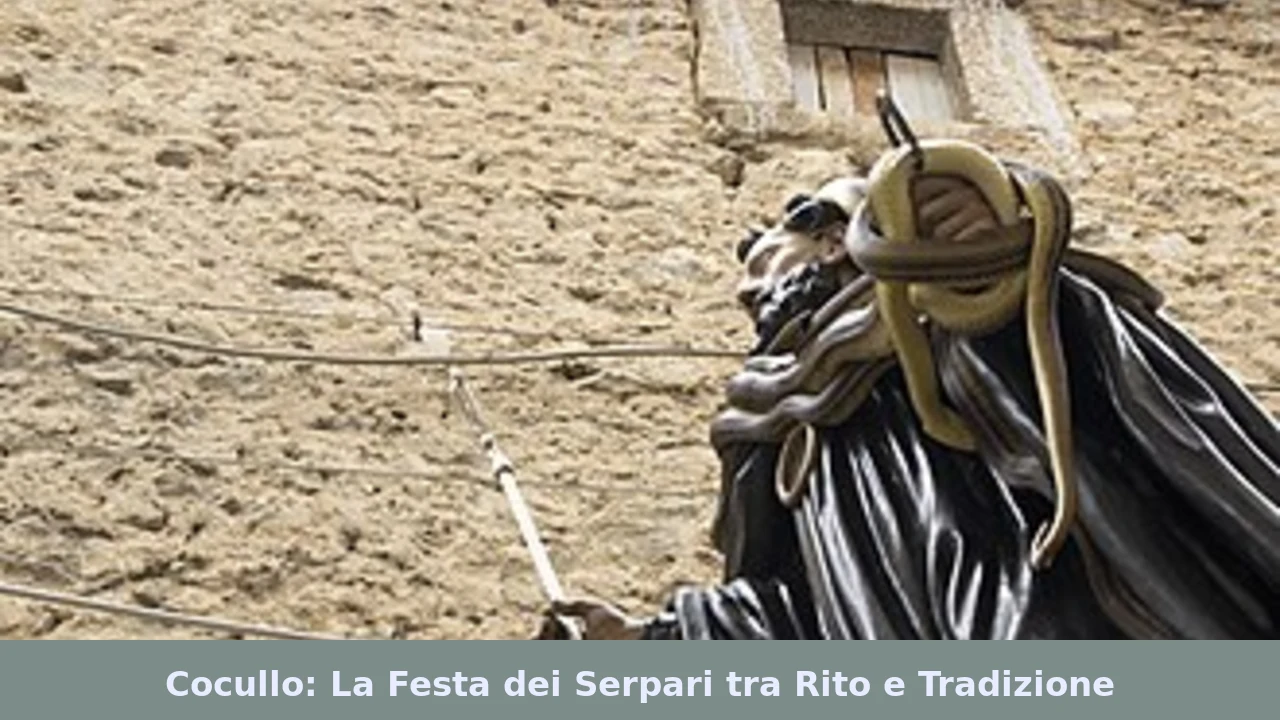
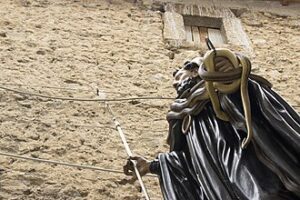
The climax of the festival is breathtaking: a wooden statue of San Domenico di Sora, the patron saint of Cocullo, is carried in procession through the streets — and before it departs, the snakes are draped across the statue’s arms, neck, and shoulders. What follows is a slow, solemn procession through the village, with devotees pressing close, some even draping additional snakes around their own bodies in an act of devotion and courage.
The roots of the Cocullo snake festival predate Christianity by thousands of years. Archaeologists and historians believe the ritual descends from ancient Italic religious practices tied to the Marsi people, a tribe renowned throughout the ancient world for their supposed ability to charm and handle snakes without harm. The Romans wrote about them with a mixture of fear and admiration.
The Origins of the Serpari Ritual: Pagan Roots and Christian Transformation
To truly understand la festa dei serpari, you need to travel far back in time — well before the Middle Ages, beyond even the Roman Empire. The territory around Cocullo was once home to the Marsi, one of the ancient Italic peoples who inhabited the Apennine mountains of central Italy. The Marsi were famous throughout the ancient world as snake handlers and healers, practitioners of a form of spiritual and medical knowledge that centered on the serpent as a sacred animal.
The serpent, in pre-Christian Mediterranean culture, was not merely a symbol of danger. It represented healing, rebirth, and earth power. Think of the caduceus, the staff of Hermes entwined with snakes, or the rod of Asclepius, the Greek god of medicine. The Marsi channeled this symbolism through rituals that involved the direct handling of live snakes — rituals that, remarkably, were never entirely abandoned.
When Christianity spread through the Apennines, the Church did not eradicate this deep-rooted practice. Instead, it was reinterpreted. San Domenico di Sora, an eleventh-century Benedictine monk who traveled through this region performing miracles and founding monasteries, became the new focus of devotion. According to local tradition, the saint had the power to protect against snakebite, toothache (another ancient attribute of the Marsi), and rabies.
The ancient pagan elements were thus absorbed into the Christian liturgical calendar, and the snake festival was given a new spiritual meaning — but the snakes remained. This extraordinary continuity across millennia is precisely what makes Cocullo’s festival so rare and so compelling.
What Happens During the Festival: A Step-by-Step Guide to the Day
If you plan to attend, understanding the structure of the day will help you make the most of the experience. The festival unfolds in a series of rituals, each with its own significance:
- Morning Mass and Bell Ringing: The day begins with a solemn religious mass inside the ancient Chiesa di San Domenico. Afterwards, a young woman of the village rings the church bell by pulling the rope with her teeth — a strange custom said to ward off toothaches for the coming year.
- The Arrival of the Snakes: The serpari present their captured snakes inside the church, placing them near the statue of San Domenico. This is one of the most atmospheric moments: the scent of incense, the flickering of candles, and the quiet movement of snakes in baskets.
- The Draping of the Statue: Shortly before the procession begins, the snakes are carefully arranged over the wooden statue of the saint. This act is carried out with great care and reverence.
- The Procession: Accompanied by prayers, chanting, and the sound of traditional Abruzzese music, the statue is carried through the narrow streets of the village. Spectators line every alley and rooftop to witness the passage.
- The Release of the Snakes: After the procession, the snakes are released unharmed back into the surrounding countryside — a gesture that echoes ancient ideas of returning sacred animals to nature.
The entire event has a deeply theatrical and emotional quality that is difficult to describe without experiencing it. There is reverence, joy, spectacle, and a genuine sense of connection to something very old.
When: First Thursday of May, every year.
Where: Cocullo, Province of L’Aquila, Abruzzo.
Access: By car via SS5 or SS83; nearest train station is Anversa degli Abruzzi (approximately 12 km). Special shuttle buses are often organized from surrounding towns on the day of the festival.
Entry: Free — the event takes place in public streets and the church is open to visitors.
Photography: Permitted, but always respectful of the religious character of the event.
Official information: Comune di Cocullo
Why Cocullo Is Worth Visiting Beyond the Festival
Even if you cannot time your visit for the first Thursday of May, Cocullo is a borgo that rewards exploration at any time of year. Situated in the Valle del Sagittario, one of the most scenic valleys in Abruzzo, it sits at the edge of the Parco Nazionale d’Abruzzo, Lazio e Molise — one of Italy’s oldest and most important national parks.
The village itself is compact and ancient, with stone-paved alleys, medieval architecture, and the ever-present Chiesa di San Domenico, where you can see ex-votos and historic artifacts related to the festival throughout the year. The surrounding landscape offers exceptional hiking, wildlife watching, and mountain scenery that will satisfy any nature lover.
For those who want to explore the wider area, the region around Cocullo is rich with equally fascinating borghi. Just a short drive away, Navelli is famous for its extraordinary saffron — one of the most prized in the world — and offers a beautifully preserved medieval hilltop village worth an afternoon’s exploration. Further south, Civita d’Antino is a romantic and little-visited gem that enchanted generations of nineteenth-century artists and Grand Tour travelers with its dramatic setting above the Liri valley.
Also worth mentioning is Cappadocia — not the famous Turkish region, but a small Abruzzo village that shares the name and offers its own quiet, authentic charm amid mountain landscapes. These villages together form a constellation of experiences that make a multi-day itinerary in this part of Abruzzo deeply rewarding.
Attending Responsibly: Tips for Visitors and Photographers
The Cocullo snake festival attracts growing international attention, and with that comes the responsibility to engage with it thoughtfully. Here are some practical suggestions for making your visit both enjoyable and respectful:
- Arrive early. The village has limited space and the streets fill quickly. Arriving by 8:00 AM gives you time to find a good vantage point before the procession begins around midday.
- Dress appropriately. This is primarily a religious event. Modest clothing is appreciated, especially when entering the church.
- Keep your distance from the snakes. The serpari are experienced handlers, but untrained handling of the animals is dangerous and disrespectful to both the snakes and the tradition.
- Do not disturb the serpari during ritual moments. Photography is generally welcomed, but be sensitive about when and how you point a camera during prayers or processions.
- Support local businesses. The day of the festival sees vendors selling local products — cheeses, cured meats, sweets, and artisan crafts. Purchasing from them directly supports the community that keeps this tradition alive.
The Regione Abruzzo has recognized the cultural importance of the festival and supports its preservation as part of the intangible cultural heritage of the region.
The Snakes Themselves: Facts and Myths
For many first-time visitors, the most immediate question is: are the snakes dangerous? The answer, reassuringly, is no. The species used in the festival — primarily the four-lined snake and the Aesculapian snake — are entirely non-venomous and relatively docile. They are also protected by Italian wildlife law outside of the specific context of this culturally sanctioned ritual.
The serpari capture their snakes in the weeks preceding the festival using techniques passed down through generations. The animals are not harmed, and their release after the ceremony is considered an essential part of the ritual — a return of the sacred creature to its natural domain.
From an ecological perspective, the festival has an interesting relationship with local snake populations. Because the serpari have deep knowledge of local habitats and behaviors, they have historically acted as informal monitors of the health of local ecosystems. Several researchers have noted that this traditional knowledge represents a form of indigenous ecological understanding that deserves documentation and respect.
Frequently Asked Questions
When exactly does la festa dei serpari take place?
The festival is held every year on the first Thursday of May in the village of Cocullo, in the Province of L’Aquila, Abruzzo. The main procession typically takes place in the early afternoon, but religious ceremonies and preparations begin in the morning from around 9:00 AM.
Is the festival suitable for children and families?
Many Italian families attend with children, and the event has a festive as well as a devotional atmosphere. However, parents should be aware that live snakes are a central element of the day. Children who are comfortable around reptiles will likely find it fascinating; those with strong fears may find it overwhelming. Use your judgment based on your child’s temperament.
How do I get to Cocullo by public transport?
Cocullo is accessible by regional train on the Rome–Pescara line; the nearest station is Anversa-Cocullo. On the day of the festival, additional buses and shuttle services are often organized from L’Aquila and other nearby towns. Check local transport authorities closer to the date for updated schedules, as the village is small and road access can become congested.
Are there accommodations in Cocullo itself?
Cocullo is a very small village with limited accommodation options. Most visitors stay in Scanno, Sulmona, or L’Aquila and travel to Cocullo on the day of the festival. Scanno, about 15 km away, offers a particularly atmospheric medieval setting and a good range of agriturismo and hotel options suitable for a longer Abruzzo itinerary.
There are few places in Italy — or indeed the world — where you can stand in a medieval street and feel the full, unbroken weight of a tradition that stretches back thousands of years. La festa dei serpari is not a reconstruction or a performance staged for tourists. It is a living ritual, rooted in the soil, the faith, and the memory of a mountain community that has never forgotten its ancient covenant with the serpent. Coming to Cocullo for this extraordinary event is an experience that will stay with you long after the snakes have been released and the streets have emptied — a reminder that the ancient world is not always as far away as we think. Plan your visit to Abruzzo for the first Thursday of May, and prepare to witness something genuinely unforgettable.