


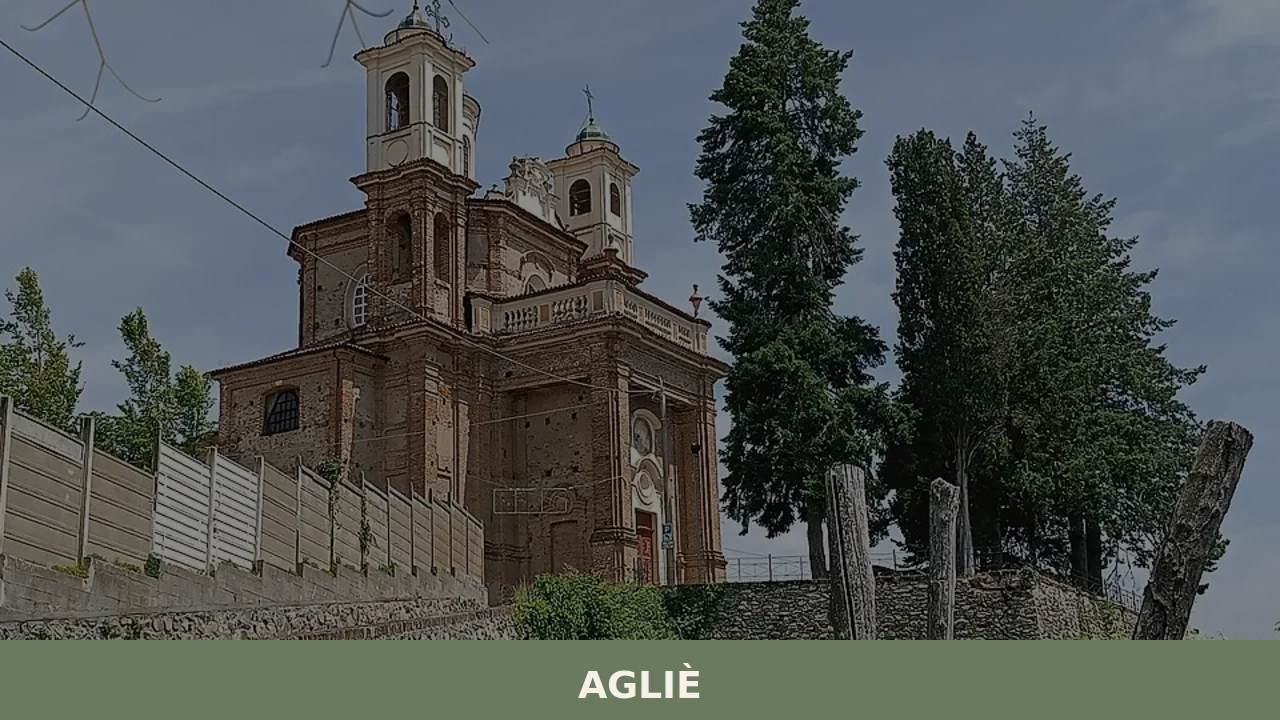
Agliè
In 1646, Count Filippo San Martino d’Agliè — diplomat, poet, choreographer at the court of Christine of France — danced in the great hall of the castle that bears his name, directing baroque festivities destined to reshape Savoyard court ceremony. That castle still dominates the village’s skyline today with its eighteenth-century façade stretching over one […]
Discover Agliè
In 1646, Count Filippo San Martino d’Agliè — diplomat, poet, choreographer at the court of Christine of France — danced in the great hall of the castle that bears his name, directing baroque festivities destined to reshape Savoyard court ceremony. That castle still dominates the village’s skyline today with its eighteenth-century façade stretching over one hundred metres, visible from kilometres away across the Canavese plain. Anyone wondering what to see in Agliè finds the first answer here: a village of 2,669 inhabitants, at 315 metres above sea level in the province of Turin, built around a residence that in 1997 was inscribed on the UNESCO World Heritage List as part of the Residences of the Royal House of Savoy circuit. But behind the monumental façade lies a dense, layered urban fabric of churches, arcades, walled gardens and precise relationships with the surrounding hill landscape.
History and origins of Agliè
The place name “Agliè” first appears in medieval documents in the Latin form Alladium or Alliacum, attested as early as the tenth century. The most widely accepted etymological theory traces the name to the Latin allium, garlic, a crop common in the Canavese countryside since the early Middle Ages, or alternatively to a Roman praedial name derived from the personal name Allius, indicating the estate of a landowner from the late-imperial period. The earliest documented mention of the settlement dates to the period when the Canavese was fragmented between the domains of the Marquises of Ivrea and the expansionist ambitions of the bishops of Turin and Vercelli. The village’s position — on a moraine ridge commanding the Dora Baltea valley towards the Turin plain — made it a point of strategic interest for controlling the routes that linked Ivrea to Turin.
During the twelfth and thirteenth centuries, Agliè was caught up in the struggles between the Guelph and Ghibelline factions of the Canavese, drawn into the conflicts between the Counts of San Martino and the Marquises of Monferrato. The San Martino family, one of Piedmont’s oldest feudal dynasties with documented roots going back to the eleventh century, consolidated their hold over the village by transforming the original fortification into a residential castle. It was in the seventeenth century, however, that Agliè’s history changed scale: Filippo San Martino d’Agliè (1604–1667), a key figure in Savoyard politics and favourite of the regent Christine of France, carried the village’s name into the courts of Europe. A refined diplomat and organiser of ballets and spectacles, Filippo turned the castle into a centre of baroque culture and intertwined the family’s destiny with that of the ruling dynasty. His role during Christine’s regency, throughout the Piedmontese civil war of 1638–1642, made him one of the most influential and controversial figures of seventeenth-century Piedmont.
In 1764, the castle passed directly to the Royal House of Savoy when Charles Emmanuel III purchased it and commissioned its enlargement from the architect Ignazio Birago di Borgaro. The eighteenth-century intervention redesigned the entire complex according to the canons of late Piedmontese baroque, adding the English-style park, the greenhouses and the monumental façade that still defines the main front today. In the nineteenth century, the castle became the favourite summer residence of King Charles Felix and Queen Maria Cristina of Bourbon-Naples, who stayed there regularly between 1824 and 1831, enriching the interiors with neoclassical furnishings and art collections. After the Unification of Italy, the property remained with the House of Savoy until 1939, when it was transferred to the State. In the post-war period, the village underwent the transition from a predominantly agricultural economy to a residential centre within the industrial Canavese, while nevertheless preserving its historic urban layout substantially intact. Since 2007, the castle has served as a filming location for television productions such as the RAI series Elisa di Rivombrosa, a circumstance that brought a new wave of visitors and contributed to the rediscovery of the local architectural heritage.
What to see in Agliè: 5 key attractions
1. The Ducal Castle of Agliè
The Ducal Castle is the monumental focal point of the village and the main reason most visitors come to Agliè. The complex, which extends over more than 32,000 square metres between buildings and parkland, contains 300 rooms, around sixty of which can be visited by booking through the museum circuit managed by the Piedmont Regional Museums Directorate. The most significant spaces include the Ballroom with frescoes by Giovanni Paolo Recchi, the Art Gallery with paintings from the Piedmontese and Flemish schools, and the royal apartments decorated in the neoclassical taste favoured by Charles Felix. The park, redesigned in the nineteenth century following the English landscape garden model, covers approximately 33 hectares and includes an artificial lake, a neoclassical temple and historic greenhouses. The castle is open from Tuesday to Sunday with guided tours at set times; it is advisable to check current days and hours on the official website of the Municipality.
2. The Parish Church of Santa Marta
Facing the village’s main square, the Church of Santa Marta was rebuilt in the eighteenth century on an earlier structure, with a restrained façade and a single-nave interior housing canvases from the seventeenth-century Piedmontese school. The building is visually linked to the castle by a perspective axis that crosses the Town Hall square, creating an urban continuity typical of baroque reorganisations in the Canavese. Inside, an eighteenth-century organ and wooden furnishings from the Savoyard period are preserved. The church is dedicated to Saint Martha, but the patron saint of the village is Saint Maximus of Riez, celebrated on the first Sunday of July with a procession and religious ceremonies.
3. The historic centre and arcades
The old core of Agliè develops along a system of arcaded streets connecting the castle square to the upper part of the village. The arcades, built between the seventeenth and eighteenth centuries to encourage commerce and provide shelter from the frequent rains of the Canavese, feature columns of local stone and cross-vaulted ceilings in brick. Walking beneath the arcades, one encounters historic shops, façades with traces of painted decorations and internal courtyards accessible through entrance passages. The urban layout reflects the model of a village founded under seigneurial authority, with the main axis oriented towards the castle and secondary streets arranged in a comb pattern along the hillside. The whole is compact and easy to read, suited to a walking visit of about one hour.
4. The Church of San Massimo and the Confraternity
In the upper part of the historic centre stands the church dedicated to San Massimo, a building linked to the activity of the lay confraternities that played a central role in religious and social life across the Canavese from the fifteenth to the nineteenth century. The structure, more modest in scale than the parish church, features an interior with baroque stuccowork and a high altar in polychrome marble. The confraternity that managed it was responsible for poor relief and the organisation of patronal processions, a tradition that continues in the festival on the first Sunday of July. The building deserves attention for the quality of its decorative elements, often overlooked by visitors who focus exclusively on the castle.
5. The park and the Fountain of the Stag
Within the castle park, the Fountain of the Stag is one of the most successful scenic features of the nineteenth-century garden. Positioned along the main avenue leading towards the artificial lake, the stone fountain depicts a stag surrounded by carved vegetal motifs, typical of the hunting iconography dear to the Savoyard court. The park as a whole offers a botanical route with rare tree species — cedars of Lebanon, sequoias, monumental plane trees — planted during the nineteenth century. The green area is accessible during the museum’s opening hours and provides a place to pause and observe, allowing visitors to appreciate the relationship between architecture and hill landscape that defines the village’s identity.
Local cuisine and regional products
The cuisine of Agliè is that of the Canavese hills: robust, tied to the agricultural cycle, built on ingredients that come from the vegetable garden, the woodland and small-scale livestock farming. The dish that more than any other identifies the territory is the tofeja, a stew of white Saluggia beans cooked over the lowest possible flame in the characteristic terracotta pot of the same name, together with pork rinds, trotters, ears and cotechino sausage. The tofeja is a winter dish, traditionally served during the Carnival period, and requires at least six to eight hours of cooking in a wood-fired oven or on a stove. Another dish deeply rooted in the Canavese tradition is polenta concia, made with Pignoletto Rosso cornmeal — an indigenous Canavese variety and a Slow Food Presidium — dressed with melted butter and Toma Piemontese DOP, a semi-hard cheese produced with cow’s milk from the Piedmontese Alpine and pre-Alpine arc.
Among local products, the Torcetti di Agliè deserve special mention: dry biscuits in an elongated ring shape, made with a dough of flour, butter and sugar, the surface coated with granulated sugar before baking. The torcetti are a PAT product (Prodotto Agroalimentare Tradizionale — Traditional Agri-food Product) of Piedmont and represent one of the most recognisable confections of the Canavese: crunchy, not overly sweet, designed to accompany coffee or local dessert wines. Artisanal production continues in a number of bakeries in the village and neighbouring municipalities. Alongside the torcetti, the territory sustains a wine production centred on the Erbaluce di Caluso DOCG grape, a white wine produced exclusively from Erbaluce grapes in the area between Caluso, Agliè and the surrounding municipalities. In its still version, it is a dry, mineral white with notes of white flowers and citrus; in the passito version, it becomes a contemplative wine of considerable complexity.
Throughout the year, the village hosts markets and fairs that showcase the food production of the Canavese. The patronal feast of San Massimo, on the first Sunday of July, is accompanied by stalls selling local products and dishes prepared by the village’s associations. In autumn, the Canavese celebrates mushroom and chestnut season with festivals spread across the municipalities of the area — occasions to taste fritto misto alla piemontese, in the complete version that includes sweet semolina, amaretti biscuits and apple, and bagna cauda, the warm sauce of garlic, anchovies and olive oil that represents the quintessential communal dish of the Piedmontese autumn and winter tradition.
When to visit Agliè: the best time of year
The most favourable season to visit Agliè runs from April to October. In spring, between April and May, the castle park reaches its peak flowering: the magnolias, the wisteria along the pergolas and the English-style lawns offer ideal conditions for visiting the grounds. Temperatures range between 10 and 22 degrees, with often clear days that allow views of the Alpine crown from the Canavese all the way to Monte Rosa. Summer brings the calendar of open-air events: the patronal feast of San Massimo, on the first Sunday of July, is the village’s moment of greatest gathering, with a procession, music, fireworks and market stalls. July and August can be hot — temperatures often exceed 30 degrees — but the hillside position at 315 metres ensures cooler evenings compared to the Turin plain.
Autumn, particularly October and November, is the season of colour in the castle park: the canopies of the plane trees and beeches turn yellow and copper-red, and the raking afternoon light casts long shadows across the eighteenth-century façades. It is also the season of the Erbaluce grape harvest and the food festivals in neighbouring municipalities. Winter is the least-visited period: the castle maintains a reduced opening schedule, but days of snow — not uncommon between December and February — transform the park and the surrounding hills into a landscape of rare composure. Those visiting in winter should check the museum’s hours, as during the low season it may only be open at weekends or by appointment for groups. For up-to-date information on opening times and temporary exhibitions, the page dedicated to the castle on Wikipedia can be consulted.
How to reach Agliè
Agliè is located approximately 38 kilometres north of Turin, along Provincial Road 37 connecting the Piedmontese capital with the Canavese. By car, the quickest route from Turin takes the A5 Turin–Aosta motorway with the exit at San Giorgio Canavese, from which you continue for about 6 kilometres westward. From Milan, the distance is approximately 140 kilometres, covered in about one hour and forty minutes via the A4 Turin–Milan motorway to the junction with the A5. The nearest airport is Turin-Caselle, about 25 kilometres away, reachable in under thirty minutes by car.
The closest railway station is Rivarolo Canavese, on the Turin–Pont Canavese line operated by Trenitalia, situated approximately 8 kilometres from the centre of Agliè. From Rivarolo, GTT bus services connect the municipalities of the Canavese, including Agliè, with variable frequency depending on the day. From Turin Porta Susa, the train to Rivarolo takes about 45 minutes. Those coming from Ivrea — 22 kilometres away — can follow the SP 565 through Castellamonte. The largest and most convenient car park is near the castle, along Viale della Rimembranza, with free access. For further logistical details and information on the area’s attractions, the Touring Club Italiano offers up-to-date profiles of the Canavese district.
Other villages to discover in Piedmont
Those visiting Agliè who have time to explore the surrounding territory can put together an itinerary that climbs the Canavese valleys to reach mountain villages. About 30 kilometres to the west, in the direction of the Orco Valley, lies Alpette, a small mountain settlement at over 900 metres above sea level, overlooking the valley with a view that sweeps from the Graian Alps to the plain. Alpette offers a sharp contrast with Agliè: where the Canavese village is defined by Savoyard architecture and the hill landscape, Alpette is a cluster of stone houses with stone-slab roofs, bound to the pastoral and forestry economy of the upper valley. Combining the two villages in a single day allows you to traverse, in just a few dozen kilometres, the full range of altitude and culture in the Canavese, from the moraine hills to the subalpine pastures.
In the opposite direction, towards the east, the Canavese opens onto the Ivrea basin and the largest moraine amphitheatre in Europe. Albiano d’Ivrea, situated on the eastern bank of the Dora Baltea, is a hill village that shares with Agliè the wine-growing landscape and agricultural vocation, but displays a different urban layout — more compact and less marked by the interventions of great aristocratic families. Albiano is known for wine production in the areas adjacent to the Erbaluce di Caluso zone and for its proximity to Lake Viverone, which makes it a starting point for lakeside and hill excursions. An itinerary linking Agliè, Albiano and Alpette over two or three days provides a comprehensive reading of the Canavese: its feudal and Savoyard history, its agriculture, its geographical verticality — from the plain to the two-thousand-metre peaks of the Orco Valley — all condensed within a radius of fifty kilometres.
In Piedmont More villages to discover
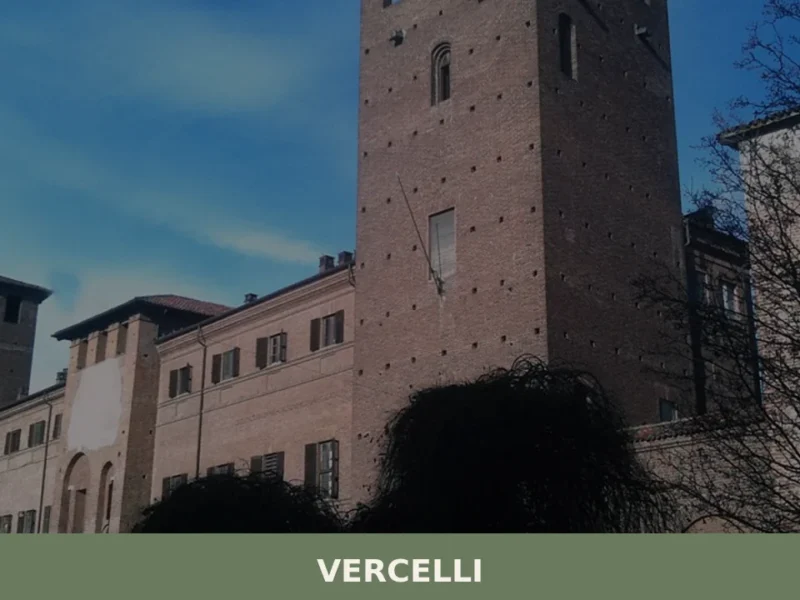
Vercelli
What to see in Vercelli: rice capital at 130 m in Piedmont. Basilica di Sant'Andrea, Museo Borgogna, panissa and flooded paddies. Plan your visit now.
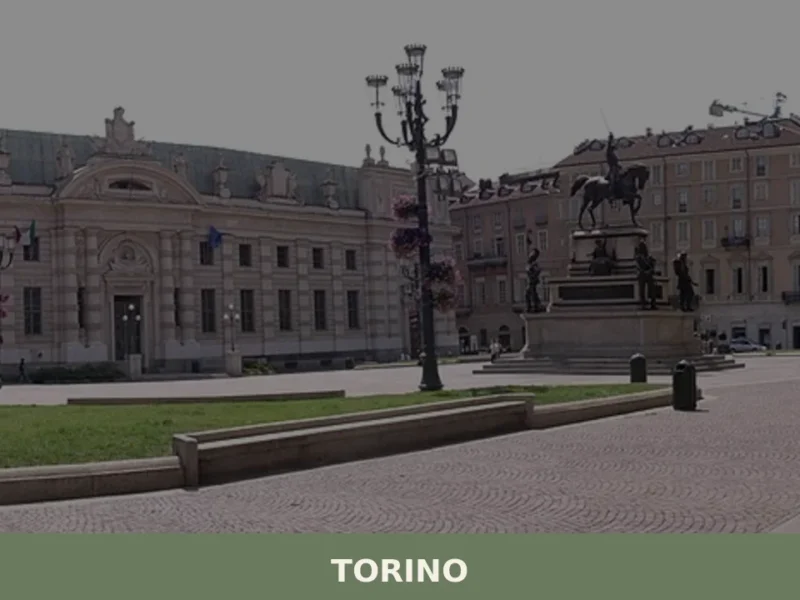
Torino
What to see in Torino: the city at 239m altitude with 841,600 residents. Explore 5 key attractions and Piedmontese cuisine. Read the full guide now.
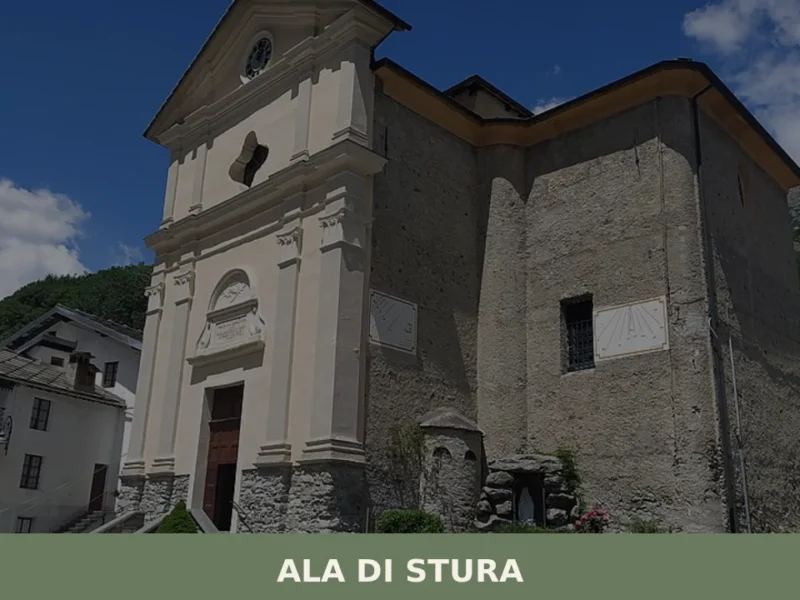
Ala di Stura
Every year on 4 September, in Ala di Stura, the bells of the Parish Church of San Grato ring out with special fervour, announcing the patron saint’s feast day. This annual ritual, rooted in centuries of mountain history, is more than a simple religious celebration: it is a call to a community that, at 1,080 […]
📝 Incorrect information or updates?
Help us keep the Agliè page accurate and up to date.