


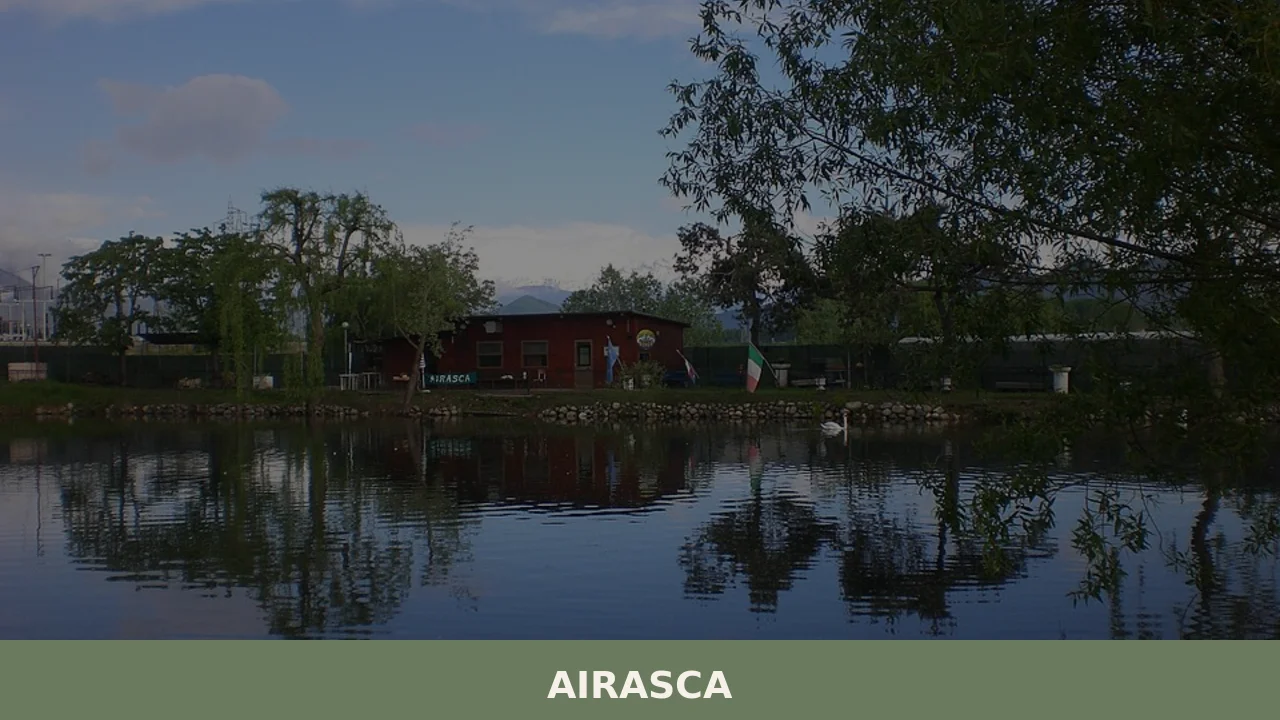
Airasca
Arriving in Airasca along the provincial road that connects Pinerolo to Turin, the first thing you notice is the bell tower of the parish church of San Bartolomeo, a vertical landmark in a horizontal landscape of cultivated fields and rows of poplars. The municipality, home to 3,842 inhabitants at 257 metres above sea level, occupies […]
Discover Airasca
Arriving in Airasca along the provincial road that connects Pinerolo to Turin, the first thing you notice is the bell tower of the parish church of San Bartolomeo, a vertical landmark in a horizontal landscape of cultivated fields and rows of poplars. The municipality, home to 3,842 inhabitants at 257 metres above sea level, occupies a gently undulating stretch of plain at the foot of the Cottian Alps, where the Lemina stream marks the natural boundary between the Pinerolo countryside and the first low hills. Understanding what to see in Airasca means entering a territory where agriculture has shaped everything — from the layout of the farmsteads to the network of irrigation channels — and where the railway, operational since 1884, introduced the first real change in the daily life of a farming community.
History and origins of Airasca
The place name “Airasca” most likely derives from the Latin word area, which passed into Piedmontese as aira, meaning the threshing floor — the open space in front of farmsteads where grain was beaten. The suffix -asca, of Ligurian or Celtic origin, is common in the place names of south-western Piedmont and points to an ancient rural settlement predating the systematic Romanisation of the Po plain. The earliest written documents mentioning the locality date back to the medieval period: a 12th-century deed records the name Airascum in connection with the holdings of local lords linked to the marquisate of Turin. The position of the settlement — along a route connecting Turin to Pinerolo and, from there, to the Alpine passes towards France — gave Airasca a function as a transit and rest point for merchants and pilgrims, without, however, granting it the rank of a major fortified town.
During the Middle Ages, the territory of Airasca was the subject of disputes between the House of Savoy and the Marquises of Saluzzo, two regional powers that for centuries contested control over the foothill belt. In the 14th century, the consolidation of Savoyard rule brought administrative stability to the municipality, which became part of the feudal system under the Savoy. No significant fortifications are documented: unlike other centres in the area, Airasca never developed a castle or independent defensive walls, probably because its economy was entirely agricultural and its population too small to justify large-scale defensive investment. Eighteenth-century cadastral records describe a landscape dominated by cereal crops — wheat, rye, millet — and irrigated meadows fed by channels drawn from the Lemina and the Chisola.
The turning point in Airasca’s modern history coincided with the arrival of the railway. The Airasca station, inaugurated in 1884 on the Turin–Pinerolo line, transformed the village into a minor but strategically important railway junction, with branch lines towards Torre Pellice and, later, towards Saluzzo. This connection allowed local agricultural products to reach the Turin markets quickly and encouraged a slow but steady population growth between the late 19th and early 20th centuries. In the post-World War II period, the industrialisation of the Turin metropolitan belt also reached Airasca, where small and medium-sized manufacturing enterprises sprang up alongside farming. Today the municipality retains a compact urban layout, with the historic core gathered around the church and the 20th-century residential expansions distributed along the main road axes. The official website of the Municipality of Airasca provides up-to-date information on services, events and council decisions.
What to see in Airasca: 5 top attractions
1. Parish church of San Bartolomeo
Dedicated to the patron saint Bartholomew, the church stands in the centre of the village and is the most important religious building in the municipality. The current structure is the result of successive interventions between the 17th and 19th centuries, with a sober exposed-brick façade and a single-nave interior. The bell tower, visible from a distance across the surrounding fields, is the highest point of the urban skyline. Inside, the church preserves liturgical furnishings of Piedmontese craftsmanship and several devotional paintings attributable to the local figurative tradition. The church is open during religious services and for the patron saint’s feast day on 24 August, when the community gathers for solemn celebrations followed by a procession through the streets of the centre.
2. Airasca railway station
The station, built in 1884 on the Turin–Pinerolo line, is an example of late 19th-century Piedmontese railway architecture. The passenger building, in the typical style of the State Railways of the period — rectangular plan, two storeys, pitched roof — retains its original structure, although it has been updated several times to meet modern regulations. Airasca is a junction point for the branch line to Torre Pellice, which gives it a logistical importance greater than that of many municipalities of similar size. For those who wish to explore the area without a car, the station is a practical starting point: regional trains connect to Turin Porta Nuova in approximately 35 minutes.
3. Historic farmsteads across the municipal territory
Scattered throughout the countryside around the village centre, the farmsteads of Airasca document three centuries of Piedmontese rural architecture. The prevailing type is the enclosed-courtyard farmstead, with the main dwelling, stables, hayloft and tool stores arranged around an inner yard. The dominant materials are solid brick and chestnut wood for the load-bearing roof structures. Some of these farmsteads are still in active agricultural use, while others have been converted into private residences. Cycling along the rural lanes allows you to observe the proportions and construction details — depressed arches, ventilation slits for the hay, masonry wells — that define the agrarian landscape of the Pinerolo plain.
4. Irrigation channel network and paths along the Lemina stream
The system of channels drawn from the Lemina and the Chisola has shaped Airasca’s agricultural landscape for centuries, distributing water to meadows and fields through an extensive network of ditches. Today these routes form walking and cycling itineraries that see little traffic, suitable for those seeking direct contact with the countryside without significant elevation changes. The riparian vegetation — alders, willows, black locusts — forms green corridors that provide shade even on the hottest summer days. In spring, the meadows along the channels fill with wild flowers, and it is not uncommon to spot grey herons and other bird species associated with the wetland environments of the Piedmontese plain.
5. Historic centre and Piazza del Municipio
The oldest core of Airasca develops around Piazza del Municipio and the parish church, with a fabric of masonry houses dating largely from the 18th and 19th centuries. The square is the venue for civic life and community occasions — weekly markets, festivals, commemorations. Some façades still bear traces of plaster decoration, and the solid wooden doors of the oldest houses reflect a craft tradition that favoured sturdiness over ornament. A thirty-minute walk is enough to cross the entire centre, taking in the details of the civil architecture and the arrangement of buildings in relation to the church and the main road.
Local cuisine and regional products
The cuisine of Airasca is that of the western Piedmontese plain: hearty, tied to agricultural cycles, built on a few ingredients prepared with care. The dish that best represents this tradition is bagna cauda, made with garlic, salt-cured anchovies and olive oil or, in its older version, walnut oil. It is eaten in winter, dipping raw and cooked vegetables — cardoons, peppers, Jerusalem artichokes, cabbages — into an earthenware pot kept warm by a small candle burner. Tajarin, egg tagliolini cut very thin and dressed with roast meat sauce or butter and sage, are the most common fresh pasta on local tables. The traditional proportion calls for one egg yolk per hundred grams of flour, which gives the dough an intense yellow colour and a silky texture.
Among the products of the area, Toma Piemontese DOP deserves mention — a semi-cooked cheese made from cow’s milk throughout the region and available in varying degrees of ageing at dairies across the Pinerolo district. Turin-style breadsticks, in their hand-stretched version (the rubatà), accompany every meal and are one of Piedmont’s most recognisable baked goods. The proximity to the Pinerolo hills provides access to local wines such as those of the Pinerolese DOC designation, which includes reds based on Barbera, Bonarda, Freisa and Neretta, vinified by small wineries scattered between Pinerolo and the surrounding municipalities. In autumn, the hazelnut and chestnut harvest in the nearby hill belt feeds a confectionery output ranging from hazelnut cake to artisanal marrons glacés.
The patron saint’s feast of San Bartolomeo, on 24 August, is the main occasion to sample local specialities in a community setting. During that period, stalls and food stands are set up offering fritto misto alla piemontese — an assortment that may include sweet semolina, amaretti biscuits, liver, sweetbreads, lamb cutlets and battered vegetables — and bônet, puddings made from amaretti, cocoa, eggs and caramel, which close the meals of important occasions. The restaurants and trattorias in the area offer menus tied to the seasons, with a growing focus on organic and short-supply-chain products, in line with a trend widespread across rural Piedmont.
When to visit Airasca: the best time of year
Airasca’s climate is temperate continental, with cold winters — January minimum temperatures regularly drop below zero — and hot, sometimes humid summers, with peaks of 33–35 degrees in July and August. Spring, from mid-April to June, is the most favourable period for exploring the area on foot or by bicycle: temperatures are mild, the countryside is in full growth and the days are long enough to allow extended outings. Autumn, from September to mid-November, offers the best light for photographing the agrarian landscape — the rows of poplars turn yellow and orange — and coincides with the season of the most interesting products: mushrooms, chestnuts, hazelnuts, wine grapes.
The most significant event of the year is the feast of San Bartolomeo, celebrated on 24 August with religious services, a procession, a market and gastronomic events. On that weekend the village comes alive and Piazza del Municipio becomes the centre of a sociability that for the rest of the year expresses itself in more subdued forms. Those who visit Airasca in winter find a bare landscape that is not without interest: the silhouettes of the farmsteads emerge from the Po Valley fog with graphic clarity, and the trattorias serve the most robust dishes of the tradition — bollito misto, polenta with stew, fonduta. It is advisable to check the website of the Municipality for any scheduled cultural events, small markets and music festivals, which are concentrated mainly in the summer months.
How to reach Airasca
Airasca can be reached by car from Turin along the provincial road SP 141 towards Pinerolo, a distance of approximately 25 kilometres with a travel time of 30–40 minutes depending on traffic. The motorway alternative involves exiting at Rivalta or Orbassano on the southern Turin ring road, then continuing on the provincial road south-west. Those coming from Milan follow the A4 motorway to Turin and then the southern ring road; from Genoa, take the A21 to Asti and then the A6 and the ring road. The nearest airport is Turin-Caselle Sandro Pertini, approximately 45 kilometres away and reachable in 50–60 minutes by car.
Airasca’s railway station, served by the Turin Porta Nuova–Pinerolo line operated by Trenitalia, provides frequent connections with the regional capital: regional trains take approximately 35 minutes and during peak hours run every 20–30 minutes. Trains to Torre Pellice also depart from the station, making Airasca a useful interchange point for those wishing to explore the Waldensian valleys by public transport. The Airasca page on Wikipedia provides further details on the transport network and the geography of the municipality.
Other villages to discover in Piedmont
Those visiting Airasca who wish to deepen their knowledge of hilly Piedmont can combine the stop with a detour to Andezeno, a municipality in the eastern Turin hills, in the Freisa di Chieri zone. Andezeno offers a landscape quite different from that of Airasca — sloping vineyards instead of flat fields — and a winemaking tradition that warrants a stop at the local cellars. The distance between the two municipalities is approximately 40 kilometres, driveable in under an hour via the Turin ring road. An itinerary taking in both villages allows you to observe the variety of Piedmontese environments — irrigated plain, vine-covered hills — in a single day.
Moving towards the Canavese, Albiano d’Ivrea offers yet another change of scenery: here we are in the zone of the morainic amphitheatre, with lakes of glacial origin, rounded hills and a geology entirely different from that of the Airasca plain. The municipality, known for its territory rich in Erbaluce vineyards, lies approximately 70 kilometres to the north-east and is an ideal stop for those planning a multi-day trip through northern Piedmont. Pairing Airasca, Andezeno and Albiano d’Ivrea creates a route that crosses three distinct agrarian landscapes — cereal-growing plain, wine-producing hills, morainic amphitheatre — and three different ways of inhabiting and cultivating the same region.
In Piedmont More villages to discover
Bairo
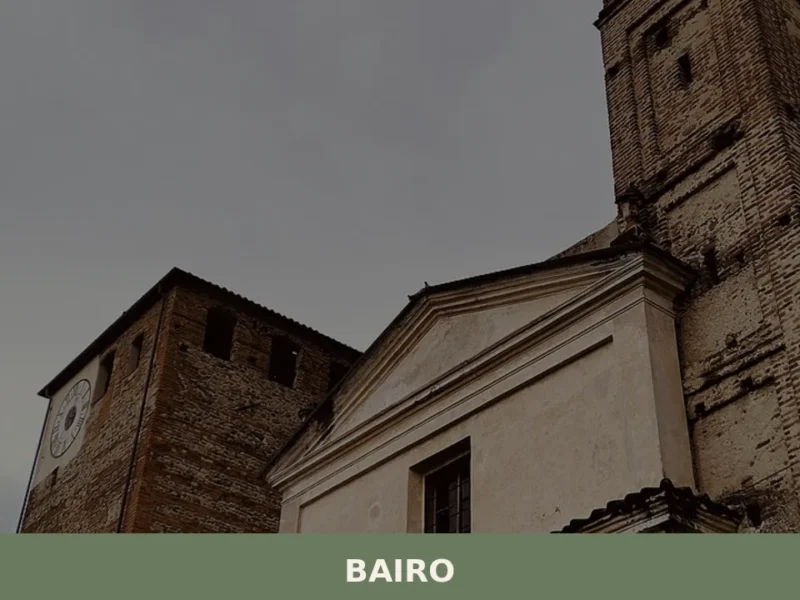
The earliest confirmed record of Bairo dates to a document from 1003, when Marquess Arduino of Ivrea — who would shortly become King of Italy — confirmed landholdings in this portion of the Canavese between the moraine ridge and the foothills of the Graian Alps. Today the municipality has 806 inhabitants, spread across the historic […]
Cuneo
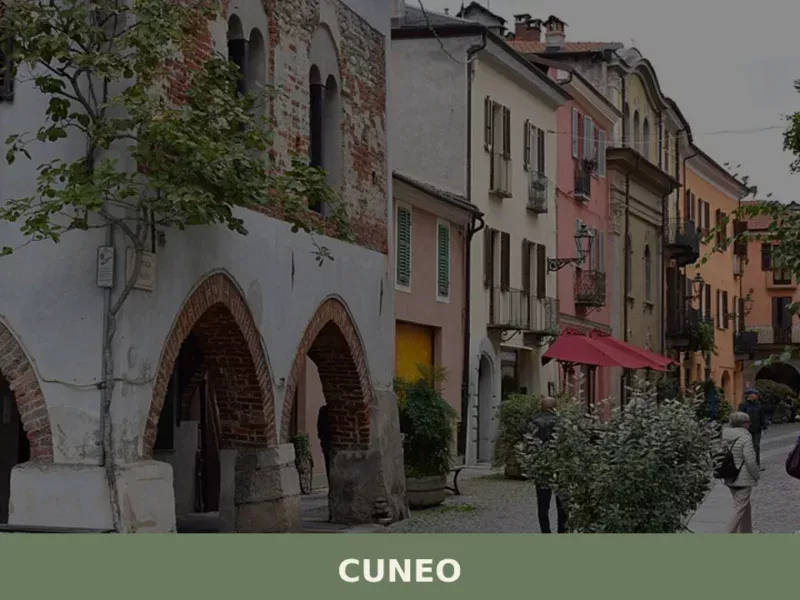
What to see in Cuneo: 55,744 residents at 534m, historic arcades, Piazza Galimberti and the Cuneese al Rum. Plan your visit with this complete city guide.
Avigliana
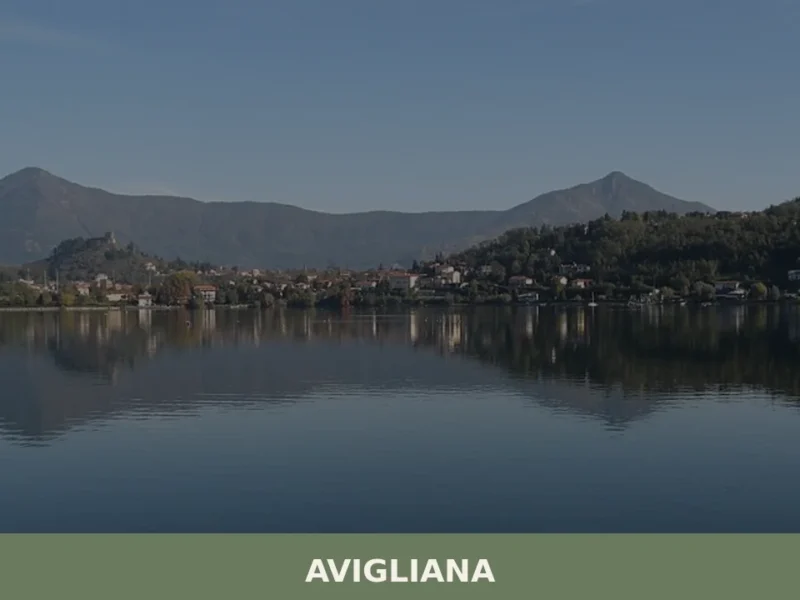
In 1092, a donation charter by Countess Adelaide of Susa mentioned for the first time the castrum Avillianae, a fortified settlement on the hill overlooking two moraine-origin lake basins in the lower Susa Valley. Anyone wondering what to see in Avigliana today will find an urban fabric preserving precise layers of history: thirteenth-century towers, Gothic […]
📝 Incorrect information or updates?
Help us keep the Airasca page accurate and up to date.