


Ala di Stura
Every year on 4 September, in Ala di Stura, the bells of the Parish Church of San Grato ring out with special fervour, announcing the patron saint’s feast day. This annual ritual, rooted in centuries of mountain history, is more than a simple religious celebration: it is a call to a community that, at 1,080 […]
Discover Ala di Stura
Every year on 4 September, in Ala di Stura, the bells of the Parish Church of San Grato ring out with special fervour, announcing the patron saint’s feast day. This annual ritual, rooted in centuries of mountain history, is more than a simple religious celebration: it is a call to a community that, at 1,080 metres above sea level in the Valli di Lanzo, has managed to preserve its own identity. Once a crossroads for shepherds and travellers, today Ala di Stura (pop. 465, Province of Turin) is a settlement in constant dialogue with its Alpine surroundings. For anyone wondering what to see in Ala di Stura, the answer lies not only in its buildings but in the experience of a place where life has adapted to the rhythms of the mountains, forging a precise and grounded character.
History and origins of Ala di Stura
The name Ala di Stura carries an echo of the village’s geological and geographical past. The most widely accepted etymology traces “Ala” to the Celtic-Ligurian word “ala”, meaning a high or elevated place, or alternatively — in a more recent interpretation — to the Latin “ala”, referring to the shape of a wing or a rocky spur. The suffix “di Stura” refers to the Stura di Lanzo torrent, which flows down from here and has been a crucial hydrographic feature for the valley and for village life. The first permanent settlements in the area probably date back to Roman times, as suggested by scattered archaeological finds, but it was in the Middle Ages that Ala di Stura began to take shape as an inhabited centre. Its strategic position, along the transit routes linking Piedmont with France through the Alpine passes, made it a reference point for territorial control and for commercial and pastoral activities.
During the medieval period, Ala di Stura fell under the influence of various local lordships, including the Counts of Lanzo and, later, the House of Savoy. Documents from the 12th century attest to the existence of an organised community and a church, signs of a well-established human presence. During the 14th and 15th centuries, the village was the scene of clashes and troop movements, given its proximity to borders and the importance of the Valli di Lanzo as a military corridor. A significant event for local autonomy was the granting of statutes and privileges by local lords, which allowed the population to partly manage its own resources and organise civil life according to specific customs. The construction of fortifications, of which few traces remain today, speaks to the need for defence in a turbulent era.
The demographic and economic evolution of Ala di Stura has been closely tied to the mountains. Until the 19th century, the economy relied mainly on subsistence farming, transhumant herding and the exploitation of forest resources. Talc mines and other mineral deposits, active during various periods, provided employment opportunities, albeit often gruelling ones. In the 20th century, with the rise of mountain tourism, Ala di Stura underwent a transformation, becoming a destination for summer holidaymakers and winter sports enthusiasts, particularly during the 1960s and 70s. This led to the construction of new accommodation and the development of services, reshaping the social and economic fabric without erasing the deep roots of its Alpine identity. The population, which today stands at 465 inhabitants, reflects a balance between long-standing residents and newcomers drawn by tourism and the desire for a life closer to nature.
What to see in Ala di Stura: 5 top attractions
The Parish Church of San Grato
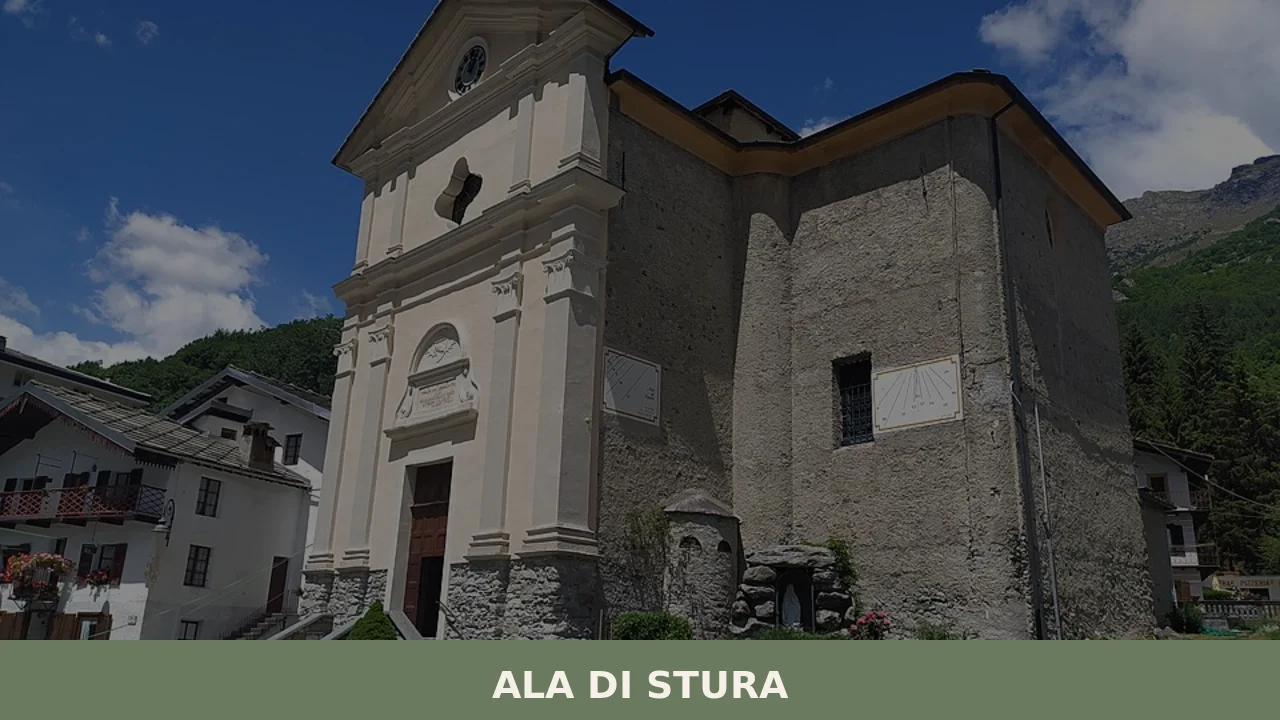
The spiritual focal point of Ala di Stura is the Parish Church of San Grato, located at the centre of the village. Dedicated to the patron saint, its current structure dates mainly from 18th-century renovations, though it retains elements and traces of earlier constructions. The sober, clean-lined façade features a stone portal and windows that allow soft light to filter inside. Within, visitors can admire wooden altars, votive frescoes and several canvases depicting episodes from the life of San Grato. The bell tower, with its open belfry, rises above the village rooftops, serving as a visual landmark. The church is not just a place of worship but also an archive of the village’s collective memory, with memorial stones and furnishings that recount the stories of local families and devotions. A visit offers the chance to appreciate mountain sacred art and the community’s deep faith.
The Sanctuary of the Madonna di Mondrone
A short distance from the centre of Ala di Stura, in the hamlet of Mondrone, stands the Sanctuary of the Madonna di Mondrone. This pilgrimage site, built in a panoramic position, is an example of mountain religious architecture. Its history is linked to miraculous events and a popular devotion that has strengthened over the centuries. The building, modest in size but deeply evocative, has a simple façade and an interior that houses ex-votos and a particularly venerated image of the Madonna. Every year, the sanctuary draws processions and pilgrimages, especially during Marian feast days, attracting the faithful from across the valley. The path to reach it, often walked on foot, offers views of the valley and the surrounding landscape, making the visit an experience that combines spirituality with direct contact with nature.
The Tower of Ala
Among the oldest surviving structures in Ala di Stura, the Tower of Ala represents a rare example of medieval defensive architecture in the area. Although it now stands as a partial ruin, its bulk suggests the strategic importance it must once have held in controlling the valley. Originally part of a larger fortified complex, the tower served as a lookout and a defence against incursions. Its stone walls, though worn by time, reveal construction techniques of the period. Its elevated position provides a broad view over the village and the course of the Stura torrent. Visiting the tower allows one to picture life in the Middle Ages and to understand the dynamics of a border territory, marked by passages and conflicts. It is a privileged vantage point for anyone wishing to grasp the historical and geographical essence of Ala di Stura.
The Ethnographic Museum of Ala di Stura
To fully understand local culture and traditions, an essential stop is the Ethnographic Museum of Ala di Stura. This small but carefully curated museum, often housed in a historic building, gathers objects, tools and records of daily life in the mountain communities of the Valli di Lanzo. Through displays of agricultural implements, household utensils, traditional clothing and handcrafted items, the museum tells the story of the trades, habits and hardships faced by inhabitants over the centuries. The rooms are often organised by theme, illustrating the pastoral economy, woodworking and stoneworking crafts, and customs linked to the seasonal cycles. It is a place that offers a concrete perspective on the past, allowing visitors to connect with the village’s deep-seated identity and to appreciate the resilience and ingenuity of previous generations. For anyone looking for what to see in Ala di Stura beyond its buildings, the museum is an immersion into lived experience.
The Ancient Hamlets and Traditional Architecture
Ala di Stura is not limited to its central nucleus; it is a collection of ancient hamlets scattered across the territory, each with its own identity and architectural features. Exploring these frazioni, such as Mondrone or other lesser-known settlements, means embarking on a journey into Alpine vernacular architecture. Houses are built predominantly from local stone, with roofs of lose (stone slabs) and carved wooden balconies. Thick walls, small windows and compact structures reflect the need to withstand harsh winters. Walking through the narrow lanes, one can spot old communal ovens, stone fountains and public wash-houses — elements that were once at the centre of social life. Each hamlet retains a quiet appeal, telling through its stonework the story of a social organisation and a harmony with the surrounding environment. It is an experience that invites contemplation and the discovery of overlooked details.
What to eat in Ala di Stura: local cuisine and regional products
The food traditions of Ala di Stura, deeply rooted in the context of the Valli di Lanzo and the broader mountain Piedmont, reflect the resources and needs of an Alpine environment. The cooking is defined by the use of simple yet substantial ingredients, capable of providing the energy needed to face winter cold and the demands of working in the fields and on the high pastures. Proximity to the mountains has fostered a preference for dairy products, game, mushrooms and wild herbs, while preservation through drying or salting has always played a key role. It is a cuisine that speaks of seasonality and a direct bond with the land, where every ingredient has its own story and its own purpose.
Among the signature dishes of local tradition, Polenta Concia stands out as a hearty and flavourful preparation. The polenta, cooked slowly with maize flour, is enriched with melted butter and various types of Alpine cheese, which blend together to create a dense, stringy cream. Cheeses such as Toma, typical of the Piedmontese valleys, or other local semi-hard cheeses are often used. This dish, ideal for colder temperatures, is true comfort food traditionally eaten during the winter months. Another recurring element is game, stewed or prepared with rich sauces, often accompanied by porcini mushrooms gathered in the surrounding woods. These dishes reflect the availability of raw ingredients and the skill of transforming them into nourishing, flavourful meals.
As for local produce, Ala di Stura sits within the tradition of the Piedmontese valleys, known for their Alpine cheeses. Although there are no specific PAT/DOP/IGP certifications for Ala di Stura itself, the area is renowned for the production of cow’s milk or mixed-milk cheeses, the result of transhumance and high-altitude herding. These cheeses — such as the aforementioned Toma in various stages of ageing, or Saras del Fèn (a type of aged ricotta wrapped in hay) — have intense aromas and flavours that are a direct expression of the Alpine pastures. Another typical product is mountain honey, available in varieties that reflect the local flora, from wildflower to rhododendron. Porcini mushrooms, gathered in season, and chestnuts, used for flour or eaten roasted, are also noteworthy.
To taste and purchase local products, it is advisable to visit the village during events linked to agricultural and food traditions. The Feast of San Grato on 4 September, while primarily religious in nature, often includes stalls selling typical products. During the summer months, small markets or sales points run directly by local producers can be found, offering cheeses, honey and garden produce. Some Alpine refuges and local trattorias serve traditional dishes, providing a chance to sample genuine mountain cooking. It is always a good idea to check with the local tourist office for the latest information on seasonal events and markets, ensuring the purchase of locally sourced, zero-kilometre products.
When to visit Ala di Stura: the best time of year
Choosing when to visit Ala di Stura depends largely on the type of experience you are looking for, since the village offers different landscapes and activities depending on the season. The summer months, from June to September, are ideal for those seeking mild temperatures and the chance to go hiking and walking. Days are long, Alpine trails are accessible, and nature is at its most lush. Average temperatures range between 15°C and 25°C, with cool evenings. On 4 September, as mentioned, the Feast of San Grato is celebrated — a chance to observe local traditions. Autumn, from October to November, brings warm-coloured landscapes and the opportunity to forage for mushrooms and chestnuts, with temperatures gradually dropping to between 5°C and 15°C, but with fewer tourists.
Winter, from December to March, transforms Ala di Stura into a classic mountain setting, with snowfall blanketing the landscape and temperatures that can drop below zero, often ranging between -5°C and 5°C. This is the ideal period for winter sports enthusiasts, with opportunities for cross-country skiing, snowshoeing and snow walks. Peak periods coincide with the Christmas holidays and the month of August, when the village fills with holidaymakers. For those who prefer quieter times, spring (April–May) and late autumn (November) are the best options, with fewer visitors and the chance to enjoy nature’s reawakening or its most vivid colours. Families with children will find summer best suited to outdoor activities, while couples or more experienced hikers may appreciate the stillness and the beauty of the winter or autumn landscapes, provided they are properly equipped for the weather conditions.
How to reach Ala di Stura
Reaching Ala di Stura, located in the Valli di Lanzo in Piedmont, requires some attention to mountain road conditions. By car, the most common route involves taking the A5 Turin–Aosta motorway (or the A4 Turin–Milan followed by the Tangenziale Nord di Torino) and following signs for the Valli di Lanzo. The recommended exit is Caselle Torinese, from where you continue on the SP13 and then the SP2 (Strada Provinciale delle Valli di Lanzo) towards Lanzo Torinese and on to Ala di Stura. From Turin, the distance is approximately 50–60 km, covered in about 1 hour and 15 minutes depending on traffic and road conditions, especially in winter. The road is generally well maintained but features the bends and climbs typical of mountain routes, requiring careful driving.
For those who prefer public transport, the nearest railway station to Ala di Stura is Lanzo Torinese. This station is served by the Turin–Ceres railway line, operated by GTT, which connects Lanzo with central Turin (Stazione Dora). Travel time from Turin to Lanzo Torinese is approximately one hour. From Lanzo Torinese, it is possible to continue to Ala di Stura using GTT’s intercity bus services. However, the frequency of bus connections to Ala di Stura can be limited, especially on public holidays or in the low season, so it is advisable to check timetables in advance. The nearest airport is Turin Caselle Airport (TRN), approximately 40 km away. From the airport, Ala di Stura can be reached by car in about one hour, or you can take a shuttle bus to Turin and then continue by train or bus as described above.
Other villages to discover in Piedmont
Piedmont, with its varied landscape ranging from the Alps to the wine-producing hills, offers a mosaic of villages, each with its own distinct identity. After exploring the Alpine character of Ala di Stura, it can be rewarding to turn your attention to other Piedmontese communities that, though different, tell equally rich stories. One example is Airasca, a village on the Turin plain, about 50 km from Ala di Stura (roughly 1 hour’s drive). Where Ala di Stura is distinguished by its mountain stone architecture and an economy tied to Alpine pasturing, Airasca offers a more agricultural setting, with broad cultivated expanses and buildings that reflect rural life, such as historic farmsteads and a castle. Visiting Airasca means immersing yourself in a rural Piedmont where the rhythms are set by seasonal cycles and the fertility of the land, providing a striking contrast with the Alpine environment.
Another destination worth considering is Andezeno, situated in the hills of the Lower Monferrato, about 70 km from Ala di Stura (roughly 1 hour and 30 minutes by car). Where Ala di Stura exemplifies adaptation to mountain life, Andezeno is set in a hilly landscape famous for its vineyards and wine production. Here the architecture conforms to the gentle slopes of the hills, and the economy is closely linked to viticulture and to local agricultural products. An itinerary combining Ala di Stura with Andezeno or Airasca allows you to appreciate the richness and diversity of Piedmont, moving from Alpine scenery to flat expanses or vine-covered hills in just a few hours of travel. Each village, with its own distinctive features, helps paint a complete picture of this region, offering varied and rewarding experiences, such as discovering the agricultural traditions of Andezeno.
In Piedmont More villages to discover
Vercelli
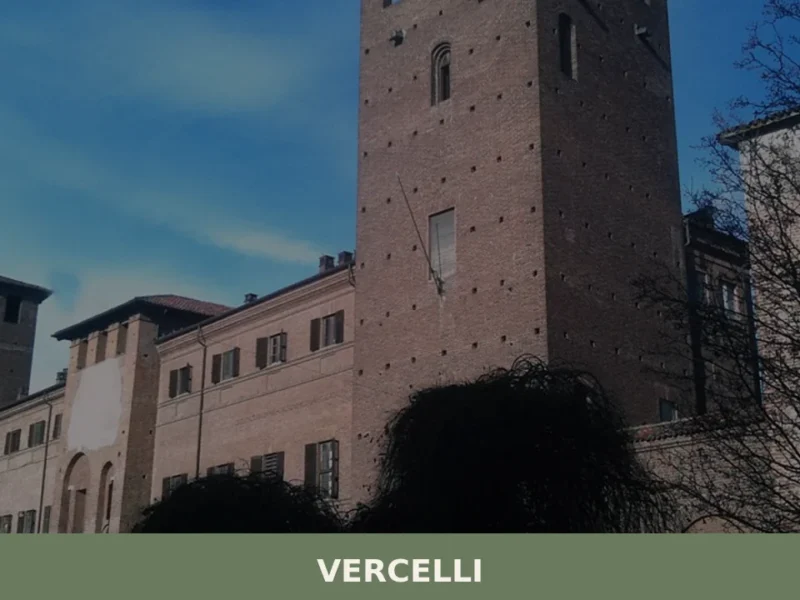
What to see in Vercelli: rice capital at 130 m in Piedmont. Basilica di Sant'Andrea, Museo Borgogna, panissa and flooded paddies. Plan your visit now.
Cuneo
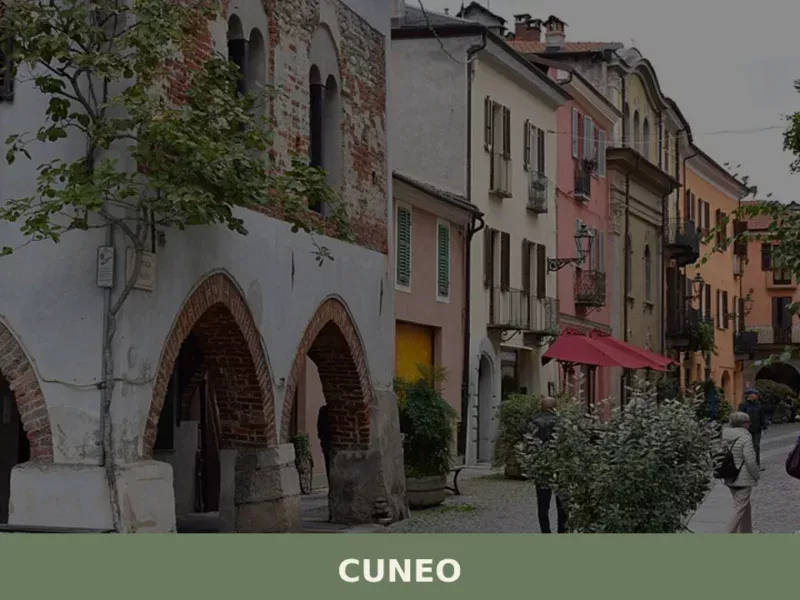
What to see in Cuneo: 55,744 residents at 534m, historic arcades, Piazza Galimberti and the Cuneese al Rum. Plan your visit with this complete city guide.
Almese
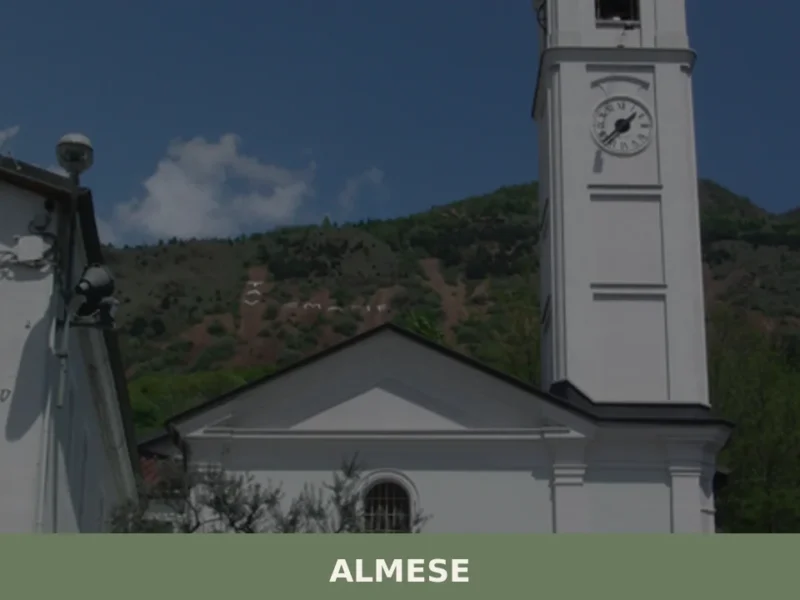
In 1029, a document from the Abbey of Novalesa recorded the name Almese for the first time, linked to a series of land holdings in the lower Val di Susa. That place name — probably derived from a Celtic or pre-Latin word connected to alpine pastures — appears in a territory that already served as […]


📝 Incorrect information or updates?
Help us keep the Ala di Stura page accurate and up to date.