


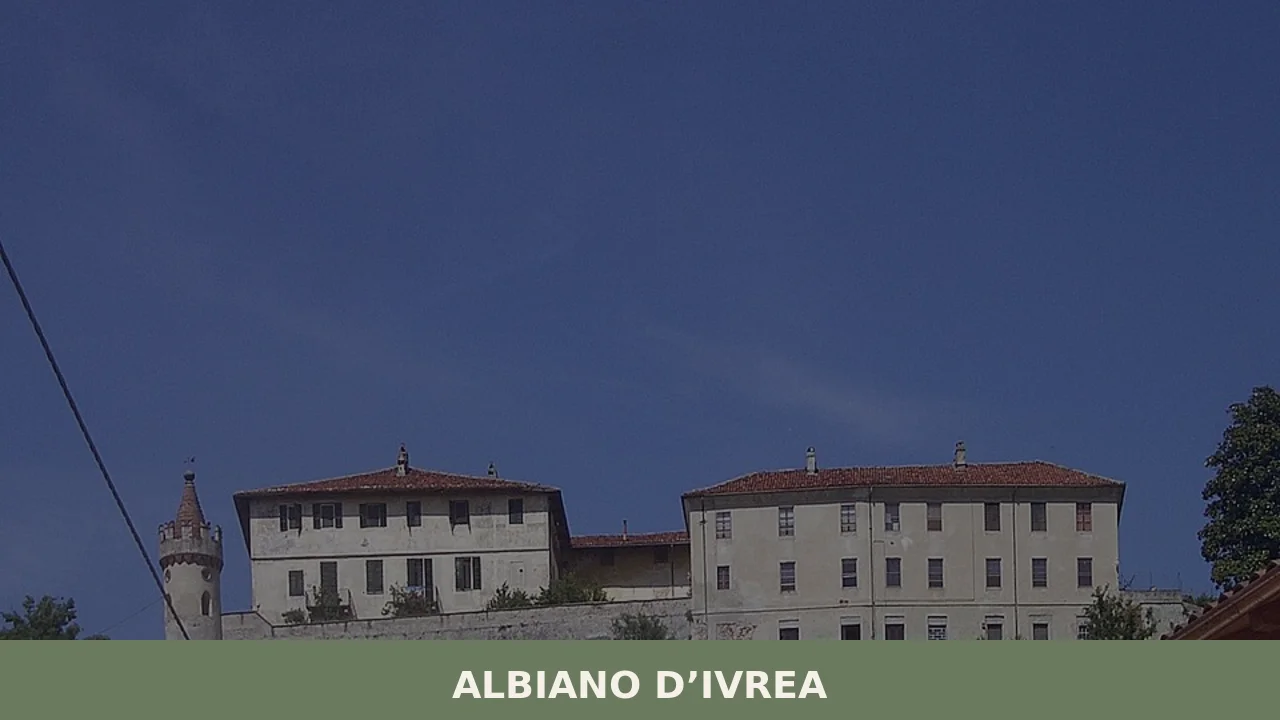
Albiano d’Ivrea
At an elevation of 230 metres, on the left bank of the Dora Baltea, Albiano d’Ivrea has 1,628 inhabitants spread between the main settlement and the hamlets scattered across the Canavese countryside. The municipal territory extends over a hilly strip that slopes down towards the plain, shaped by the moraine deposits of the Ivrea Morainic […]
Discover Albiano d’Ivrea
At an elevation of 230 metres, on the left bank of the Dora Baltea, Albiano d’Ivrea has 1,628 inhabitants spread between the main settlement and the hamlets scattered across the Canavese countryside. The municipal territory extends over a hilly strip that slopes down towards the plain, shaped by the moraine deposits of the Ivrea Morainic Amphitheatre, one of the best preserved in Europe. Asking what to see in Albiano d’Ivrea means entering a landscape where glacial geology has determined the layout of the fields, the course of the roads, and the very position of the houses.
History and origins of Albiano d’Ivrea
The name “Albiano” appears in medieval documents with varying spellings — Albianum, Albianus — and its etymology is traced back to the Latin albius or to the Roman gentile name Albius, probably indicating a farming estate from the imperial period. The territory fell under the jurisdiction of the diocese of Ivrea, documented from the 5th century, and its history followed the feudal events of the Canavese, a land disputed between the Marquises of Monferrato, the Counts of Savoy, and the bishop-counts of Ivrea.
During the Middle Ages, the village came under the control of various noble families linked to the Savoyard feudal network. Its position along the route connecting Ivrea to the Vercelli plain gave Albiano a role as a transit point — never a major military one, but enough to justify the presence of defensive structures. With the definitive annexation to the Duchy of Savoy, the town consolidated its agricultural vocation, centred on viticulture and cereal cultivation, activities that still define its economic profile today.
In the 20th century, Albiano d’Ivrea was tied to the industrial developments of the Canavese, with the proximity to the Olivetti hub in Ivrea influencing local employment and demographics. The collapse of the motorway overpass, which occurred in 2020, brought the municipality’s name into national headlines — an event that laid bare the infrastructure problems facing Piedmont’s inland areas.
What to see in Albiano d’Ivrea: 5 essential attractions
1. Parish Church of San Martino di Tours
Dedicated to the patron saint of the village, celebrated on 11 November, the church retains a structure that was remodelled over successive periods, with alterations ranging from the Baroque era to 19th-century restorations. The interior has a single-nave layout with decorated side altars. The bell tower, visible from several points across the municipal territory, serves as a topographic reference point on the plain.
2. The Ivrea Morainic Amphitheatre
The territory of Albiano falls within the perimeter of the Ivrea Morainic Amphitheatre, recognised as a geosite of European significance. The hills surrounding the village are moraine ridges left by the Baltea glacier during the Pleistocene. The glacial-origin soils — gravelly and well-drained — have determined local crops and create a landscape of gentle rises and lake basins.
3. The network of hillside paths
From the edges of the town centre, dirt tracks and cart roads branch out through vineyards and woods of black locust and oak. These routes connect Albiano to its hamlets and neighbouring municipalities, following the contour of the moraines. Some sections trace old rural paths once used to transport grapes during the harvest, and are still used on foot and by bicycle.
4. The historic farmsteads
Scattered across the municipal territory, the Canavese farmsteads feature the enclosed-courtyard layout with walls of river cobblestones and bricks, materials taken directly from the moraine deposits. Some still have bread ovens, porticoes with stone columns, and first-floor loggias. These buildings document the agricultural organisation of the Canavese between the 17th and 19th centuries.
5. The Erbaluce vineyards
Albiano lies within the production area of Erbaluce di Caluso DOCG, one of the oldest indigenous white grape varieties of Piedmont. The rows, trained using the traditional Canavese pergola system, trace regular geometric patterns on the south-facing slopes. The harvest, between September and October, transforms the agricultural landscape into an open-air work site where the manual labour of grape picking can be observed.
Local cuisine and regional products
The product that defines the food and wine identity of the territory is Erbaluce di Caluso DOCG, produced in three versions: still, sparkling, and passito. The passito, made by drying the grapes on racks for several months, reaches sugar concentrations that make it suitable for pairing with the aged cheeses of the Canavese, including Toma Piemontese DOP, made from cow’s milk in wheels weighing between 2 and 8 kilograms. Local cuisine features tajarin, finely cut egg pasta dressed with butter and sage or with a meat-roast sauce, and bagna cauda, prepared with garlic, salt-cured anchovies, and oil, served in a fujot terracotta pot with raw and cooked vegetables — cardoons, peppers, and Jerusalem artichokes. Salame di turgia, a pork sausage typical of the Canavese, is distinguished by its coarse grain and short ageing period.
Among desserts, torcetti di Saint-Vincent and paste ‘d melia, biscuits made from maize flour, accompany the end of the meal together with passito. In autumn, chestnuts from the foothill area are used for mondine (boiled chestnuts) and for making flours used in polenta and desserts. The territory also falls within the production zone for chestnut honey and acacia honey, harvested by local beekeepers between May and July. Local farms sell Nocciola Piemonte IGP hazelnuts and fruit preserves directly. In November, on the feast of San Martino, it is traditional to open the new wine and drink it with roasted chestnuts — a custom that in the Canavese still follows a precise rural calendar.
When to visit Albiano d’Ivrea: the best time of year
The period between mid-September and late October coincides with the Erbaluce harvest and the colour change of the vineyards, which shift from green to intense yellow. Daytime temperatures range between 15 and 22 degrees, with cool mornings and dry afternoons. This is the season when the wineries open for tastings and the agricultural landscape is at its most legible, with laden rows of vines and harvesting operations visible from the hillside paths.
On 11 November, the feast of San Martino di Tours, patron saint of the village, marks the second significant date in the calendar: it traditionally signals the end of the agricultural year and the beginning of the winter period. In spring, between April and May, the flowering of the moraine meadows and the vegetative restart of the vineyards offer favourable conditions for excursions. Canavese summers can be hot and humid on the plain, but Albiano’s hillside elevation tempers the temperatures compared to the valley floor. Also worth noting is the proximity to the historic Carnival of Ivrea, held between February and March just a few kilometres away.
How to reach Albiano d’Ivrea
By car, Albiano d’Ivrea is reached from the A5 Turin–Aosta motorway, taking the Albiano exit. The distance from Turin is approximately 50 kilometres, covered in 40–50 minutes. From Milan, the journey is around 130 kilometres via the A4 and then the A5. The nearest railway station is Ivrea, on the Turin–Aosta line operated by Trenitalia, from which Albiano is about 6 kilometres away. The reference airport is Turin-Caselle “Sandro Pertini”, approximately 55 kilometres away. For information on municipal services and local road conditions, the official website of the Municipality of Albiano d’Ivrea publishes updates and useful contacts.
What to see in Albiano d’Ivrea and the surroundings: other villages in Piedmont
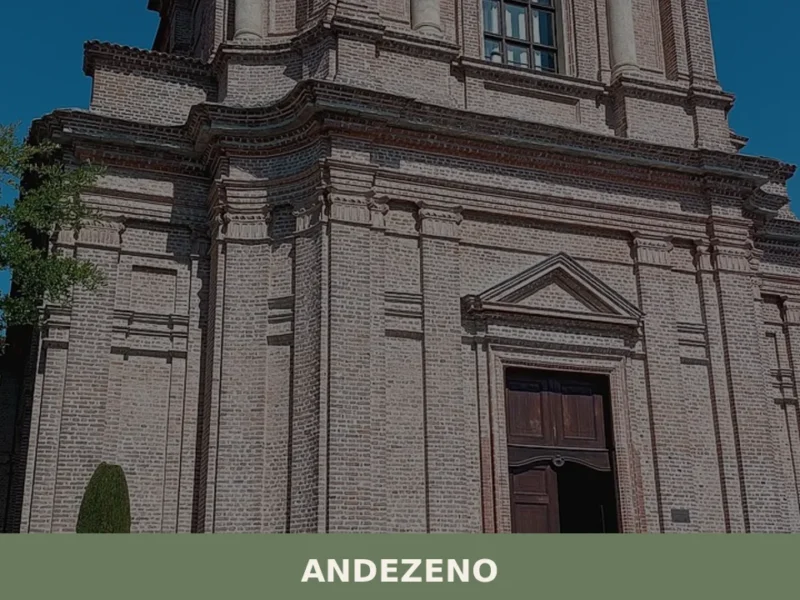
Eastern Piedmont, between the Canavese and the Turin hills, has a high density of small centres that share a rural matrix and a history linked to trade between the plain and the mountains. South-east of Albiano, heading towards the hills that precede the metropolitan area of Turin, lies Andezeno, a municipality on the Turin hillside where clay and calcareous soils support a viticulture distinct from that of the Canavese, with Freisa among the main grape varieties. The comparison between the two territories — morainic at Albiano, hilly and marly at Andezeno — illustrates how geology directly conditions agricultural choices and the landscape.
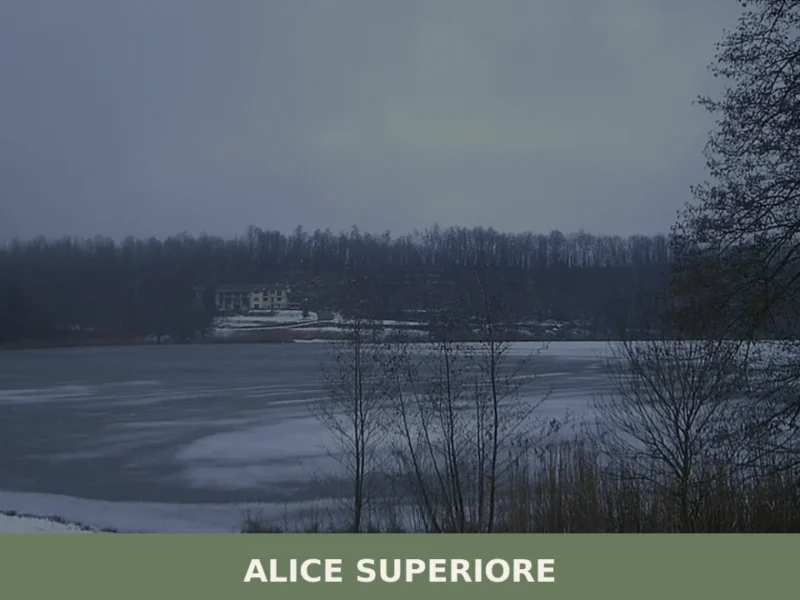
Heading instead up towards the valleys that open north of Ivrea, Alice Superiore occupies a higher position in the upper Chiusella valley, where the landscape shifts from cultivated hillside to mountain forest. Visiting these villages in sequence allows you to cross three different altitudinal bands in less than an hour by car, observing the progressive change in vegetation, architecture, and farming practices — a geographical transect that sums up the variety of sub-Alpine Piedmont.
Getting there
Corso Vittorio Emanuele, 10010 Albiano d'Ivrea (TO)
Nearby Villages near Albiano d’Ivrea
In Piedmont More villages to discover
Bairo
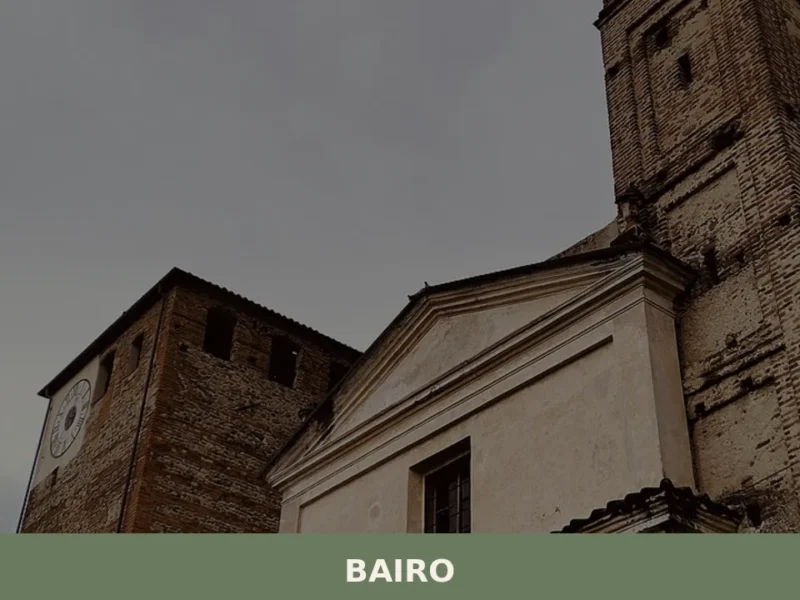
The earliest confirmed record of Bairo dates to a document from 1003, when Marquess Arduino of Ivrea — who would shortly become King of Italy — confirmed landholdings in this portion of the Canavese between the moraine ridge and the foothills of the Graian Alps. Today the municipality has 806 inhabitants, spread across the historic […]
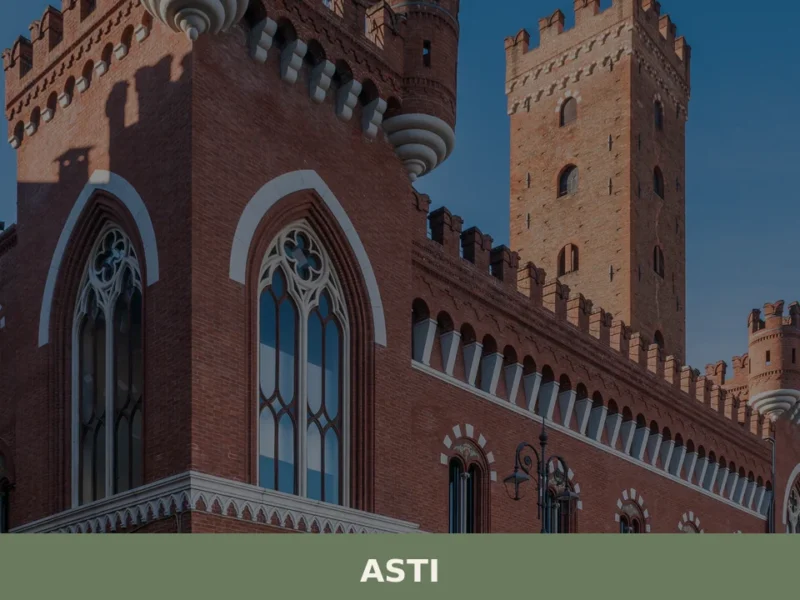
Asti
What to see in Asti: a city of 73,421 residents at 123m. Explore the Gothic Cathedral, Torre Rossa, Palazzo Alfieri and Barbera d'Asti DOCG. Plan your visit now.
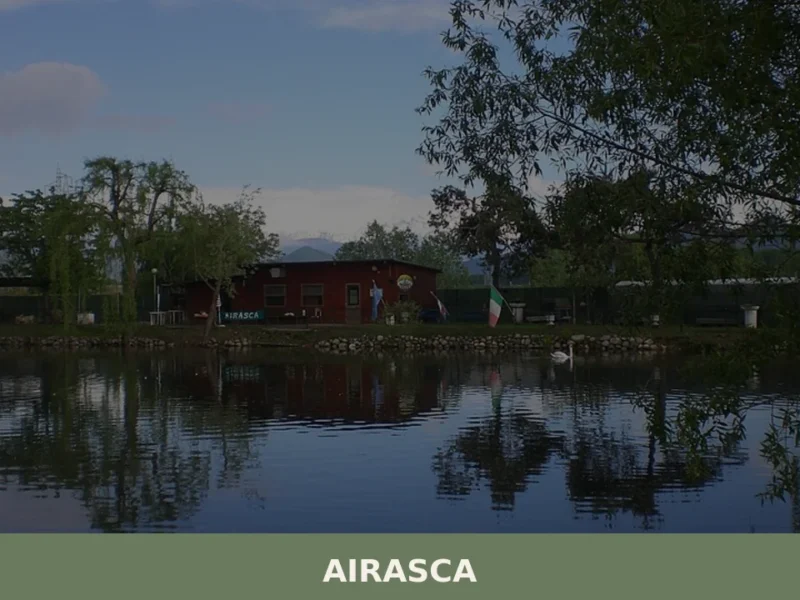
Airasca
Arriving in Airasca along the provincial road that connects Pinerolo to Turin, the first thing you notice is the bell tower of the parish church of San Bartolomeo, a vertical landmark in a horizontal landscape of cultivated fields and rows of poplars. The municipality, home to 3,842 inhabitants at 257 metres above sea level, occupies […]


📝 Incorrect information or updates?
Help us keep the Albiano d’Ivrea page accurate and up to date.