


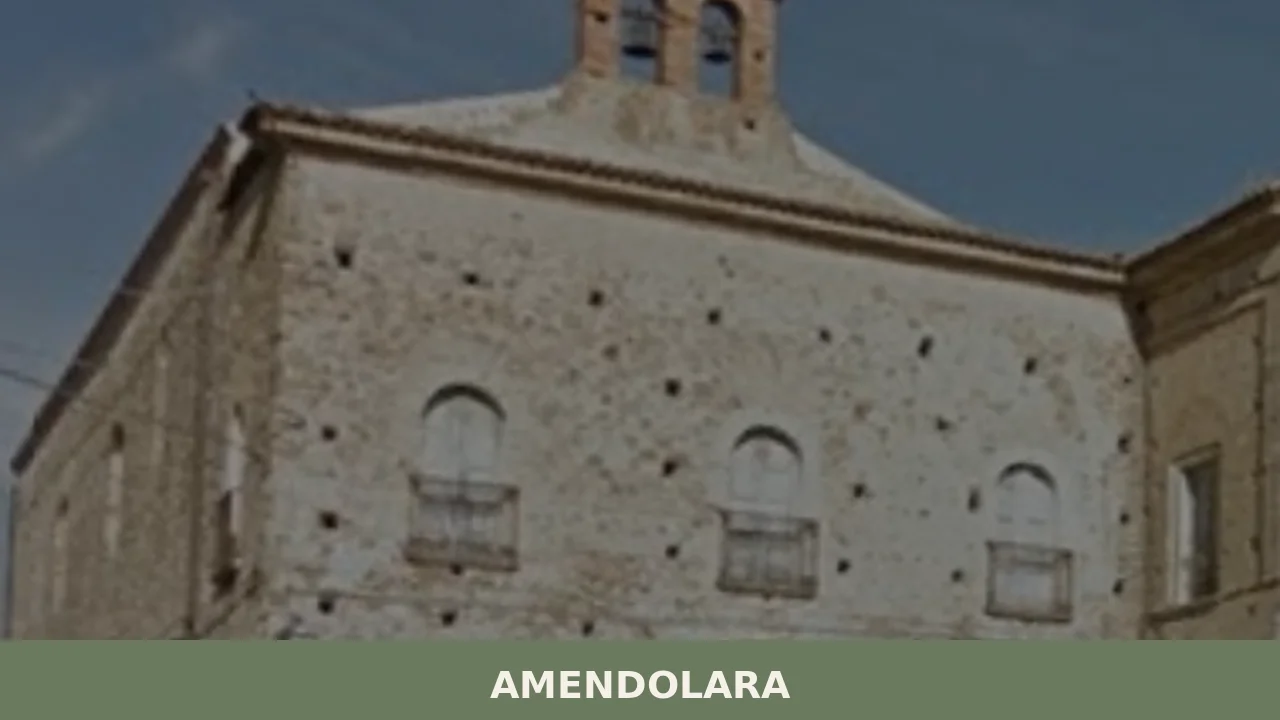
Amendolara
Explore Amendolara village, a charming Italian gem nestled in Calabria. Discover its rich history, stunning landscapes, and authentic local culture. Plan your visit today!
Discover Amendolara
Amendolara, with its 2,719 inhabitants, rises 227 meters above sea level in the province of Cosenza, offering a prime view of the Calabrian Ionian coast. This hillside village, whose history is deeply rooted in ancient times, represents an interesting destination for those wishing to explore a territory rich in cultural and natural layers.
Its name, linked to the prevalence of almond trees in the area, foreshadows the deep connection with the surrounding landscape and the agricultural traditions that have shaped the local identity over centuries.
For travelers seeking authenticity and a journey through archaeology, architecture, and traditional tastes, discovering what to see in Amendolara means embarking on a trip through millennia of Mediterranean history and culture.
IN THIS ARTICLE
History and Origins of Amendolara
The origins of Amendolara extend far back in time, with evidence of human settlements dating to the Bronze Age, between 1600 and 1000 BC, as shown by the Paleokastro site. During this period, the territory was a significant center for the Oenotrians, an Italic population inhabiting the area before the arrival of the Greeks. Subsequently, during the Magna Graecia era, Amendolara became part of the colony of Lagaria, founded by the Achaeans of Sybaris, one of the most important city-states of the time.
Historical documents also recount the renowned battle between Croton and Sybaris, which occurred in 510 BC, and had significant repercussions across the entire region.
Under Roman rule, the strategic importance of the location did not wane, and Amendolara was identified as the “Statio ad Vicesimum,” the twentieth post station along the Via Popilia, twenty miles from Sybaris. This position made it a vital reference point for connections and trade. In the Byzantine era, the village took on the name “Amendolaria” or “Amandularium” and transformed into a fortified center, necessary for defense against Saracen incursions that ravaged the southern Italian coasts. The defensive structures from that period laid the groundwork for the appearance the historic center would take in subsequent centuries.
The medieval age saw Amendolara pass under various feudal dominations, from the Norman-Swabian period to the Aragonese, when it became part of the Principality of Taranto.
Each transfer of power left an imprint on the urban and cultural fabric of the village, contributing to its complex layering. The 18th and 19th centuries were marked by natural and social events of great impact, such as the earthquakes of 1783, 1836, and 1887, which caused destruction and subsequent reconstructions.
After the Unification of Italy, Amendolara was also involved in the phenomenon of brigandage, an expression of the social and economic tensions affecting Southern Italy. Those visiting Amendolara today can perceive the signs of these eras, which narrate a past of resilience and continuous transformation, in a context similar to that of Altilia, also a witness to centuries of Calabrian history.
What to see in Amendolara: Main Attractions
The village of Amendolara offers visitors several attractions worth exploring, each with its distinct character and a profound link to the territory’s history. Walking through its streets, one discovers evidence of distant eras, from prehistoric settlements to religious buildings and medieval fortifications. Every corner holds a discovery, allowing for a better understanding of the evolution of this place in the heart of Ionian Calabria.
Paleokastro Archaeological Site
The Paleokastro Archaeological Site represents one of the key stops for those wishing to explore Amendolara’s historical roots.
Located on a height overlooking the coast, this settlement dates back to the Bronze Age and was a significant center for the Oenotrians.
Subsequently, it became part of the Greek colony of Lagaria. Excavation campaigns have revealed remains of dwellings, artifacts, and a large necropolis, providing valuable data on the daily life and funerary practices of ancient populations. A visit to the site allows one to immerse oneself in a compelling archaeological landscape, where history merges with natural beauty.
Mother Church of Saint Margaret Virgin and Martyr
The Mother Church, dedicated to Saint Margaret Virgin and Martyr, is Amendolara’s main place of worship, built on the ruins of a pre-existing Byzantine church. The building underwent several modifications over the centuries, particularly after the devastating earthquake of 1783 which required almost complete reconstruction. Of the ancient structure, the bell tower, dating back to the 16th century, stands prominently.
Inside, visitors can admire a valuable 17th-century wooden crucifix, a marble main altar, and some frescoes decorating the vaults, elements that make it a significant example of local sacred art.
Amendolara Castle
Amendolara Castle, also known as Castello di Amendolara Vecchia, is a substantial fortification that stands out in the village’s historic center.
Its origins date back to the Norman-Swabian period, but the current structure is the result of significant reconstructions carried out during Aragonese rule. It features a quadrangular plan with corner towers, typical elements of medieval military architecture. Although it is now a private residence, its striking presence helps define the village’s profile, recalling a past of defense and feudal power. Its location also offers panoramic views of the surrounding area.
Dominican Convent (Saint Dominic)
The Dominican Convent, dedicated to Saint Dominic, was founded in the 16th century and represents a complex of notable historical and artistic interest. The structure includes an internal cloister, characterized by sober and harmonious architecture, and rooms that once housed the monks. Inside, one can find remains of frescoes and, in the past, a library rich in volumes. Adjacent to the convent is the church, which preserves decorative elements from that era.
This place offers an atmosphere of peace and reflection, allowing visitors to discover an important part of the village’s religious and cultural life.
Torre Spaccata (Amendolara Marina)
Along the Amendolara Marina coast stands Torre Spaccata, one of the many watchtowers that dotted the Calabrian Ionian coastline.
Built in the 16th century, it was part of a broader defensive system, intended to protect the population from Saracen pirate incursions. Its robust structure and strategic position allowed for effective sea control. Despite the passage of centuries and the marks of time, the tower retains its appeal, serving as a historical reminder and a visual landmark for those traveling the coast, offering insight into the challenges faced by coastal communities in the past.
What to see in Amendolara: Itineraries and Discoveries
Beyond the main attractions, Amendolara invites visitors to explore less-traveled paths and discover aspects of local life that enhance the experience. The historic center, with its narrow streets and intimate squares, is an ideal place for relaxed walks, where one can observe Noble Palaces like Palazzo Pucci and Palazzo Andreassi, which bear witness to the architectural elegance of past eras.
These buildings, often characterized by stone portals and floral balconies, offer an idea of the life of the village’s most influential families. The search for these details makes every walk a true discovery.
Another interesting itinerary leads to the Sanctuary of the Madonna del Carmelo, situated on a hill overlooking the town and the sea. This place of worship is a destination for pilgrimages and offers a panoramic view of the surrounding landscape, extending to the coast and inland. The
In Calabria More villages to discover
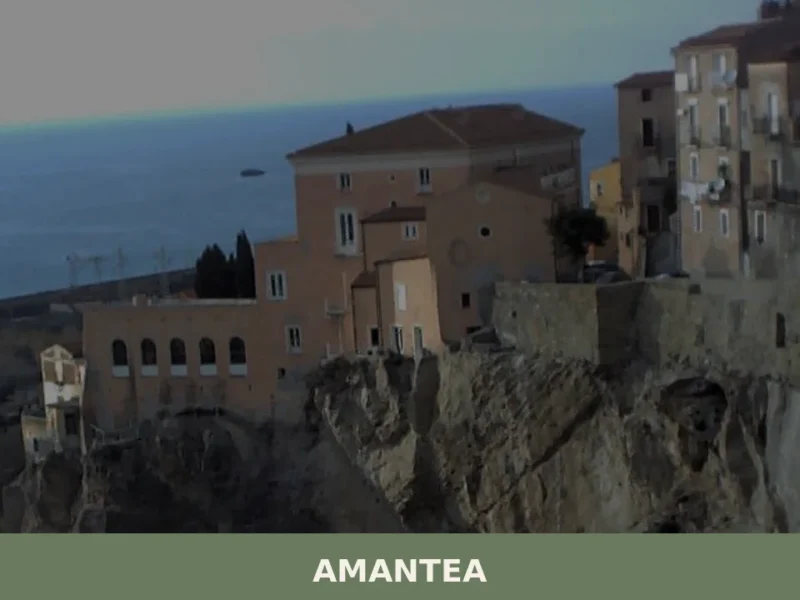
Amantea
Explore the picturesque village of Amantea Calabria. Discover its historic center, beautiful beaches, and authentic Italian charm. Plan your perfect trip to this hidden gem on the Tyrrhenian coast.
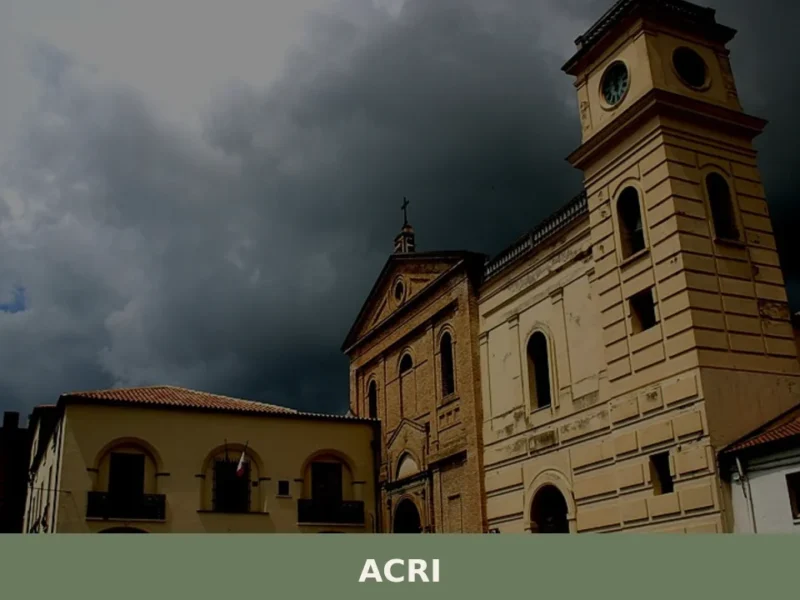
Acri
Acri is a town in the province of Cosenza with over 21,000 inhabitants, located in the Calabrian interior of the Sila Greca area, on a territory that passed through Norman, Swabian and Aragonese rule, leaving concrete traces in the local architecture and culture. For anyone approaching this corner of the province of Cosenza, the question […]
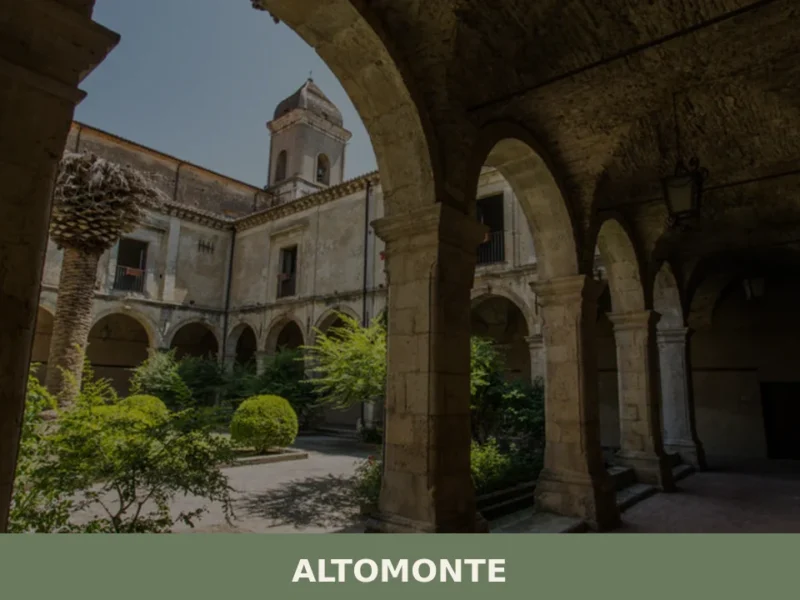
Altomonte
What to see in Altomonte: a hill village at 455m in Calabria with a 14th-century Gothic church, Civic Museum and medieval castle. Plan your visit today.






📝 Incorrect information or updates?
Help us keep the Amendolara page accurate and up to date.