


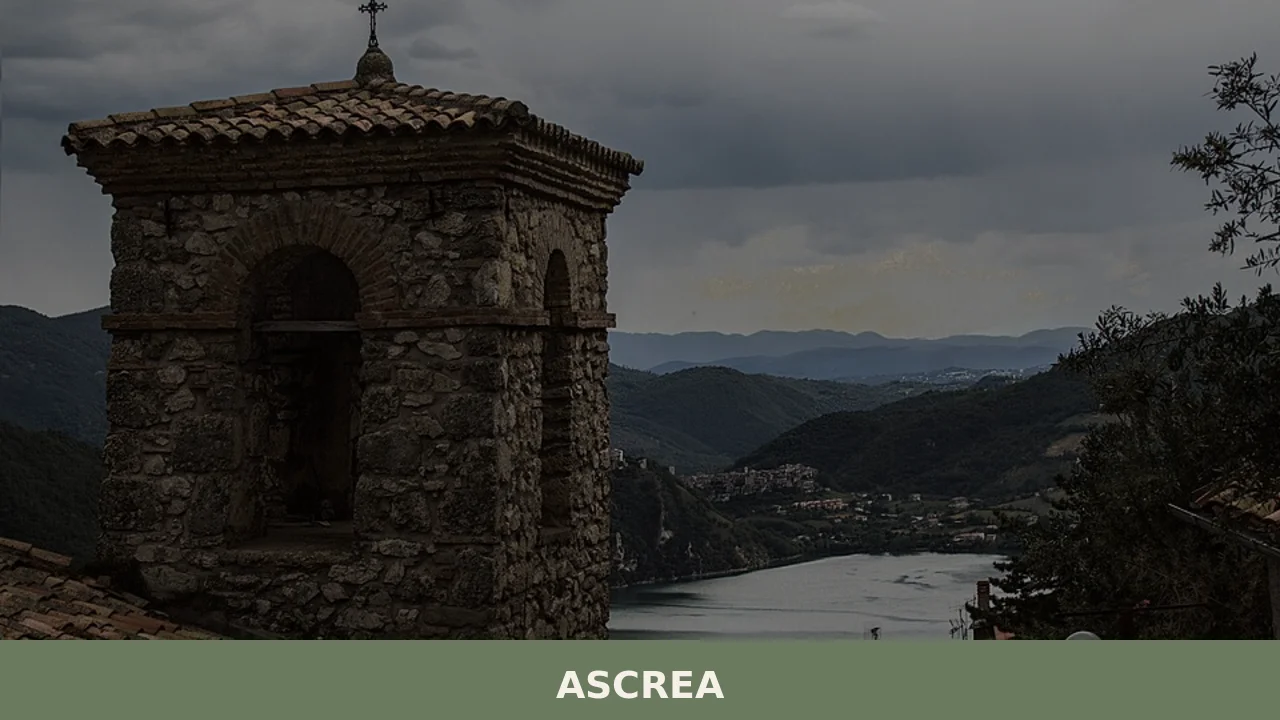
Ascrea
What to see in Ascrea: a mountain village at 757 m in the province of Rieti with 261 residents. Discover the church of San Nicola, PAT-certified products and how to get there.
Discover Ascrea
At 757 metres above sea level in eastern Lazio, the small municipality of Ascrea belongs to the province of Rieti and has a current population of 261.
Those wondering about what to see in Ascrea will find a mountain village where livestock farming and cheesemaking shaped the local economy for centuries, giving rise to products such as Cacio fiore that are still recognised at a national level today.
The historic centre runs along the ridges of the Monti Carseolani, overlooking a stretch of inland Lazio that few people truly know — reason enough to include it in an itinerary that goes beyond the more frequently visited routes.
History and Origins of Ascrea
The roots of Ascrea reach back to the early Middle Ages, a period when the territory around Rieti was subject to continuous disputes between secular and ecclesiastical lordships.
The village’s name appears in medieval historical sources relating to the Sabina, the broad historical region stretching between the River Tiber and the central Apennines, today partly within the province of Rieti.
The settlement most likely arose as a defensive outpost on a promontory that provided visual control over the valley below — a model of land occupation common to many centres of the Lazio Apennines between the 9th and 11th centuries.
During the late Middle Ages, the territory of Ascrea came under the influence of feudal families tied to papal power, as was the case for much of the Sabina around Rieti.
The village’s urban layout — compact in form, with houses pressed closely together along narrow routes — reflects the defensive needs that defined the centuries of greatest political instability.
The walls and towers still recognisable in the profiles of the oldest buildings speak of an architecture designed above all to withstand, not to impress.
In the modern era, Ascrea followed the administrative fortunes of the province of Rieti, remaining under the control of the Papal State until Italian Unification.
With 1861, the municipality became part of the Kingdom of Italy, and during the twentieth century it experienced — as many Apennine villages did — a gradual demographic decline tied to emigration toward the industrial cities of central and northern Italy.
The population, which had reached considerably higher figures in the first half of the last century, has now settled at 261 residents, a figure that reflects the deep transformation these mountain territories have undergone over the past seventy years.
What to See in Ascrea: Main Attractions
Church of San Nicola di Bari
The church dedicated to San Nicola di Bari, patron saint of the village, is the principal place of worship in Ascrea and the spiritual focal point of the local community. The patron saint’s feast day falls on 6 December, when the church becomes the centre of the village’s religious celebrations.
The building displays the typical features of rural sacred architecture in the Sabina: local stone construction, a plain façade, and a single-nave interior with restrained decorative elements.
Visitors to Ascrea should not miss going inside to observe the ensemble of liturgical furnishings and the quality of the stone carving in the architectural details.
Historic Centre and Medieval Layout
The old core of Ascrea retains a medieval building fabric that is legible in the arrangement of the houses, the covered passageways, and the limestone walls that define the internal routes of the village.
Walking among the houses of the centre means observing how the builders of the past adapted every structure to the shape of the terrain, creating a compact and functional urban organism. The different levels of the dwellings and the changes in height between the lanes make the visit interesting from a landscape perspective too, with sudden openings out toward the valley. What to see in Ascrea includes precisely this interplay between architecture and the natural landscape.
Medieval Tower
As in many villages of the Rieti Apennines, Ascrea preserves the remains of a turreted structure that originally formed part of the village’s defensive system.
The tower dominates the village’s profile and is visible from a distance, signalling the presence of the settlement to visitors approaching from the valley. Almost certainly built between the 10th and 13th centuries, the local-stone structure has undergone modifications and partial restorations over time, but still retains its visual role as an identifying element of the local landscape.
It is worth climbing to the highest point of the village to observe its outline at close range.
Views over the Monti Carseolani
Situated at 757 metres above sea level, Ascrea offers natural viewpoints looking out over the Monti Carseolani and the surrounding valleys of inland Lazio.
The village’s natural belvederes, accessible on foot along paths leading from the historic centre, allow visitors to appreciate the extent of the mountain territory in the province of Rieti. The landscape includes pastures, Turkey oak woodland and beech forest — elements that document the silvopastoral character of this part of the central Apennines.
Hiking enthusiasts will find in the area around Ascrea good options for walks of moderate difficulty, well suited to a day’s excursion.
Fountains and Minor Civil Architecture
Beyond the main architectural features, the village of Ascrea holds elements of minor civil architecture that deserve attention: stone fountains, carved doorways, external staircases and loggias that bear witness to the craft skills of local builders in past centuries. The public fountains, in particular, played a central role in the communal life of mountain villages and often carry inscriptions or decorative elements that allow their construction to be dated.
Even those visiting Ascrea for a single day should set aside time for these details — they are easily overlooked on a hurried itinerary, but form an essential part of reading the place.
Local Food and Products of Ascrea
The cuisine of the Ascrea area belongs to the gastronomic tradition of the Sabina around Rieti, one of the parts of inland Lazio where sheep and pig farming historically determined the food identity of mountain communities.
The techniques for preserving meat and dairy — developed over centuries in response to the need to survive long winters and the isolation imposed by the climate — produced a range of preparations that are now recognised as part of the national gastronomic heritage.
The proximity to the Amatrice area, one of the most celebrated gastronomic centres of mountain Lazio, has also profoundly influenced the eating habits of Ascrea and the surrounding villages.
Among the dishes of the local tradition, legume soups stand out — beans, lentils, chickpeas — cooked with wild aromatic herbs and dressed with extra virgin olive oil, a simple dish that reflects the peasant diet of this part of the Apennines. Homemade pasta, prepared with local flours, accompanies ragù of sheep or pork according to recipes handed down through families in the village.
Guanciale, made from the pig’s cheek and cured with salt and pepper, is the ingredient that most characterises the cuisine of this mountain area: its flavourful, aromatic fat forms the base of many traditional seasonings.
Three products certified as PAT (Traditional Agri-food Products) are closely linked to the territory of Ascrea and its food tradition.
Cacio fiore (PAT) — municipalities: Rome, Viterbo, Rieti — is a fresh soft cheese made from sheep’s milk, using a coagulation technique that relies on vegetable rennet extracted from the flowers of thistle or wild artichoke: an ancient process that sets it clearly apart from animal-rennet cheeses.
Guanciale (PAT) — municipalities: Rieti, Rome, Viterbo, Frosinone, Latina — is the cured meat made from the pig’s cheek, aged with salt, black pepper and sometimes chilli, and indispensable in many preparations of Lazio cuisine. Guanciale amatriciano (PAT) — municipalities: Rieti, Amatrice — represents the most prized variant, produced in the Amatrice area with specific characteristics of weight, curing time and the ratio of lean to fat, recognised by its intense aroma and firm texture.
The most favourable season for buying local products is autumn and winter, when cured meat production reaches its traditional peak and village markets offer both fresh and aged cheeses.
Those visiting Ascrea in December, for the feast of San Nicola, have the opportunity to meet small local producers who bring their products to the village during the days of celebration, creating an informal occasion for exchange and direct purchase.
Festivals, Events and Traditions of Ascrea
The most important event in Ascrea’s civic and religious calendar is the feast of the patron saint San Nicola di Bari, celebrated on 6 December each year.
San Nicola is one of the most venerated saints in central and southern Italy, and his celebration in Ascrea brings together the resident community and the many former residents who return to the village for the occasion.
The event includes a solemn Mass in the parish church dedicated to the patron saint, followed by a procession through the village streets during which the statue of the saint is carried on the shoulders of the faithful.
The day traditionally concludes with communal gatherings involving the entire community.
Beyond the patron saint’s feast, the annual calendar of Ascrea follows the rhythms of the mountain seasons and the religious observances of the liturgical year. Holy Week and Christmas celebrations draw the community to the church of San Nicola for well-attended services.
August, when many former residents return to the village for their summer holidays, is traditionally the period when informal initiatives are organised — gatherings, communal dinners, small local events — that keep alive the bond between those who have stayed and those who left the village in decades past.
When to Visit Ascrea and How to Get There
The best period to visit Ascrea runs from late spring to early autumn, between May and October, when temperatures at 757 metres are pleasant and the surrounding mountain paths can be walked without particular difficulty.
Those looking for contact with nature and wanting to explore the woodland around the village will find the most favourable conditions in June and September: the vegetation is at its fullest, yet the summer heat is not yet oppressive or has already eased.
In December, the feast of San Nicola offers a specific occasion for those who want to experience the village in its traditional and religious dimension. For up-to-date information on local events and initiatives, the Ascrea municipal website is the official point of reference.
Ascrea is reached primarily by car, as the village is not served by direct rail links.
Those arriving via the A24 Rome–L’Aquila motorway can exit at the Carsoli-Oricola junction, approximately 20 kilometres from the village, and continue on provincial roads through the hilly landscape of the eastern Sabina. The nearest railway station is Carsoli-Oricola, on the Rome–Pescara line, around twenty kilometres away, from which the village can be reached by car or local taxi.
Travellers arriving by air can fly into Rome Fiumicino airport, approximately 120 kilometres away, connected to the capital from where the onward journey to Ascrea can be made by car via the Via Tiburtina or the A24 motorway.
Other Villages to Explore in Lazio
Inland Lazio contains a network of small historic centres that share with Ascrea the quality of having remained outside mass tourism flows, while offering a genuine historical and landscape heritage.
Those wishing to extend their itinerary can look toward the north of the region, where Farnese, in the Viterbo area, has a historic centre of Etruscan origin with well-preserved medieval towers, and Latera stands out for its position on the edge of an ancient volcanic crater now designated as a nature reserve.
Both villages lend themselves to a day visit and offer a perspective on rural Lazio that complements the Rieti area.
For those heading into the Tuscia around Viterbo, Onano is a medieval-origin village with a compact urban layout and an agricultural tradition tied to the lentil, a product that has received quality recognition at a national level.
Not far away, Villa San Giovanni in Tuscia offers an example of a small village set within the rolling hill landscape typical of the Lazio Maremma.
Combining visits to these centres in a three- or four-day itinerary allows travellers to cross Lazio transversally, moving from the Rieti Apennines where Ascrea stands to the volcanic hills of the Viterbo area, with a variety of landscapes and traditions that makes the route both varied and coherent.
In Lazio More villages to discover
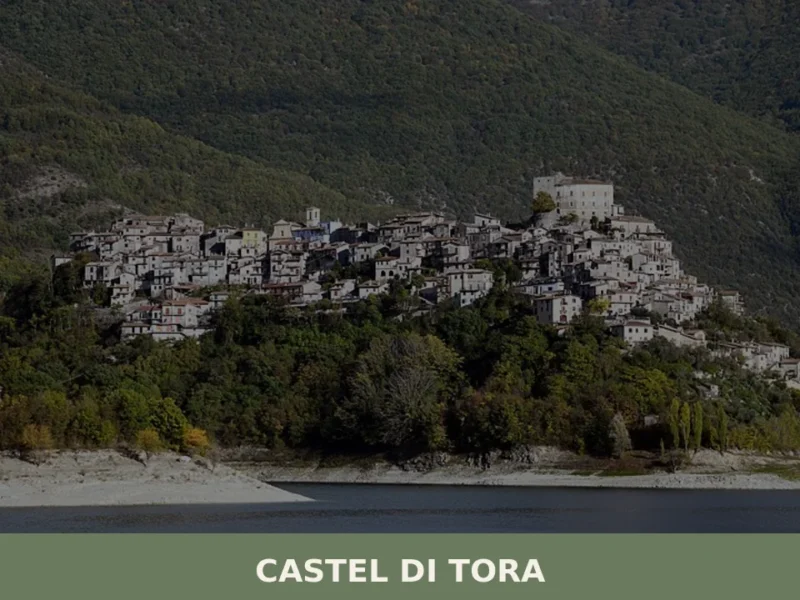
Castel di Tora
What to see in Castel di Tora: medieval village at 607 m above Lago del Salto, 292 residents, 3 PAT-certified products. Plan your visit with our complete guide.
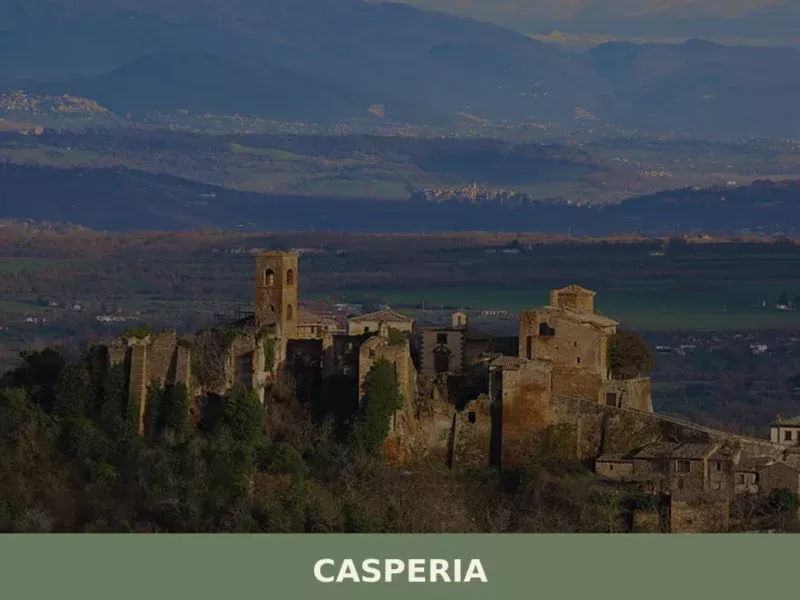
Casperia
What to see in Casperia, a hilltop village at 397 m in Rieti province: medieval centre, 3 PAT-certified products including guanciale. Plan your visit and where to stay.
Castelnuovo di Farfa
What to see in Castelnuovo di Farfa: 1,032 inhabitants at 358 m in the Sabina. Explore the medieval castle, San Nicola church and PDO cacio fiore. Plan your visit now.
📝 Incorrect information or updates?
Help us keep the Ascrea page accurate and up to date.