


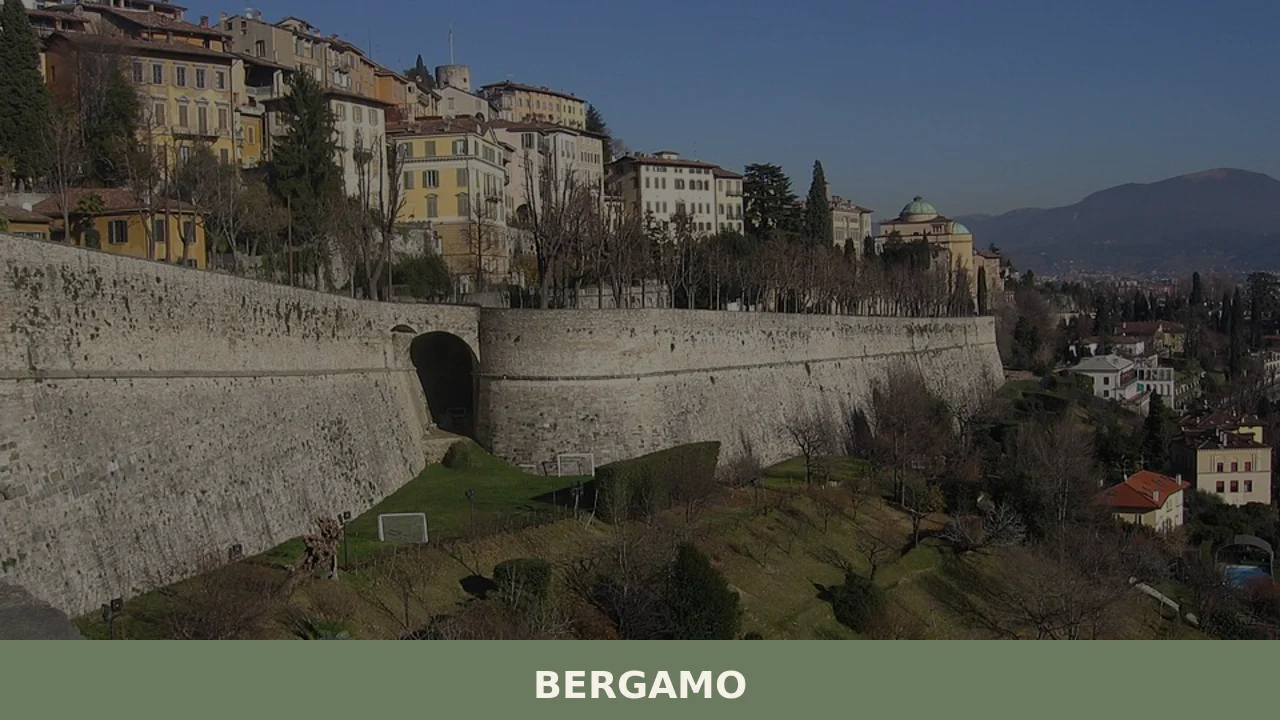
Bergamo
What to see in Bergamo? With 119,534 inhabitants, the city is famous for its Venetian Walls and Piazza Vecchia. Discover its rich history and typical dishes.
Discover Bergamo
Located in the Lombardy region, the city of Bergamo has a population of 119,534 inhabitants and stands at an altitude of 249 m above sea level.
This locality is distinguished by its peculiar division into two distinct urban centers: the Città Alta (Upper Town), of medieval origin and surrounded by Venetian walls, and the Città Bassa (Lower Town), the more modern and dynamic part.
Every corner offers glimpses and testimonies of a rich past, inviting visitors to discover an artistic and cultural heritage of great value.
If you are wondering what to see in Bergamo, the ideal route begins by exploring its historic architectures and the streets that connect the two souls of the city, offering a complete experience of art, nature, and traditions.
History and Origins of Bergamo
The roots of Bergamo run deep into ancient times, with settlements of Celtic populations, particularly the Cenomani, who established themselves in the area.
Subsequently, in the 1st century BC, the city was Romanized and took the name of Bergomum, a term believed to derive from “Berg-hem”, meaning “house on the mountain”, in reference to its hilly position.
During the Roman period, Bergomum became an important strategic and commercial center, a crossroads of communication routes connecting different parts of the Empire, and its urban structure began to take shape with the construction of public and private infrastructures.
With the fall of the Roman Empire, Bergamo passed under the dominion of the Lombards in the 6th century, becoming a prominent duchy within the Lombard Kingdom.
This period saw an important territorial reorganization and the rise of a local aristocracy.
Subsequently, under the Carolingian Empire, the city experienced a phase of development that led to the birth of the Free Commune in the 12th century, an era of economic and civil flourishing.
The struggles between Guelph and Ghibelline factions characterized much of the Middle Ages, profoundly influencing local politics and society, as also occurred in other Lombard centers such as Arsago Seprio, which shares a similar past of communal autonomy and internal conflicts.
A crucial moment in the history of Bergamo was its annexation to the Republic of Venice in 1428, a dominion that lasted for over three centuries, until 1797.
Under the Serenissima, the city experienced a period of stability and economic prosperity, but above all, it saw the construction of the imposing Venetian Walls, a masterpiece of military engineering that still encircles the Città Alta (Upper Town) today.
These fortifications, built between the 16th and 17th centuries, aimed to defend the western borders of the Republic.
After the end of Venetian rule, Bergamo passed under French and then Austrian influence, eventually playing a significant role in the Italian Risorgimento, actively participating in Garibaldi’s Expedition of the Thousand in 1860, earning it the moniker “City of the Thousand” for the high number of volunteers who took part.
What to see in Bergamo: main attractions
Visitors to Bergamo discover a concentration of history and art that manifests in every street and square.
For those wondering what to see in Bergamo, its main attractions offer a journey through the centuries, from Roman remains to Renaissance and Baroque architecture.
The city is an open-air museum, where every monument tells a part of its glorious past, inviting a slow and in-depth discovery.
Venetian Walls
The Venetian Walls of Bergamo, recognized as a UNESCO World Heritage Site since 2017, represent an extraordinary defensive work, built by the Republic of Venice in the 16th and 17th centuries to protect the city.
Over six kilometers long, these walls are an excellent example of fortified military architecture, featuring bastions, monumental gates, and covered passages.
Their integrity is remarkable, and they offer a panoramic path around Città Alta (Upper Town), allowing visitors to admire spectacular views of Città Bassa (Lower Town) and the surrounding valleys.
Walking along them is an experience that combines historical appreciation with the beauty of the landscape, making them an ideal starting point for discovering the town.
Piazza Vecchia
The beating heart of Città Alta (Upper Town) is Piazza Vecchia, described by Le Corbusier as “one of Italy’s most beautiful squares”.
This urban space encompasses some of Bergamo’s most significant buildings, bearing witness to its communal history.
At its center stands the Contarini Fountain, dating back to the 18th century. The square is bordered by the Palazzo della Ragione, the ancient communal broletto from the 12th century, with its open loggia and frescoes, and by the Angelo Mai Civic Library, which occupies the former Palazzo Nuovo, a building with Renaissance forms.
The architectural harmony of the square invites visitors to pause and observe, allowing them to perceive the historical atmosphere that still permeates the place.
Basilica of Santa Maria Maggiore
The Basilica of Santa Maria Maggiore is one of Bergamo’s most important buildings, its construction having begun in 1137 by popular vow.
Despite subsequent additions, it retains a Romanesque-Lombard layout, especially evident in the external apses and side portals, decorated with sculptures and bas-reliefs.
The interior is a triumph of Baroque art, with rich stuccos, frescoes, and Flemish and floral tapestries from the 16th and 17th centuries depicting biblical episodes and scenes of life.
The remains of the composer Gaetano Donizetti are also found here. The complexity of the decorations and the richness of the materials used make a visit a deep immersion into art history, offering surprising details at every glance.
Colleoni Chapel
Adjacent to the Basilica of Santa Maria Maggiore is the Colleoni Chapel, a Renaissance mausoleum commissioned by the condottiero Bartolomeo Colleoni for himself and his daughter Medea.
Built between 1472 and 1476 to a design by Giovanni Antonio Amadeo, the chapel is a masterpiece of Lombard Renaissance art, with a richly decorated polychrome marble facade featuring biblical and allegorical scenes, as well as numerous busts and medallions.
The interior houses the funerary monument of Bartolomeo Colleoni and the sarcophagus of Medea, both of great artistic value.
The chapel is an exceptional example of how art and architecture can celebrate the memory and power of historical figures.
Campanone (Civic Tower)
The Campanone, or Civic Tower, stands majestically in Piazza Vecchia, offering one of the most evocative perspectives of the city.
Originally built in the 11th century as a defensive tower, it was later repurposed as a civic tower and clock. At 52 meters tall, it represents the highest point in the square and is accessible by elevator or a staircase of approximately 230 steps.
From the top, one can enjoy a 360-degree view spanning from Città Alta (Upper Town), with its historic architecture, to Città Bassa (Lower Town), and extending to the plain and the Orobic Prealps.
Every evening at 10:00 PM, the Campanone’s main bell rings one hundred times, a tradition that once signaled the closing of the Venetian Walls’ gates, a ritual that still marks the city’s time today.
Typical Cuisine and Products of Bergamo
Bergamo’s gastronomic tradition reflects its position between mountains and plains, offering robust and flavorful cuisine based on local ingredients and recipes handed down from generation to generation.
The Lombard influence is evident, with a strong connection to local produce and livestock. Polenta, in particular, is a central element of the Bergamasque table, consumed in multiple variations and pairings, both as an accompaniment and as a main dish, a sign of its versatility and importance in the local diet.
Among the emblematic dishes of Bergamasque cuisine are the Casoncelli alla bergamasca, ravioli filled with meat, cheese, breadcrumbs, eggs, and spices, traditionally served with melted butter, sage, and crispy pancetta.
Another characteristic dish is Polenta e Osei, which actually comes in two versions: the savory one, with wild birds, and the sweet one, a dessert made with sponge cake, buttercream, and marzipan, decorated with chocolate birds.
No less appreciated is the Stracotto di manzo alla bergamasca, a slow-cooked preparation of beef braised in red wine with vegetables, which yields a rich and flavorful sauce, perfect for accompanying polenta.
Although no products with DOP, IGP, or PAT certification are present in the database for this specific area, the province of Bergamo is renowned for the production of high-quality cheeses, such as Taleggio and Strachìtunt, both linked to a long mountain cheesemaking tradition.
These cheeses, while not specifically certified for the village of Bergamo itself, are widely available and represent an excellence of the surrounding territory, offering intense and distinctive flavors.
Their production is based on ancient methods, which enhance the milk from the Bergamasque valleys and the experience of local cheesemakers, guaranteeing a product of great gustatory value.
For those wishing to savor local specialties, Bergamo’s numerous restaurants and trattorias, both in Città Alta and Città Bassa, offer traditional dishes.
Local markets, such as the one held on Saturdays in Piazzale Alpini, provide an opportunity to purchase fresh and typical products directly from producers, including seasonal vegetables and local cheeses.
Throughout the year, various food festivals take place in the towns of the province, celebrating the excellences of the territory, offering tastings and opportunities to get to know the culinary traditions of the Bergamasque region up close.
Festivals, Events, and Traditions of Bergamo
Bergamo celebrates its patron saint’s day with particular devotion in honor of Saint Alexander of Bergamo, which falls on August 26th.
This day is a moment of deep spirituality and civic participation, with religious ceremonies taking place in the main churches, often culminating in a solemn procession that winds through the streets of Città Alta.
The feast is accompanied by civil events, including open-air markets where local artisanal and gastronomic products can be found, musical performances, and entertainment for all ages, creating an atmosphere of joy and sharing that involves residents and visitors.
In addition to the patron saint’s day, Bergamo hosts numerous cultural and traditional events throughout the year that enliven the city.
These include events related to the Christmas period, with traditional markets and concerts that create a festive atmosphere, especially in Città Bassa.
Throughout the year, music festivals, theater reviews, and art exhibitions are also held, enriching the city’s cultural offerings.
The vibrancy of these traditions helps keep alive the connection to local history and identity, offering visitors further opportunities to discover the different facets of this Lombard village, much like what also happens in Cadegliano-Viconago, where local celebrations are a moment of strong community gathering.
When to visit Bergamo and how to get there
The best time to visit Bergamo is spring (April-June) and autumn (September-October), when the climate is mild and pleasant, ideal for strolling through the streets of Città Alta and walking along the Venetian Walls.
In these months, the crowds are generally less intense compared to the peak summer season, and the surrounding landscape offers a rich palette of colors. Summer can be hot, but evenings in Città Alta are often refreshed by a light breeze.
Winter, while colder, offers a charming atmosphere, especially during the Christmas period, with markets and illuminations decorating the city.
Those looking for what to see in Bergamo will always find a suitable opportunity in every season.
Getting to Bergamo is easy thanks to its strategic location.
By car, the city is easily accessible via the A4 Milan-Venice motorway, with the specific Bergamo exit leading directly to the center. For those who prefer the train, Bergamo’s railway station is well connected with major Italian cities, particularly Milan, from which frequent regional trains depart.
Those arriving by plane can land at Orio al Serio International Airport (BGY), located about 5 kilometers from the city center, and connected by shuttle bus services.
For detailed information on timetables and connections, it is advisable to consult the official website of the municipality of Bergamo or dedicated transport portals.
To facilitate trip planning, here is a summary table of estimated distances and travel times from nearby major cities:
| Point of departure | Distance | Estimated time |
|---|---|---|
| Milan | 50 km | 45-60 minutes |
| Brescia | 55 km | 50-70 minutes |
| Verona | 115 km | 1 hour and 20 minutes |
Where to stay in Bergamo
Bergamo offers a wide range of accommodation solutions suitable for every need, both in Città Alta and in the more modern Città Bassa.
In Città Alta, you can find boutique hotels carved out of historic buildings and charming bed & breakfasts, ideal for those who wish to fully immerse themselves in the medieval atmosphere and have the main attractions within easy reach.
These establishments often offer panoramic views and a more intimate and characteristic experience, allowing you to experience the city at a leisurely pace.
Città Bassa, on the other hand, offers a wider choice of hotels in various categories, from more economical to luxury ones, as well as numerous apartments and holiday homes.
This area is well-served by public transport and offers easy access to shops, restaurants, and services. Many visitors choose Città Bassa for its practicality and proximity to the train station and airport, while still being able to reach Città Alta by funicular in a few minutes. Regardless of your choice, it is advisable to book in advance, especially during peak seasons or in conjunction with events.
Photo Gallery of Bergamo
Do you have photos of Bergamo?
Share your photos of the village: the best ones will be added to the official gallery, with your credit.
Send your photosIn Lombardia More villages to discover
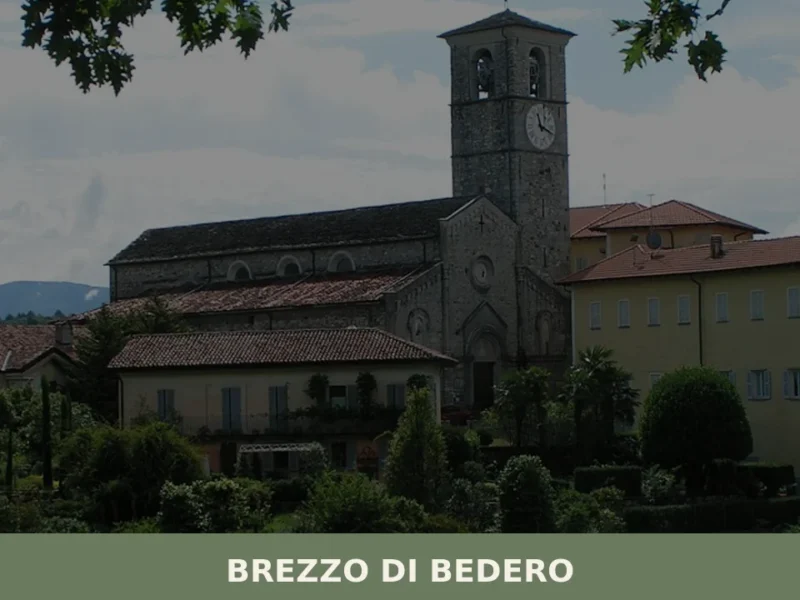
Brezzo di Bedero
What to see in Brezzo di Bedero: Explore Collegiata di San Vittore and the lakeside Hermitage. This village, home to 1,200 residents, offers rich history. Discover more!
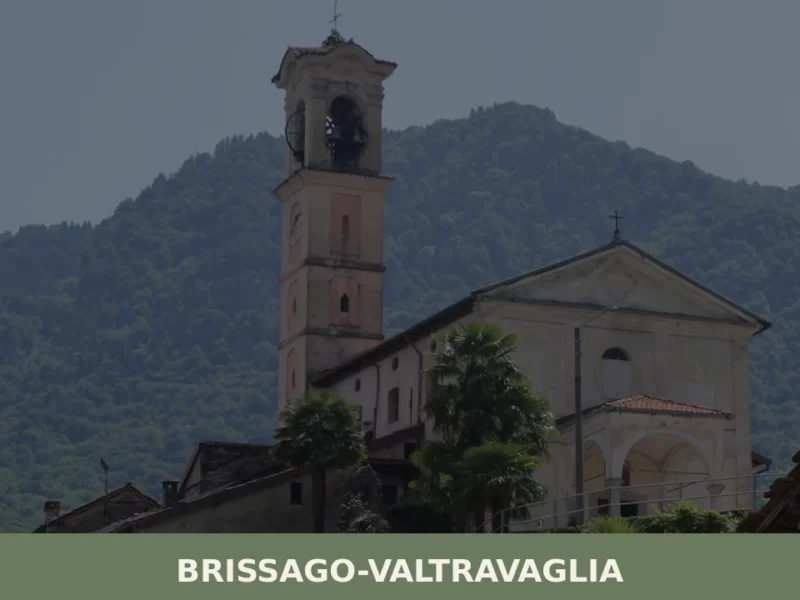
Brissago-Valtravaglia
What to see in Brissago-Valtravaglia: village at 429m with 5 top attractions, Lombard cuisine and panoramic trails. Explore the complete guide now.
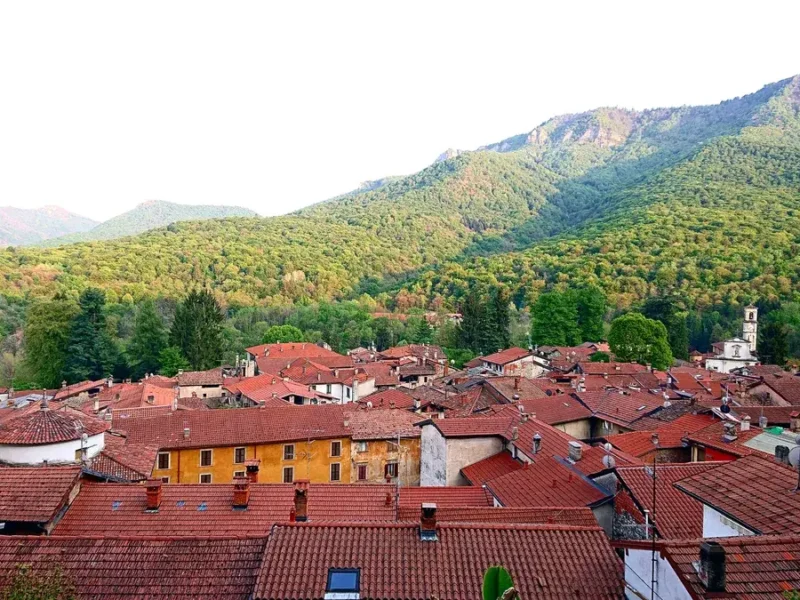
Castello Cabiaglio
What to see in Castello Cabiaglio: a hill village at 514m with 567 residents in Varese. Explore Sant'Appiano church, Campo dei Fiori trails and local porcini risotto. Plan your visit now.





📝 Incorrect information or updates?
Help us keep the Bergamo page accurate and up to date.