


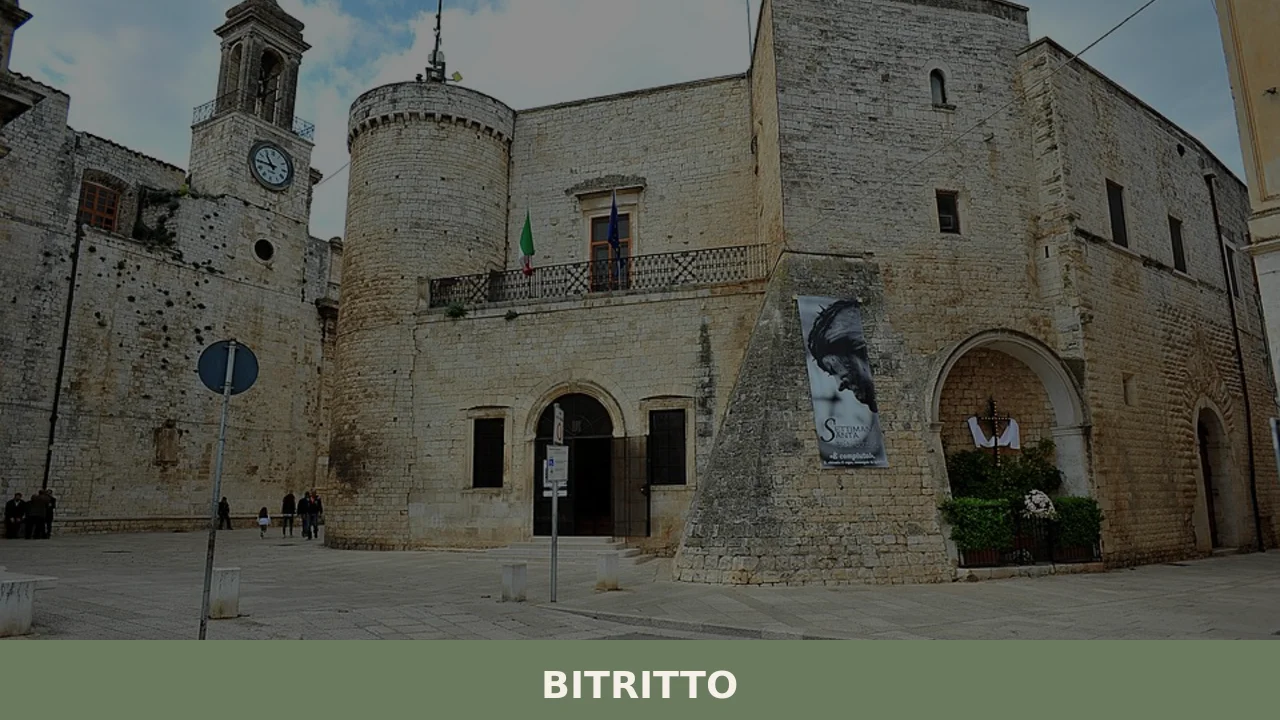
Bitritto
Approximately 11 kilometers southwest of Bari, in the basin opening towards the hinterland, lies Bitritto, a municipality with 11,046 inhabitants, situated 102 meters above sea level. Its territory, marked by olive groves and almond orchards, is an integral part of the Apulian agricultural landscape and reflects the region’s farming heritage. For those wondering what to […]
Discover Bitritto
Approximately 11 kilometers southwest of Bari, in the basin opening towards the hinterland, lies Bitritto, a municipality with 11,046 inhabitants, situated 102 meters above sea level. Its territory, marked by olive groves and almond orchards, is an integral part of the Apulian agricultural landscape and reflects the region’s farming heritage. For those wondering what to see in bitritto, the village presents an urban fabric that has evolved over centuries, retaining traces of a past rooted in the Roman era and developing through the Middle Ages.
History and Origins of Bitritto
The first historical records place Bitritto’s origin in the Roman era, when its territory was likely crossed by a consular road. The toponym itself, according to some interpretations, derives from “Buxus,” indicating the presence of boxwood forests. With the fall of the Roman Empire, the area experienced barbarian and Lombard dominations, before entering the sphere of the Duchy of Benevento.
The medieval period was crucial for the village’s structure. Bitritto was involved in the feudal dynamics that characterized Southern Italy, passing under the control of various noble families, including the Acquaviva, Carafa, and Filomarino. These lordships contributed to the fortification of the inhabited center, as evidenced by the Baronial Castle, and to the development of agricultural activities, which have always been the economic engine of the community.
The construction of the Mother Church of Santa Maria Veterana, whose origins date back to the 12th century, marks a significant moment in the religious and social life of the village, establishing itself as the community’s focal point. Its architecture, although altered over the centuries, retains elements reminiscent of the Apulian Romanesque style, reflecting the artistic and cultural influences that have traversed the region. The village, despite being on a plain, has maintained its distinct character, linked to the fertility of its soil and agricultural production.
What to see in bitritto: 5 Must-Visit Attractions
Baronial Castle
The Baronial Castle of Bitritto represents the historical symbol of the village. Its current structure is the result of modifications and expansions over centuries, starting from a probable Norman fortification. It features a quadrangular plan with four corner towers and an internal courtyard. Today, it hosts cultural events and celebrations, serving as a center of civic life.
Mother Church of Santa Maria Veterana
Originally built in the 12th century, the Mother Church of Santa Maria Veterana is the most significant religious building in Bitritto. Despite subsequent alterations, it retains Romanesque elements in its structure. The interior houses sacred artworks and altars. It is dedicated to Our Lady of Constantinople, the patron saint of the village, whose feast is celebrated on the first Tuesday of March.
Convent of Santa Maria delle Grazie
The Convent of Santa Maria delle Grazie, dating back to the 16th century, is a monastic complex that includes a church and a cloister. The church’s facade features sober lines, typical of conventual architecture. Inside, frescoes and wooden artifacts can be observed. The convent has played a historical role in Bitritto’s religious and cultural life.
Church of San
In Apulia More villages to discover
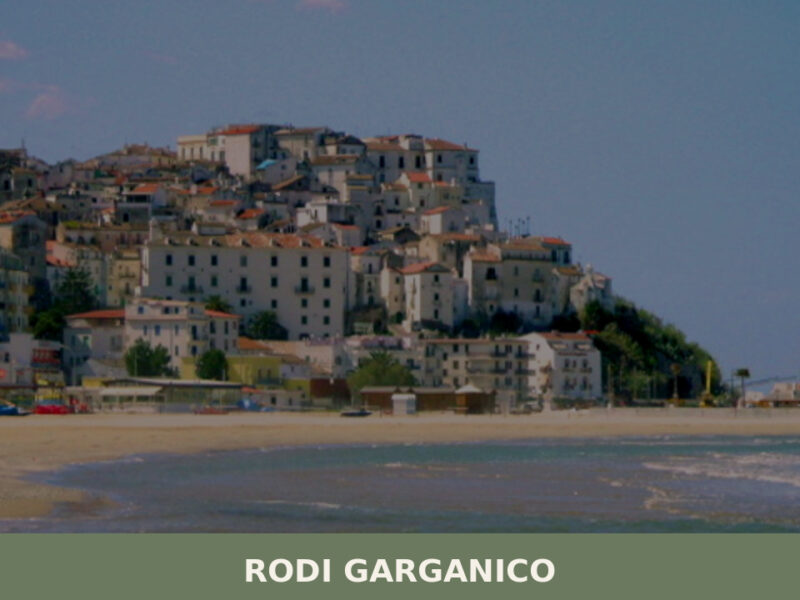
Rodi Garganico
A coastal village of 3,302 inhabitants on the Gargano promontory, Rodi Garganico offers a medieval centre, IGP citrus groves, and an authentic Adriatic harbour life.
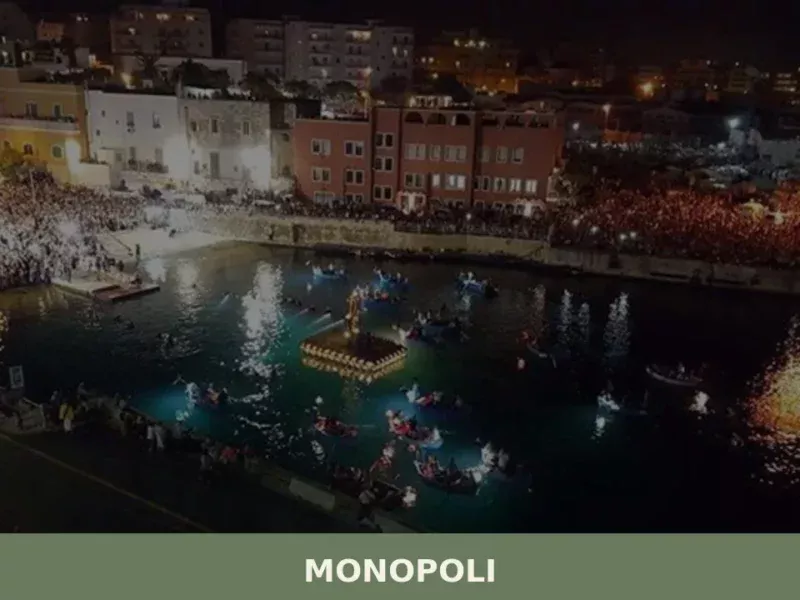
Monopoli
From the promontory where the Castle of Charles V stands, the view sweeps across the Adriatic, a horizon of waters that have shaped Monopoli’s identity for centuries. This port city, whose name evokes the idea of a “unique city,” reveals itself through its architecture, which tells of historical layers, from Messapian walls to Spanish fortifications. […]
Motta Montecorvino
A 651-inhabitant hilltop village in Puglia's Daunia hills, Motta Montecorvino rewards slow visitors with medieval lanes, long views over the Tavoliere plain, and robust mountain cooking.




📝 Incorrect information or updates?
Help us keep the Bitritto page accurate and up to date.