


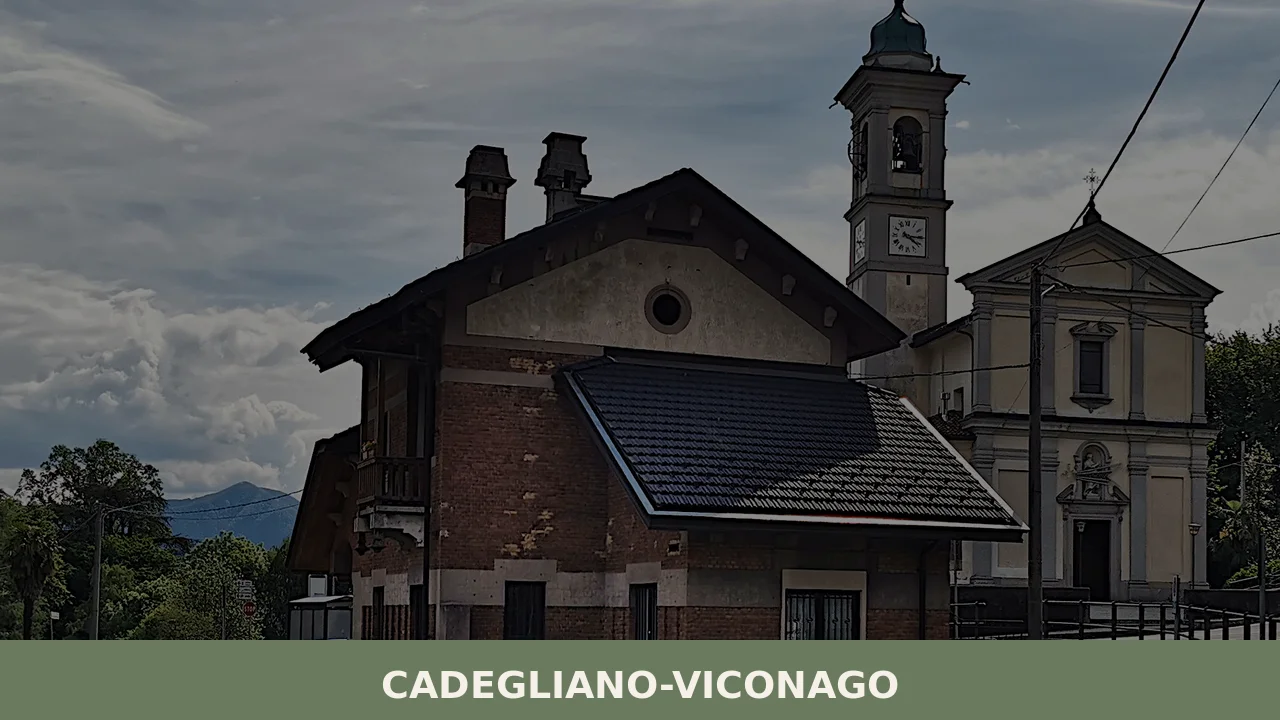
Cadegliano-Viconago
What to see in Cadegliano-Viconago: hilltop village at 414m, 2,155 residents. Two historic centres, chestnut woodland, views over Lake Lugano. Plan your visit with this complete guide.
Discover Cadegliano-Viconago
At 414 metres above sea level, where the Varese province gives way to the hilly terrain approaching the Swiss border, two distinct settlements — Cadegliano and Viconago — were merged into a single municipality in 1928, during the wave of administrative consolidations carried out under the Fascist regime. Today the municipality has 2,155 inhabitants and retains a settlement structure that still reflects its dual origins: two nuclei with their own distinct character, surrounded by chestnut woodland and overlooking Lake Lugano.
For those wanting to know what to see in Cadegliano-Viconago, this guide covers the village’s history, its religious buildings, the hillside trails and local food — with no tourist-brochure gloss.
History and Origins of Cadegliano-Viconago
The name Cadegliano has Lombard roots: it most likely derives from a Germanic personal name, combined with the Latin suffix -anum, which traditionally denoted land ownership.
This is a typical pattern in pre-medieval Lombard place names, common throughout the arc between Lake Maggiore and Lake Ceresio. Viconago, on the other hand, recalls the Latin vicus — a small rural settlement — with a medieval adjectival suffix. Even in their linguistic form, the two names tell a story of successive ethnic layers: first Roman, then Germanic, then ecclesiastical and lay feudal lords.
During the medieval period, both settlements formed part of a network of small rural properties that fell within the sphere of the local lordships of the Varese area, in a territory contested between noble Milanese families and the bishops of Como. The earliest written records date to the eleventh and twelfth centuries, when the area appeared in ecclesiastical surveys and tax records of the Diocese of Milan.
Like many municipalities in the Varese pre-Alpine zone, the territory came under the influence of the Visconti and later the Sforza, though it never became the scene of significant military events: its history is one of agricultural and forestry continuity rather than armed conflict.
The unification of the two municipalities in 1928 was an administrative act that did not erase the separate local identities.
To this day, residents tend to refer to the two nuclei individually in everyday conversation. Demographically, the municipality maintained a stable population throughout the twentieth century, hovering between two thousand and two thousand two hundred residents, without the large-scale emigration to cities that depopulated other Lombard villages. This relative stability is partly explained by the proximity to the Varese industrial area and the ease of commuting, which allowed many families to remain rooted in the hillside territory.
What to See in Cadegliano-Viconago: 5 Top Attractions
1. Parish Church of San Silvestro in Cadegliano
The patron saint of the municipality is San Silvestro, whose feast day falls on 31 December — a coincidence that gives the patronal celebration a dual civil and religious significance, overlapping with New Year’s Eve. The parish church dedicated to the saint stands in the historic core of Cadegliano and features architectural elements accumulated over several centuries, with a medieval foundation reworked in the Baroque period, as is the case with nearly all places of worship along the Varese hillside belt. The interior holds carved wooden furnishings and paintings worth close attention for visitors with an interest in art history.
2. The Church of Viconago
The second settlement retains its own place of worship, which speaks to the religious and community independence that Viconago maintained before the administrative merger of 1928. The building, more modest in scale than the parish church in Cadegliano, fits into the village fabric with the understated quality typical of rural Lombard chapels. Visiting it means reading the municipality’s dual identity in concrete terms: two churches, two centres, two histories that only the twentieth century formally brought together under one town hall. Comparing the two buildings offers a direct insight into the minor religious architecture of the Varese area.
3. Viewpoints over Lake Lugano and the Valceresio
The elevation of 414 metres allows, from the more open points of the municipal territory, direct views over Lake Lugano and the Valceresio valley. This is not a designated viewpoint in the tourist sense, but rather a series of vantage points that open up along hillside paths and at the edges of the built-up areas. The physical geography of southern Varese province — with its interplay of wooded ridges and lake basins — reads clearly from this altitude. For the observant visitor, these vantage points provide a concrete sense of orientation within the intricate topography of the Italian-Swiss border zone.
4. The Hillside Landscape and Chestnut Woodlands
The territory of Cadegliano-Viconago belongs to the hilly belt of Varese province, characterised by mixed woodland with a predominance of chestnut trees. This vegetation is more than just a landscape feature: for centuries the chestnut was the primary food and material resource for mountain communities in Lombardy, who used its fruit for flour and its timber for construction and tool-making. Walking the paths through these areas means moving through an agro-forestry landscape with a precise economic history, today partly reclaimed by hikers and those exploring the trail network of the Valceresio.
5. The Urban Fabric of the Two Historic Centres
One of the most legible aspects of Cadegliano-Viconago is its urban structure: two distinct centres with their sequence of rural Lombard houses in stone and plasterwork, enclosed courtyards, wells and votive shrines at crossroads. This is not monumental architecture, but the vernacular building stock that defines the visual identity of the Varese hillside. Walking between the two nuclei and noting the differences in scale and layout allows you to reconstruct, in concrete terms, how rural communities in this area lived before twentieth-century industrialisation.
It is an exercise in reading the landscape that justifies the detour.
What to Eat in Cadegliano-Viconago: Local Cuisine and Produce
The cooking of the Varese hillside belt, of which Cadegliano-Viconago forms a part, reflects a peasant tradition built on long-keeping ingredients, grains, pulses and woodland produce. Centuries of proximity to the Swiss border and the Ceresio area have introduced influences from Ticinese cuisine, making the local table a meeting point between Lombard traditions and Alpine elements.
The damp climate and the presence of woodland have encouraged the gathering of mushrooms and chestnuts, both of which feature as significant seasonal ingredients in local cooking.
At the centre of the traditional table is polenta, made from maize flour and served in various forms: alongside local cheeses, meat stews, or simply with butter and sage. It is a dish without a fixed season in this part of Lombardy, but it reaches its full prominence at autumn and winter meals. Equally well-established is the tradition of risotto, prepared with herbs gathered from surrounding meadows or with porcini mushrooms that appear in the chestnut woods between September and October.
The technique follows the classic Lombard method: a soffritto base, toasted rice, slow cooking with stock, and a final finish of butter and Grana Padano.
In terms of dairy products, the Varese area has historically been associated with small-scale production of fresh and aged cheeses, part of an Alpine and pre-Alpine tradition documented by local historical sources.
No DOP or IGP certifications apply exclusively to the territory of Cadegliano-Viconago: certified excellence products here belong to broader regional designations, such as Grana Padano DOP, produced throughout the Lombard Po Valley and widely present on tables across Varese province. Chestnut honey, produced on an artisan scale throughout the pre-Alpine hillside belt, is another verifiable product characteristic of the area.
Opportunities to buy local produce directly are primarily tied to the periodic markets of the Varese area and the autumn fairs that take place across the municipalities of the Valceresio between October and November. The feast of San Silvestro on 31 December is the most significant community gathering of the year, with the tradition of celebrating the new year together in a setting that blends the religious and the civic.
On this occasion it is possible to find home-prepared dishes rooted in local tradition, distributed during the public celebrations in the square.
Varese province is not a wine-producing territory in any structured sense: there are no DOC or DOCG designations directly associated with this hillside belt.
Wines on local tables come predominantly from the nearest Lombard denominations — Oltrepò Pavese and Franciacorta — or from the neighbouring Swiss canton of Ticino, with which commercial and cultural ties are long-standing. The most deeply rooted traditional drink in the local context remains bulk wine produced on a small-scale artisan basis, without certifications but present in the cellars of many families in the village.
When to Visit Cadegliano-Viconago: The Best Time of Year
Spring and autumn are the seasons that give the clearest sense of what Cadegliano-Viconago actually is. In spring, between April and May, the chestnut woods come back into leaf and the hillside paths are walkable without summer heat, with clear views over Lake Lugano and the Valceresio. Autumn, from September to November, is the season for gathering mushrooms and chestnuts: the woodland becomes a terrain for foraging and the territory returns to its historical role as a natural larder.
In both seasons, visitor numbers are low, which makes the experience of being there more direct and less mediated.
Summer brings visitors connected to the proximity of Lake Lugano and the broader Varese lakeside tourism circuit, with an increase in footfall between July and August that nonetheless does not reach the concentrations seen in better-known lakeside villages.
The event most closely felt by the local community remains the feast of San Silvestro on 31 December: an unusual date for a village celebration, which layers the religious observance over the civic festivities of the new year. For those who want to observe the community life of the village at its most active, this is the date to mark.
Winter, outside of this occasion, is the quietest period: suited to those who want to experience the Varese hillside villages without any tourist mediation.
How to Get to Cadegliano-Viconago
By car, the most direct route from Milan takes the A8 Milan-Varese motorway, exiting at Varese or Gazzada Schianno, then following the provincial road towards the Valceresio. From Varese, the village is approximately 15 to 18 kilometres to the south-west, along a route that crosses the hilly belt of the province. From Lugano, via the Ponte Tresa border crossing, the distance is under 20 kilometres: Cadegliano-Viconago sits in a central position along the Italian-Swiss axis of the Ceresio.
The nearest airport is Malpensa, approximately 40 kilometres away and reachable in 40 to 50 minutes under normal traffic conditions.
Public transport connections to Varese are provided by bus services run by provincial network operators, with limited frequencies that make a private vehicle the most practical option for reaching the village. The nearest railway station is Porto Ceresio, a few kilometres away, served by the Milan-Porto Ceresio line with departures from Milan Cadorna: from there, an additional journey by car or taxi is needed to reach Cadegliano-Viconago.
Travellers arriving by train are advised to check the availability of local taxis in advance or arrange a private transfer from the station.
Other Villages to Explore in Lombardy
The Valceresio and the southern Varese area are home to a number of hillside and lakeside municipalities that work well as companion visits to Cadegliano-Viconago. Brusimpiano sits directly on the shore of Lake Lugano and offers a lakeside perspective that complements the hillside character of Cadegliano-Viconago: the two villages are only a few kilometres apart and can be visited on the same day as part of a circular route.
Besano, meanwhile, is known for its palaeontological site — Triassic fossil deposits that have yielded finds of international significance — adding a scientific and natural history dimension to an itinerary that would otherwise focus primarily on architecture and local history.
Extending the range northward, Agra offers a mountain village experience with views over Lake Maggiore, different in altitude and landscape from the Valceresio but consistent with the hillside and woodland character of Varese province.
To the south, Bisuschio is known for Villa Cicogna Mozzoni, one of the best-preserved Renaissance residences in the Varese area, which introduces a strand of aristocratic architecture into the itinerary.
A route linking these four villages — Cadegliano-Viconago, Brusimpiano, Besano and Bisuschio — allows you to cover, in two days, the landscape and historical range of the Varese pre-Alpine belt, from the border lakes to the country houses of the Milanese nobility.
For more on the municipality’s history, the official website of the Municipality of Cadegliano-Viconago is a useful resource, while a geographical and historical overview is available on the Wikipedia page dedicated to the village.
In Lombardy More villages to discover
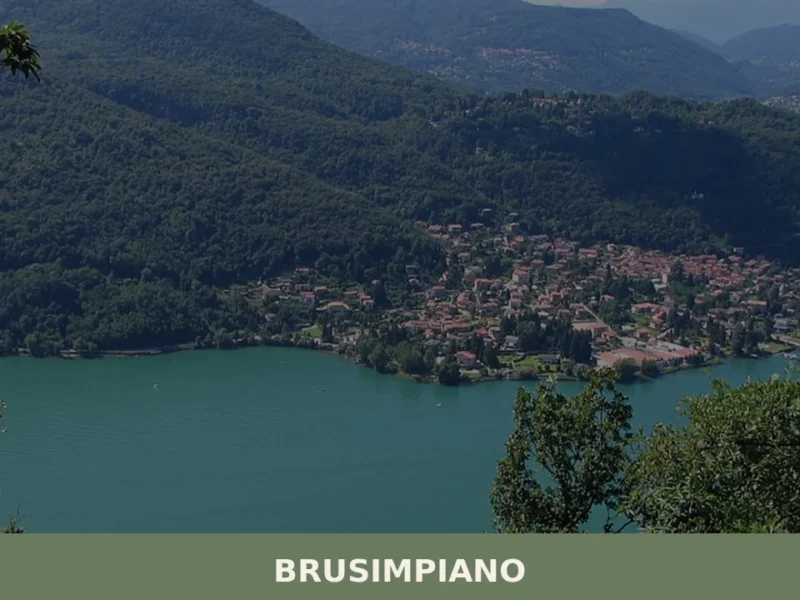
Brusimpiano
What to see in Brusimpiano: 1,229 inhabitants, 289m above Lake Lugano. Discover the Church of the Nativity, lakeside promenade and nature trails. Plan your visit now.
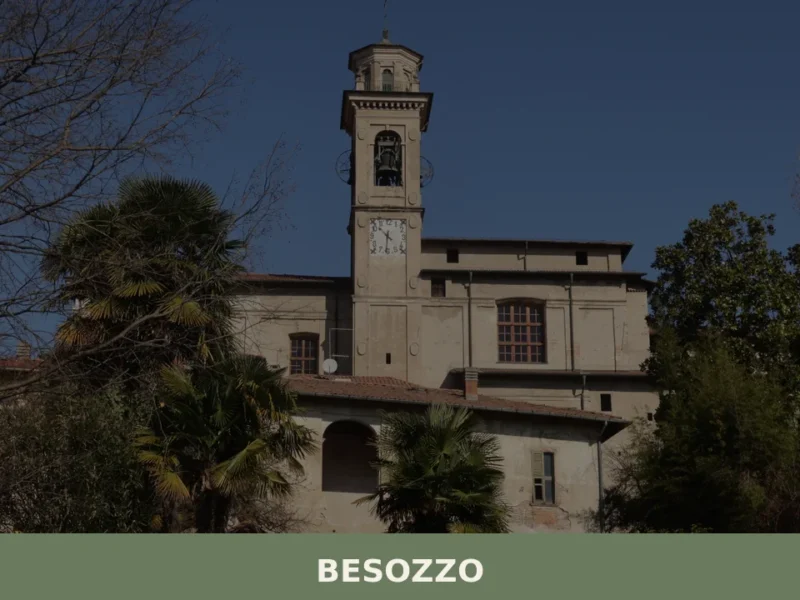
Besozzo
In Besozzo, in the province of Varese, Palazzo Besozzi, also known as the Castle, dominates the historic center with its mass dating back to various construction phases, with origins around the 10th century. This historical structure is a focal point for those intending to explore the town. With a population of 9,003 inhabitants and situated […]
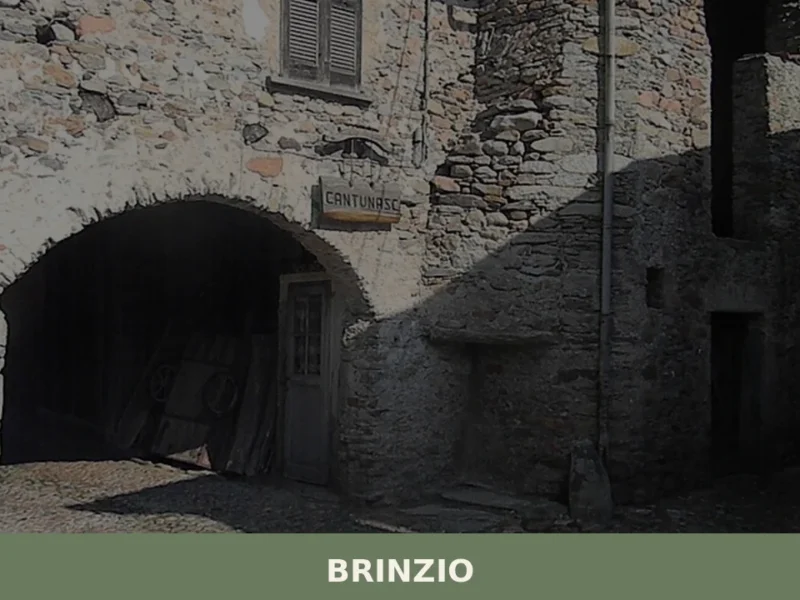
Brinzio
What to see in Brinzio: a village at 510m in the Campo dei Fiori Park, Varese province. Explore 5 attractions, local cuisine, hiking trails and the 29 June Saint Peter feast.
📝 Incorrect information or updates?
Help us keep the Cadegliano-Viconago page accurate and up to date.