


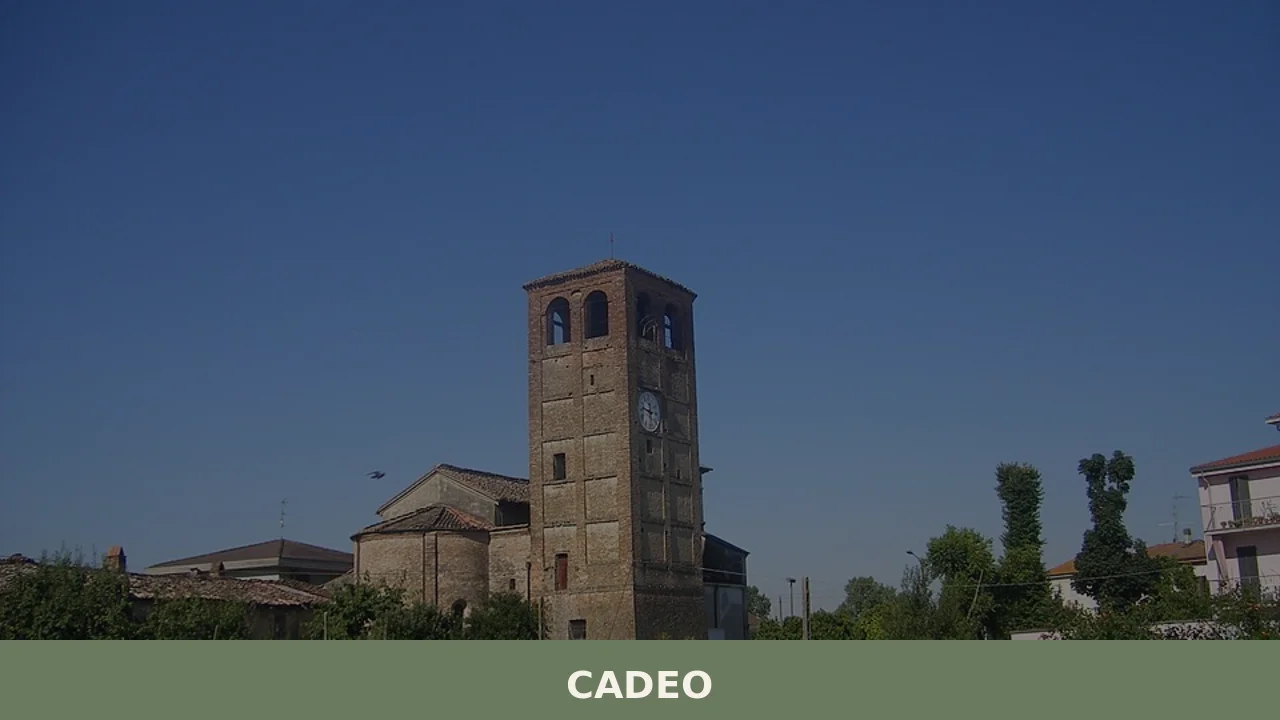
Cadeo
What to see in Cadeo: a Piacenza plain town at 65m with 6,035 residents. Discover Romanesque churches, historic villas and DOP cured meats. Plan your visit.
Discover Cadeo
Cadeo is a municipality in the province of Piacenza, situated 65 metres above sea level on the Emilian Po Plain.
With 6,035 inhabitants spread across a territory that includes several hamlets, the town offers a cross-section of rural life in the Piacenza area, where cultivated fields, ecclesiastical architecture and layers of historical memory accumulated over centuries all coexist.
Those wondering what to see in Cadeo will find an itinerary that takes in Romanesque parish churches, historic villas and an agricultural landscape still legible in its traditional features.
Its position along the Via Emilia — one of Italy’s oldest roads — has shaped the development of the territory since Roman times, leaving traces visible both in the urban fabric and in the layout of the surrounding countryside.
History and Origins of Cadeo
The origins of the name Cadeo go back to the early Middle Ages, a period when the Piacenza territory was crossed by commercial and religious routes of considerable importance. The place name appears in medieval documentary sources in connection with agricultural settlements and ecclesiastical buildings that served as reference points for the rural population.
The Piacenza plain, in this strip of land between the Po and the Apennines, was organised around courts and parish churches — productive and spiritual units that structured the lives of farming communities.
Cadeo fits fully into this settlement pattern, as confirmed by the architectural evidence still present across the territory.
During the Middle Ages, the territory of Cadeo fell within the sphere of influence of the great noble families competing for control of the Po Plain.
Its position along the Via Emilia — the Roman consular road linking Rimini to Piacenza and beyond — made the area strategically important for controlling trade and commercial traffic. The central medieval centuries saw the Piacenza territory pass in turn under the influence of the Municipality of Piacenza, the Visconti, and the Sforza of Milan, followed by the Farnese duchy established in 1545 with the creation of the Duchy of Parma and Piacenza.
Like the other municipalities of the plain, Cadeo navigated these political transitions by adapting its social and productive organisation to the shifting conditions of the regional context.
In the modern era, between the seventeenth and nineteenth centuries, the territory of Cadeo underwent a gradual transformation of its agricultural landscape driven by hydraulic land reclamation and the rationalisation of crops.
The nineteenth century brought Italian Unification and the subsequent integration of the Piacenza area into the new national state: Cadeo became an autonomous municipality as part of the administrative reorganisation that followed 1861.
In the twentieth century, the town went through the changes typical of the Po Plain — agricultural mechanisation, the growth of craft and industrial activity along the Via Emilia, and modest demographic expansion that has brought the population to its current 6,035 residents. These dynamics have shaped the contemporary identity of Cadeo, a lowland town that retains significant historical elements alongside a lively productive economy.
What to See in Cadeo: Main Attractions
Pieve di San Giorgio di Roncaglia
The Pieve di San Giorgio di Roncaglia is one of the most significant religious buildings in the territory of Cadeo and across the entire province of Piacenza.
Built in the Romanesque style, the structure preserves architectural elements dating to the eleventh and twelfth centuries, with a restrained façade that reflects the aesthetic of rural Po Plain churches of that period.
The interior contains decorative and structural features of historical and artistic interest, while the landscape setting in which the church sits — surrounded by the fields of the lower Piacenza plain — makes the visit particularly worthwhile for anyone seeking to understand the religious and territorial organisation of medieval Emilia.
Historic Villas of the Territory
The territory of Cadeo preserves several villas and rural estates built between the seventeenth and nineteenth centuries, expressions of the aristocracy and agrarian bourgeoisie of Piacenza who invested in the construction of country residences.
These buildings, located across the hamlets and surrounding countryside, display architectural features ranging from Baroque to Neoclassical, with porticoes, dovecote towers and adjoining parkland.
Some of these properties belong to the tradition of Farnese villas of the Po Plain, linked to the period of rule under the Duchy of Parma and Piacenza, and they form a distinctive element of the local built landscape.
Parish Church of Cadeo
The main parish church of the town is both a focal point for the local community and a place of interest for visitors wishing to explore the religious architecture of the Piacenza plain.
Rebuilt and extended over the centuries, the building contains interior decorative elements worthy of attention, including paintings and sculptures connected to local and regional artistic traditions. A visit to the church also provides an opportunity to learn about the history of the parish, which for centuries served as the centre of civic and religious life in Cadeo.
The Agricultural Landscape of the Piacenza Plain
Cadeo stands in a section of the Po Plain where the agricultural landscape retains a remarkable historical legibility.
Fields of wheat, maize and fodder crops, broken up by rows of poplars and artificial waterways that bear witness to centuries of land reclamation work, form a setting that the attentive visitor can read as a historical document as much as a natural one.
Cycling or walking along the country roads of the Cadeo territory allows you to appreciate the human scale of this landscape, where historic farmhouses and agricultural estates appear at regular intervals across the plain.
The Via Emilia and the Towns Along its Route
The stretch of the Via Emilia passing through the territory of Cadeo deserves attention in its own right, as an ancient infrastructure of extraordinary longevity.
Built by the Roman consul Marcus Aemilius Lepidus in 187 BC, this road links Rimini to Piacenza along a straight alignment that for over two thousand years has structured human settlement across the Po Plain. Along its course you find evidence of every era, from Roman settlements to medieval centres, through to twentieth-century architecture.
Anyone seeking to understand what to see in Cadeo cannot overlook this infrastructural context, which still shapes the hierarchy of settlements across the municipal territory today.
Traditional Cuisine and Local Products of Cadeo
The cuisine of the Cadeo area belongs to the great gastronomic tradition of Piacenza, one of the most well-established in the entire Emilia-Romagna region.
Over the centuries, the Piacenza plain developed a food culture built on pork processing, dairy production and fresh pasta, in direct continuity with the agricultural and livestock farming practices that define this stretch of the Po Plain.
The geographical setting, with its fertile soils and temperate-continental climate, supports the cultivation of cereals and hay production, underpinning a livestock economy that feeds directly into the local culinary tradition.
Among the dishes most deeply rooted in Piacenza tradition that also appear on tables in Cadeo and its surrounding area, pisarei e fasò stands out — a humble dish of ancient origin that combines small bread-and-flour dumplings with a sauce of borlotti beans and lard.
Equally widespread is stuffed pasta in its local variations, notably anolini in brodo, prepared with a filling of braised meat, breadcrumbs, Parmigiano Reggiano and spices, cooked in a rich, flavourful beef broth.
Coppa Piacentina, Salame Piacentino and Pancetta Piacentina are cured meats deeply embedded in this tradition and widely present on local menus, part of a production chain that defines the entire province.
Regarding certified products, the available data for this territory does not record DOP, IGP or PAT certifications specifically associated with the municipality of Cadeo.
However, the municipal area falls within the production zone of several Piacenza designations with national recognition. Coppa Piacentina DOP, Salame Piacentino DOP and Pancetta Piacentina DOP are products whose production zone covers the entire province of Piacenza, as documented in the relevant technical specifications recognised by the European Union.
Similarly, Parmigiano Reggiano DOP, whose production rules include the province of Piacenza, is present in the dairy output of the area.
For those wishing to purchase local products, the weekly markets of municipalities across the Piacenza province offer the most direct opportunity to meet local farmers and producers.
Summer and autumn festivals, widespread throughout the Emilian Po Plain, provide occasions to sample traditional dishes in a convivial setting. Autumn, with the grape harvest and cereal collection season, is the time of year when the territory’s gastronomic calendar is at its most event-rich, with numerous activities tied to local production.
Festivals, Events and Traditions of Cadeo
Like most municipalities on the Piacenza plain, Cadeo organises its festive life around the Catholic liturgical calendar and seasonal agricultural traditions.
The patron saint’s feast day, linked to the titular saint of the main parish church, is the most significant communal gathering of the year, bringing together religious services, processions and social moments that involve both residents and visitors.
Traditions linked to the agricultural cycle — harvest celebrations and festivities tied to the grape harvest — remain alive across the territory in their more contemporary forms as well, through local food festivals and events organised by pro loco associations and community groups.
The territory of Cadeo takes part in the calendar of summer and autumn events that characterises the entire province of Piacenza, with cultural, sporting and gastronomic initiatives that bring life to the hamlets and the main town from May through October.
Local village festivals, a tradition firmly rooted in Emilian rural culture, are occasions on which the local community serves traditional dishes prepared according to recipes passed down within families of the area. Visitors to the area during summer have a good chance of encountering these events, which offer direct access to the communal dimension of life in the town.
When to Visit Cadeo and How to Get There
The best time to visit Cadeo is spring, between April and June, when the agricultural landscape is in full vegetative cycle and temperatures allow outdoor excursions without difficulty.
Autumn, from September to November, is equally recommended: the Piacenza plain takes on a particular quality of light in this season, local food festivals are plentiful, and the climate remains pleasant for exploring the territory on foot or by bicycle.
The hottest summer months, July and August, can be humid on the Po Plain, although evenings bring relief and the local events calendar remains active.
For up-to-date information on events and municipal services, you can consult the Cadeo Municipal Website, which publishes notices and news for both residents and visitors.
If you are travelling by car, Cadeo is reachable via the Via Emilia (SS9) in the direction of Piacenza–Fidenza. The nearest motorway exit is Fiorenzuola d’Arda on the A1 Milan–Bologna motorway, approximately 10 kilometres from the centre of Cadeo.
Travellers arriving by train can alight at Fiorenzuola d’Arda station, served by the Milan–Bologna rail line, and continue towards Cadeo by local transport or taxi.
For those arriving from abroad or from greater distances, the nearest airport is Milan Linate Airport, approximately 85 kilometres away and connected to the Piacenza area via the A1 motorway.
Alternatively, Bologna Guglielmo Marconi Airport is around 100 kilometres away and offers frequent international connections.
Other Towns to Explore in Emilia-Romagna
Emilia-Romagna offers a variety of territorial contexts that pair well with a visit to Cadeo. Travelling north-east along the Via Emilia, you can easily reach Bologna, the regional capital, which preserves one of the best-maintained medieval city centres in Italy, with its towers, porticoes and a gastronomic tradition of international standing.
In the opposite direction, towards the Adriatic coast, Rimini presents a territory where Roman history — represented by the Arch of Augustus and the Bridge of Tiberius — sits alongside a well-established seaside tourism tradition.
For those who prefer exploring smaller-scale towns, San Pietro in Cerro, in the province of Piacenza, is a destination comparable to Cadeo in geographical context and scale, with its medieval castle overlooking the plain.
Moving towards the Bolognese hills, Casalfiumanese offers an Apennine setting that contrasts with the flatness of the Piacenza plain, with rolling hill scenery and a historical and architectural heritage worth exploring. An itinerary combining what to see in Cadeo with these destinations allows you to traverse the geographical and historical variety of Emilia-Romagna in a single coherent trip, moving from the Po Plain to the hills and on to the Adriatic Sea.
In Emilia-Romagna More villages to discover
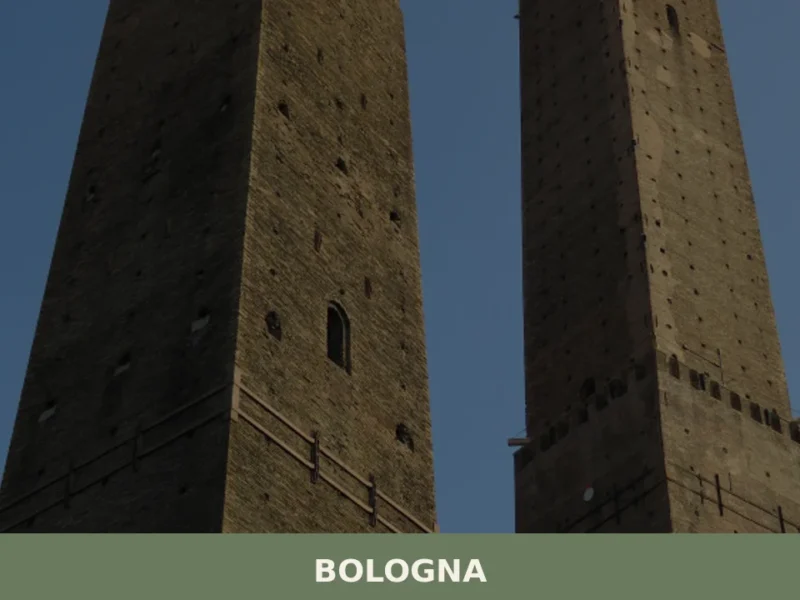
Bologna
What to see in Bologna: 388,000 inhabitants, UNESCO porticoes and the Two Towers. Plan your visit with our guide to tortellini, Mortadella IGP and top museums.
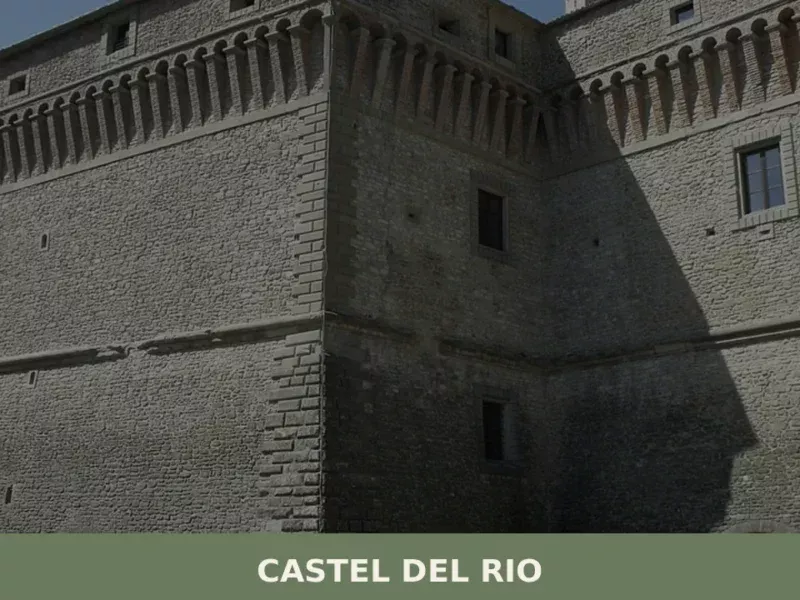
Castel del Rio
In 1290, the Alidosi family obtained imperial control over a fortified outpost in the Santerno valley, a transit point between Romagna and Tuscany. That stronghold, which over the following centuries became a fortress, a village and eventually an autonomous municipality, is now Castel del Rio: 1,215 inhabitants at 215 metres above sea level, in the […]
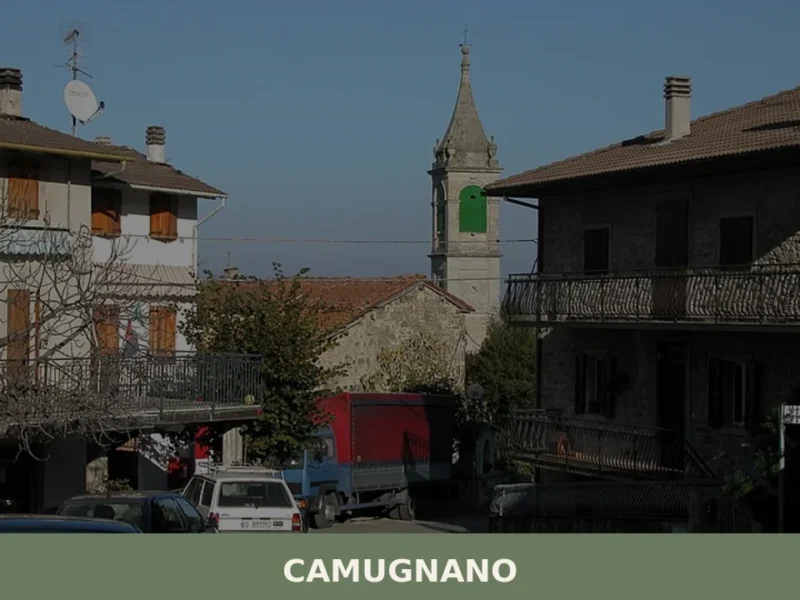
Camugnano
In 1911, when the construction of the Suviana Dam transformed the course of the Limentra torrent, Camugnano changed its appearance forever. The water submerged farmland and footpaths, creating an artificial reservoir that now defines the landscape of the upper Bolognese Apennines at an altitude of 692 metres. This municipality of 1,948 inhabitants, spread across scattered […]
📝 Incorrect information or updates?
Help us keep the Cadeo page accurate and up to date.