


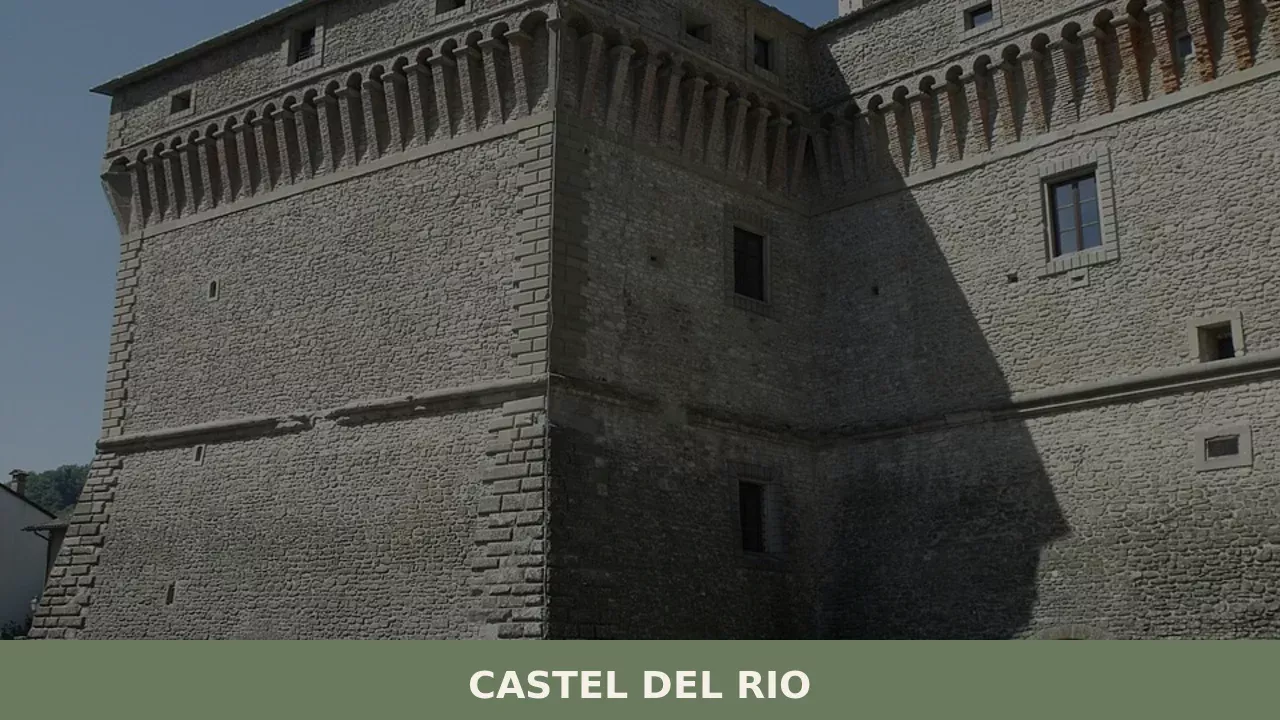
Castel del Rio
 Hills
Hills
In 1290, the Alidosi family obtained imperial control over a fortified outpost in the Santerno valley, a transit point between Romagna and Tuscany. That stronghold, which over the following centuries became a fortress, a village and eventually an autonomous municipality, is now Castel del Rio: 1,215 inhabitants at 215 metres above sea level, in the […]
Discover Castel del Rio
In 1290, the Alidosi family obtained imperial control over a fortified outpost in the Santerno valley, a transit point between Romagna and Tuscany. That stronghold, which over the following centuries became a fortress, a village and eventually an autonomous municipality, is now Castel del Rio: 1,215 inhabitants at 215 metres above sea level, in the southernmost part of the province of Bologna, close to the Tuscan border. Asking what to see in Castel del Rio means entering a valley where sandstone, chestnut groves and a Renaissance bridge of unusual proportions form a landscape made for walking.
Here the Bolognese uplands already become the Apennines, and the air carries the scent of the forest floor.
History and origins of Castel del Rio
The village’s name appears in medieval documents as Castrum Rii, where “rii” refers to the numerous watercourses — streams and torrents — that cut into the slopes of the Santerno valley before flowing into the main river. The etymology therefore points to the geography of the place, a territory shaped by running water. In some texts the variant Castrum Alidosii is also found, underscoring the inseparable bond between the village and the dynasty that governed it for nearly three centuries. The earliest certain mention of the fortress dates to the 13th century, but human presence in the area is older: the Santerno valley served as a route connecting the Po plain to Etruria as far back as Roman times, as confirmed by archaeological finds along the road that would later become the Via della Futa.
The political history of Castel del Rio is dominated by the Alidosi lordship, which from around 1290 until the mid-16th century exercised power over the valley. Lippo Alidosi received the title of imperial vicar from Adolf of Nassau in 1292, consolidating the family’s control over a vast territory between Imola and the Apennine ridge.
During the 14th century, the Alidosi expanded their domain to include the city of Imola itself, becoming one of the most influential families in Romagna. The lordship ended in 1638, when the fief was devolved to the Apostolic Chamber and the village came under the direct rule of the Papal States. This transition marked a gradual economic decline for the valley, which lost its function as a strategic hinge between the Romagnol and Tuscan domains.
In the 18th and 19th centuries, Castel del Rio followed the fortunes of the Bolognese territory: Napoleonic rule, papal restoration, and annexation to the Kingdom of Italy in 1861. During the Second World War, the Santerno valley was crossed by the Gothic Line and suffered heavy destruction. The Crocetta bridge and several buildings were damaged in fighting between Allied troops — in particular the US 88th Infantry Division — and retreating German forces in the autumn of 1944. Post-war reconstruction and the exodus to the cities reduced the population, which from over three thousand residents at the start of the 20th century has fallen to the current 1,215, making it one of the least populated municipalities in the entire province of Bologna.
What to see in Castel del Rio: 5 top attractions
1. Palazzo Alidosi
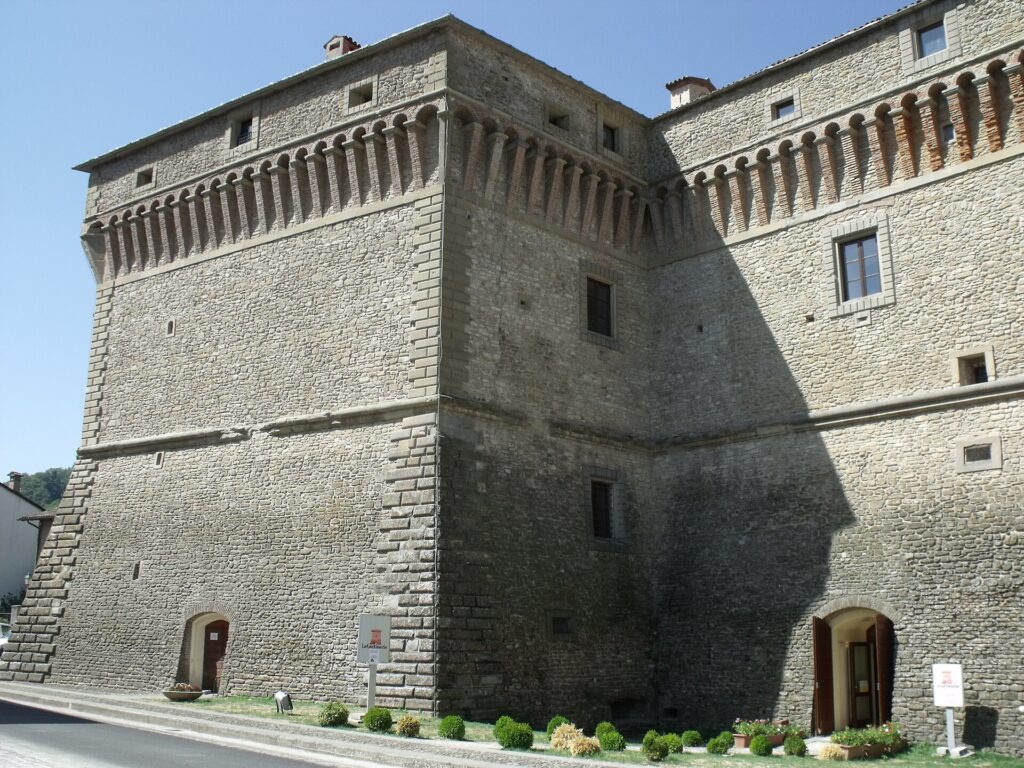
Built at the behest of the Alidosi family between the late 15th and early 16th centuries, Palazzo Alidosi dominates the centre of the village with its imposing sandstone mass. The building, renovated several times over the centuries, now serves as the Town Hall and houses the Museum of the War and the Gothic Line, which documents the military events that devastated the Santerno valley in 1944–1945 through photographs, weapons, uniforms and maps. The façade retains Renaissance elements visible in the window frames and the entrance portal. A visit to the museum is an essential step to understanding how deeply the Second World War marked this territory.
2. Ponte Alidosi
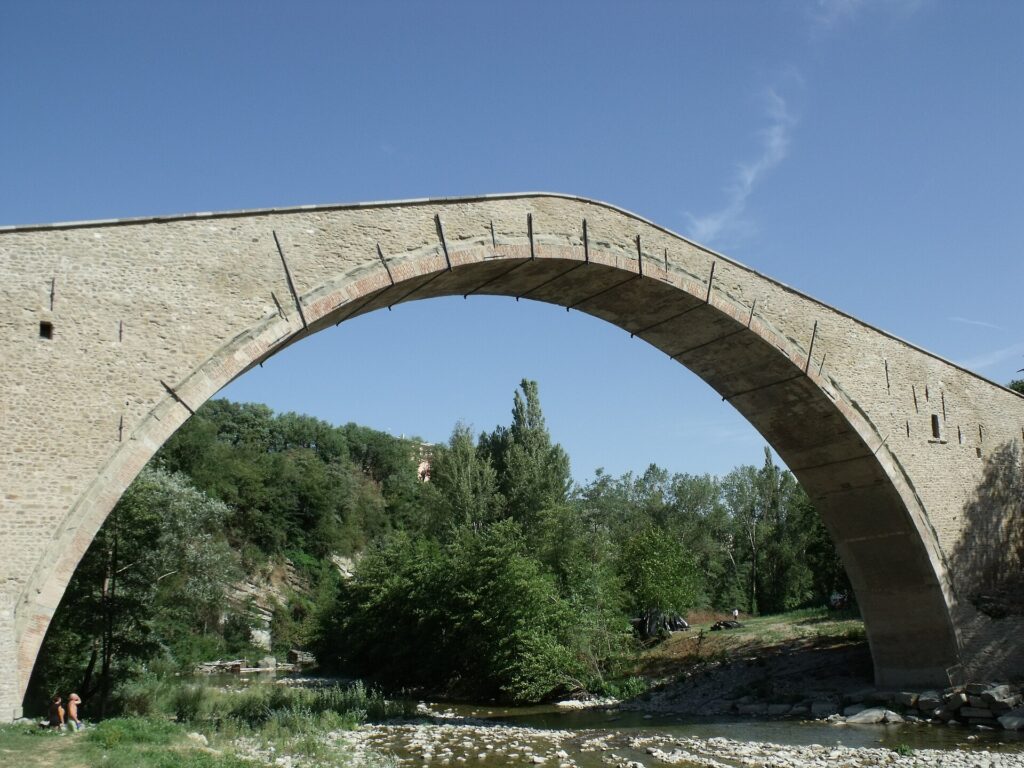
The Ponte Alidosi, which spans the Santerno river with a single humpback arch approximately 42 metres long, is the most celebrated monument in Castel del Rio and one of the most photographed medieval bridges in Emilia-Romagna. It was built in 1499 on the commission of Riario Alidosi, with a structure made entirely of locally quarried sandstone blocks, cut and laid dry.
The incline of the roadway and the breadth of the arch — designed to withstand the violent floods of the Santerno — make it a remarkable example of late-15th-century engineering. The bridge is visible from the provincial road, but it should be crossed on foot to fully appreciate the curvature and the stereotomy of the voussoirs. It is listed as a national monument.
3. Church of San Martino in Pedriolo
In the hamlet of Pedriolo, a few kilometres from the centre of Castel del Rio, stands the church of San Martino, Romanesque in plan with subsequent modifications carried out between the 17th and 18th centuries. The building has a single-nave structure with a semicircular apse and a stone bell tower that rises above the surrounding hillside. Inside are 18th-century liturgical furnishings and traces of wall decorations recovered during post-war restorations. The church’s position, on a knoll overlooking the valley floor, makes it a natural panoramic point over the Santerno valley. The walk from the village square to Pedriolo takes about forty minutes and passes through cultivated fields and rows of oak trees.
4. Vena del Gesso Romagnola
The municipal territory of Castel del Rio borders the Regional Park of the Vena del Gesso Romagnola, an outcrop of selenite gypsum approximately 25 kilometres long that constitutes a geological phenomenon unique in Europe, recognised by UNESCO in 2023 as a World Heritage Site under the designation “Evaporite Karst and Caves of the Northern Apennines”. The walls of selenite crystals, sinkholes and karst caves — including the Grotta di Re Tiberio, accessible via guided tours — offer terrain for exploration by hikers and geology enthusiasts. The CAI trails departing from the Castel del Rio area allow visitors to reach the most notable points of interest in two to three hours of walking.
5. Medieval village and streets of the historic centre
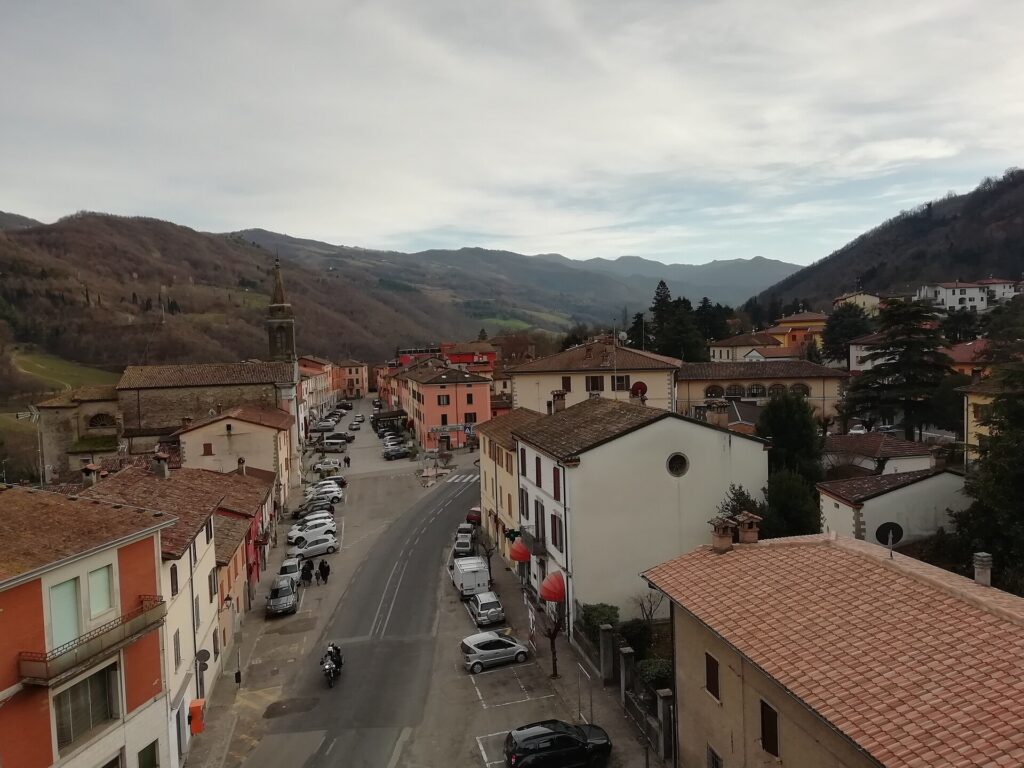
The old core of Castel del Rio extends around Palazzo Alidosi along a network of narrow streets that preserve the medieval urban layout. The stone houses, many of which were rebuilt after the war damage of 1944, maintain their original height and alignment. Walking along Via Roma and its side streets, you encounter sandstone portals with carved dates, small votive shrines and views toward the Santerno. The main square, named after Andrea Costa, still functions as a daily gathering point: this is where the weekly market takes place and where the community comes together during festivals.
Covering the centre takes less than an hour, but it allows you to read in the walls and proportions of the buildings the historical layering of the village.
What to eat in Castel del Rio: local cuisine and products
The cuisine of Castel del Rio belongs to the Bolognese Apennine tradition, a repertoire born from the intersection of Emilian and Tuscan influences, consistent with the valley’s border position. The resources of the territory — chestnut groves, woods rich in mushrooms and game, vegetable gardens irrigated by the river — have shaped the local diet for centuries. The modest altitude but nonetheless mountain climate favours hearty cooking, designed for work in the fields and forests, with ample use of chestnut flour, pork and fresh pasta rolled by hand using the Emilian technique of the sfoglia with a rolling pin.
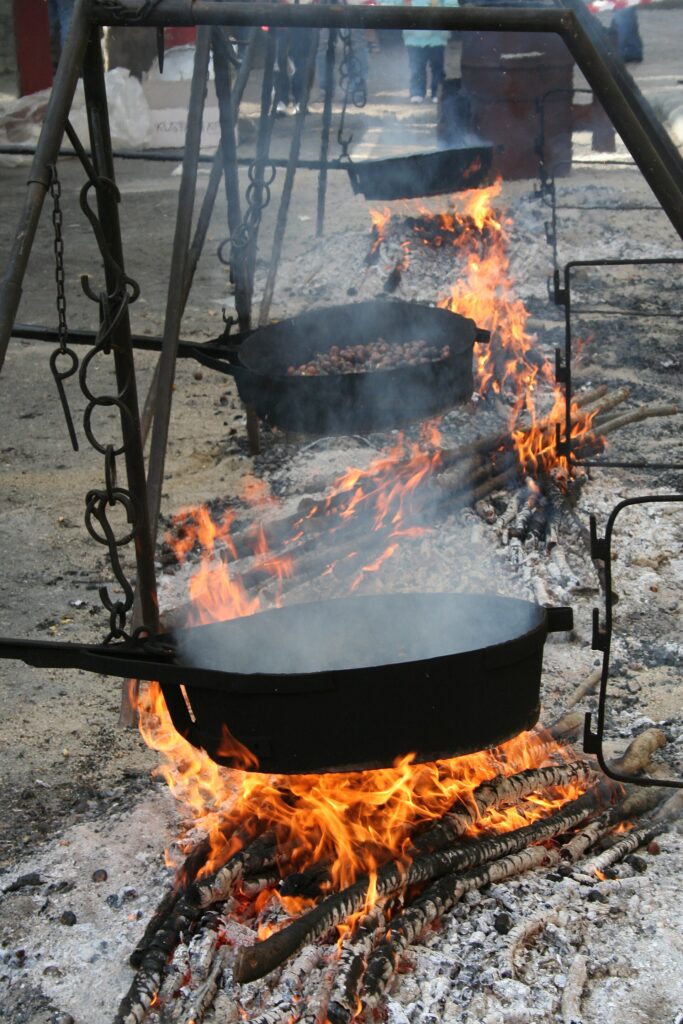
The dish that more than any other defines Castel del Rio is linked to the marrone, the large chestnut harvested in the surrounding woods. Chestnut flour is used to prepare sweet fritters, castagnacci and polentas, while whole marroni are eaten roasted (traditional caldarroste), boiled or turned into jams. Alongside the marrone, the local table features tortellini in broth — following the classic Bolognese recipe with a filling of pork, cured ham, mortadella and Parmigiano — and tagliatelle al ragù, which in the Santerno valley version retain the thickness and roughness of handmade pasta, ideal for holding the long-simmered meat sauce.
The most celebrated product of the territory is the Marrone di Castel del Rio, which has obtained PDO (Protected Designation of Origin) certification from the European Union, as documented in the relevant Wikipedia entry.
It is an oval-shaped chestnut with a dark brown shell and pale, crunchy, sweet flesh, harvested in the chestnut groves of the Santerno valley between October and November. The PDO designation protects both the fresh fruit and its derivatives. Chestnut cultivation in this area is documented since the Middle Ages, when chestnut flour was a fundamental subsistence food for mountain communities. Today the chestnut groves cover a significant portion of the municipal territory and also constitute a distinctive landscape feature of the valley.
Every year in October, Castel del Rio hosts the Sagra del Marrone, one of the oldest and most popular food festivals in the Bolognese Apennines. Spread over three or four weekends, the festival offers tastings of roasted marroni, sweets made with chestnut flour, stalls selling local products and demonstrations of traditional processing. During the event, the chestnut groves surrounding the village are open for guided harvest walks.
Outside the festival period, marroni and their derivatives can be purchased from small farms in the valley and food shops in the centre.
On the beverages side, the area does not have a notable wine production of its own, but it falls within the sphere of influence of Emilia-Romagna wines, particularly Sangiovese and Albana, which regularly accompany local meals. In some trattorias in the valley you can also find wines from the Colli d’Imola, the nearest DOC denomination to Castel del Rio, with Sangiovese-based reds and Trebbiano whites that pair naturally with chestnut dishes and local cured meats.
When to visit Castel del Rio: the best time
Autumn is the ideal season to visit Castel del Rio. From mid-September to late November the chestnut groves change colour and the marrone harvest brings the village to life. The Sagra del Marrone, concentrated on the weekends of October, draws visitors from across Emilia-Romagna and represents the peak of tourist activity for the year. Those who prefer quieter conditions can choose the midweek days of October or the first weeks of November, when the woods are still accessible and the temperatures — between 5 and 15 degrees — make for comfortable walking.
The feast of Sant’Ambrogio, on 7 December, marks the beginning of winter with religious celebrations in the village church.
Spring, from April to June, is the best period for hikes toward the Vena del Gesso Romagnola and along the trails of the Santerno valley: the days grow longer, wildflowers enliven the hillside meadows and mild temperatures — between 14 and 22 degrees — favour extended walks. Summer brings moderate heat compared to the plain, making Castel del Rio a stop for those crossing the Apennines by bicycle or on foot. Winter, by contrast, is the quietest season: the village draws inward, tourist activities are reduced, but those who arrive find restaurants open and the chance to visit Palazzo Alidosi and the museum without queues.
How to get to Castel del Rio
From Bologna, Castel del Rio is approximately 55 kilometres away. The most direct route follows the A14 motorway heading south-east to the Imola exit, from which you continue on the provincial road SP610 — the old Santerno valley road — for about 30 kilometres to the village. The total travel time is approximately one hour. From Florence, the distance is about 90 kilometres via the Futa Pass or the Raticosa Pass, with a travel time of around one hour and thirty minutes on predominantly mountain roads.
The official municipal website provides up-to-date information on local road conditions.
The nearest railway station is Imola, served by regional and intercity trains on the Bologna–Ancona line, reachable in about 30 minutes by car from the village. From Imola station, TPER bus services connect the city to the Santerno valley, with reduced frequencies especially on public holidays — it is advisable to check timetables in advance. The nearest airport is Bologna’s Guglielmo Marconi, approximately 65 kilometres away. A car remains the most practical means of reaching Castel del Rio and getting around the valley.
Other villages to discover in Emilia-Romagna
Visitors to Castel del Rio who wish to continue exploring the villages of Emilia-Romagna can head towards two destinations that, although geographically distant, share common traits with the Santerno valley. Zerba, at the far western edge of Emilia-Romagna in the province of Piacenza, is the least populated municipality in the entire region.
Located in the Val Boreca at over 800 metres above sea level, it shares with Castel del Rio the condition of a mountain village with a small community and a landscape dominated by woods and streams. Reaching Zerba from Castel del Rio takes approximately three hours by car across the Emilian plain, but the trip allows you to cross the entire regional Apennine ridge, observing the differences between the Bolognese and the Ligurian-Piacentine Apennines.
In the opposite direction, toward the lower Parma area, lies Villanova sull’Arda, in the province of Piacenza, linked to the memory of Giuseppe Verdi, who composed many of his works at the nearby Villa Sant’Agata.
If Castel del Rio is a village of stone and chestnuts, Villanova sull’Arda is a village of the plain and fertile land along the Po: the contrast between the two settings — Apennine mountain and Po lowland — illustrates the landscape diversity of Emilia-Romagna better than any description. An itinerary combining Castel del Rio, Verdi’s plains and the mountains of Zerba covers the entire geographical arc of the region, from the Bolognese hills to the banks of the Po, all the way to the ridges overlooking Liguria.
Frequently asked questions about Castel del Rio
What is the best time to visit Castel del Rio?
Autumn is the ideal season, particularly October and November, when the Sagra del Marrone fills the village with the scent of roasted chestnuts and the surrounding woods turn amber and gold. Spring offers mild temperatures and green valleys, perfect for hiking. Summer is quiet and cool compared to the Po plain. Winter visits are rewarding around 7 December, the feast of patron saint Sant'Ambrogio, when the community gathers for local celebrations. Avoid January–February if you prefer open trails and fully accessible sites.
What are the historical origins of Castel del Rio?
The village traces its origins to a fortified outpost in the Santerno valley, first documented as Castrum Rii in the 13th century. In 1292, Lippo Alidosi received the title of imperial vicar from Adolf of Nassau, launching nearly three centuries of Alidosi lordship. The valley had been a transit route between the Po plain and Etruria since Roman times. In 1638, the fief passed to the Papal States. The area suffered heavily during World War II when the Gothic Line crossed the Santerno valley in autumn 1944, involving the US 88th Infantry Division.
What to see in Castel del Rio? Main monuments and landmarks
The five essential sights are: Ponte Alidosi (1499), a single-arch sandstone bridge spanning 42 metres over the Santerno — listed as a national monument, best crossed on foot; Palazzo Alidosi, the Renaissance town hall housing the Museum of the War and the Gothic Line; the Church of San Martino in Pedriolo, a Romanesque-origin building with valley panoramas reachable via a 40-minute walk; the medieval historic centre around Piazza Andrea Costa; and the bordering Vena del Gesso Romagnola Regional Park, a UNESCO World Heritage Site since 2023 featuring karst caves including the Grotta di Re Tiberio.
What are the main natural or scenic attractions of Castel del Rio?
The municipal territory borders the Regional Park of the Vena del Gesso Romagnola, a 25-kilometre selenite gypsum outcrop recognised as a UNESCO World Heritage Site in 2023 under 'Evaporite Karst and Caves of the Northern Apennines'. CAI-marked trails departing from the Castel del Rio area reach the park's key points in two to three hours. The surrounding chestnut groves, the Santerno river corridor and the forested Apennine slopes provide additional terrain for walking and nature observation throughout the year.
Where to take the best photos in Castel del Rio?
The Ponte Alidosi is the most photogenic subject in the village: the single humpback arch reflects in the Santerno and is best captured from the riverbank below, either from the provincial road side or a short descent to the water's edge. The Church of San Martino in Pedriolo, set on a knoll above the valley floor, offers a wide panoramic backdrop. In October, the chestnut groves surrounding the village add warm autumn colour. The sandstone portals and votive shrines along Via Roma provide close-up architectural detail for street photography.
Are there museums, churches or historic buildings to visit in Castel del Rio?
Palazzo Alidosi houses the Museum of the War and the Gothic Line, which documents the 1944–1945 military events in the Santerno valley through photographs, weapons, uniforms and maps — an essential visit for understanding the village's recent history. The building itself retains Renaissance architectural elements including carved window frames and a sandstone portal. The Church of San Martino in Pedriolo, Romanesque in plan with 17th–18th century modifications, contains period liturgical furnishings and traces of wall decorations. For opening hours and admission fees, check directly with the municipality of Castel del Rio.
What can you do in Castel del Rio? Activities and experiences
Hiking is the primary activity: CAI trails connect the village to the Vena del Gesso Romagnola UNESCO park, with routes of two to three hours reaching karst formations and the Grotta di Re Tiberio, accessible via guided tours. A 40-minute walk leads to the panoramic Church of San Martino in Pedriolo. The Ponte Alidosi should be crossed on foot to appreciate its engineering. In October, the Sagra del Marrone offers a full food-and-culture programme across several weekends. Year-round, the village suits slow food itineraries centred on the PDO Marrone di Castel del Rio chestnut.
Who is Castel del Rio suitable for? Families, couples, hikers, solo travelers?
Castel del Rio suits hikers and nature lovers drawn to the UNESCO Vena del Gesso Romagnola park and the Apennine chestnut forests. History enthusiasts will appreciate the Alidosi medieval legacy, the Ponte Alidosi and the Gothic Line museum. Couples seeking a quiet Bolognese Apennine escape — sandstone villages, local food, minimal crowds — will find it rewarding, especially in autumn. Families with older children can combine the cave visit at Grotta di Re Tiberio with the Sagra del Marrone in October. It is less suited to travellers seeking nightlife or beach holidays.
What to eat in Castel del Rio? Local products and specialties
The flagship product is the Marrone di Castel del Rio PDO, an oval chestnut with pale, sweet flesh harvested in October–November, eaten roasted, boiled or processed into jams, castagnacci and chestnut-flour polenta. The local table also features tortellini in broth following the classic Bolognese recipe and handmade tagliatelle al ragù. The cuisine reflects the valley's border position between Emilian and Tuscan traditions, with generous use of pork, foraged mushrooms and game. The best occasion to taste the full range is the Sagra del Marrone, held over several weekends each October.
📷 Photo Gallery — Castel del Rio
Nearby Villages near Castel del Rio
In Emilia-Romagna More villages to discover
Argenta
 Plains
What to see in Argenta, Italy: Explore the 7m altitude of Argenta. Discover top attractions like San Nicola di Bari and enjoy local foods.
Alfonsine
Plains
What to see in Alfonsine? Discover the top 5 attractions of the village in Emilia-Romagna. From the house museum to nature trails, plan your visit now!
Boretto
Plains
What to see in Boretto, Italy: explore the Basilica Minore of San Marco, the Po riverfront, and local food traditions. Population 5,402. Discover Emilia-Romagna.
Morfasso
 Mountain
Morning mist settles into the valley below like poured milk, and from 631 metres above sea level, the stone houses of Morfasso emerge into sharp Apennine light. A church bell marks seven o’clock to an audience of 884 residents spread across a constellation of hamlets. This is Morfasso, a municipality in the province of Piacenza […]
Ferrara
Plains
What to see in Ferrara? Explore 6 attractions, from the Estense Castle to the Palio at this city of 135,000. Discover Ferrara’s unique architecture today!
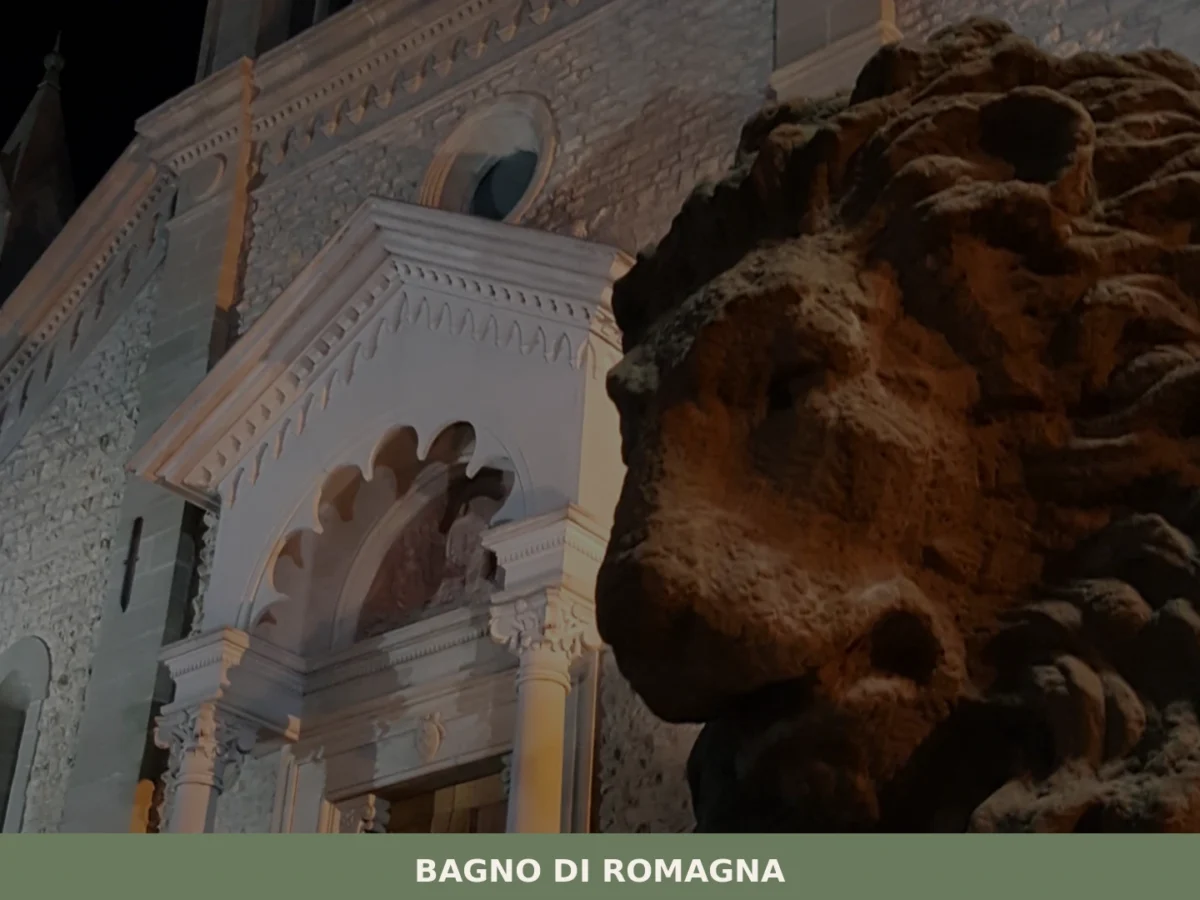
Bagno di Romagna
Hills
what to see in bagno di romagna, Italy: Discover its 47°C hot springs and historic Basilicas. Explore Emilia-Romagna's natural wonders.
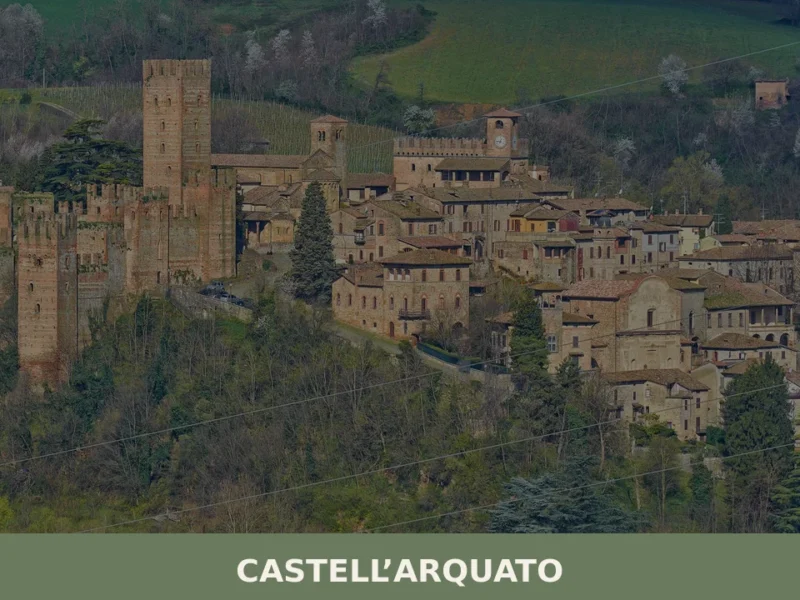
Castell’Arquato
Hills
In the upper Val d’Arda valley, at around 150 metres above sea level, Castell’Arquato is one of the best-preserved medieval villages in the province of Piacenza. In this article History and Origins of Castell'Arquato What to See in Castell'Arquato: Main Attractions Local Cuisine and Products of Castell'Arquato Festivals, Events and Traditions of Castell'Arquato When to […]
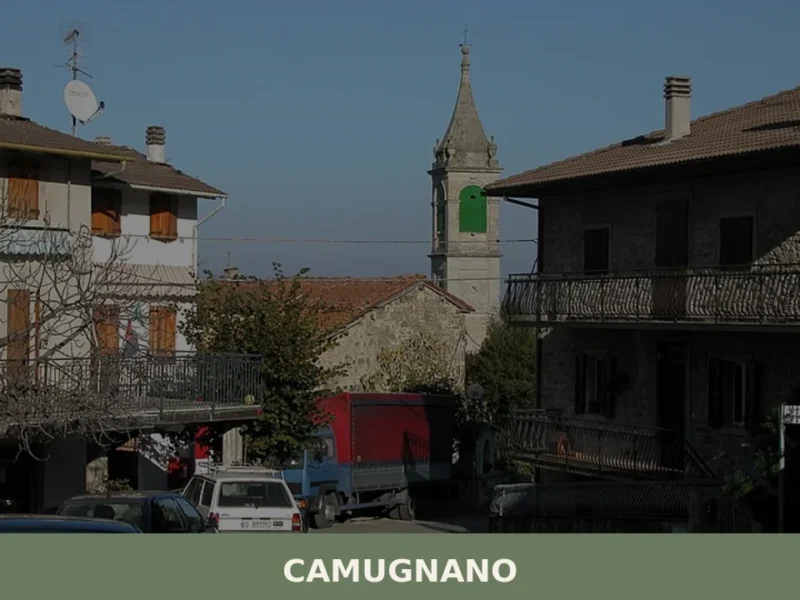
Camugnano
Mountain
In 1911, when the construction of the Suviana Dam transformed the course of the Limentra torrent, Camugnano changed its appearance forever. The water submerged farmland and footpaths, creating an artificial reservoir that now defines the landscape of the upper Bolognese Apennines at an altitude of 692 metres. This municipality of 1,948 inhabitants, spread across scattered […]
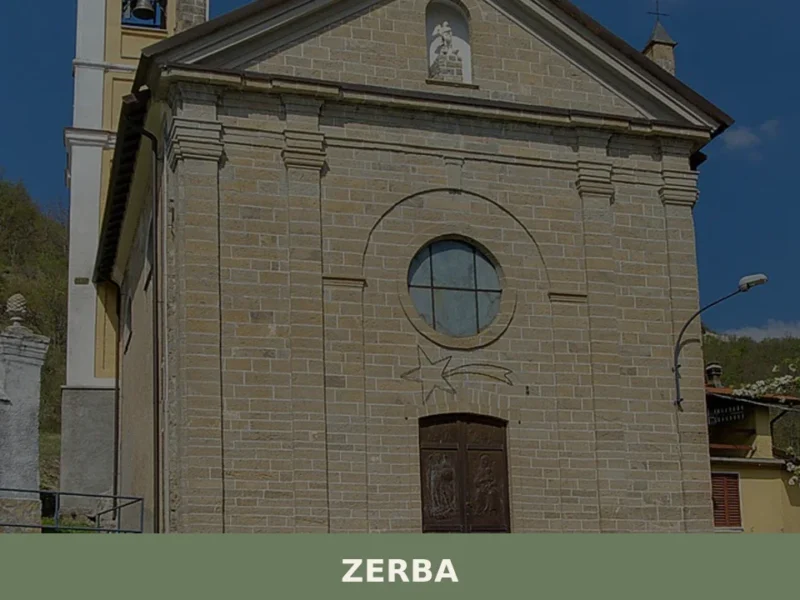
Zerba
Mountain
With just 71 registered inhabitants, Zerba is the least populated municipality in the entire province of Piacenza and one of the smallest in Italy. Situated at 906 metres above sea level in the upper Val Boreca, on the border between Emilia-Romagna and Liguria, this mountain settlement retains a sandstone building fabric that follows precise construction […]
Imola
Plains
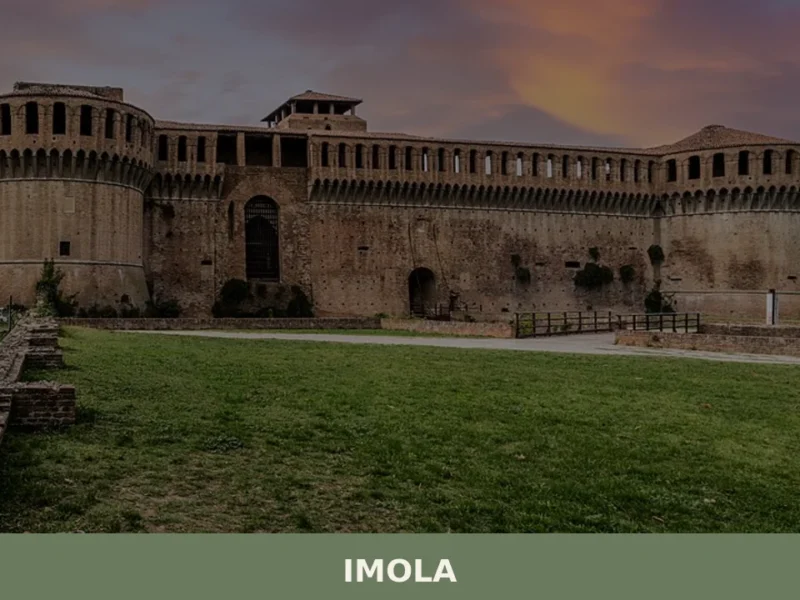
In 1953, on the track of the Autodromo Enzo e Dino Ferrari, Formula One cars raced in the Italian Grand Prix, placing Imola firmly in international motorsport history. But this city of 69,121 inhabitants, spread out at 47 metres above sea level along the banks of the River Santerno, had already existed for two thousand […]



🏡 Know Castel del Rio better than we do?
If you’re a local or have been there, your knowledge matters: add what’s missing or fix a detail on this page.