


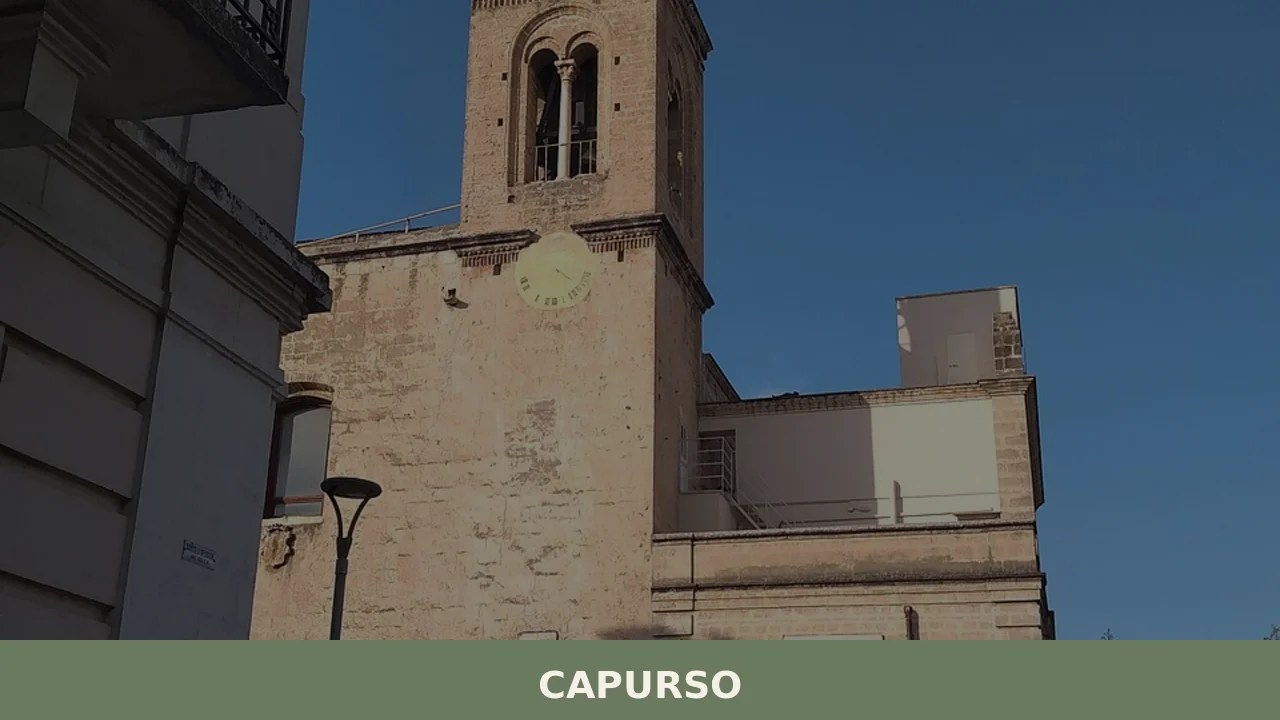
Capurso
Every last Sunday of August, the streets of Capurso light up with illuminations reaching twenty metres in height, and the sheer weight of the crowd forces traffic to be diverted onto the provincial road to Cellamare. This is the climax of the feast of the Madonna del Pozzo, a devotional event that since 1705 has […]
Discover Capurso
Every last Sunday of August, the streets of Capurso light up with illuminations reaching twenty metres in height, and the sheer weight of the crowd forces traffic to be diverted onto the provincial road to Cellamare. This is the climax of the feast of the Madonna del Pozzo, a devotional event that since 1705 has defined the identity of this town of 15,212 inhabitants just ten kilometres from Bari. Capurso spreads across a flat plateau at 74 metres above sea level, on the coastal plain that separates the regional capital from Triggiano and Noicattaro. Anyone wondering what to see in Capurso will find a place where religious history and civic architecture intertwine with a neighbourhood life that remains solid and distinctive.
History and origins of Capurso
The etymology of the name remains a matter of debate among scholars.
The most widely accepted theory traces Capurso back to the Latin caput ursae, meaning “head of a she-bear”, possibly linked to a heraldic emblem or a topographical reference now lost. Another interpretation connects the place name to the Messapian term kapur, which would indicate elevated terrain, consistent with the town’s position on a modest rise above the coastline. Early medieval documents mention the hamlet as Capursium as early as the 10th century, when the territory fell within the orbit of Byzantine administration in Puglia. The first settled nucleus took shape around a watchtower and a rural church, elements typical of the settlement pattern in the Terra di Bari during the Norman period.
With the arrival of the Normans in the 12th century, Capurso entered the feudal system of southern Italy. The hamlet passed under the control of various local lords, including the De Balzo family and later the Carafa, who governed its fortunes until the abolition of feudalism in 1806. In 1656, the plague that devastated much of the Kingdom of Naples also struck Capurso, drastically reducing its population.
The demographic recovery was slow: in the 1669 census, the town counted barely four hundred souls. It was precisely the discovery of the image of the Madonna del Pozzo in 1705 — a fresco found in a well along the road to Noicattaro — that marked the rebirth of the town, attracting pilgrims and resources that financed the construction of the sanctuary and the surrounding urban development.
Among the figures associated with Capurso, the best known is Modugno — not as a native, but for the family roots that some biographers attribute to him in the surrounding area. Better documented is the figure of Monsignor Giuseppe Vairo, a bishop and theologian active in the 18th century, who helped promote local Marian devotion.
During the 19th century, Capurso developed as an agricultural centre specialising in the cultivation of almond trees, olive trees and grapevines, integrating into the commercial circuit of the Bari plain. The 20th century brought the railway — the Ferrovie del Sud Est line — and with it a gradual transformation from a rural village to a residential centre in the metropolitan area of Bari, reaching its current population of 15,212.
What to see in Capurso: 5 essential attractions
1. Sanctuary of the Madonna del Pozzo
Built from 1705 on the site where the Marian image was found, the sanctuary is the religious and urban focal point of Capurso. The church features a late-Baroque façade in local limestone, with a portal surmounted by the town’s coat of arms. The interior, with three naves, preserves polychrome marble altars from the 18th century and a crypt where the original well with the fresco of the Virgin is located. The majolica-tiled dome, visible from several points around the town, was restored in 2003. The sanctuary is a destination for regional pilgrimages, particularly during the feasts on the last Sunday of May and the last Sunday of August. It is the first place to visit for anyone arriving in Capurso.
2. Chiesa Matrice di San Nicola (Mother Church of St Nicholas)
Located in the old town, along Via Roma, the Chiesa Matrice di San Nicola is the oldest religious building in Capurso. The current structure dates from the 16th century, with 18th-century renovations that altered the façade and the interior layout. Inside, it preserves canvases from the Neapolitan school and a 16th-century stone baptismal font. The square bell tower, approximately twenty-five metres tall, dominates the skyline of the old town. The church hosts the celebrations for San Giuseppe (St Joseph), patron saint of Capurso, on 19 March, with a procession through the streets of the centre and the traditional distribution of blessed zeppole on the churchyard.
3. Old town and Palazzo Marchesale
The historic core of Capurso retains a medieval street layout with narrow lanes converging on the main square. The Palazzo Marchesale, dating from the 15th century and expanded by the Carafa family in the 17th century, overlooks Piazza Gramsci with a rusticated portal and a wrought-iron balcony. The building, after decades of neglect, has been partly restored and now houses municipal offices and exhibition spaces. Walking through the adjacent alleyways, one notices connecting arches between houses, inner courtyards with cisterns, and fragments of tuff masonry predating the modern era. The whole ensemble offers a direct reading of the urban organisation of the hamlets of the Terra di Bari.
4. Pozzo della Madonna and archaeological area
A few metres from the sanctuary, the site of the Pozzo della Madonna has been the subject of excavations that brought to light underground structures and the remains of a rock-hewn settlement. The well itself, approximately eight metres deep, is accessible from the sanctuary crypt and represents the exact spot where the Marian fresco was discovered in 1705. The surrounding area has been landscaped as a public garden, with information panels reconstructing the history of the discovery and the cult. During the patronal festivities, the well becomes the central point of the liturgical celebrations, with the ritual descent of the faithful into the crypt. It is a site that documents the relationship between popular devotion and the subterranean geography of Puglia.
5. Chiesa del Purgatorio (Church of Purgatory)
Along Corso Vittorio Emanuele, the Chiesa del Purgatorio dates from the first half of the 18th century and represents a complete example of Baroque devotional architecture in the context of smaller Puglian towns. The façade, restrained compared to the Lecce canon, features a stone portal with floral decorations. The single-nave interior preserves a marble high altar and several 18th-century wooden statues depicting the souls in purgatory. The Confraternity of Purgatory, still active, organises rites during Holy Week that include a nocturnal procession with simulacra.
The building can be visited on request and deserves attention for the quality of its interior decorations relative to its modest size.
What to eat in Capurso: local cuisine and traditional products
The cuisine of Capurso belongs to the gastronomic tradition of the Bari plain, a territory where the availability of durum wheat, olive oil and vegetables has defined for centuries a repertoire of dishes built on simple ingredients and long-preservation techniques. The proximity to the sea — Bari is ten kilometres away — has over time also introduced fish-based preparations, but the core of the Capurso table remains tied to the land: fresh pasta, pulses, wild greens and lamb. The mild climate and the fertility of the calcareous soil have favoured the cultivation of almond and cherry trees, which appear in domestic pastry-making and seasonal preparations.
Among the most representative dishes of the area, Acquasale (PAT) is an essential peasant preparation: stale bread soaked in water, dressed with fresh tomato, raw onion, oregano and a generous drizzle of extra virgin olive oil. It was traditionally eaten at breakfast during the summer months, as a quick meal in the fields. Another dish deeply rooted in local culture is Agnello al forno con patate alla leccese (PAT), also known as Auniceddhru allu furnu, which in Capurso is prepared during Easter with thickly sliced potatoes, cherry tomatoes, grated pecorino and lampascioni (wild hyacinth bulbs). It is cooked in a wood-fired oven for at least two hours, until the potatoes develop a golden crust and the meat falls off the bone.
The Puglian territory boasts numerous products recognised as Prodotti Agroalimentari Tradizionali (PAT) — Traditional Agri-Food Products — by the Ministry of Agriculture.
Among those found on the tables of Capurso are Asparagi selvatici (PAT) (wild asparagus), gathered between March and April in the surrounding countryside and used in omelettes or as a sauce for orecchiette. Asparagi sott’olio (PAT) (asparagus preserved in oil) is the conserved version, prepared with white wine vinegar and local extra virgin olive oil, and consumed as a starter or side dish throughout the year. Africani (PAT), sweets made from almond paste and dark chocolate coated in dark icing, are widespread in the pastry shops of the Province of Bari and represent a confectionery tradition that in Capurso is linked to the feast of San Giuseppe.
The feast of the Madonna del Pozzo, at the end of August, is accompanied by food stalls offering focaccia barese, fried panzerotti, fennel-seed taralli and sgagliozze — triangles of fried polenta typical of the Bari area. The weekly Wednesday market, in Piazza del Popolo, offers fruit and vegetables from the surrounding countryside, fresh cheeses such as burrata and stracciatella, and extra virgin olive oil from Coratina and Ogliarola cultivars.
For targeted purchases, the farmsteads along the provincial road to Noicattaro sell almonds, dried figs and oil-preserved conserves directly.
The Capurso area falls within the production zone of Primitivo di Gioia del Colle DOC and Castel del Monte DOC, two appellations that represent the finest of Puglian viticulture. The local Primitivo, vinified as a red with notes of black cherry and sweet spices, pairs well with lamb dishes and aged cheeses. Negroamaro, present in the vineyards south of the municipal territory, is also used for dry rosés suited to fish dishes and raw vegetables. Amaro del Gargano (PAT), produced with aromatic herbs from the Gargano promontory, can be found in bars and trattorias as an after-dinner digestif.
When to visit Capurso: the best time of year
Capurso’s festive calendar concentrates the most interesting events between March and August. On 19 March, the feast of San Giuseppe, the town celebrates its co-patron with a procession, fireworks and the communal preparation of zeppole. The last Sunday of May marks the first of the two feasts dedicated to the Madonna del Pozzo, with a solemn Mass and a procession of the simulacrum. But it is the last Sunday of August that draws the largest crowds: the monumental illuminations — set up by specialist firms from the province — transform the old town into a pathway of light that attracts visitors from across the entire metropolitan area of Bari.
On those days, finding a parking space requires patience and strategy.
For those who prefer a quieter visit, the months of April and October offer pleasant temperatures — between 15 and 22 degrees — and the chance to explore the old town and the sanctuary without the festival crowds. Spring coincides with the wild asparagus harvest and the blossoming of almond trees in the countryside, while autumn brings the grape harvest and the olive milling. Full summer, between July and August, is hot and humid — exceeding 35 degrees is common — but offset by the liveliness of evening events. Winter is mild compared to the rest of Italy, with very rare frosts, and allows comfortable visits even between December and February.
How to get to Capurso
Capurso is connected to the motorway network via the A14 Bologna–Taranto motorway: the most convenient exit is Bari Sud, from which you travel approximately eight kilometres along the provincial road 54 towards Triggiano-Capurso. From central Bari, the drive takes fifteen minutes via the strada statale 100 or the southern ring road. From Taranto, the distance is approximately ninety kilometres with a travel time of one hour. From Foggia, the journey covers approximately 140 kilometres in one hour and forty minutes via the A14.
The Capurso railway station is served by the Ferrovie del Sud Est (FSE), on the Bari–Putignano line, with frequent services during the day and a travel time of twenty minutes from Bari Centrale.
Bari-Karol Wojtyła airport is twelve kilometres away and offers domestic and international connections; from there, Capurso can be reached by taxi or by AMTAB bus to Bari and then FSE. The extra-urban bus service operated by AMTAB/STP connects Capurso to the neighbouring municipalities of Triggiano, Noicattaro and Cellamare on an hourly basis.
Other villages to discover in Puglia
Visitors to Capurso who wish to deepen their knowledge of Puglia can build an itinerary that crosses the region from south-east to north-west. Approximately 140 kilometres away, reachable in under two hours via the A14, Foggia presents an entirely different face: a plains city in the Tavoliere, with a 12th-century Romanesque cathedral and a Civic Museum documenting the presence of Frederick II of Swabia. The contrast between the cereal-growing Foggia plain and the olive-clad landscape of the Bari area makes the transition from one territory to the other a concrete exercise in geographical reading.
Continuing towards the Monti Dauni, approximately 170 kilometres from Capurso, you reach Orsara di Puglia, an Apennine village at over six hundred metres altitude where the mountain cuisine — featuring cardoncelli mushrooms, caciocavallo podolico and burnt-wheat bread — diverges markedly from the coastal tradition of Capurso.
Orsara is also known for the Fucacoste, the night of bonfires on 1 November, a rite that precedes the Christian celebrations of the dead. Placing Capurso alongside Orsara reveals the internal variety of Puglia, a region that within two hundred kilometres moves from sea level to the Apennine ridge, shifting landscape, dialect and gastronomic repertoire. The full itinerary requires a minimum of three days to be covered without haste, with stops at intermediate villages such as Altamura and Gravina in Puglia.
In Apulia More villages to discover
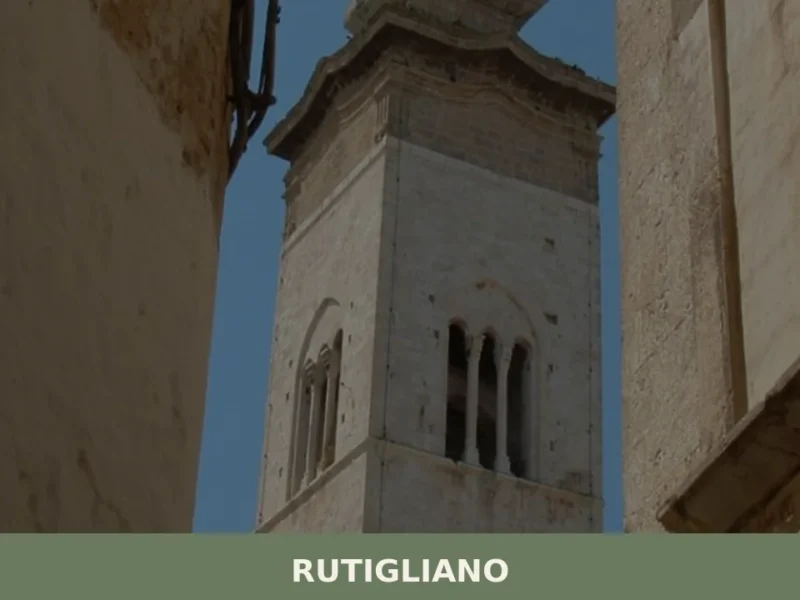
Rutigliano
What to see in Rutigliano, a town at 125 m in Puglia. Terracotta whistle museum, Norman tower, Peucetian necropolis and PAT cuisine. Plan your visit now.
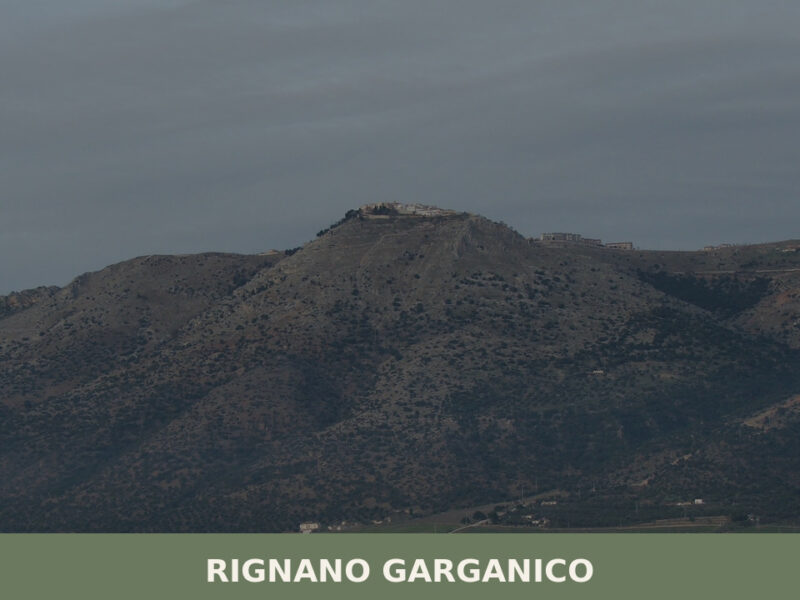
Rignano Garganico
A quiet hilltop village at 590 metres on the Gargano promontory, Rignano Garganico rewards visitors with medieval lanes, wide Tavoliere views, and the honest food traditions of inland Puglia.
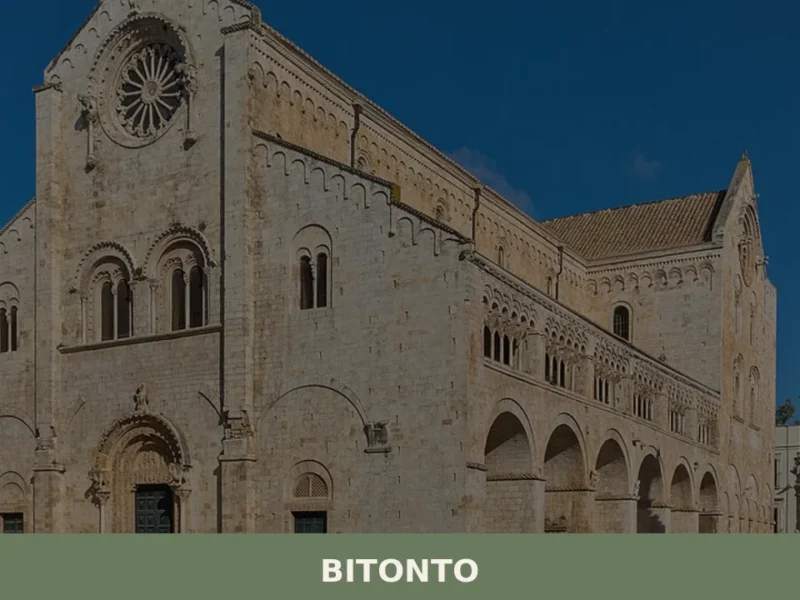
Bitonto
In 1089, Pope Urban II consecrated the cathedral of Bitonto, a building in local limestone that still dominates Piazza Cattedrale today with its sixteen-spoke rose window and its sculpted portal. That ceremony marked the city’s definitive entry into the network of major Apulian episcopal seats, confirming a political and religious role that Bitonto had maintained […]
📝 Incorrect information or updates?
Help us keep the Capurso page accurate and up to date.