


Orsara di Puglia
 Mountain
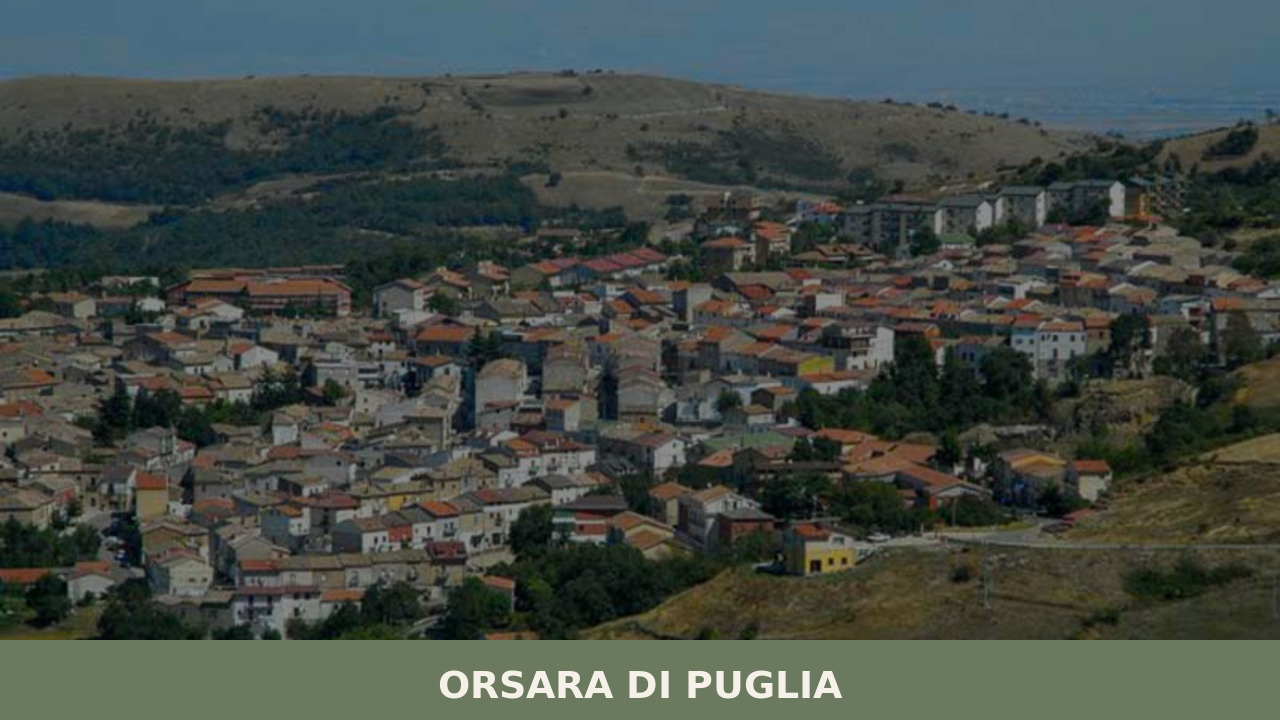
A mountain village of 2,507 people in the Foggia province, Orsara di Puglia holds sacred grottoes, medieval stonework, and one of southern Italy’s most distinctive culinary traditions.
Discover Orsara di Puglia
Morning fog lifts from the Daunia sub-Apennines in slow, deliberate layers, and Orsara di Puglia emerges at 635 metres above sea level — stone facades catching the first light, the smell of woodsmoke and bread ovens threading through narrow streets. This is a village of 2,507 people in the province of Foggia, where the rhythm of daily life still follows older clocks. If you are wondering what to see in Orsara di Puglia, the answer begins the moment you cross its threshold: a place where sacred grottoes, medieval towers, and one of southern Italy’s most celebrated culinary traditions converge on a single hilltop.
History of Orsara di Puglia
The name itself carries the imprint of the forest. “Orsara” is widely believed to derive from the Latin ursaria, meaning “place of bears” — a reference to the dense woodland that once blanketed the Daunia mountains and sheltered the animals within. The settlement’s origins are ancient, likely pre-Roman, rooted in the strategic importance of controlling a high ridge along routes that connected the Adriatic coast to the Campanian interior. By the early medieval period, the site had drawn the attention of monastic communities and Norman lords alike.
Under Norman rule in the eleventh and twelfth centuries, Orsara gained a feudal castle and a more defined urban structure. The village passed through the hands of several noble families across the centuries — a common trajectory for settlements in the Capitanata region. Its elevation, unusual for Puglia, gave it a defensive advantage and a cooler climate that attracted religious orders. The Benedictine and later the Celestine monks established a presence here, leaving behind churches and ritual spaces carved into the rock that remain central to the village’s identity today.
Through the centuries of Bourbon rule and into Italian unification, Orsara maintained its agricultural character — wheat, wine, and livestock forming the economic backbone. The village was never large enough to become a centre of political power, which paradoxically preserved its architectural coherence. What visitors encounter today is not a reconstructed heritage site but a continuously inhabited settlement whose medieval bones are still clearly visible beneath the plaster.
What to see in Orsara di Puglia: 5 must-visit attractions
1. The Grotto of San Michele Arcangelo
Carved into the rock beneath the village, this sacred grotto has been a site of worship since at least the early medieval period, linked to the cult of the Archangel Michael that runs through the Daunia mountains like a thread. The descent into the cave is marked by a shift in temperature and light — the walls are damp, the silence sudden. Stone altars and traces of ancient frescoes remain in the dim interior, evidence of centuries of continuous devotion.
2. The Abbey of the Angelo (Abbazia dell’Angelo)
Sitting above the grotto, the abbey complex was originally managed by Benedictine monks before passing to the Celestines. Its Romanesque elements — simple arches, thick walls, a bell tower that acts as a landmark visible from the valley below — speak to the functional beauty of monastic architecture in southern Italy. The complex ties directly into the grotto below, forming a single vertical axis of sacred space.
3. The Torre Guevara
This medieval tower, part of the original fortification system, anchors the old quarter of the village. It is associated with the Guevara family, one of the noble houses that held the fief. The tower’s stonework, heavy and unadorned, is a document of Norman-Swabian military construction — built not for beauty but for the practical business of watching the valleys below for movement.
4. The Historic Centre and Via Roma
Walking through the centro storico, you encounter a sequence of narrow stone alleys, arched passageways, and small piazzas that open without warning. Via Roma serves as the main artery. The buildings — mostly two or three storeys, their facades rendered in pale stucco — lean close enough in places that neighbours could pass objects across the gap. Doorways bear carved lintels that date various structures to the seventeenth and eighteenth centuries.
5. The Fountain of the Angelo
Located near the abbey, this public fountain has served the village for centuries. It is a modest structure, but its placement — at the junction of sacred and civic space — makes it a natural gathering point. The water, fed by mountain springs, is cold year-round, and locals still fill bottles here. It functions as a kind of informal village clock: who is there, and when, tells you the hour.
Local food and typical products
Orsara di Puglia has earned a reputation that extends well beyond its size, largely through the work of local chefs and producers who treat the Daunia terroir with seriousness. The village sits at an altitude where both lowland and mountain ingredients converge: hard durum wheat from the Tavoliere plain below, wild herbs and mushrooms from the forests above. Signature dishes include orecchiette with local cardoncelli mushrooms, slow-cooked lamb with wild fennel, and pancotto — a bread soup that transforms stale loaves, greens, and olive oil into something far greater than its humble origins suggest. The local olive oil, produced from cultivars adapted to the cooler microclimate, tends toward a peppery intensity unusual in the region.
Orsara’s reputation in Italian gastronomic circles owes much to Peppe Zullo, a chef who has built an internationally recognized kitchen around the principle that every ingredient should be sourced within eyeshot of the village. His restaurant and garden have become a pilgrimage site for those interested in the intersection of agriculture and cuisine. Beyond his kitchen, the village hosts small producers of cured meats, cheeses, and preserves. The local bread, baked in wood-fired ovens that have been in continuous use for generations, is dense, dark-crusted, and keeps for days — a product of the altitude and the grain.
Best time to visit Orsara di Puglia
Orsara’s elevation sets it apart from the Puglian coast: summers are warm but not punishing, with temperatures frequently ten degrees cooler than Foggia below. Spring — late April through June — brings wildflowers to the surrounding hillsides and comfortable walking temperatures. Autumn is particularly compelling: the forests turn, the mushroom season opens, and in early November the village celebrates its most distinctive tradition, the Fuochi di Orsara, a fire festival on the night of All Saints’ Day. Bonfires — called fucacoste — are lit in every neighbourhood, and food is cooked over the flames for communal feasting, a ritual with roots that likely predate Christianity. Winters are cold by southern standards, with occasional snow, and the village takes on a quiet, introspective character.
For practical purposes, weekdays offer a more genuine experience of daily life, while weekends — especially in the warmer months — draw visitors from Foggia and beyond for the food. The village is small enough that a single day allows you to walk its full extent, but an overnight stay lets you experience the shift in light and mood between afternoon and early morning, when the fog returns and the stone changes colour.
How to get to Orsara di Puglia
Orsara di Puglia lies approximately 35 kilometres southwest of Foggia, the provincial capital, accessible via the SS90 road that winds into the Daunia mountains. From the A14 Adriatic motorway, exit at Foggia and follow the provincial roads south-west — the drive takes roughly 40 minutes and the final approach involves a steady climb through agricultural land that gives way to forest. The nearest railway station is in Foggia, which is served by high-speed trains from Rome (approximately two and a half hours), Bari (one hour), and Naples (two hours). From Foggia station, local bus services run to Orsara, though schedules are limited and a rental car is strongly recommended. The nearest airports are Bari Karol Wojtyła (approximately 160 km) and Naples Capodichino (approximately 180 km), both offering domestic and European connections.
More villages to discover in Puglia
Orsara sits within a network of small settlements that, taken together, map the full range of Puglia’s geography — from mountain ridges to coastal promontories to the flat expanse of the Tavoliere. On the Gargano peninsula to the northeast, the village of Ischitella occupies a different kind of elevation, overlooking the Varano lake and the Adriatic beyond. Its microclimate supports citrus groves, and the atmosphere shifts from Orsara’s mountain austerity to something more Mediterranean and salt-aired. The two villages, separated by less than a hundred kilometres, feel like different countries.
Closer to the plains, Orta Nova offers the contrasting experience of a Tavoliere agricultural centre — flat, sunlit, oriented toward wheat and tomato production. Where Orsara looks inward, toward its grottoes and fires, Orta Nova spreads outward across the plain. Visiting both gives a traveller the full vertical cross-section of the Foggia province: from the valley floor to the forested ridgeline, with the culture and cuisine shifting at every contour line.
Frequently asked questions about Orsara di Puglia
Are there CAI hiking trails around Orsara di Puglia?
Orsara di Puglia falls within the Monti della Daunia area, which is crossed by documented CAI (Club Alpino Italiano) trails connecting the sub-Apennine ridge villages. The surrounding terrain — forested hillsides, beech and oak woodland, and open ridgelines — makes it a recognised destination for trekking in the Foggia Apennines. For current trail numbers, maps and conditions, the CAI Foggia section (www.caifoggia.it) maintains updated route documentation specific to this mountain area.
Is Orsara di Puglia feasible as a day trip from Foggia or other nearby cities?
Yes. At roughly 35 kilometres southwest of Foggia — approximately 40 minutes by car via the SS90 — Orsara di Puglia is easily reachable for a day visit. The village is compact enough to walk in its entirety within a few hours. However, given the limited local bus schedules from Foggia railway station, a rental car is strongly recommended. Visitors coming from Bari (around 160 km) or Naples (around 180 km) can combine the trip with other Daunia villages.
What is the Fuochi di Orsara festival and when does it take place?
The Fuochi di Orsara is a fire festival held on the night of All Saints' Day (1 November). Known locally as fucacoste, bonfires are lit throughout every neighbourhood of the village, and food is cooked over the flames for communal feasting. The ritual is considered to have pre-Christian roots. It is one of the most distinctive and well-documented folk traditions in the Foggia province, attracting visitors from across the region each year.
Who is the patron saint of Orsara di Puglia and how does the cult connect to the village's monuments?
The patron saint of Orsara di Puglia is San Michele Arcangelo (Saint Michael the Archangel). The cult of the Archangel Michael is deeply embedded in the Daunia mountains and is physically expressed in the village through the Grotto of San Michele Arcangelo — a sacred cave carved into the rock — and the Abbey of the Angelo above it. Together they form a vertical sacred axis that has been a site of continuous devotion since at least the early medieval period.
Nearby Villages near Orsara di Puglia
In Apulia More villages to discover
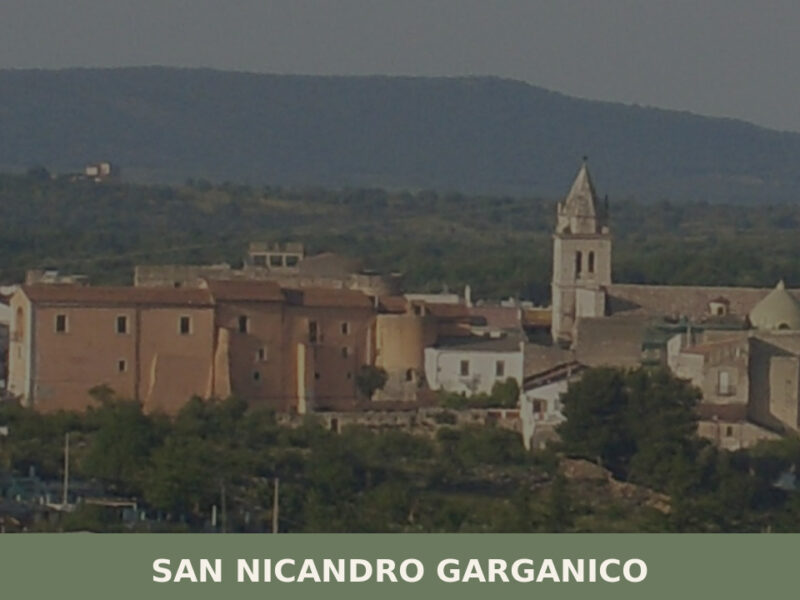
San Nicandro Garganico
 Sea
Sea
A hilltop settlement on the Gargano promontory with a Norman castle, prehistoric dolmen, and a living agricultural culture shaped by wheat, olives, and limestone.
Castellaneta
Sea
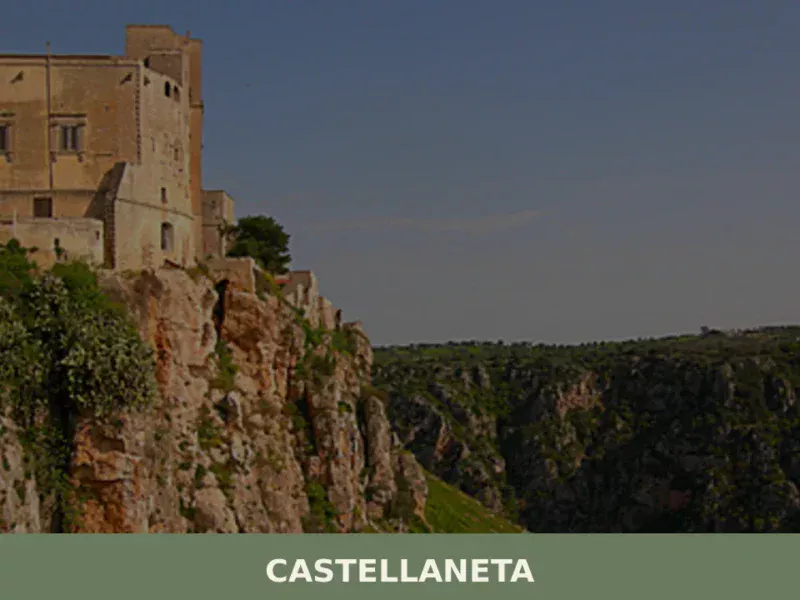
Castellaneta, a comune of around 15,784 inhabitants in the province of Taranto, sits above a dramatic ravine system carved into the Apulian plateau — a geological fact that has determined the town’s layout, its defensive logic, and the views that define it today. Visitors drawn to this corner of southern Puglia often arrive expecting little […]
Cisternino
 Hills
Hills
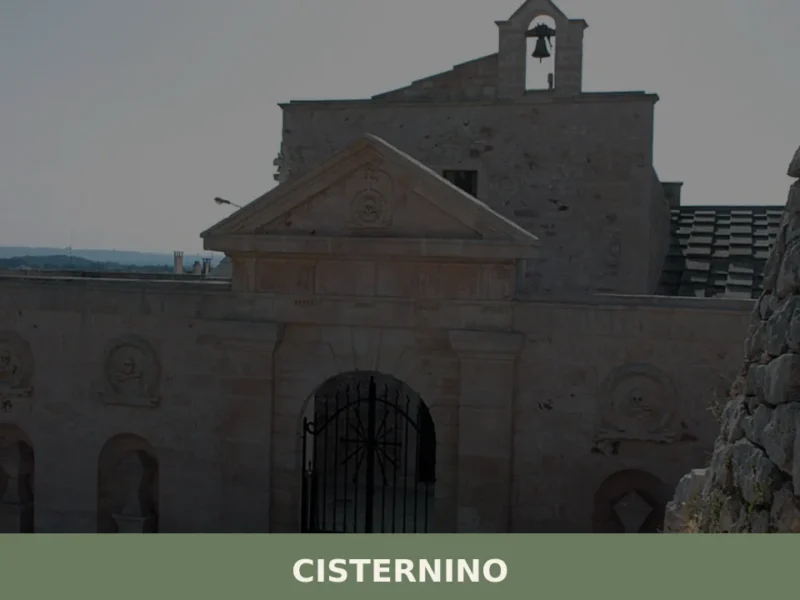
At 394 meters above sea level, in the heart of the Itria Valley, Cisternino features a compact urban layout, characterized by white lime buildings that line a network of narrow streets. This architecture, typical of Puglia’s “white village” style, reflects centuries of adaptation to the climate and terrain. Its elevated position offers a wide view […]
Conversano
Hills
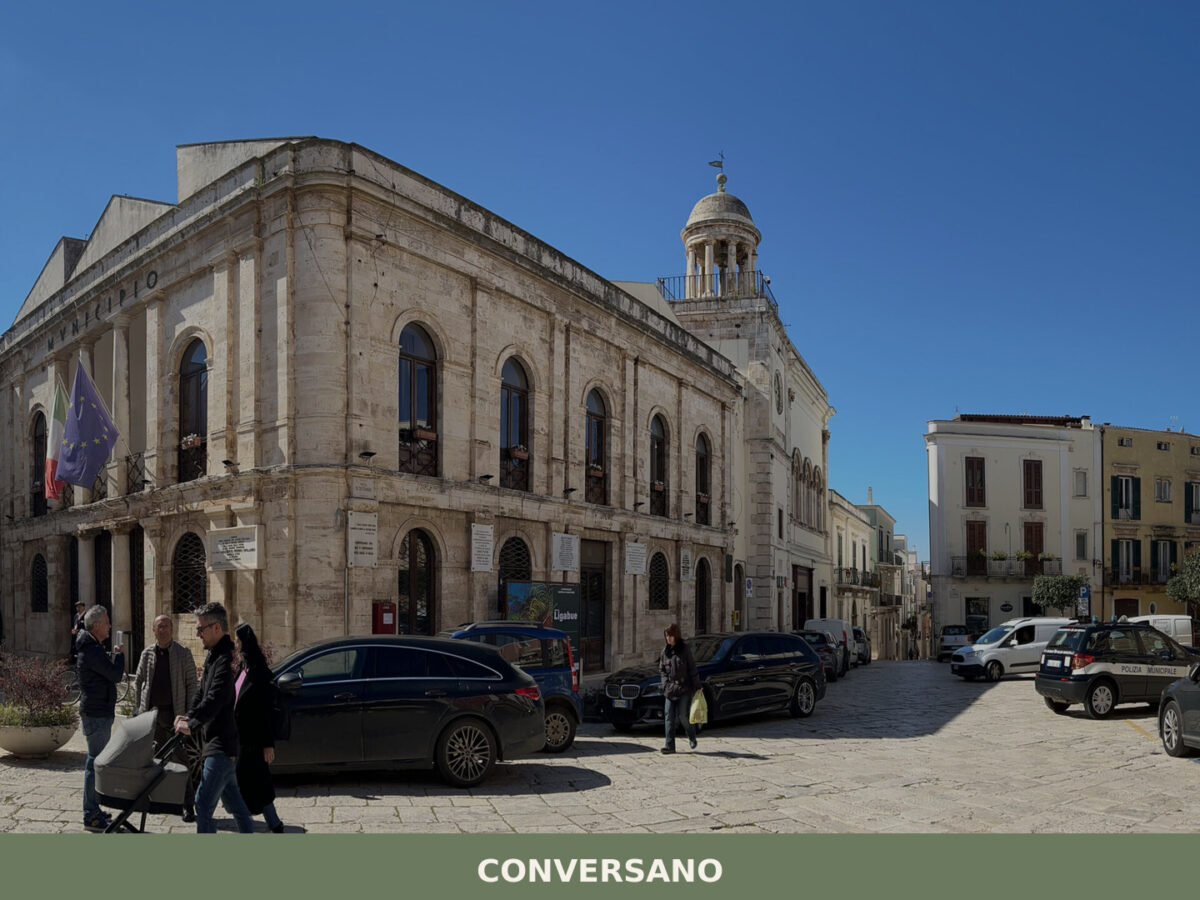
What to see in Conversano: town at 219 m on the Murgia plateau. Norman castle, Finoglio cycle, Romanesque cathedral and Africani PAT. Plan your visit now.
Cellamare
 Plains
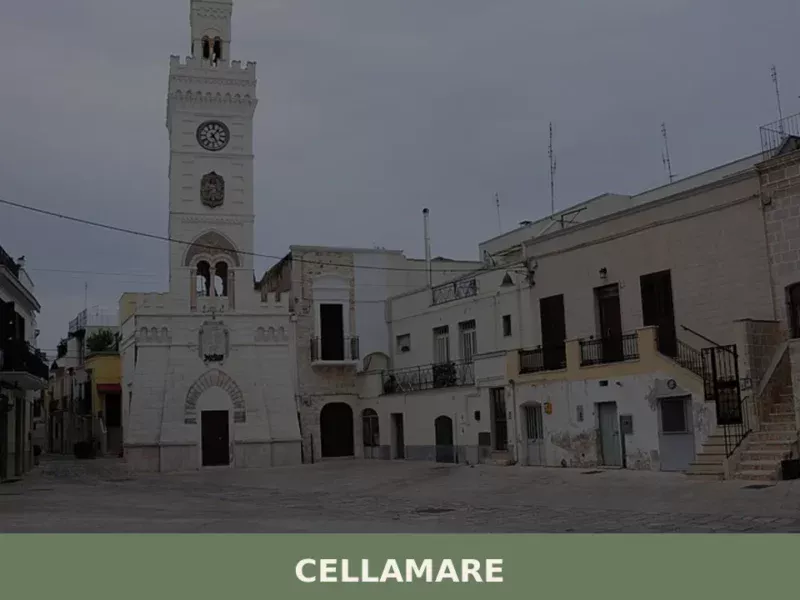
What to see in Cellamare, Italy: Explore this historic village, founded in 1171, located 110 m (361 ft) above sea level. Discover its grape industry and ancient origins.
Volturara Appula
Hills
A hill village of 378 residents at 489 metres in the Daunian Subapennines. Volturara Appula offers medieval lanes, panoramic views over the Tavoliere, and the quiet of a place most travellers never find.
Stornara
Plains
A quiet agricultural town on Puglia's Tavoliere plain, Stornara rewards visitors with honest rural architecture, sweeping wheat-field panoramas, and a food tradition rooted in durum wheat.
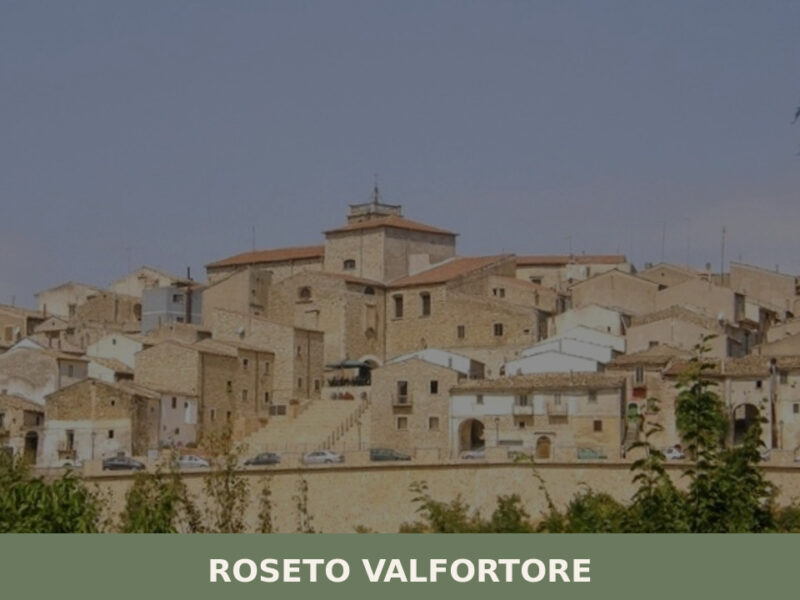
Roseto Valfortore
Mountain
A stone village of 993 inhabitants at 658 metres in the Fortore valley. Roseto Valfortore preserves medieval architecture, mountain cooking traditions, and the quiet of inland Puglia.
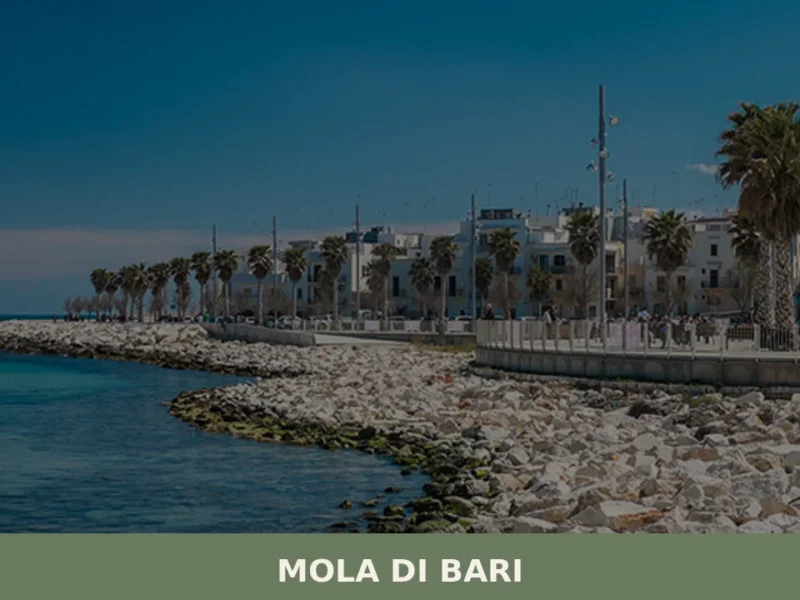
Mola di Bari
Sea
In 1278, Charles I of Anjou ordered the construction of a castle on the Adriatic coast south of Bari, at a spot where fishermen had been hauling their boats ashore for generations. That castle still stands, and it marks the exact centre of Mola di Bari, a town of 24,416 inhabitants spread out at just […]
Bisceglie
Sea
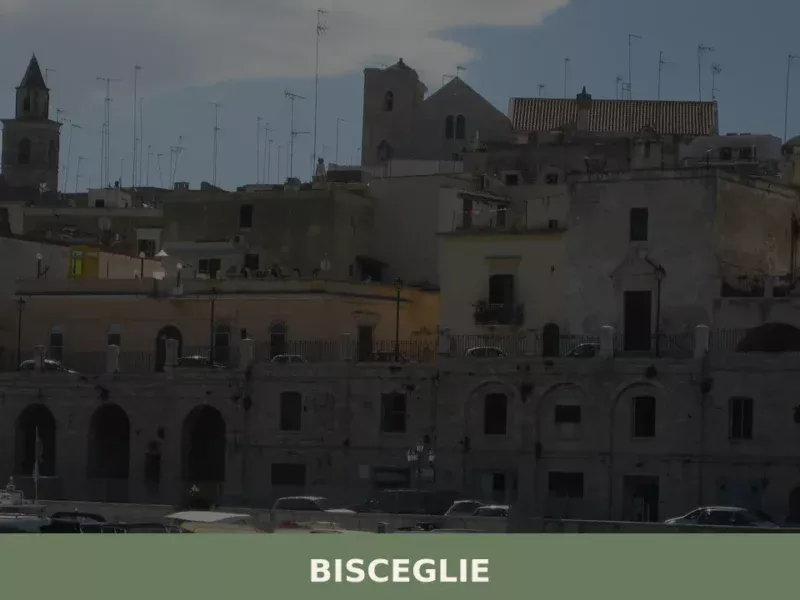
Discover what to see in Bisceglie, Puglia: Bronze Age dolmens, a Norman cathedral, Swabian castle, local food and practical travel tips for the Adriatic coast.



🏡 Know Orsara di Puglia better than we do?
If you’re a local or have been there, your knowledge matters: add what’s missing or fix a detail on this page.