


Casamassima
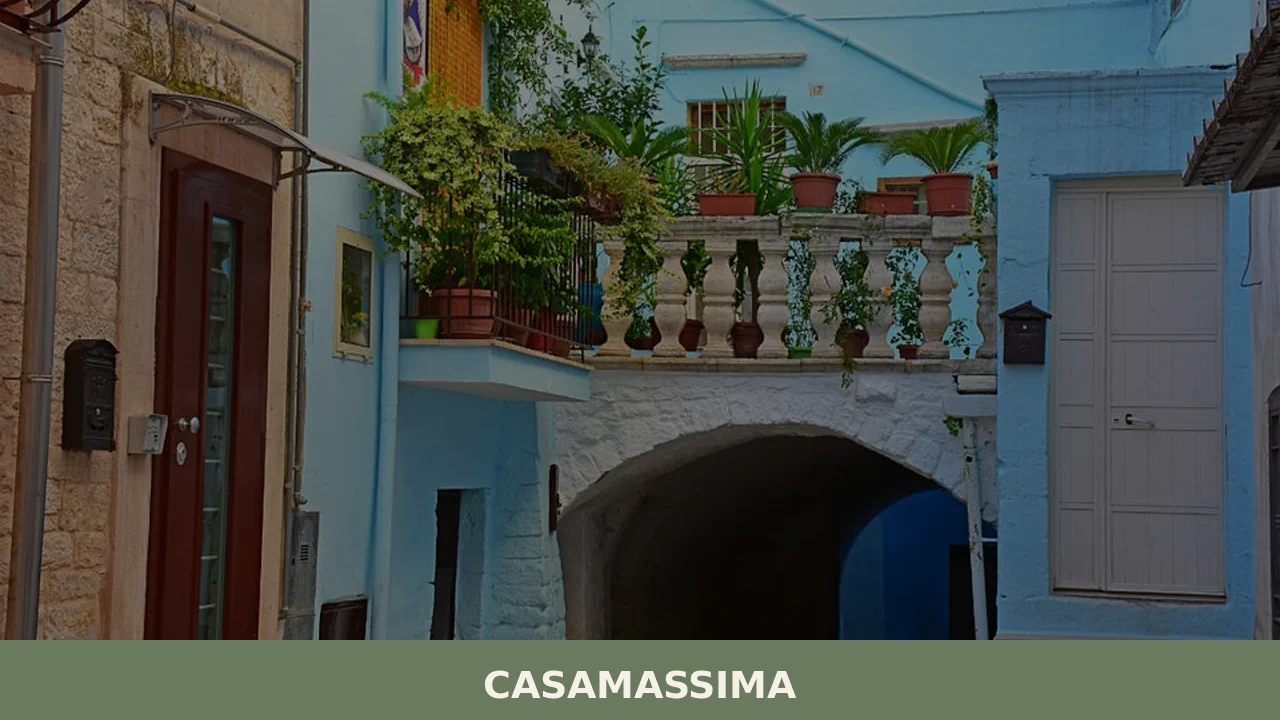
The façades painted with blue limewash in the historic centre earned Casamassima the nickname “Blue Village” — a unique case among Apulian villages and one of very few in Europe. This tradition, documented from the 19th century onward and linked according to local belief to a vow made to the Virgin Mary during a plague […]
Discover Casamassima
The façades painted with blue limewash in the historic centre earned Casamassima the nickname “Blue Village” — a unique case among Apulian villages and one of very few in Europe. This tradition, documented from the 19th century onward and linked according to local belief to a vow made to the Virgin Mary during a plague epidemic, still colours the alleys and courtyards of the old town today, giving the village a profile recognisable from a distance.
Anyone wondering what to see in Casamassima will find here an urban layering that spans from medieval remains to 19th- and 20th-century expansions, in a town of 19,294 inhabitants standing at 223 metres above sea level in the heart of the Murgia Barese. This guide documents the attractions, history and food culture of the village, tracing a complete itinerary for those arriving from the coast or from inland Puglia.
History and origins of Casamassima
The place name Casamassima has been the subject of several etymological hypotheses. The most widely accepted traces it to the Latin Casa Maxima, meaning “large house” or “main dwelling,” referring to a sizeable rural settlement that arose in the late Roman period along the routes connecting the Adriatic coast to the Murgia hinterland. Other readings propose a derivation from the name of a local landowner, a certain Maximus, who owned the agricultural estate on which the first inhabited nucleus developed. Archaeological finds recovered in the surrounding countryside — ceramic fragments and remains of masonry structures — confirm that the area was already frequented during the Messapian and Peucetian periods, well before the Romanisation of southern Puglia.
During the Norman-Swabian period, between the 11th and 13th centuries, Casamassima acquired a more defined defensive layout with the construction of an initial castle and a circuit of walls to protect the village.
The fief passed through various noble families: from the Norman Hautevilles to Angevin lords, and then to the Acquaviva d’Aragona, who held control for a long stretch between the 15th and 17th centuries. In 1656, a plague epidemic struck the territory severely, decimating the population and leaving a deep mark on collective memory. According to oral tradition, it was on that occasion that the inhabitants painted their house façades blue as an act of devotion to the Madonna — a custom that, though with interruptions, has endured across the centuries to the present day.
Between the 18th and 19th centuries, Casamassima experienced a demographic and economic recovery linked to olive cultivation and oil production, activities that shaped the agricultural landscape still visible in the terraces and dry-stone walls of the surrounding countryside. In 1799, during the revolutionary upheavals of the Neapolitan Republic, the village witnessed episodes of popular participation.
With Italian unification, the town gradually acquired modern infrastructure — the road network, then the railway — which improved its connections with Bari and neighbouring centres. In the 20th century, urban growth transformed Casamassima into a town of nearly twenty thousand inhabitants, while the historic core with its architectural and chromatic layers remained intact.
What to see in Casamassima: 5 key attractions
1. The Blue Historic Centre
The old town of Casamassima is arranged around a medieval street plan of narrow alleys, connecting arches between buildings and small internal courtyards. The façades painted in blue — a light cerulean that varies in shade from building to building — define the visual identity of the village and are the primary reason visitors travel to this location.
The colour, periodically refreshed by the residents, extends over portals in local limestone, balconies with wrought-iron railings and carved cornices. Walking along via Roma and the side lanes allows a close-up look at this chromatic feature, which has attracted the attention of photographers, filmmakers and scholars of vernacular architecture. The historic centre can be visited on foot in about an hour, following a circular route that starts from the main square.
2. Chiesa Madre di Santa Croce
Standing at the highest point of the old village, the Chiesa Madre di Santa Croce is the principal place of worship in Casamassima. The current structure, the result of 17th- and 18th-century rebuilding on an older foundation, features a façade in local stone with a decorated portal and a bell tower visible from several points across the surrounding territory.
Inside, the three-nave layout houses lateral altars in Baroque style, canvases from the Neapolitan school dating to the 17th and 18th centuries, and a restored pipe organ. The church also holds sacred furnishings and liturgical vestments of considerable value, recorded in diocesan inventories. It is worth visiting both for its architecture and for its elevated position, which offers a broad view over the blue rooftops below.
3. Norman-Swabian Tower and Castle remains
Of what was once Casamassima’s medieval defensive system, the Norman-Swabian tower and sections of the town walls survive, integrated into the built fabric of the historic centre. The tower, with a quadrangular plan, is constructed from limestone ashlar blocks laid in regular courses — a building technique typical of Apulian military architecture between the 11th and 13th centuries.
Its original height, partially reduced by collapses and later interventions, reached approximately fifteen metres. Examining the external masonry reveals splayed arrow slits and traces of a sentry walkway. The castle to which the tower belonged was altered during the Angevin and Aragonese periods, eventually losing its military function and being absorbed into civilian dwellings. Today the tower is visible from via Castello and the adjacent lanes.
4. Church and Convent of Santa Chiara
The Santa Chiara complex, built in the 17th century to house a community of Poor Clare nuns, stands in the southern part of the historic centre. The attached church has a single-nave interior with stucco decorations and a majolica floor that recalls Neapolitan models of the period. The convent, organised around a quadrangular cloister with a central well, retains traces of the monastic living spaces: the refectory, the cells and the chapter house. After the suppression of religious orders in the 19th century, the complex went through phases of civic reuse and restoration. The conventual architecture represents a significant record of female religious life in 17th-century Puglia, and a sober counterpoint to the more exuberant Baroque of the Chiesa Madre.
5. Sanctuary of the Madonna della Misericordia
Just outside the perimeter of the historic centre, along the road leading toward the southern countryside, stands the Sanctuary of the Madonna della Misericordia, a place of devotion central to the religious life of Casamassima. The building, whose foundation is linked to a miraculous event handed down by local tradition, has a simple façade with a stone rose window. The interior holds a venerated image of the Virgin and votive frescoes painted between the 17th and 18th centuries. The sanctuary is a destination for local pilgrimages, particularly during the spring Marian celebrations. The surrounding area, marked by centuries-old olive trees and dry-stone walls, allows a walk connecting the sanctuary to the village in about twenty minutes on foot.
What to eat in Casamassima: traditional dishes and local products
The food tradition of Casamassima is rooted in the peasant cooking of the Murgia Barese, a territory where limestone surfaces between olive groves and arable fields and where the diet was built for centuries around cereals, legumes, vegetables and olive oil. The village’s position — midway between the Adriatic coast and the Murgia plateau — has fostered a cuisine that combines seafood ingredients with inland products, with a strong seasonal character. Dishes are prepared with few quality ingredients, using slow cooking methods — wood-fired ovens, terracotta pots, embers — that bring out flavours without masking them. Even today, during family celebrations and religious feast days, the table in Casamassima follows a repertoire passed down orally from generation to generation.
Among the dishes that mark the local food calendar, Acquasale (PAT) holds a place of prominence.
It is a soup of stale bread soaked in hot water, dressed with fresh tomatoes, raw onion, oregano and a generous drizzle of extra virgin olive oil. In some variations, poached eggs or salted capers are added. It is a recovery dish, created to avoid wasting hardened bread, traditionally eaten during summer days as a light midday meal. Alongside acquasale, the local cuisine features orecchiette with turnip tops, broad beans with wild chicory, Bari-style focaccia with cherry tomatoes and olives, and fried calzoni stuffed with stewed onions — preparations common across the entire province of Bari but which in Casamassima retain specific proportions and cooking methods.
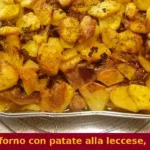
The catalogue of certified Apulian products includes several specialities also consumed in the Casamassima area. Agnello al forno con patate alla leccese (PAT), known in dialect as Auniceddhru allu furnu, is a festive dish of local lamb slowly roasted with potatoes, cherry tomatoes, grated pecorino and parsley until a golden crust forms over a tender interior.
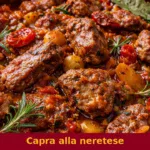
Agnello alla gravinese (PAT), braised with seasonal vegetables and pecorino cheese, represents another variant from the Murgia hinterland. Wild asparagus (PAT) is gathered in spring from the limestone countryside and eaten sautéed with eggs, or preserved in oil as a winter conserve — a preparation itself recognised as Asparagi sott’olio (PAT). Africani (PAT), small almond-paste cakes coated in dark chocolate, are a constant presence in the pastry shops of the Bari area.
The best occasions to taste these products coincide with the festivals and food fairs that enliven Casamassima from spring to autumn. On the second Sunday in September, during the feast of San Rocco, food stalls and the village restaurants offer menus based on local specialities. During the summer, fairs dedicated to specific products — focaccia, orecchiette, grilled meat — take place in the central squares or in the rural contrade. For direct purchases, the weekly market offers extra virgin olive oil, fresh and aged cheeses, semolina bread and seasonal vegetables grown in the surrounding countryside.
Local masserie also practise direct sales of oil and preserves.
The territory of Casamassima falls within the production area of Gioia del Colle DOC, a denomination that covers red and rosé wines based on Primitivo, an indigenous Apulian grape variety that finds ideal ripening conditions in the red soils of the Murgia. The reds display an intense ruby colour, dark fruit notes and a tannic structure that makes them well suited to pairing with grilled meats and aged cheeses. Wineries in the area also produce varietal Negroamaro and Fiano. Amaro del Gargano (PAT) and Anisetta (PAT), traditional Apulian liqueurs, close special-occasion meals with their aromatic and digestive profiles.
When to visit Casamassima: the best time of year
Spring, from April to June, is the most suitable period to visit Casamassima. Temperatures range between 15 and 25 degrees, daylight hours are long and the surrounding countryside is at peak bloom, with wild asparagus still available in the fields and markets. In spring the historic centre lends itself to extended walks without the summer heat that, between July and August, can reach 35 degrees during the middle of the day.
Autumn, particularly September and October, is an equally valid alternative: the olive harvest is in full swing and the climate remains mild. Those who prefer to attend local events should aim for the second Sunday in September, when the patron feast of San Rocco brings processions, festive lights and brass-band concerts that animate the village over several consecutive days.
Winter, from December to February, is the least visited period, but it offers a different atmosphere: the blue historic centre under winter light takes on cooler and more contrasted tones, and the village’s eateries serve warm, hearty dishes such as legume soups, orecchiette with ragù and roast lamb. The Christmas celebrations and the local carnival, with costumed parades through the central streets, are moments of community participation that a curious visitor can take in.
For those travelling as a couple or seeking quiet, the months of March and November guarantee lower prices and no crowding, though with shorter days and some intermittent rain.
How to reach Casamassima
By car, Casamassima is reached from the A14 Bologna–Taranto motorway by exiting at Bari Sud and continuing for about 12 kilometres along the provincial road toward Gioia del Colle. From Bari city centre the distance is 20 kilometres, covered in 25–30 minutes via the SS100. From Taranto the journey is approximately 75 kilometres in just over an hour. Those coming from Lecce can follow the SS16 to Bari and then turn inland, for a total of roughly 170 kilometres. The village is also connected by the strada statale 100, a trunk road linking Bari to Taranto that passes through the municipal territory.
The nearest railway station with regional service is Casamassima, operated by Ferrovie del Sud Est, with direct connections to Bari Centrale (about 35 minutes) and to towns in the Murgia hinterland.
Bari-Karol Wojtyła Airport is 30 kilometres away, reachable in approximately 35 minutes by car. From the airport it is possible to hire a car or use the intercity bus service with a transfer in Bari. Regional bus lines connect Casamassima to several centres in the province, making the village accessible even without a private vehicle.
Other villages to explore in Puglia
Visitors to Casamassima who wish to deepen their knowledge of Apulian villages can build an itinerary that includes places differing in geography and character. To the north-west, in the province of Foggia, Bovino occupies a panoramic position on the Daunian Sub-Apennines, with its ducal castle and Romanesque cathedral that make it a centre of historical importance in northern Puglia.
The distance from Casamassima is about 160 kilometres, covered in under two hours by following the A14 motorway toward Foggia and then the inland roads. Bovino offers a radically different landscape — hilly, wooded, with harsher winters — and a food tradition tied to the mountains, with cheeses, cured meats and mushrooms that round out the picture of Apulian cuisine in unexpected ways.
Also in the province of Foggia, Stornarella is a worthwhile stop for those who want to discover the Tavoliere delle Puglie, the great cereal-growing plain that stretches north of Bari.
Approximately 140 kilometres from Casamassima, Stornarella is reached in an hour and forty minutes and allows visitors to observe a different settlement model: a lowland agricultural centre with 19th- and 20th-century architecture, tied to wheat cultivation and tomato processing. The pairing of the blue village of the Murgia, the heights of the Sub-Apennines and the expanse of the Tavoliere creates a three- or four-day route through three distinct versions of Puglia, each with its own landscape, its own food traditions and a specific history to document.
In Apulia More villages to discover
Polignano a Mare
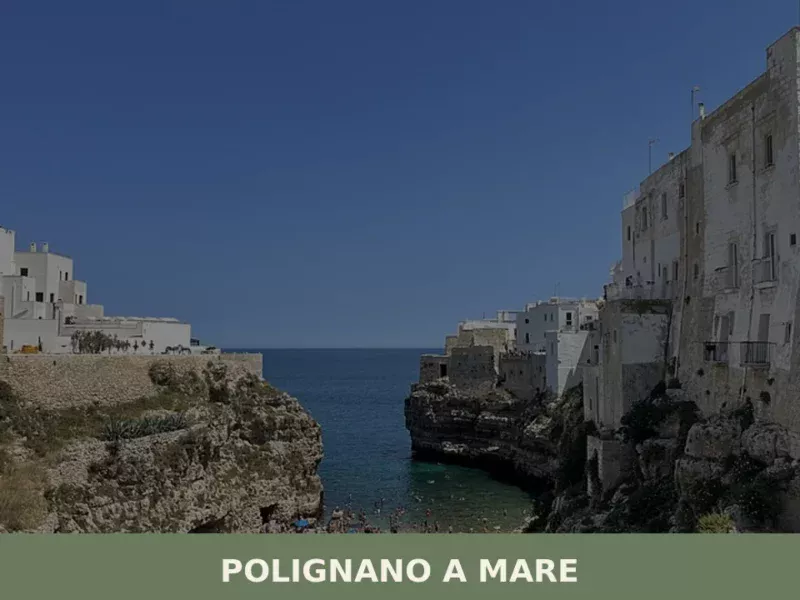
What to see in Polignano a Mare: clifftop town at 24 m, 17,531 residents. Lama Monachile, Grotta Palazzese, PAT Africani. Plan your visit now.
Carapelle (Italia)
Carapelle sits on the open Tavoliere plain near Foggia, a small agricultural town where daily rhythms and grain-growing traditions reveal an unmediated southern Italy.
Rignano Garganico
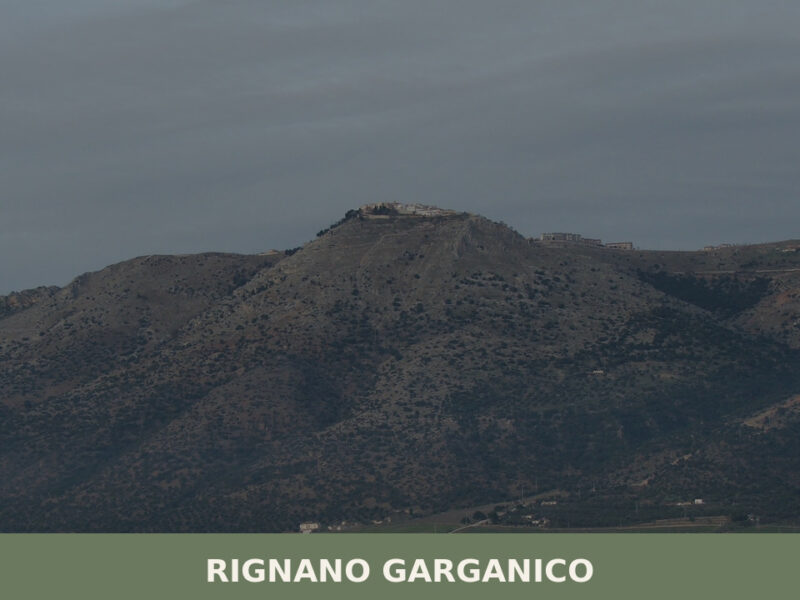
A quiet hilltop village at 590 metres on the Gargano promontory, Rignano Garganico rewards visitors with medieval lanes, wide Tavoliere views, and the honest food traditions of inland Puglia.
📝 Incorrect information or updates?
Help us keep the Casamassima page accurate and up to date.