


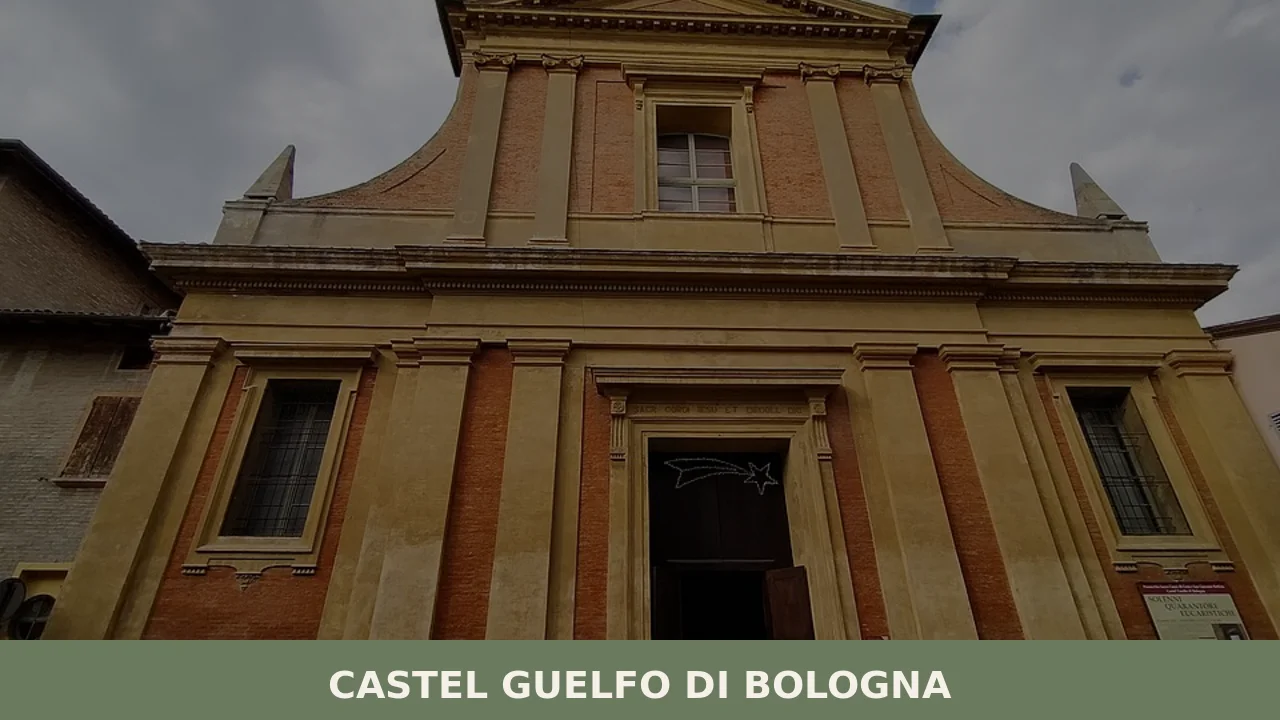
Castel Guelfo di Bologna
In 1388, the Council of the Six Hundred in Bologna ordered the construction of a fortress on the plain southeast of the city, along the road leading towards Romagna. That military outpost, built to defend the borders of the contado from the ambitions of the Visconti, took its name from the Guelph faction that governed […]
Discover Castel Guelfo di Bologna
In 1388, the Council of the Six Hundred in Bologna ordered the construction of a fortress on the plain southeast of the city, along the road leading towards Romagna. That military outpost, built to defend the borders of the contado from the ambitions of the Visconti, took its name from the Guelph faction that governed Bologna.
Today Castel Guelfo di Bologna is a town of 4,360 inhabitants, spread across flat land at 32 metres above sea level between wheat fields and orchards, with a historic centre that still preserves the regular layout of the original castrum. Asking what to see in Castel Guelfo di Bologna means preparing to read, street by street, the traces of an agricultural community that has passed through six centuries without losing its original structure.
History and origins of Castel Guelfo di Bologna
The name of the village contains its own political identity card. “Castel Guelfo” refers to the Guelph faction, supporters of the papacy in the struggle against the pro-imperial Ghibellines, who in the late fourteenth century dominated Bolognese institutions. The addition “di Bologna” was necessary to distinguish the town from other castles with the same name found across the peninsula, particularly from the Romagnol Castel Guelfo.
The official founding dates to 1388, when the Bolognese government ordered the construction of a fortified castle to guard the eastern border of its territory, threatened by mercenary companies and the expansionist ambitions of Gian Galeazzo Visconti, lord of Milan. The urban plan followed the rational layout of the castrum: a rectangular perimeter of walls with corner towers, a moat fed by the waters of the surrounding canals, and an internal street network organised along orthogonal axes.
During the fifteenth century, the village went through a phase of consolidation. The Malvezzi family, among the most influential in the Bolognese aristocracy, acquired feudal rights over the territory and contributed to the construction of civic and religious buildings. In 1443 the community obtained its own local statutes, a fundamental step that regulated the economic and social life of the inhabitants — predominantly farmers, artisans and small landowners.
The Italian Wars of the early sixteenth century brought pillaging and destruction: in 1511, during the military operations connected to the Holy League, French and Spanish troops crossed the area repeatedly, causing significant damage to the defensive structures. Reconstruction was slow and partial, and gradually the walls lost their military function and became simple boundaries of the built-up area.
With annexation to the Kingdom of Italy in 1860, Castel Guelfo entered the province of Bologna as an autonomous municipality. The economy remained firmly agricultural until after the Second World War: the reclamation of the surrounding wetlands, begun during the papal era and completed in the twentieth century, transformed the landscape into an expanse of highly productive cultivable land.
The population, which exceeded 3,000 inhabitants in the mid-nineteenth century, grew gradually to the current 4,360 residents. The opening in 2003 of Castel Guelfo The Style Outlets, one of the first outlet villages in Emilia-Romagna along the A14 motorway, introduced an entirely new commercial and tourist dimension to the municipality’s identity, sitting alongside the agricultural vocation that remains the foundation of the local economy.
What to see in Castel Guelfo di Bologna: 5 essential attractions
1. The historic centre and the layout of the fourteenth-century castrum
The original nucleus of Castel Guelfo is still perfectly legible on the town’s map. The main streets intersect at right angles following the layout of the castle founded in 1388, and the perimeter of the former walled enclosure can be traced in the streets that surround the centre. In some sections, especially along the eastern side, portions of the brick curtain wall survive, incorporated into houses built in subsequent centuries. Walking along via Roma and via Gramsci — the two main axes — reveals how the medieval urban plan has withstood six centuries of building changes. The terraced houses with exposed brick facades, typical of minor Emilian architecture, line the street fronts with an almost modular regularity.
2. The Church of Sant’Agnese
Dedicated to the patron saint of the village, Sant’Agnese, celebrated on 21 January, this parish church faces the main square of the historic centre. The current building is the result of seventeenth- and eighteenth-century interventions that replaced the original fifteenth-century structure, but its position still corresponds to the one planned in the fourteenth-century urban layout. The interior, with a single nave, contains lateral altars in stucco and canvases from the Bolognese school dating to the seventeenth and eighteenth centuries. The brick bell tower, visible from several kilometres across the surrounding plain, is the most recognisable vertical landmark in Castel Guelfo’s urban profile. During the patron saint’s feast in January, the church becomes the centre of liturgical celebrations and of the procession that winds its way through the town.
3. Palazzo Malvezzi-Hercolani
Among the civic buildings of the village, the palazzo that belonged to the Bolognese noble families Malvezzi and subsequently Hercolani is the most architecturally significant construction. Located in the heart of the historic centre, the palazzo was built as a country residence and as a management hub for the agricultural properties that the Malvezzi held in the territory. The facade, sober and linear in keeping with Emilian aristocratic taste, features a sandstone portal and windows with terracotta frames. Although the building is not regularly open to the public, its imposing volume defines the space of the square and bears witness to the relationship of economic dependence that linked the village to the great senatorial families of Bologna.
4. The canal system and the reclamation landscape
Castel Guelfo stands on an area of alluvial plain where water management represented the main challenge for agricultural survival for centuries. The network of canals and drainage channels that crosses the municipal territory tells a story of land reclamation that began in the medieval period and continued systematically under the Papal State and then into the twentieth century. The Canale di Medicina, which flows just north of the built-up area, is one of the main collectors in the hydraulic network of the lower Bolognese plain. Cycling or walking along the embankment roads offers a close-up view of this human-shaped landscape: rows of poplars, brick sluice gates, small bridges and farmhouses arranged along the canal axes compose an orderly and functional plain panorama.
5. Castel Guelfo The Style Outlets
About two kilometres from the historic centre, along via Poggio, extends the commercial complex inaugurated in 2003 that has significantly altered visitor flows in the area. The structure, designed as an open-air village with architecture inspired by Emilian towns, houses over one hundred shops of national and international brands. Beyond its commercial function, the outlet has made Castel Guelfo a popular stopping point along the Bologna–Rimini motorway corridor, bringing hundreds of thousands of visitors to the municipal territory each year.
For those looking for what to see in Castel Guelfo di Bologna beyond shopping, the outlet can serve as a starting point for a visit to the historic centre, just a few minutes away by car.
What to eat in Castel Guelfo di Bologna: traditional cuisine and local products
The cuisine of Castel Guelfo belongs entirely to the Bolognese and, more broadly, Emilian gastronomic tradition — a tradition built on the availability of soft wheat for fresh pasta sheets, pork for cured meats and fillings, and cow’s milk for cheese. The village’s position on the lower plain, an area of intensive agricultural and livestock production, has guaranteed a rich and steady food supply for centuries. The territory, dedicated to the cultivation of cereals, sugar beet, fruit and vegetables, provides raw materials that feed directly into home cooking and local restaurants.
The dish that dominates the Emilian table is sfoglia all’uovo — egg pasta rolled thin by hand with a rolling pin on a wooden board and shaped into various formats: tagliatelle, lasagne, tortellini and tortelloni. Tagliatelle al ragù, prepared with a sauce of beef and pork cooked slowly with a soffritto of celery, carrot and onion, tomato and wine, is the most common first course in the area. Tortellini in brodo — small pasta parcels filled with a mixture of pork loin, cured ham, mortadella and Parmigiano Reggiano — are the celebration dish, traditionally served in capon broth during Christmas lunch and on solemn occasions.
The Bolognese territory is home to some of Italy’s most renowned food supply chains.
Parmigiano Reggiano, a hard cheese with Protected Designation of Origin, is also produced in local dairies, using milk from farms on the plain. Mortadella Bologna IGP, a cooked sausage of pure pork with an extremely fine grain and an unmistakable aroma, is another outstanding product of the provincial territory. Prosciutto di Parma DOP, although the ageing zone is located in the Parma area, traditionally uses legs sourced also from farms on the Bolognese plain. These products, documented and protected by their respective consortia, can be found in the food shops and markets of Castel Guelfo and the neighbouring municipalities.
The local gastronomic calendar follows the rhythm of the agricultural seasons. In autumn and winter, food festivals and village fairs offer dishes from the farming tradition: filled pastas, mixed boiled meats with sauces, cotechino with lentils or mashed potatoes. The weekly market, held in the centre of the village, offers seasonal fruit and vegetables and specialities from local producers. To buy directly from dairies or cured meat producers, a drive of just a few kilometres along the via Emilia or towards Medicina and Imola is enough, where several farm shops are concentrated.
On the wine front, the area falls within the Colli Bolognesi district, although Castel Guelfo lies on the plain rather than in the hilly belt where viticulture is concentrated.
The most representative wine of the Emilian tradition remains Lambrusco, produced in several variants across the provinces of Modena, Reggio Emilia and parts of Bologna: a sparkling red, slightly tannic, that traditionally accompanies the rich dishes of the local cuisine. In the village’s restaurants it is also common to find Sangiovese di Romagna and Albana, reflecting the border position between two winemaking traditions — Emilian and Romagnol.
When to visit Castel Guelfo di Bologna: the best time
The climate of the lower Bolognese plain is continental, with hot and humid summers and cold, foggy winters. Spring, particularly the months of April and May, is the most favourable period for visiting the village and the surrounding territory: temperatures are mild, the countryside is in full bloom and the days are long enough to combine a visit to the historic centre with a bicycle ride along the canals.
Autumn, from September to November, offers equally good conditions, with the advantage of coinciding with the season of gastronomic festivals and the harvesting of agricultural products. The feast of Sant’Agnese on 21 January falls in the depths of winter but represents a significant moment in community life, with religious celebrations and cultural events.
Summer, between June and August, brings temperatures that regularly exceed 35°C with high humidity levels, making visits less comfortable during the central hours of the day. Those in the area during this period can still take advantage of cooler evenings and summer events organised by the municipality. The winter months, from December to February, are marked by frequent fog and harsh temperatures, but offer the advantage of experiencing the village in its most everyday dimension, away from the tourist flows linked to the outlet. For those travelling with shopping in mind, the sales periods — January and July — draw the highest number of visitors to the outlet area.
How to reach Castel Guelfo di Bologna
Castel Guelfo is efficiently connected to the national motorway network.
The “Castel San Pietro Terme” exit on the A14 Bologna–Taranto motorway is about 5 kilometres from the centre of the village. From Bologna the motorway journey takes approximately 25 minutes to cover the 30-kilometre distance; from Rimini it is about 90 kilometres and one hour of travel; from Florence, via the A1 and then the A14, the distance is approximately 130 kilometres, covered in an hour and a half. The provincial road SP253 (via Selice) connects Castel Guelfo directly to Imola, about 10 kilometres to the southeast.
The nearest railway station is Castel San Pietro Terme, on the Bologna–Rimini line, reachable by regional train from Bologna Centrale in about 20 minutes. From there, a local bus service connects Castel San Pietro to Castel Guelfo in approximately 15 minutes. The reference airport is Bologna’s Guglielmo Marconi, about 40 kilometres away and reachable by car in 35–40 minutes.
For those arriving by air and renting a car, the route from the airport is straightforward and entirely on the motorway. The website of the Municipality of Castel Guelfo provides updated information on local public transport lines.
Other villages to discover in Emilia-Romagna
Emilia-Romagna is a region that moves naturally from the plain to the hills and the Apennines, and each geographical setting has produced villages with very different characteristics. Those visiting Castel Guelfo who wish to continue exploring the regional territory can head towards San Pietro in Cerro, a small town in the province of Piacenza where a fifteenth-century castle houses the MIM — Museo Industriale della Motocicletta, a remarkable collection that tells the story of Italian mechanical engineering.
The journey from Castel Guelfo to San Pietro in Cerro, about 150 kilometres along the via Emilia, crosses the entire Emilian stretch of the Po Valley and offers a visual summary of the region’s diverse agricultural and architectural nuances.
For those seeking a sharp contrast with the flat landscape, Morfasso, also in the province of Piacenza but in the Ligurian-Emilian Apennines, offers a mountain setting at over 800 metres of altitude, with beech forests and hiking trails that reach Monte Lama and Monte Moria. The shift from the 32-metre elevation of Castel Guelfo to the 800-plus metres of Morfasso, achievable in about two and a half hours by car, allows you to experience in a single day the extraordinary environmental variety of Emilia-Romagna — from rice paddies to beech woods, from reclamation canals to Apennine torrents.
An itinerary of this kind reveals the geographic complexity of a region that is too often reduced to the single image of the via Emilia. For further information on the cultural and natural heritage of Emilia-Romagna, you can consult the Wikipedia page dedicated to Castel Guelfo and the Touring Club Italiano portal.
In Emilia-Romagna More villages to discover
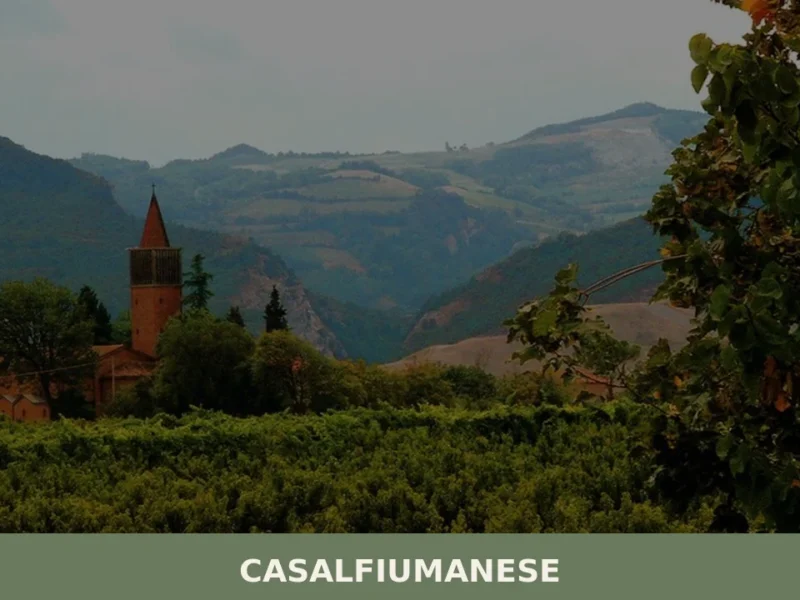
Casalfiumanese
About twenty kilometres from Imola, along the valley of the Sillaro stream, the municipal territory of Casalfiumanese stretches between the lower plain and the first hills of the Bolognese Apennines, covering an elevation range from 50 to nearly 500 metres above sea level. The main town, sitting at 125 metres above sea level, has approximately […]
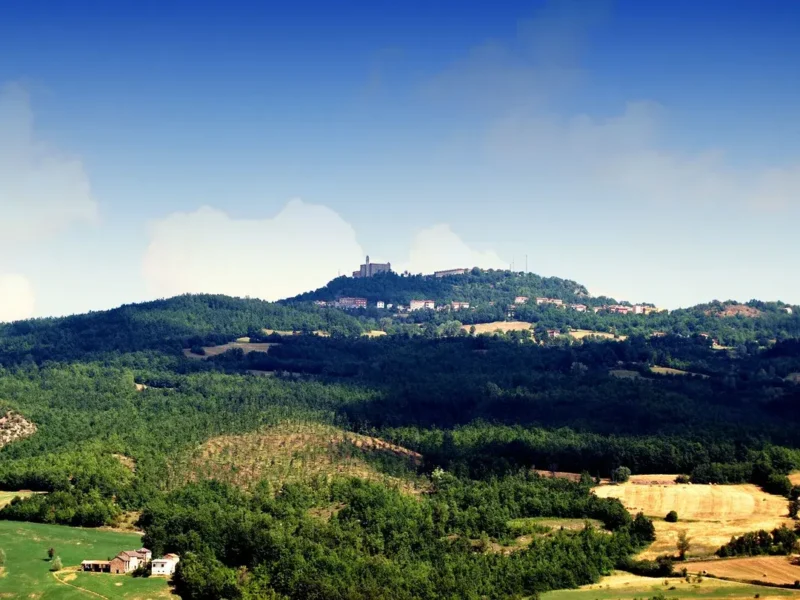
Farini
What to see in Farini, a village at 424 m in Val Nure with 1,043 residents: San Giuseppe Church, Apennine trails, PDO cured meats. Plan your visit and how to get there.
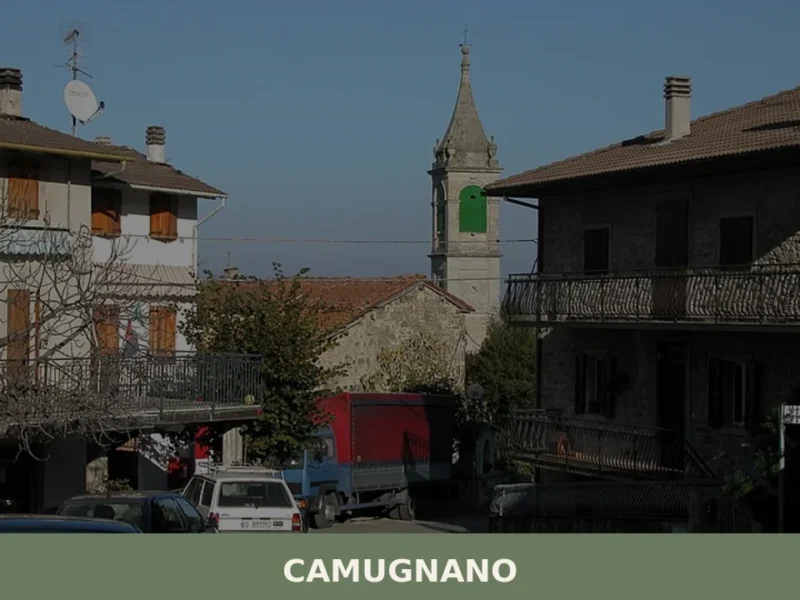
Camugnano
In 1911, when the construction of the Suviana Dam transformed the course of the Limentra torrent, Camugnano changed its appearance forever. The water submerged farmland and footpaths, creating an artificial reservoir that now defines the landscape of the upper Bolognese Apennines at an altitude of 692 metres. This municipality of 1,948 inhabitants, spread across scattered […]




📝 Incorrect information or updates?
Help us keep the Castel Guelfo di Bologna page accurate and up to date.