


Villanova sull’Arda
 Plains
In 1813, in the hamlet of Sant’Agata, Giuseppe Verdi was born — the composer who would rewrite the history of European melodrama. Villanova sull’Arda, home to 1,894 inhabitants in the Bassa Piacentina lowlands, still bears the marks of that bond: the villa where Verdi lived for over half a century with soprano Giuseppina Strepponi stands […]
Discover Villanova sull’Arda
In 1813, in the hamlet of Sant’Agata, Giuseppe Verdi was born — the composer who would rewrite the history of European melodrama. Villanova sull’Arda, home to 1,894 inhabitants in the Bassa Piacentina lowlands, still bears the marks of that bond: the villa where Verdi lived for over half a century with soprano Giuseppina Strepponi stands just a short walk from the parish church. Asking what to see in Villanova sull’Arda means following the traces of a musical biography that spanned two centuries, along roads running parallel to the Po between rows of poplars and tomato fields.
History and origins of Villanova sull’Arda
The place name first appears in medieval documents connected to the monastery of Nonantola, which held lands in the Arda area — the Apennine torrent that flows into the Po just east of the town. The specification “sull’Arda” distinguishes this settlement from the many other Villanovas across the peninsula, and indicates a community founded as a “villa nova,” a newly established village in contrast to the older centres of the Piacenza plain. The territory passed under the control of the Pallavicino family, then to the Farnese with the Duchy of Parma and Piacenza from 1545.
The event that defined the identity of this place began in 1848, when Giuseppe Verdi purchased the Sant’Agata estate, in the hamlet of the same name within the municipality. Here the composer lived permanently from 1851 until his death in Milan in 1901. Villa Verdi became the operational centre of his creative work: among other operas, he composed Rigoletto, Il trovatore, La traviata, Aida and Otello there. Verdi was also an active farmer: he managed the farms directly, introducing experimental crops and irrigation systems that influenced the local economy.
The municipality remained small in the following centuries. The economy stayed agricultural, tied to the cultivation of wheat, processing tomatoes and cattle farming. The population, which exceeded 3,000 in the 1950s, has undergone a steady decline due to emigration towards the urban centres of Piacenza and Parma.
What to see in Villanova sull’Arda: 5 top attractions
1. Villa Verdi at Sant’Agata
The residence that the composer purchased in 1848 and gradually expanded into a manor house with an English-style park, stables and a private chapel. The interiors preserve the writing desk where Verdi composed, his personal library of over two thousand volumes, and the original furnishings chosen by Giuseppina Strepponi. The garden, designed by Verdi himself, includes tree species that the maestro had brought from across Europe. Visits follow a guided route managed by the Carrara Verdi heirs.
2. Parish Church of Saints Martino and Leonardo
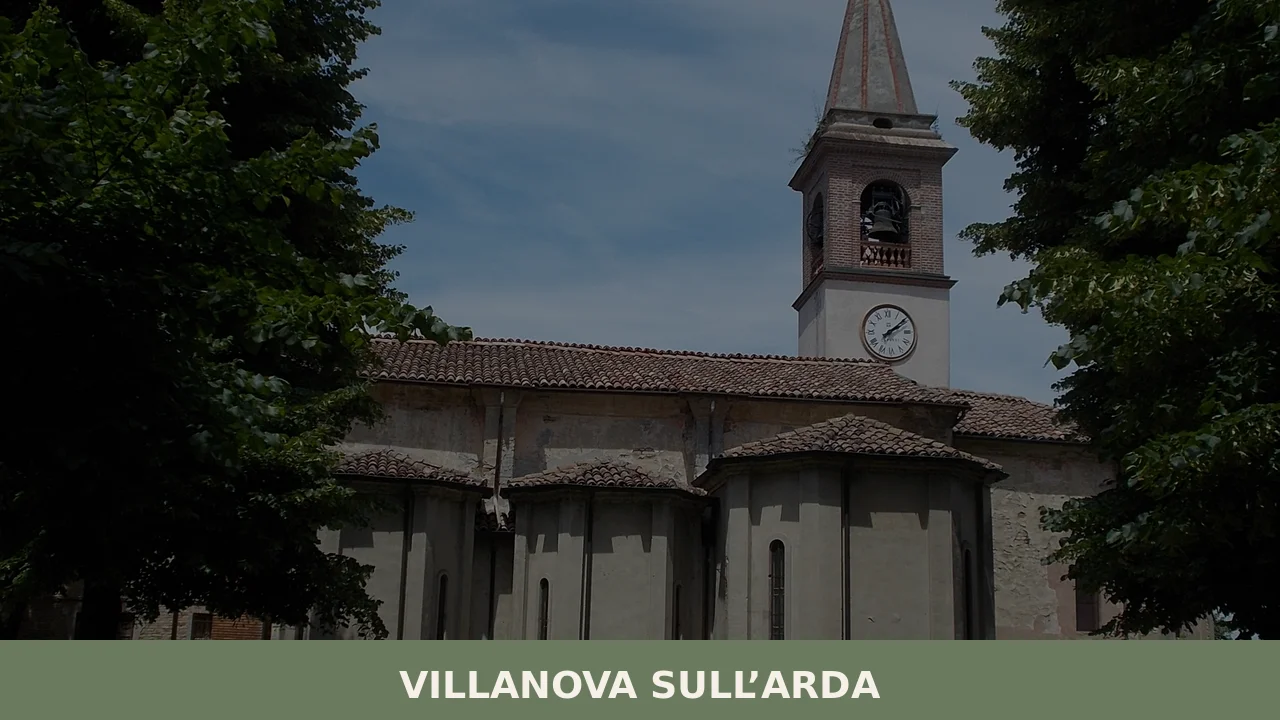
The main religious building of the village dates in its current form to the 18th century, with a brick façade and bell tower visible from the provincial road. Inside, it houses 18th-century paintings from the Emilian school and an organ that documents the musical tradition of the Piacenza area. Verdi was baptised in the church at Roncole, but he regularly attended this parish during the decades he spent at Sant’Agata.
3. Oratory of Sant’Agata
A small church in the hamlet where Villa Verdi stands, it is a rectangular-plan brick building with Baroque decorative elements. The structure served the rural community of the hamlet and maintained a direct connection with the Verdi family. The single-nave interior preserves stuccoes and a polychrome marble altar. Its compact dimensions allow visitors to observe the details of the decorative scheme at close range.
4. Po river embankments and river landscape
The embankment road running along the Po offers a perspective on the morphology of the Bassa: cultivated floodplains, lanche — the river’s oxbow lakes — and industrial poplar groves planted in regular rows. In spring and autumn the embankment can be cycled along stretches of the VenTo cycle route, the cycling connection project between Venice and Turin that passes through this very area. The fauna includes grey herons, cormorants and, in the wetland areas, the kingfisher.
5. Historic centre and church square
The built-up core retains the structure of a lowland hamlet: brick courtyard houses, low arcades and a system of irrigation channels that once fed the vegetable gardens. The main square, overlooked by the church and the municipal building, maintains modest proportions, with a portico that functioned as a covered market. Some civic buildings still display terracotta decorations typical of 19th-century rural architecture from the Parma-Piacenza area.
Traditional cuisine and local produce
The table at Villanova sull’Arda follows the repertoire of the Bassa Piacentina, with influences from Parma. The signature dishes are anolini in brodo — pasta stuffed with braised beef, Parmigiano and breadcrumbs, served in capon broth — and the bomba di riso, a rice timbale filled with pigeon, which Verdi himself enjoyed and which appears in accounts of meals at Villa Sant’Agata. Pisarëi e fasö, small bread-and-flour dumplings dressed with beans and rendered lard, is a first course common to the trattorias of the area. Among the cured meats, coppa piacentina DOP and salame piacentino DOP can be found in the shops of the centre.
The territory produces Gutturnio DOC, a red wine from Barbera and Bonarda grapes that accompanies meat dishes and cured meats. Fortanina, a lightly sparkling local Lambrusco, is harder to find outside the area. The processing tomatoes, grown in the fields between Villanova and the Po, feed a canning supply chain with roots in the first half of the 20th century. The local trattorias — concentrated along the provincial road and in the hamlet of Sant’Agata — serve menus tied to the agricultural calendar, with pumpkin in autumn and asparagus in spring.
When to visit Villanova sull’Arda: the best time
The Piacenza plain has cold and foggy winters, with temperatures regularly dropping below zero between December and February. Summers are hot and humid, with highs exceeding 35°C in July and August. The most suitable months for a visit are April–May and September–October, when temperatures are moderate and the countryside displays the colours of its crops — the green of fields in spring, the yellow of harvests in autumn. In October, the Verdi Festival organised by the Teatro Regio di Parma often extends its events to the Verdian venues across the territory, including Villa Sant’Agata.
The commemoration of Verdi’s birth on 10 October is an occasion when the village comes alive with musical events and special openings. It is advisable to check Villa Verdi’s opening hours before visiting, as the residence is privately owned and follows its own schedule, with closures during the winter months.
How to reach Villanova sull’Arda
Villanova sull’Arda is located on provincial road 10, approximately 30 kilometres south-east of Piacenza and 35 kilometres north-west of Parma. The nearest motorway exit is Fiorenzuola d’Arda on the A1 Milan–Bologna, from which you continue for about 15 kilometres northward towards the Po. The nearest railway station is Fiorenzuola d’Arda, on the Milan–Bologna line, from which you need to continue by car or local bus. The closest airport is Giuseppe Verdi in Parma (45 km), with limited domestic flights. The international airports of Milan Linate (120 km) and Bologna Marconi (140 km) offer more connections. The terrain is flat and well suited to cycling, with low-traffic secondary roads running between the fields.
Other villages to discover in Emilia-Romagna
From the Po plain, the Piacenza territory rises rapidly towards the Apennines. To the south-west, Morfasso occupies a stretch of Apennine ridge at over 700 metres above sea level, in a geological landscape marked by the ophiolite outcrops of Monte Moria. The contrast with the lowlands of Villanova is stark: on one side the cultivated expanses and the Po floodplains, on the other the highland pastures and beech forests. The road link between the two villages crosses the entire province from north to south in just over an hour.
Closer by, along the same stretch of plain, San Pietro in Cerro preserves a 15th-century castle that today houses the MIM — Museum in Motion, a collection of contemporary art within Renaissance walls. The distance from Villanova sull’Arda is about 20 kilometres, a route that crosses the countryside between the Arda and the Ongina and allows visitors to combine the Verdi itinerary with a tour of the fortified architecture of the Bassa Piacentina.
Nearby Villages near Villanova sull’Arda
In Emilia-Romagna More villages to discover

Tizzano Val Parma
 Mountain
2,198 residents and over a thousand years of documented history: Tizzano Val Parma draws visitors with its Romanesque pieve, medieval ruins and ski slopes on Monte Caio.
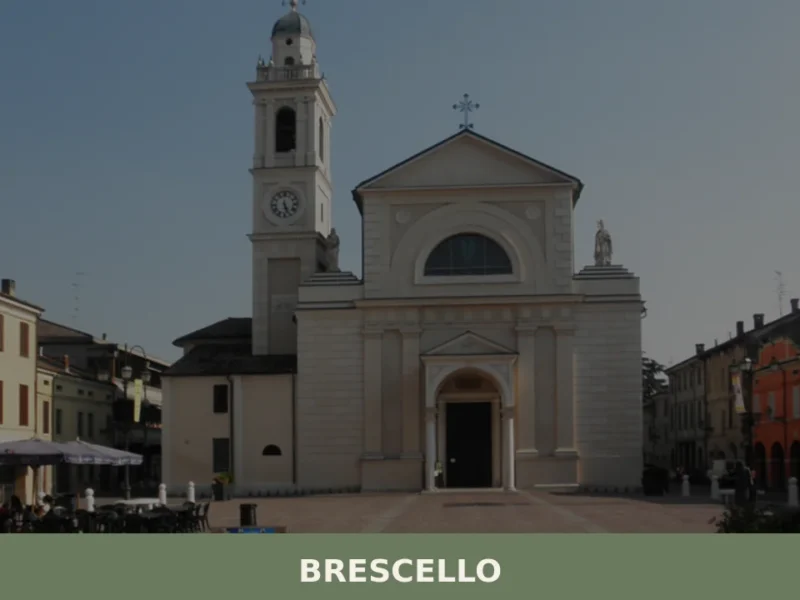
Brescello
Plains
What to see in Brescello, Emilia-Romagna, Italy: explore the Don Camillo Museum, Roman ruins and local Po Valley cuisine. 5,554 inhabitants. Discover it now.
Bibbiano
Plains
What to see in Bibbiano, Emilia-Romagna, Italy: explore the birthplace of Parmigiano Reggiano, 14 km from Reggio Emilia. Discover history, food and how to get there.

Sorbolo
Plains
Sorbolo offers 3,000 years of history from Bronze Age terramare to Farnese noble palaces. Visit for Roman centuriation, a Serassi organ and authentic Po Valley cuisine.
Fontanelice
Plains
The provincial road climbing the Santerno valley passes through Imola and, after a few kilometres, reaches a compact settlement along the right bank of the river: this is Fontanelice, a municipality of 1,951 inhabitants at 165 metres above sea level, in the province of Bologna. The very name of the village refers to water — […]
Bagno di Romagna
 Hills
Hills
what to see in bagno di romagna, Italy: Discover its 47°C hot springs and historic Basilicas. Explore Emilia-Romagna's natural wonders.
Corte Brugnatella
Hills
Corte Brugnatella scatters its stone hamlets above the Trebbia River in the Piacenza Apennines. A guide to its medieval settlements, river gorge, and mountain food.
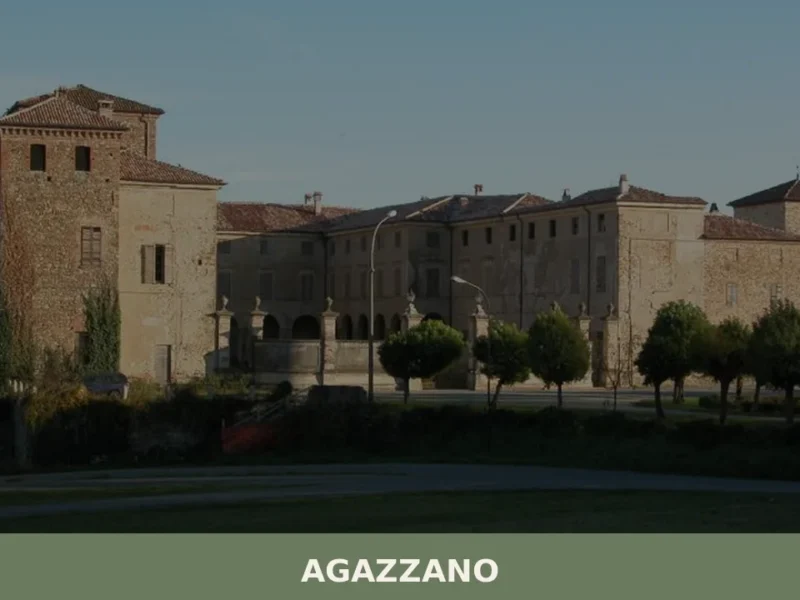
Agazzano
Plains
What to see in Agazzano, a village at 187 m in Piacenza province with 2,054 residents. Explore the medieval castle, Santa Maria Assunta church and Val Luretta. Plan your visit.
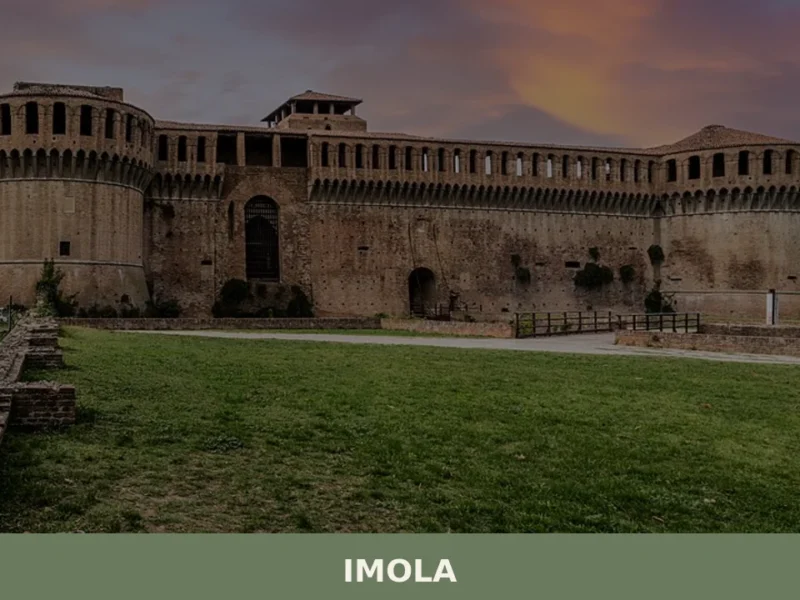
Imola
Plains
In 1953, on the track of the Autodromo Enzo e Dino Ferrari, Formula One cars raced in the Italian Grand Prix, placing Imola firmly in international motorsport history. But this city of 69,121 inhabitants, spread out at 47 metres above sea level along the banks of the River Santerno, had already existed for two thousand […]
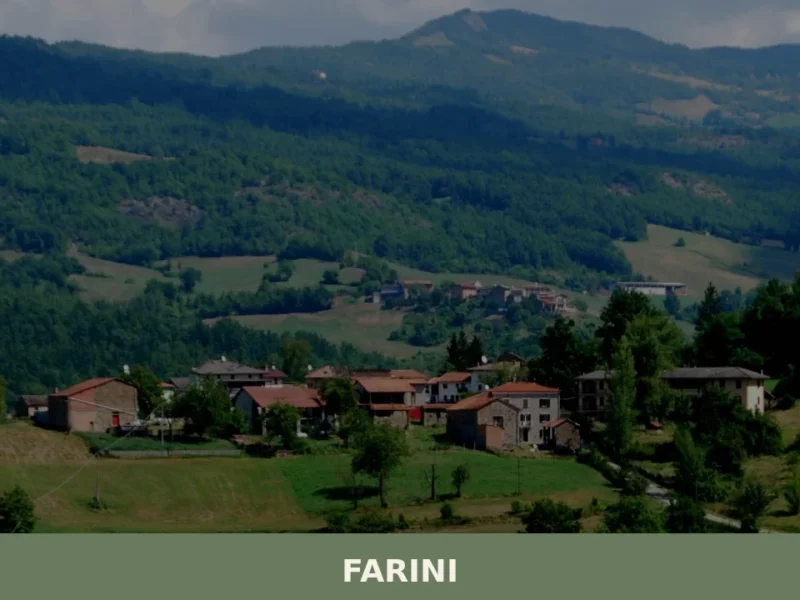
Farini
Hills
What to see in Farini, a village at 424 m in Val Nure with 1,043 residents: San Giuseppe Church, Apennine trails, PDO cured meats. Plan your visit and how to get there.



🏡 Know Villanova sull’Arda better than we do?
If you’re a local or have been there, your knowledge matters: add what’s missing or fix a detail on this page.