


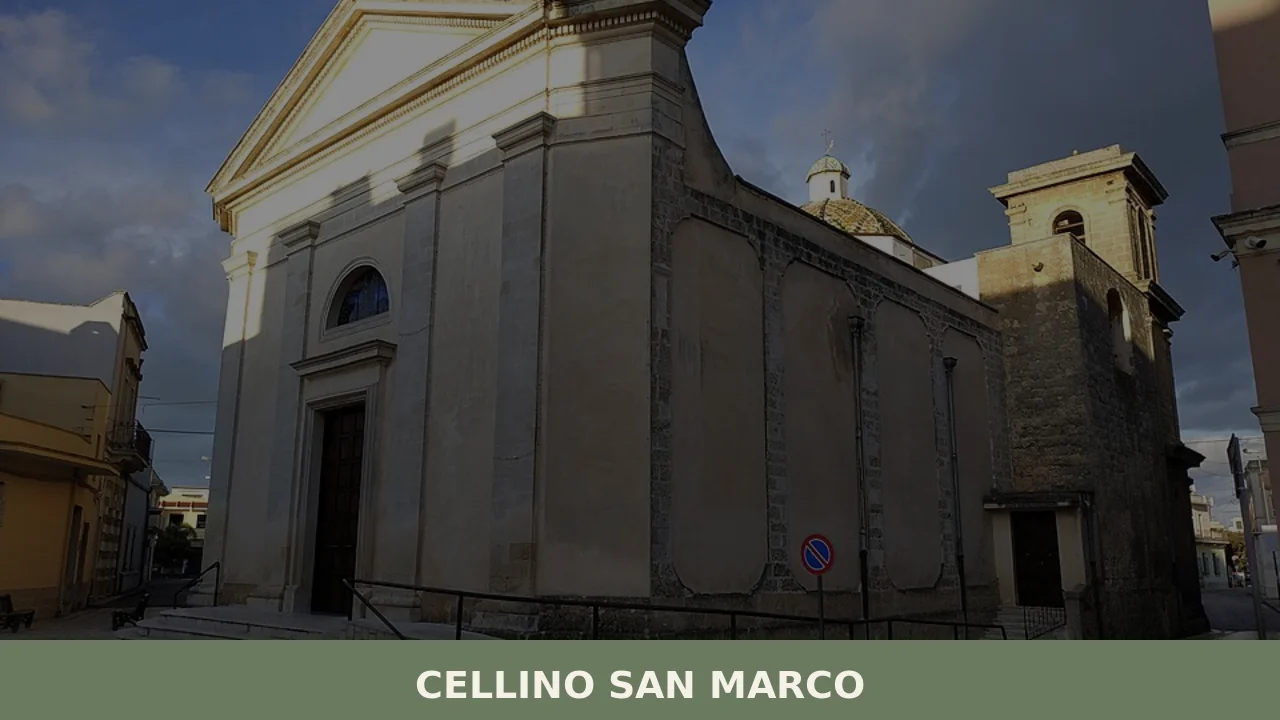
Cellino San Marco
Scopri Cosa vedere a Cellino San Marco: un borgo agricolo ricco di storia e tradizioni in Puglia. Pianifica la tua visita e assapora l’autenticità del Salento.
Discover Cellino San Marco
Cellino San Marco, a municipality in the province of Brindisi, currently has 6,088 inhabitants and is located 58 meters above sea level, in a plain whose economy is traditionally linked to the cultivation of olive trees and vineyards. Its name, attested in historical documents, is believed to derive from the presence of ancient “celle” (cells), rural structures used as cellars or granaries, or perhaps from the Roman gens “Caelius”. The addition “San Marco” (Saint Mark) is a direct reference to the patron saint, whose devotion is celebrated on April 25th and November 25th. For those wondering about what to see in cellino san marco, the village offers a perspective on agricultural life and traces of a past connected to the land and its dominations.
History and Origins of Cellino San Marco
The territory of Cellino San Marco shows evidence of human presence since the Bronze Age, as attested by archaeological finds scattered in the surrounding countryside. In Roman times, the area was likely part of a large agricultural estate. The first stable settlement, from which the name “Cellino” originated, developed during the medieval period, perhaps around a small rural community or a monastic settlement.
The feudal territory of Cellino San Marco passed under various dominations over the centuries, reflecting the historical events of Puglia. From the Norman and Swabian dominations, which left an imprint on territorial organization, it transitioned to the Angevin and Aragonese periods. In the 15th century, control of the village was acquired by the Sambiase family, then passed to the Filomarino and in more recent times to the Lopez y Royo, who marked its development with the construction of significant buildings. The name “San Marco” consolidated over time, becoming inseparably linked to the cult of the patron evangelist.
For more information on the history of the municipality, you can consult the Wikipedia page dedicated to Cellino San Marco.
What to see in cellino san marco: 5 must-see attractions
For those visiting the Brindisi plain and wondering what to see in cellino san marco, the village offers an itinerary that includes points of historical-architectural interest and aspects related to its agricultural vocation.
Mother Church of San Marco Evangelista
The Mother Church, dedicated to Saint Mark the Evangelist, is the village’s main place of worship. Its structure, the result of successive alterations and expansions over time, features architectural elements that show the different construction periods. Inside, sacred works and furnishings are preserved, which tell of the local community’s devotion to its patron saint.
Baronial Castle (or Monfredo)
The Baronial Castle, also known as Monfredo Castle, is a building that evokes Cellino San Marco’s feudal past. Despite undergoing transformations over the centuries, it maintains an imposing structure that reveals its original defensive and noble residential function. Its walls and architectural details tell stories of noble families who lived in and governed the village.
Palace of the Princes (or Lopez y Royo)
The Palace of the Princes, or Lopez y Royo Palace, represents an example of noble civil architecture. Built in a later period than the castle, it reflects an era when residential and representational functions prevailed over purely defensive ones. Its facades and interiors preserve traces of the style and taste of the families who resided there, helping to define the image of the historic center.
Convent and Church of San Marco
The complex of the Convent and Church of San Marco, distinct from the Mother Church, demonstrates the presence and influence of religious orders in the territory. These places of worship and monastic life played a role in the spiritual and cultural life of the village, offering an additional viewpoint on local history and traditions. Their architecture, often more restrained, reflects the spirituality of the friars.
Historic Masserie and the Agricultural Landscape
The territory of Cellino San Marco is dotted with historic masserie, ancient fortified farmhouses that represent a distinctive element of the Apulian landscape. These structures, often surrounded by extensive ancient olive groves and vineyards, are evidence of a consolidated rural economy and offer an insight into peasant life and agricultural production that has shaped the identity of the place. Walking through these fields allows one to understand the deep connection between the village and its land.
Typical Cuisine and Local Products
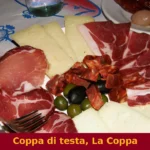
The cuisine of Cellino San Marco is an expression of the peasant and maritime tradition of the Brindisi Salento, based on simple and seasonal ingredients. Among the most representative dishes are the orecchiette with turnip tops, a classic of Apulian gastronomy, and fava bean purée with chicory, a combination that enhances the flavors of the land. Also available are friselle, toasted bread rings to be seasoned with tomato, oil, and oregano, and taralli, crumbly savory rings ideal as a snack.
Local products are the core of Cellino’s table. Extra virgin olive oil, obtained from the ancient olive groves surrounding the village, is a fundamental element of the Mediterranean diet. Viticulture is another excellence of the territory, with the production of wines such as Primitivo, robust and aromatic, and Negroamaro, the base for many Salento reds. These wines, along with other products such as fresh and aged cheeses and seasonal vegetables, form the basis for a cuisine that celebrates the richness of the Apulian soil. Summer festivals often provide the opportunity to taste these specialties.
When to Visit Cellino San Marco: The Best Time
The best time to visit Cellino San Marco is spring (April-May) or early autumn (September-October). During these months, temperatures are mild and the climate is ideal for exploring the village and the surrounding countryside without the intense heat of the summer months. Spring offers the awakening of nature, with fields in bloom, while autumn is the period for grape harvesting and olive picking, a time of great agricultural activity and tasting opportunities.
The patron saint festivals, dedicated to Saint Mark the Evangelist, are held on April 25th and November 25th. These anniversaries represent significant moments for the community, with religious celebrations and events that bring the village to life, offering an immersion into local traditions. Summer, although hot, can be chosen by those wishing to combine a visit to the village with days at the beach, given its relative proximity to the Adriatic coast.
How to Get to Cellino San Marco
Cellino San Marco is well-connected and easily accessible:
- By car: From the north, take the A14 motorway (Bologna-Taranto) to its end, then continue on the SS7 E90 towards Brindisi, taking the exit for Cellino San Marco. From the south, from the SS101 or SS613, follow signs for Brindisi and then for Cellino San Marco.
- By train: The nearest railway station is Brindisi, well-connected to major Italian cities. From Brindisi, it is possible to reach Cellino San Marco by local bus or taxi.
- By plane: The nearest airport is Salento Airport (Brindisi-Papola Casale), approximately 20 km away. From there, you can take a taxi or rent a car to reach the village. Bari-Palese Airport is a more distant alternative, approximately 140 km away.
Cellino San Marco is approximately 20 km from Brindisi, 45 km from Lecce, and 60 km from Taranto.
Other Villages to Discover in Puglia
Puglia is a territory rich in villages that preserve unique histories and traditions, offering glimpses into a rural and genuine Italy. For those wishing to continue their exploration after Cellino San Marco, the region presents several options worth visiting.
In the same region, but with different geographical and historical characteristics, one can discover villages like Anzano di Puglia, which is located in the Dauni Mountains, or Celle di San Vito, an interesting place where Franco-Provençal is still spoken. These examples show the landscape and cultural diversity that Puglia can offer, from the Brindisi plain to the Foggia highlands.
{ “seo_title”: “What to see in Cellino San Marco: agricultural village and history”, “seo_description”: “Discover what to see in Cellino San Marco, including historic churches, baronial castles, and the rich agricultural landscape of Salento. A journey into Apulian traditions.”, “focus_keyword”: “what to see in cellino san marco”, “excerpt”: “Cellino San Marco, in the province of Brindisi, is a village of 6,088 inhabitants, known for its olive groves and vineyards. Discover its history, main monuments, and culinary specialties.”, “prodotti_citati”: [“Extra virgin
In Apulia More villages to discover
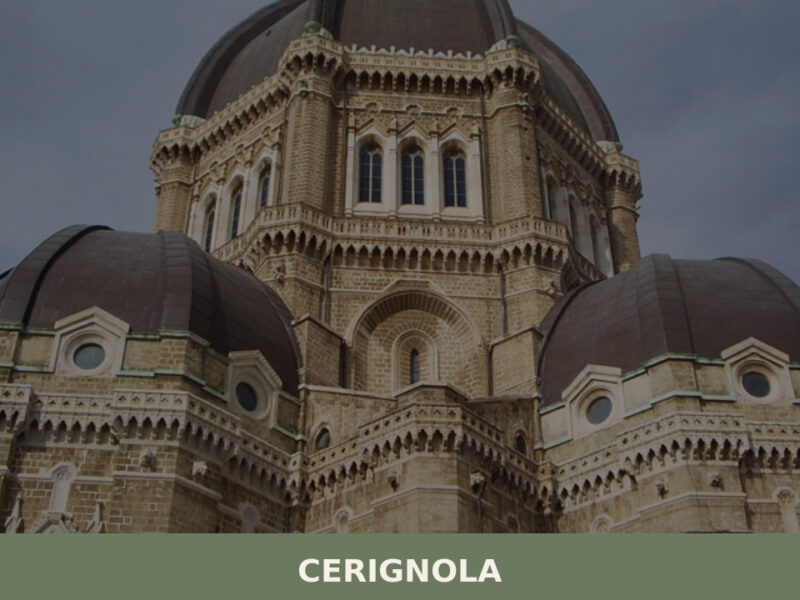
Cerignola
A complete guide to Cerignola in Puglia's Tavoliere plain — its medieval quarter, cathedral, Teutonic tower, renowned olives, and the deep agricultural heritage of the province of Foggia.
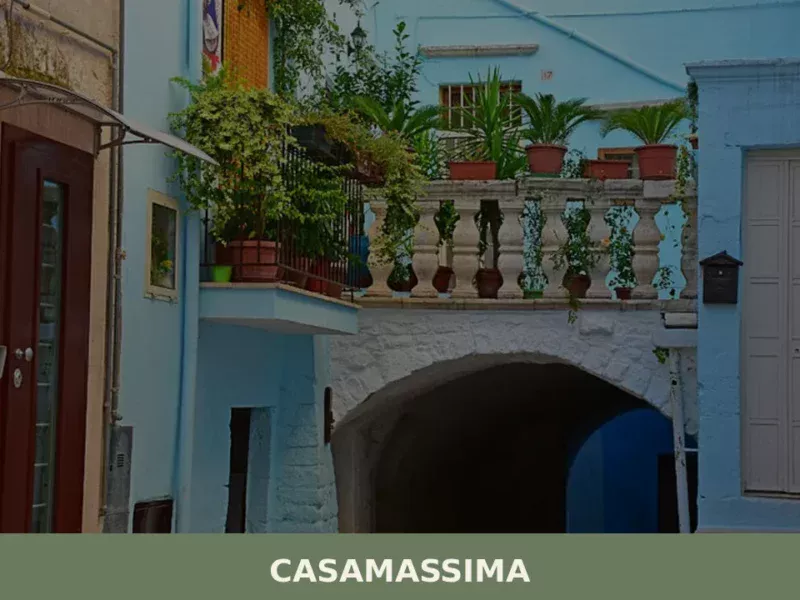
Casamassima
The façades painted with blue limewash in the historic centre earned Casamassima the nickname “Blue Village” — a unique case among Apulian villages and one of very few in Europe. This tradition, documented from the 19th century onward and linked according to local belief to a vow made to the Virgin Mary during a plague […]
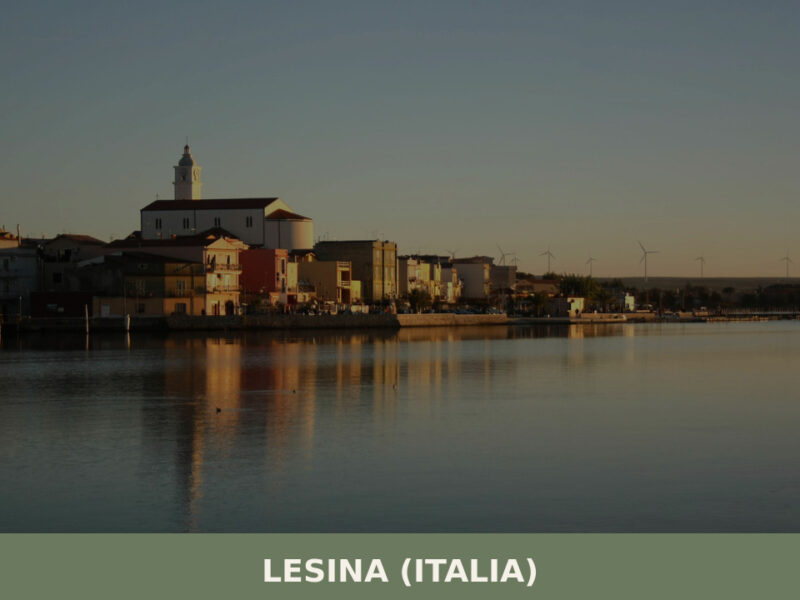
Lesina (Italia)
Lesina sits between Italy's second-largest coastal lagoon and the Adriatic Sea. A guide to its lagoon ecology, eel fishing traditions, and quiet historic centre.





📝 Incorrect information or updates?
Help us keep the Cellino San Marco page accurate and up to date.