


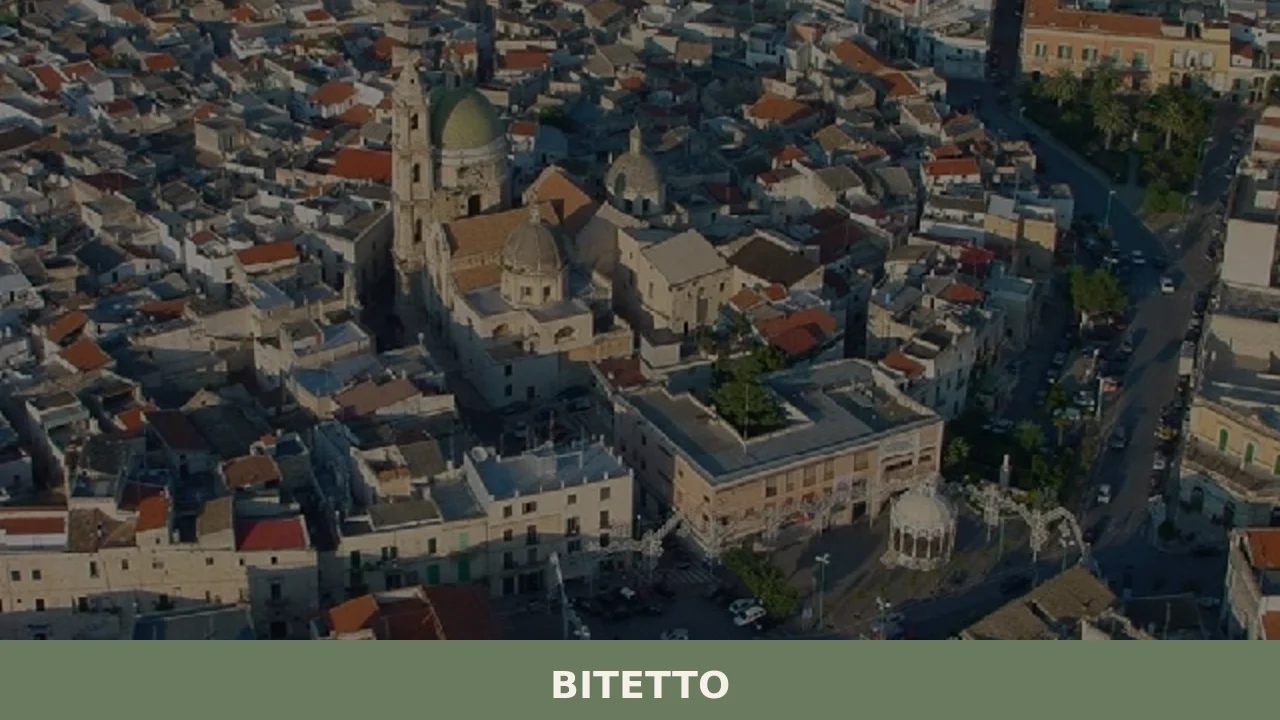
Bitetto
 Plains
What to see in Bitetto, Italy: Discover its 14th-century cathedral and the legacy of Blessed James. Explore this Puglian village, 139 m above sea level, for a rich historical journey.
Discover Bitetto
The year 1335 marked the completion of Bitetto’s cathedral, a significant example of Apulian Romanesque architecture that continues to define the village’s skyline. For those planning what to see in Bitetto, this historic structure, situated at an altitude of 139 m (456 ft) above sea level, dominates the landscape of the Metropolitan City of Bari, Puglia, Italy.
Its sober façade, punctuated by false columns and a grand rose window, hints at the artistic and religious devotion that shaped this part of Puglia centuries ago.
For those wondering what to see in Bitetto, this village with 11,767 inhabitants provides a rich experience centered on its historical and religious landmarks. Visitors can explore the impressive 14th-century cathedral dedicated to Saint Michael and learn about historical figures such as Blessed James of Sclavonia. The Bitetto highlights include the intricate sculptures of the cathedral’s central portal and the enduring legacy of its ancient diocese.
History of Bitetto
The origins of Bitetto, known historically by its Latin names of Vitetum, Bisctictum, or Bitectum, are closely tied to the establishment of its ecclesiastical structures. Historical records indicate that a diocese was founded in this location sometime between 1025 and 1089. Pope John XIX’s bull of 1025 made no mention of Bitetto among Bari’s suffragan sees, yet Pope Urban II’s bull Quia nostris temporibus in 1089 explicitly listed it among them, marking a definitive point in its early historical recognition and influence within the region.
This period of ecclesiastical development saw the rise of significant figures and architectural achievements within the community.
Bishop Raus, the first known bishop of Bitetto, played a role in the Third Lateran Council in 1179, underscoring the diocese’s early importance and its integration into wider Christian affairs. For instance, other Puglian towns like San Marco in Lamis also boast long ecclesiastical histories, reflecting the region’s deep religious roots. A pivotal moment in the village’s architectural history occurred in 1335 with the construction of the Cathedral of Saint Michael, which remains its primary landmark and a testament to Apulian Romanesque design, reflecting the era’s artistic prowess.
The diocese of Bitetto continued its function for centuries, with its last bishop serving until January 1, 1798. In 1818, the see was formally incorporated into the archdiocese of Bari, transitioning from a residential bishopric to a titular see, a status it retains today. Beyond its ecclesiastical history, Bitetto is associated with notable individuals such as Blessed James of Sclavonia, a Franciscan born around 1400 in Zadar, Croatia, who passed away in Bitetto in 1496.
The village also maintains international connections through its twin towns, Prienai in Lithuania and Józefów in Poland, fostering cultural ties beyond its regional boundaries.
What to see in Bitetto, Puglia: top attractions
Cathedral of Saint Michael (Overview)
The Cathedral of Saint Michael stands as Bitetto’s foremost architectural treasure, a prime example of Apulian Romanesque style completed in 1335. This historical edifice, dedicated to the archangel Michael, showcases a distinctive blend of local tradition and broader Romanesque influences. Its robust construction and detailed ornamentation reflect the artistic currents prevalent in Puglia during the 14th century, offering visitors a clear insight into the region’s medieval heritage and craftsmanship.
The Cathedral’s Façade and Rose Window
Visitors approaching the Cathedral of Saint Michael are greeted by its sober façade, characterized by a series of false columns that provide structural rhythm without overtly ornate embellishment. At the center of this composition is a large rose window, a common feature in Romanesque cathedrals that allows natural light to filter into the nave. The overall design of the façade emphasizes balance and proportion, a hallmark of the Apulian Romanesque style, inviting contemplation of its ancient construction dating back to 1335.
The Sculpted Central Portal
The central portal of the Cathedral of Saint Michael is a focal point of intricate sculptural detail, offering a rich narrative in stone.
Two stone lions serve as powerful guardians, supporting columns topped with carved capitals that display elaborate vegetable motifs. Above these, a lunette features bas-reliefs depicting Christ alongside the twelve apostles, while the surrounding frame illustrates various scenes from the New Testament. This portal, a masterpiece of 14th-century carving, provides a profound visual commentary on biblical stories for all who enter.
The Restored Romanesque Interior
Inside the Cathedral of Saint Michael, the original Romanesque layout of a nave and two aisles is evident, leading towards a transept that culminates in three apses. While the interior underwent an 18th-century plastering that obscured much of its earlier character, a comprehensive restoration in 1959 successfully returned the space to its original Romanesque style. This meticulous work allows contemporary visitors to appreciate the architectural purity and spatial grandeur that has defined the cathedral since its 1335 completion, showcasing its enduring design.
The Historical Significance of the Bitetto Diocese
The ecclesiastical history of Bitetto is integral to understanding its past, as the village once hosted a significant diocese.
This diocese was founded between 1025, when it was not yet mentioned, and 1089, when Pope Urban II formally listed it among the suffragan sees of Bari. Bishop Raus, a notable figure from Bitetto, participated in the Third Lateran Council in 1179, highlighting the see’s early prominence. Although its last bishop served until 1798 and the diocese was incorporated into Bari in 1818, its legacy as a titular see continues to mark Bitetto’s historical importance within the Catholic Church.
Local food and typical products of Bitetto
Bitetto, situated in the fertile Apulian plain (Pianura), benefits from the region’s agricultural abundance. While specific local dishes are not detailed in historical records for Bitetto itself, the broader Puglian culinary tradition is deeply rooted in ingredients cultivated from such plains. This typically includes high-quality olive oil, durum wheat for traditional pasta, and a variety of fresh vegetables, forming the basis of a diet that emphasizes seasonal and local produce, reflecting the agricultural identity of the area.
The absence of specific historical mentions for unique Bitetto dishes means that visitors can expect to find the wider array of Puglian specialties throughout the area.
These often feature simple, robust flavors derived from ingredients like tomatoes, artichokes, fava beans, and various legumes. Traditional preparations frequently involve baking or grilling, highlighting the natural quality of the raw materials. This focus on fresh, seasonal produce is a defining characteristic of gastronomy across Puglia, reflecting its deep agricultural roots.
Festivals, events and traditions of Bitetto
Beyond the physical landmarks, what to see in Bitetto also includes its active calendar of festivals, central among them being the feast day of its patron saint, Blessed James of Sclavonia. Celebrated on April 27th, this commemoration typically involves religious services and community gatherings that reflect centuries-old traditions of devotion. The event provides an opportunity for residents and visitors alike to participate in local customs, acknowledging the legacy of the Franciscan who passed away in Bitetto in 1496.
Beyond the primary patron, the village also observes other significant religious festivals that punctuate its yearly calendar.
The feast of San Michele (Saint Michael) is celebrated on September 29th, honoring the patron of the cathedral with solemn rites. Additionally, the first Sunday of September is dedicated to the Addolorata (Our Lady of Sorrows), a tradition that brings the community together for processions and prayer. These events collectively offer a glimpse into the enduring cultural and spiritual fabric of Bitetto.
When to visit Bitetto, Italy and how to get there
Planning your trip to discover what to see in Bitetto is crucial for a rewarding experience. The best time to visit Puglia, including Bitetto, is during the spring months of April and May or in the autumn during September and October. These periods offer pleasant temperatures, ideal for exploring the village and its surroundings without the intense heat of summer or the cooler, sometimes rainy, conditions of winter.
Visiting during these shoulder seasons also means fewer crowds, allowing for a more relaxed experience of Bitetto’s historical sites and local life. Travelers seeking a broader exploration of the region might also consider destinations such as Mattinata, known for its coastal landscapes, to complement their visit to the plains of Bitetto.
Bitetto is readily accessible for those planning a day trip from the nearest major city, Bari. The village is approximately 17 km (10.6 mi) southwest of Bari, making it a convenient destination. If you arrive by car, Bitetto can be reached via the A14 motorway (Autostrada Adriatica), with convenient exits at “Bari Nord” or “Bari Sud,” from which local roads lead directly to the village. For those using public transport, the Bitetto-Palo del Colle train station, served by the Ferrovie del Sud Est network, connects to Bari Centrale, offering a practical option for travelers.
The nearest major airport is Bari Karol Wojtyła Airport (BRI), located approximately 20 km (12.4 mi) northeast of Bitetto.
From the airport, visitors can rent a car or take a taxi to reach the village. For international visitors, it is worth noting that while major cities in Italy are increasingly English-friendly, in smaller villages like Bitetto, English may be limited in shops and local establishments, so carrying some Euros cash can be a useful practice. For official information about the municipality, you can visit the Comune di Bitetto website.
Visitors exploring Bitetto and its Romanesque heritage might consider extending their trip to Bisceglie, another Puglian town with notable Romanesque architecture, located along the Adriatic coast. Both villages offer distinct historical insights into the region’s rich past and share a common thread of ancient building traditions, providing a comprehensive understanding of Puglia’s diverse cultural landscape.
Frequently asked questions about Bitetto
What is the best time to visit Bitetto?
The ideal period to visit Bitetto runs from spring through autumn. April is particularly special: on April 27, the village celebrates its patron Blessed Giacomo Illirico with processions and devotional events drawing pilgrims from across the region. September offers two further celebrations: the feast of Our Lady of Sorrows on the first Sunday, and Saint Michael on September 29. Autumn also coincides with olive harvesting in the surrounding countryside. Spring brings mild temperatures and blooming landscapes perfect for exploring the historic center and surroundings.
What are the historical origins of Bitetto?
Bitetto's roots stretch back to the Neolithic period, followed by Peucetian settlement. Roman presence is linked to the Via Traiana and a possible settlement called Bitettum. In the Middle Ages, the village developed under Byzantine influence before passing to Norman control in the 11th century. It later belonged to the Kingdom of Sicily under Frederick II and then the Kingdom of Naples under Angevin and Aragonese rule. The 15th-century Franciscan friar Blessed Giacomo Illirico became the defining figure of Bitetto's spiritual and cultural identity, turning it into a pilgrimage destination.
What to see in Bitetto? Main monuments and landmarks
Bitetto's must-see attractions include: the Pontifical Minor Basilica of San Giacomo Illirico, housing the patron's relics and Romanesque-style frescoes; the Church of San Michele Arcangelo, one of the oldest in town with possible Byzantine origins; Marquis Volpicella Palace, the imposing noble residence that shaped the village's history; Porta Baresana, the ancient fortified gate marking the entrance to the historic center; and the old village itself, with narrow stone-paved streets and traditional Apulian architecture worth exploring on foot.
Are there museums, churches or historic buildings to visit in Bitetto?
Yes. The Pontifical Minor Basilica of San Giacomo Illirico is the main religious landmark, preserving the relics of the blessed patron and notable frescoes — it holds pontifical status, underscoring its religious significance. The Church of San Michele Arcangelo, with roots possibly dating to the Byzantine era, is another historic place of worship in the town center. Marquis Volpicella Palace represents the civil and noble architectural heritage. For visiting hours and accessibility, it is advisable to contact the Municipality of Bitetto directly or check the local pro loco.
Where to take the best photos in Bitetto?
The most photogenic spots in Bitetto are concentrated in the historic center. Porta Baresana, the ancient fortified gateway, offers a striking architectural frame leading into the old village. The façade of the Basilica of San Giacomo Illirico — with its Apulian Romanesque rose window and sculpted portal — is a classic subject. The narrow stone lanes of the old village, with their traditional Apulian stonework and internal courtyards, provide authentic street photography opportunities, especially in the soft light of early morning or late afternoon.
What can you do in Bitetto? Activities and experiences
Visitors to Bitetto can explore the historic center on foot, discovering Romanesque religious architecture and centuries-old noble palaces. The patron saint festivities on April 27 (Blessed Giacomo), September 29 (Saint Michael) and the first Sunday of September (Our Lady of Sorrows) offer immersive experiences into local traditions and community life. Food and wine enthusiasts can seek out local almonds, taralli, orecchiette with turnip greens, and local extra virgin olive oil. The surrounding plain countryside is also suitable for relaxed cycling or drives through the Apulian agricultural landscape.
Who is Bitetto suitable for?
Bitetto suits travelers who appreciate authentic, off-the-beaten-path southern Italian villages without large tourist crowds. History and religious heritage enthusiasts will find particular value in the Basilica of San Giacomo Illirico and the medieval urban fabric. Couples and slow travelers will enjoy the quiet stone streets and local food scene. Families can experience lively patron saint festivals in April and September. Those exploring the wider Bari province will find Bitetto an easy and rewarding half-day stop, conveniently located around 15 kilometers from the regional capital.
What to eat in Bitetto? Local products and specialties
Bitetto's table reflects classic Apulian cuisine. Signature dishes include orecchiette with turnip greens, fava bean and chicory purée, and rice with potatoes and mussels. Extra virgin olive oil from the Coratina cultivar — a staple of the Bari province — is used in virtually every preparation. A local specialty is the Bitetto Almond, prized for its flavor and used in sweets and as a snack. Taralli flavored with wild fennel or chili pepper, fresh local cheeses, and handmade durum wheat pasta complete the gastronomic experience of the village.
Nearby Villages near Bitetto
In Apulia More villages to discover

Cagnano Varano
 Sea
Sea
6,579 residents live between a brackish lagoon and the Gargano hills. Stone lanes, patron saints Michele and Cataldo, and a shoreline unlike anywhere else in Foggia province.
Monopoli
Sea
From the promontory where the Castle of Charles V stands, the view sweeps across the Adriatic, a horizon of waters that have shaped Monopoli’s identity for centuries. This port city, whose name evokes the idea of a “unique city,” reveals itself through its architecture, which tells of historical layers, from Messapian walls to Spanish fortifications. […]
Minervino Murge
 Hills
Hills
Discover what to see in Minervino Murge, Puglia: Alta Murgia national park, historic centre, drove roads, local food and practical travel tips.
Rocchetta Sant’Antonio
 Mountain
Discover what to see in Rocchetta Sant'Antonio: a Foggia province village in the Daunia hills, with history, local food, travel tips and how to get there.
Triggiano
Plains
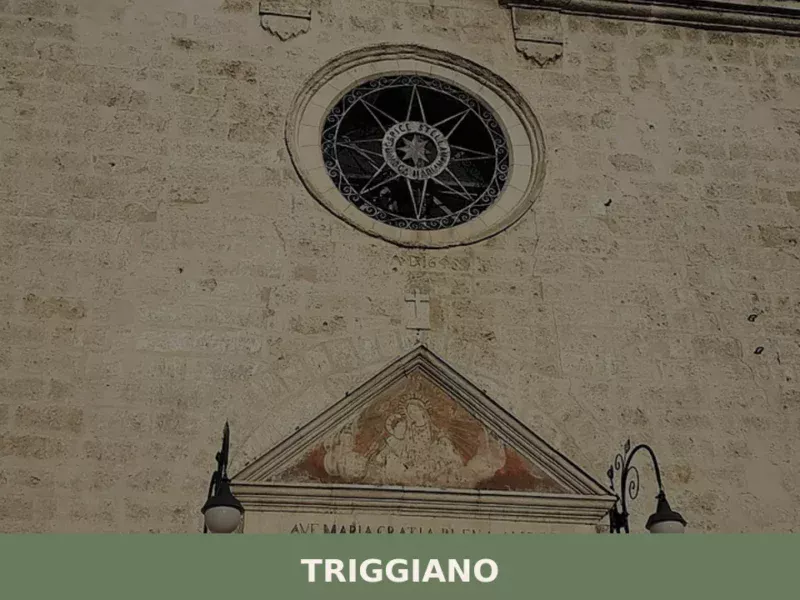
What to see in Triggiano? Discover the 5 must-see attractions, from the Baronial Castle to the Mother Church, and experience the tradition of this Apulian village.
Rodi Garganico
Sea
A coastal village of 3,302 inhabitants on the Gargano promontory, Rodi Garganico offers a medieval centre, IGP citrus groves, and an authentic Adriatic harbour life.
Torremaggiore
Plains
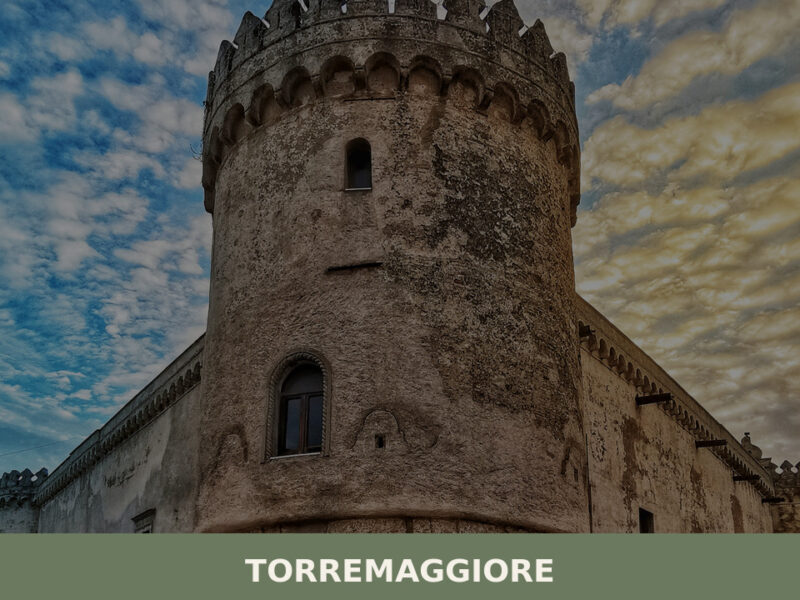
A complete guide to Torremaggiore in northern Puglia — its medieval castle, the ruins of Fiorentino, local food traditions, and practical travel information.
Gioia del Colle
Hills
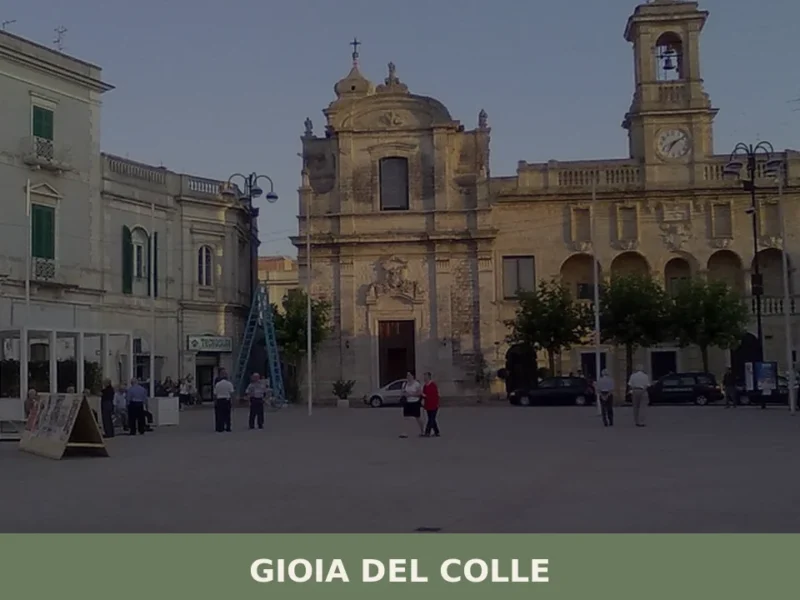
What to see in Gioia del Colle: hilltop town at 362m on the Murgia. Explore the Swabian castle, Monte Sannace park, Primitivo DOC wines and local PAT dishes.
Rignano Garganico
Hills
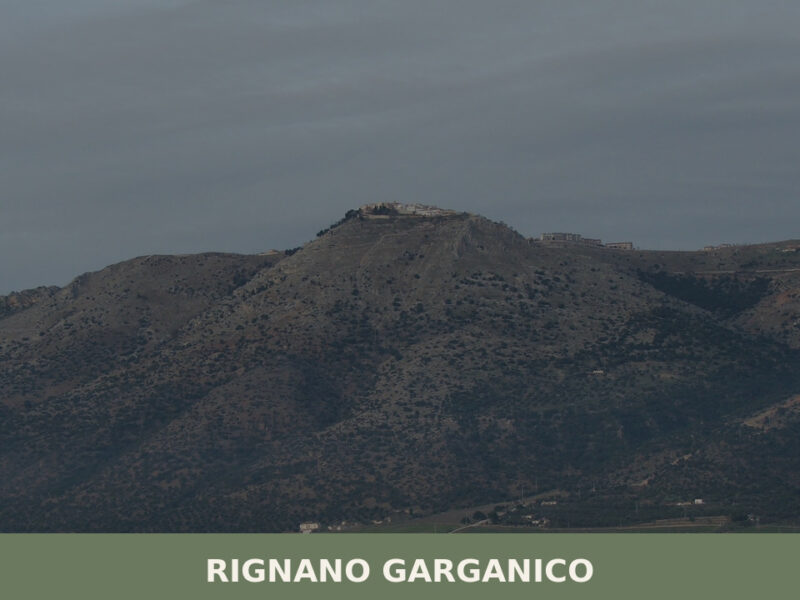
A quiet hilltop village at 590 metres on the Gargano promontory, Rignano Garganico rewards visitors with medieval lanes, wide Tavoliere views, and the honest food traditions of inland Puglia.
Castrignano del Capo
Sea
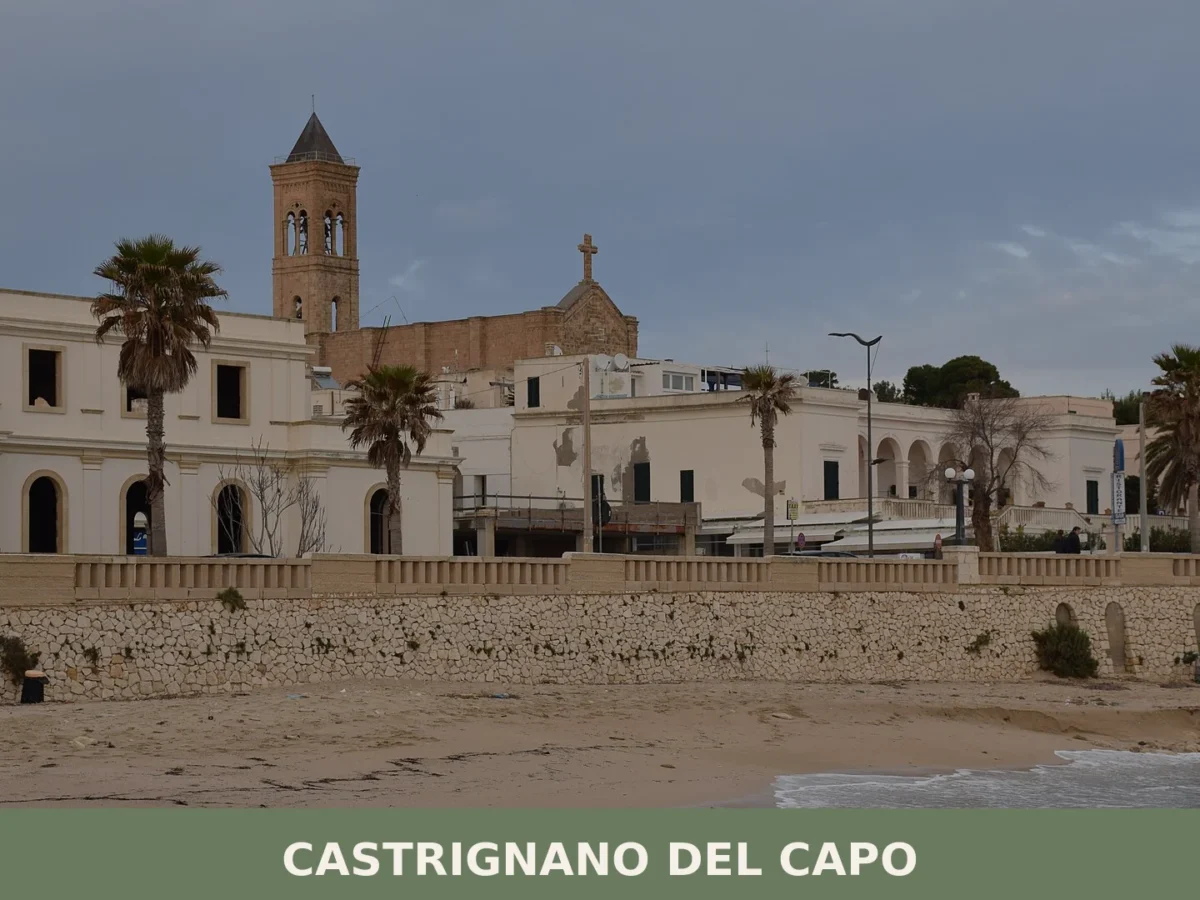
A village of 5,093 inhabitants where baroque architecture meets coastal limestone cliffs. Explore the medieval heart, defensive heritage and the fractions that include the celebrated beach resort of Santa Maria di Leuca.


🏡 Know Bitetto better than we do?
If you’re a local or have been there, your knowledge matters: add what’s missing or fix a detail on this page.