


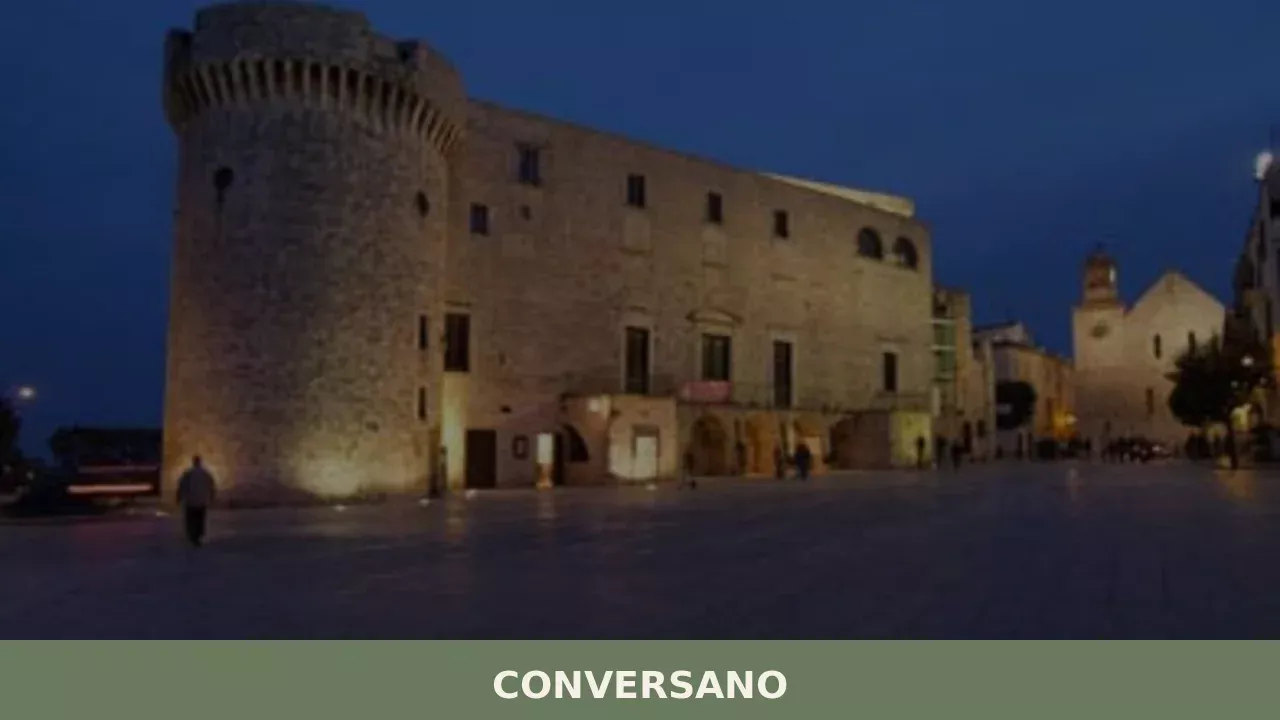
Conversano
What to see in Conversano: town at 219 m on the Murgia plateau. Norman castle, Finoglio cycle, Romanesque cathedral and Africani PAT. Plan your visit now.
Discover Conversano
In 1054, the Norman count Geoffrey of Hauteville received the county of Conversano, transforming an already fortified town into one of the most influential power centres in Terra di Bari. That castle, which still dominates the main square with its cylindrical towers and massive profile, is the natural starting point for anyone wanting to explore what to see in Conversano.
At 219 metres above sea level, the town extends across a karst plateau on the south-eastern Murgia, amid centuries-old olive trees and cherry orchards — the same countryside that every year, between May and June, turns deep red during the harvest of the celebrated ferrovia cherries.
With its 25,779 inhabitants, Conversano preserves a visible historical stratification at every corner: Peucetian megalithic walls, Romanesque apses, Baroque palazzi, and a cathedral encompassing eleven centuries of architectural modifications.
History and origins of Conversano
The Latin name Norba, recorded in Roman sources, relates to the homonymous Latin city in Lazio and indicates the existence of a fortified settlement as early as the pre-Roman era. The Peucetians — an Iapygian people settled in the Bari hinterland between the 7th and 3rd centuries BC — built a megalithic city wall here, the remains of which are still visible at several points in the historic centre.
With the Roman conquest, the settlement took the name Cupersanum, probably derived from the Latin gentile name Cupersanius, from which the modern form descends. The popular etymology tracing the name to a supposed “convent of Janus” lacks documentary evidence and belongs to the 17th-century scholarly tradition.
The period of greatest political expansion coincided with Norman rule.
Geoffrey of Hauteville, son of Tancred, obtained the county in 1054 and began construction of the castle on the highest point of the settlement. Between the 12th and 15th centuries, the county of Conversano controlled a vast territory stretching as far as Castellana Grotte, Turi, Casamassima, and part of the Adriatic coastline. In 1455 the county passed to the Acquaviva d’Aragona family, who held it until the abolition of feudalism in 1806.
Giulio Antonio I Acquaviva, known as the “One-Eyed Man of Puglia,” was a controversial and powerful figure: warrior, patron of the arts, involved in the barons’ conspiracy of 1485 against Ferrante of Aragon, he died in 1487 during the siege of Nardò. His political trajectory profoundly shaped the history of the town and of the entire Aragonese southern Italy.
From a demographic perspective, Conversano recorded a population peak as early as the 17th century, when the town numbered around 8,000 inhabitants — a significant figure for an inland settlement in the Bari area. The 19th century brought major urban transformations: the opening of Corso Umberto I, the demolition of part of the medieval walls, and the construction of the municipal theatre.
In the 20th century the town expanded beyond its ancient perimeter, but the historic core retained its urban legibility.
Among the notable figures associated with Conversano is the painter Paolo Finoglio, active in the first half of the 17th century, who created the cycle of ten canvases on Tasso’s Gerusalemme Liberata, now housed in the civic art gallery inside the castle. This is one of the most important pictorial cycles of the southern Baroque, commissioned by Count Giangirolamo II Acquaviva d’Aragona around 1640.
What to see in Conversano: 5 top attractions
1. Acquaviva d’Aragona Castle
Built in the Norman period on the acropolis of ancient Cupersanum, the castle has a trapezoidal plan with four corner towers, of which the oldest — the southern cylindrical tower — dates to the 12th century. The main façade, remodelled in the 17th century, overlooks Piazza Castello with a rusticated portal.
Inside is the Civic Art Gallery, which houses the cycle of ten canvases by Paolo Finoglio dedicated to the Gerusalemme Liberata. The hall on the piano nobile also contains a collection of majolica and documents on the history of the county. Access to the inner courtyard is free; the art gallery has regular visiting hours.
2. Cathedral of Santa Maria Assunta
The cathedral, built in the second half of the 11th century in the Apulian Romanesque style, stands a few steps from the castle along the main street of the historic centre. The original façade featured three portals; the central one still retains figured capitals with biblical scenes and vegetal motifs. The three-aisled interior with transept was modified in the Baroque period with the addition of stuccoes and lateral altars in polychrome marble. Of particular interest is the crypt, dating to the 12th century, with reused Roman-era columns and fragmentary frescoes. The bell tower, partially rebuilt after the earthquake of 1456, reaches a height of approximately 35 metres and serves as a visual landmark throughout the urban centre.
3. Monastery of San Benedetto and the Mitred Abbess
Founded in the 6th century according to tradition, the Monastery of San Benedetto is celebrated for a unique case in ecclesiastical history: the abbesses of Conversano exercised for centuries a quasi-episcopal jurisdiction over the territory, with the right to wear the mitre and carry the crosier. This privilege, documented from the 12th century onwards, was abolished only in 1810 with the Napoleonic suppression of religious orders. The adjoining church features a Romanesque cloister with round arches on paired columns and carved capitals. The church interior has a painted wooden ceiling and an 18th-century high altar. The complex is open to visitors and periodically hosts temporary exhibitions and cultural events.
4. Church of Saints Cosmas and Damian
Located in the oldest quarter of the historic centre, the Church of Saints Cosmas and Damian dates in its current form to the 14th century, although the original foundation is earlier. The exterior features a sober façade in local limestone with a rose window and an ogival portal. The single-nave interior preserves medieval frescoes rediscovered during 20th-century restorations, depicting scenes from the life of the patron physician saints. Also noteworthy is the 18th-century polychrome majolica floor. The church stands within a particularly intact urban context, with stone houses built closely against one another and small connecting arches between buildings that define the medieval street layout of the quarter.
5. Parco dei Monaci and Castiglione Tower
Approximately three kilometres from the town centre, the Parco dei Monaci is a publicly owned natural area covering 15 hectares of olive groves, Mediterranean scrubland, and karst formations. The park takes its name from an ancient monastic settlement of which wall traces remain. A short distance away stands the Castiglione Tower, a 16th-century fortified farmhouse built on an earlier Messapian settlement, attested by ceramic finds datable to the 4th century BC. From the terraces around the tower, the view extends as far as the Adriatic Sea on clear days.
The site is accessible on foot or by bicycle from the town and offers an ideal stop for those combining archaeological interest with the rural landscape.
What to eat in Conversano: traditional cuisine and local products
The cuisine of Conversano belongs to the gastronomic tradition of the Murgia around Bari, a territory where the rural economy shaped over centuries a repertoire of dishes built on a few essential ingredients: durum wheat, extra-virgin olive oil, legumes, wild greens, and sheep meat.
The town’s position on the plateau, midway between the Adriatic coast and the Murgia hinterland, fostered a cuisine that combines coastal elements — blue fish, anchovies — with the pastoral gastronomy of the interior. The seasons still dictate the food calendar: the cherry harvest between May and June, summer preserves, winter butchering.
Among the most representative dishes of the Conversano table are orecchiette with cime di rapa, made with hand-shaped fresh pasta dressed with turnip top florets, garlic, olive oil, and salt-cured anchovies. Riso patate e cozze — an oven-baked dish of rice, thinly sliced potatoes, fresh mussels, cherry tomatoes, onion, and pecorino — is a land-and-sea crossover typical of the Bari area.
In winter, fave e cicorie is prepared: a purée of dried broad beans served with blanched wild chicory and a drizzle of raw olive oil, the best-known example of Puglia’s peasant cooking tradition.
Among the territory’s certified products, the Apulian tradition includes Acquasale (PAT), an ancient preparation based on stale bread soaked in water and dressed with fresh tomato, onion, oregano, and extra-virgin olive oil — a peasant recovery dish widespread throughout the Murgia.
Africani (PAT) are instead sweets typical of Conversano’s pastry tradition: sponge cake filled with chocolate cream and coated in dark icing, whose origin dates back at least to the 18th century according to local tradition. Also worth mentioning are Agnello al forno con patate alla leccese (PAT) and Agnello alla gravinese (PAT), lamb preparations that reflect the central role of sheep farming in the Apulian hinterland.
Wild asparagus (PAT) and asparagus preserved in oil (PAT), gathered in fields and along rural roadsides between March and April, complete the picture of a deeply seasonal gastronomy.
Every year, in the first week of June, the town hosts a festival dedicated to the ferrovia cherry — the firm-fleshed, dark red variety that is Conversano’s most renowned horticultural product. The weekly market, held on Thursday mornings, offers local produce sold directly by growers from the Murgia countryside.
To purchase Africani, it is advisable to visit the historic pastry shops in the centre, particularly along Corso Umberto I, where the recipe is still executed using the traditional method with hand-poured icing.
On the wine front, the territory falls within the production area of Gioia del Colle DOC, a denomination that includes red wines based on Primitivo — an indigenous Apulian grape variety — with a minimum alcohol content of 11.5% and ageing of at least six months. The vines trained in the traditional alberello (bush vine) method on the Murgia’s calcareous soils produce grapes with a high sugar concentration, which gives the wines a full and structured character.
Several wineries in the Conversano area offer tastings by appointment.
When to visit Conversano: the best time of year
Spring, from April to June, is the most suitable period to visit Conversano. Temperatures range between 15 and 25 degrees, the countryside is in full bloom, and the cherry harvest drives the local economy. On the fourth Sunday of May, the patronal feast of Maria Santissima della Fonte is celebrated, with a solemn procession through the historic centre and market stalls filling the main squares. On 24 November, the second patronal observance dedicated to Flavianus of Constantinople takes place, an occasion for those who prefer to travel in the low season without the pressure of summer tourism.
Summer brings a greater influx of visitors, partly due to the proximity of coastal resorts — Polignano a Mare is just 12 kilometres away.
July and August temperatures regularly exceed 30 degrees, making visits to the historic centre more tiring during the middle of the day. Autumn, especially October and November, offers soft light and still mild days, ideal for excursions in the Parco dei Monaci or cycling along rural roads. Winter is mild compared to other areas at the same altitude: lows rarely drop below 5 degrees.
Those seeking a focused cultural experience can combine a visit to the castle and art gallery with a tour of the centre’s churches in a single day.
How to get to Conversano
Conversano is reached by car from the A14 Bologna–Taranto motorway, Bari Sud exit, continuing on the SS16 state road south-east for approximately 25 kilometres. From Bari the drive takes around 30 minutes; from Taranto it takes approximately 70 minutes via the SS 100. Bari-Palese airport is 40 kilometres away and offers domestic and international connections with major European cities.
Conversano’s railway station is on the Ferrovie del Sud Est (FSE) line, which connects Bari to Putignano with intermediate stops at Noicattaro, Rutigliano, and Castellana Grotte.
The train from Bari Centrale takes approximately 50–60 minutes, with hourly frequency during peak periods. Alternatively, buses operated by the same FSE company link Conversano to Bari, Monopoli, and Polignano a Mare.
For those arriving by high-speed train, the reference station is Bari Centrale, served by Trenitalia and Italo.
Other villages to discover in Puglia
Visitors to Conversano can extend their itinerary inland across the Murgia, where other towns offer different perspectives on the same territory. Cassano delle Murge, reachable in about 40 minutes by car heading west, shares with Conversano the karst Murgia landscape but has a more distinctly rural character, with farmsteads scattered across the countryside and a compact historic centre clustered around the mother church.
The route between the two towns crosses an area of oak woods and pastures that forms the core of the Alta Murgia around Bari, a territory rarely frequented by mass tourism.
For those with more time who wish to head towards northern Puglia, Castelluccio dei Sauri, in the province of Foggia, offers a gateway to the Tavoliere plain and the landscape of the Subappennino Dauno.
The distance from Conversano is approximately 160 kilometres — just over an hour and a half by car — and the contrast between the two landscapes is stark: from the limestone of the Murgia to the wheat fields of the Tavoliere. An itinerary linking the three towns allows travellers to cross inland Puglia from south to north, passing through three distinct geographical environments and three complementary gastronomic traditions, from the Primitivo wines of the Murgia to the durum wheat of the Foggia area.
In Apulia More villages to discover
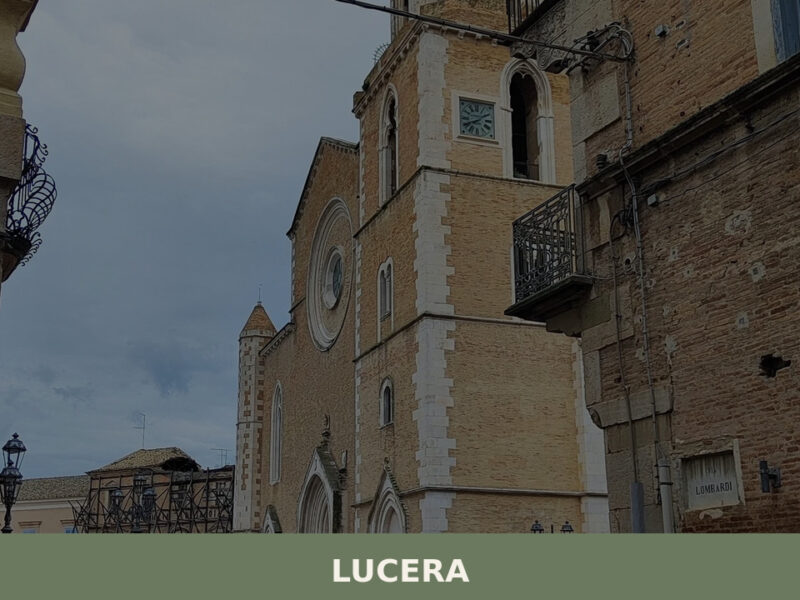
Lucera
Discover Lucera, a historic hilltop city in Puglia where Roman ruins, a Saracen past, and Angevin grandeur converge amid the sun-drenched Tavoliere plain.
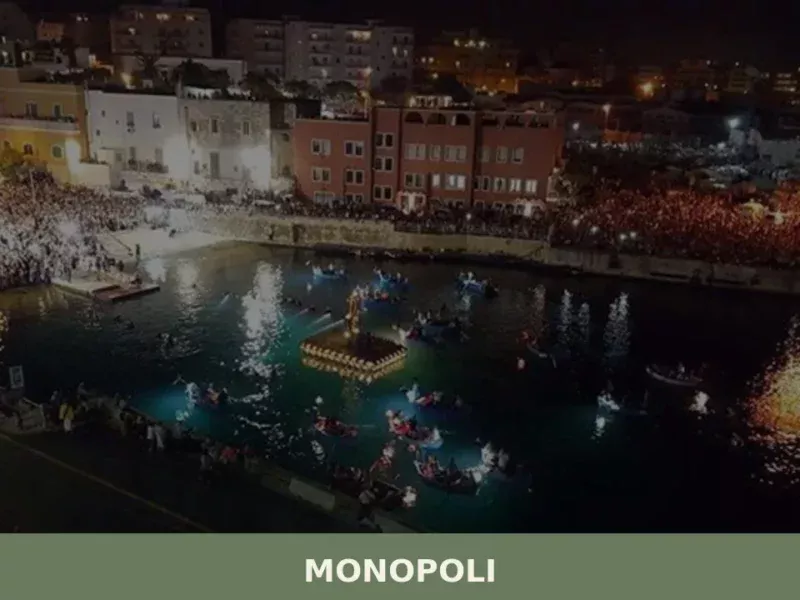
Monopoli
From the promontory where the Castle of Charles V stands, the view sweeps across the Adriatic, a horizon of waters that have shaped Monopoli’s identity for centuries. This port city, whose name evokes the idea of a “unique city,” reveals itself through its architecture, which tells of historical layers, from Messapian walls to Spanish fortifications. […]
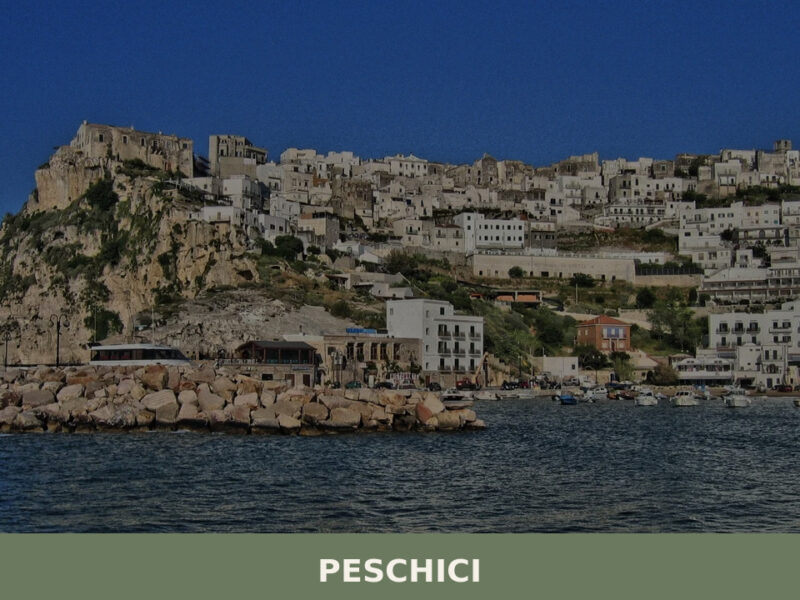
Peschici
Perched on a rocky promontory above the turquoise waters of the Adriatic Sea, Peschici is one of the most enchanting coastal villages in Puglia’s Gargano peninsula. With its whitewashed houses, narrow alleyways, and dramatic clifftop setting, this small town of 4,283 inhabitants offers a captivating blend of history, natural beauty, and Mediterranean charm. If you’re […]


📝 Incorrect information or updates?
Help us keep the Conversano page accurate and up to date.