


Cuneo
What to see in Cuneo: 55,744 residents at 534m, historic arcades, Piazza Galimberti and the Cuneese al Rum. Plan your visit with this complete city guide.
Discover Cuneo
At 534 metres above sea level, where the Piedmontese plain meets the first Alpine foothills, Cuneo has a population of 55,744 and occupies a geographical position that has shaped its history, architecture and commercial identity. The city’s name reflects the shape of the land itself: a wedge of terrain defined by the confluence of the Stura di Demonte and Gesso rivers.
Anyone exploring what to see in Cuneo should start with this geographical fact, because the urban layout, the arcaded streets, the churches and the historic markets were all built around the natural geometry that has governed centuries of civic and military life.
History and Origins of Cuneo
The name “Cuneo” comes directly from the shape of the promontory on which the city stands — a triangular spit of land between the Stura di Demonte and Gesso rivers, recognisable in early medieval maps as a natural defensive feature.
The earliest documented records of settlement date to 1198, when communities from surrounding villages joined together to found a new urban centre with autonomous status, in response to pressure from the Marquises of Saluzzo and the lords of Busca. That collective decision gave rise to a newly founded commune, organised along rational principles that are still legible today in the grid layout of the historic city.
During the thirteenth and fourteenth centuries, Cuneo expanded rapidly thanks to its position along trade routes connecting the Po Valley with Provence through the Alpine passes.
The city came under Angevin control in 1259, then passed to the Visconti, and finally to the House of Savoy, which incorporated it definitively into their domain in 1382. Savoyard rule had a profound effect on urban development: the walls were strengthened, the system of arcades that still characterises Via Roma was extended, and the city took on a strategic role as a frontier outpost towards France.
Among the historical figures associated with Cuneo, the Blessed Angelo Carletti stands out — a Franciscan friar born in Chivasso in 1411 and who died in Cuneo in 1495, venerated as the city’s patron.
His story is bound up with the spiritual climate of fifteenth-century Piedmont, marked by mendicant preaching and strong popular devotion. In the early modern period, Cuneo was the scene of repeated sieges during the Franco-Spanish wars and the Napoleonic campaigns. In 1744, the city withstood a combined assault by Franco-Spanish forces, an episode that entered collective memory as a symbol of civic resilience.
The twentieth century brought further change: Cuneo became the capital of one of Italy’s largest provinces and grew into a significant regional railway and road hub.
What to See in Cuneo: Main Attractions
Piazza Galimberti
The centre of public life in Cuneo is one of the largest squares in Piedmont, named after Duccio Galimberti — a lawyer and partisan commander born in Cuneo in 1906 and shot by Nazi-fascist forces in 1944. Three sides of the square are lined with elegant nineteenth-century arcades housing historic cafés, shops and the Tuesday market, one of the most frequented in the region. The architectural layout reflects nineteenth-century rebuilding, but the square’s roots as a commercial and political centre go back to the medieval founding of the city.
It is worth visiting in the morning hours, when the weekly market transforms the entire space into an expansive display of local produce.
Via Roma and the Historic Arcades
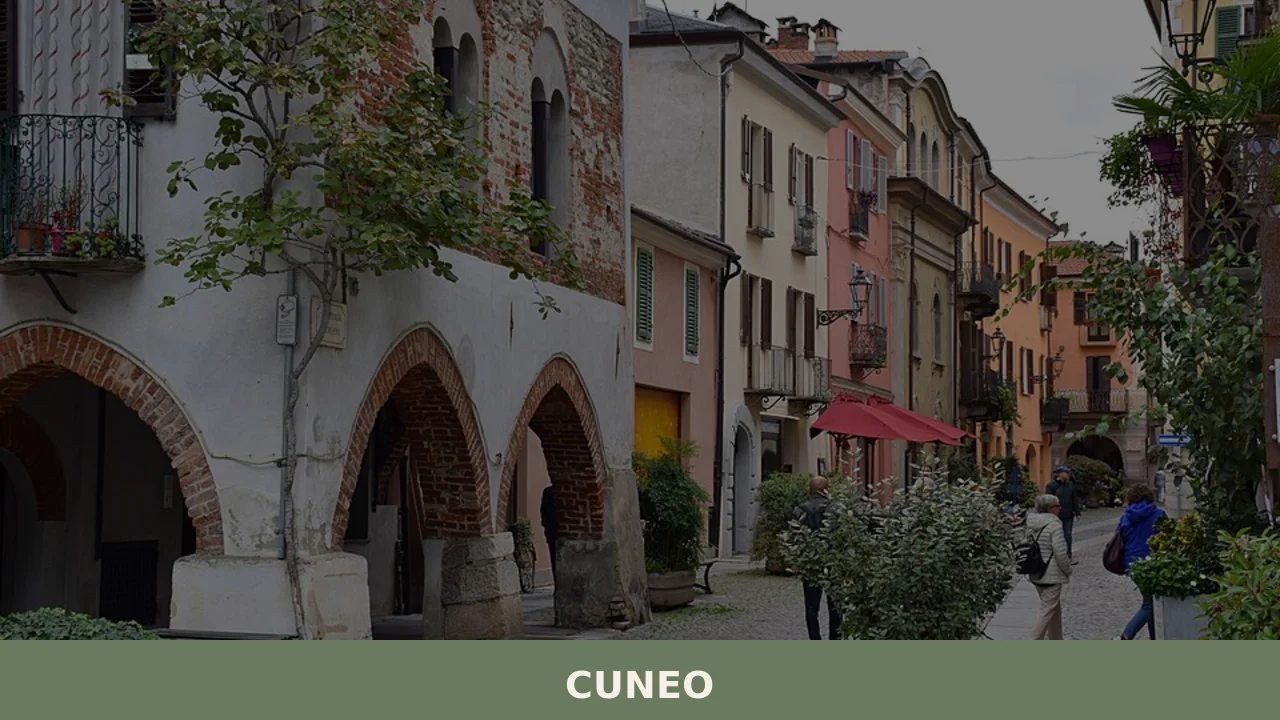
Cuneo’s main thoroughfare features one of the longest and most consistent sequences of arcades in Piedmont — over a kilometre of covered pedestrian galleries that shelter passers-by from rain and snow.
The arcades of Via Roma developed gradually between the Middle Ages and the nineteenth century, responding to the needs of merchants who required covered display space along the main transit route. Each section retains different proportions and materials, making a walk along the street a study in the city’s architectural evolution. Among what to see in Cuneo along this axis are several historic palazzi with decorated façades, internal courtyards and period commercial signs still in use today.
Cathedral of Santa Maria del Bosco
Cuneo’s cathedral, dedicated to the Madonna del Bosco, stands in a central position within the urban fabric and presents a neoclassical façade completed in the first half of the nineteenth century over an older structure. The three-nave interior contains paintings from the Piedmontese school dating between the seventeenth and eighteenth centuries, marble altars and a chapel dedicated to the Blessed Angelo Carletti, the city’s patron. The cathedral serves as the episcopal seat of the Diocese of Cuneo and retains an active liturgical and cultural role.
The interior architecture follows the conventions of Savoyard classicism, with stucco columns, frescoed vaults and a carved wooden choir of considerable craftsmanship.
Cuneo Civic Museum
Housed in the former convent of San Francesco, the Civic Museum holds collections documenting the natural history, archaeology and urban history of the Cuneo area.
The convent complex, dating to the thirteenth century, was founded by the same Franciscan order with which the Blessed Angelo Carletti was associated, and retains medieval architectural elements visible in the cloister and exhibition rooms. The collections include prehistoric finds from the Cuneo plain, Roman materials, medieval artefacts and a section dedicated to the partisan Resistance — particularly significant for a city that produced figures such as Duccio Galimberti for the Italian anti-fascist movement.
The Cuneo Railway Viaduct
Among the most striking engineering structures in the area, the viaduct carrying the Cuneo–Ventimiglia railway line over the Stura torrent is a notable work of industrial architecture. The international rail line, which connects Cuneo with Nice through the Maritime Alps passes, is considered one of the most scenic routes in the European Alpine railway network. The viaduct dominates the south-western urban landscape with its masonry and concrete arches, and is best viewed from the public gardens on the edge of the promontory.
For those exploring what to see in Cuneo from an engineering and landscape perspective, this structure offers an unusual viewpoint over the city and the valley below.
Local Cuisine and Produce of Cuneo
Cuneo’s gastronomy sits within the broader context of Piedmontese cooking, drawing on influences from both the farming traditions of the Po Valley and the Alpine culture of the valleys that open up to the west of the city.
The city’s position at a crossroads between Liguria, southern France and the Turin plain has historically encouraged an exchange of products, techniques and recipes, reflected today in the variety of local food on offer. The weekly market in Piazza Galimberti, held every Tuesday, is where this diversity is most clearly on display, bringing together producers from the surrounding valleys and the plain.
Among the most deep-rooted dishes in local tradition is bagna cauda, a warm dipping sauce made from garlic and anchovies, served with raw and cooked vegetables and eaten communally during the autumn and winter months. Fresh egg pasta in its local forms — including tajarin and agnolotti del plin — is made with soft wheat flour and deep-yellow eggs, following proportions passed down through families and local trattorias.
Brasato al Barolo, though Barolo is produced in the Langhe to the north of Cuneo, features regularly on city menus as an expression of more elaborate Piedmontese cooking, involving long, slow braising and a reduction of red wine into a dense sauce.
The territory of the Granda — the name given to the Province of Cuneo on account of its size — is known for the farming of Piedmontese cattle, whose beef is prized for its tenderness.
Also well-established among local products are Langhe hazelnuts, which are widely used in pastry-making throughout the Cuneo area. The Cuneese al Rum is a confection with documented origins in the city: a chocolate with a dark chocolate shell encasing a filling of cocoa paste, sugar and rum, produced by artisan workshops in Cuneo and established over time as a benchmark product of local confectionery.
In autumn, the city hosts events dedicated to local food and agricultural produce, including chocolate-focused festivals that draw visitors from across the region. The period between October and November is when the gastronomic offer reaches its peak, with restaurants proposing seasonal menus based on mushrooms, white truffle from the Langhe and mountain game.
Those with an interest in local food can also visit butchers specialising in cuts of Piedmontese beef and pastry shops in the city centre that continue to produce Cuneese al Rum according to the original recipes.
Festivals, Events and Traditions in Cuneo
Cuneo’s main patron saint’s feast is celebrated on 29 September, the feast day of the Archangel Michael, who is venerated as protector of the city alongside the Blessed Angelo Carletti.
The feast of St Michael has deep roots in popular Piedmontese devotion, and in Cuneo it is also connected to the city’s military history, given that St Michael is traditionally associated with the protection of armies and fortresses. Celebrations include solemn liturgical services in the cathedral and the church of San Francesco, attended by civil and military authorities in a form that follows long-established custom.
The Blessed Angelo Carletti, venerated as the city’s own patron, is commemorated through specific rites in Cuneo’s liturgical calendar.
His memory is intertwined with the historic presence of the Franciscan order in Cuneo, attested by the fourteenth-century convent that today houses the Civic Museum. On the civic side, Cuneo has developed a range of events over the years linked to local produce and Alpine culture, including festivals celebrating chocolate and the food specialities of the Granda. Many of these take place in the autumn calendar, taking advantage of the season when local products are at their most plentiful and visitor flows towards the Langhe and Maritime Alps bring additional footfall to the city.
When to Visit Cuneo and How to Get There
The most favourable period for a visit to Cuneo runs from spring through autumn, with the shoulder seasons offering the most agreeable conditions for exploring the historic centre on foot and for reaching the surrounding Alpine valleys.
Autumn — particularly between September and November — coincides with the harvest of local specialities and the food events that animate the city.
Those seeking mountain walks tend to prefer summer, when the Gesso, Stura and Maira valleys are accessible up to their highest elevations. Winter brings snow to the surrounding hills and offers the possibility of skiing at resorts in the Maritime Alps just a few dozen kilometres from the city. For up-to-date information on events, municipal offices and services, visit the Cuneo City Council website.
Arriving by car from the north, the A6 Turin–Savona motorway has an exit at Fossano, approximately 18 kilometres from Cuneo; alternatively, the A33 Asti–Cuneo motorway offers a direct exit into the city. From Milan, the fastest route combines the A21 and the A33, covering a total distance of around 230 kilometres. Travellers arriving by train will find Cuneo served by the Turin–Cuneo line, with a station in the city centre, as well as the international line to Nice mentioned above.
The most convenient airport for visitors arriving from outside the region is Turin Caselle Airport, approximately 100 kilometres from the city, well connected by bus and train with a change at Turin Porta Nuova.
Where to Stay in Cuneo
Cuneo offers a well-established range of accommodation suited to different types of visitor.
The historic centre has hotels across several categories, some occupying historic buildings with views over the arcades, others in modern properties a short walk from Piazza Galimberti. Those preferring a bed and breakfast will find several options listed on the municipality’s official portal and on the main booking platforms. In the peri-urban areas and surrounding hillside hamlets, agriturismi combine accommodation with dining based on produce from the Granda, offering a different perspective from the urban hospitality of the city centre.
Other Villages to Explore in Piedmont
Piedmont has a variety of historic centres that, by virtue of their geographical and cultural characteristics, lend themselves to combined itineraries with a visit to Cuneo.
Travelling through the region towards the Canavese, a stop at Agliè is worthwhile — a hillside town known for its Savoyard royal castle, which is a significant example of Piedmontese aristocratic residential architecture. Continuing towards the pre-Alpine Canavese, Alpette offers the experience of a mountain village, distinguished by its elevated position and its views towards the Gran Paradiso valleys.
For those wishing to extend their itinerary eastward into Piedmont, Alessandria is a historic city on the plain with its own urban identity and an architectural heritage rooted in Savoyard military history, close to the wine-producing areas of Monferrato.
In a different direction, in the hilly Canavese, lies Bairo, a small municipality that retains traces of a medieval settlement within a gently rolling landscape, well suited to those looking for routes away from the region’s more visited destinations.
Each of these places, with its own distinct character, fits naturally into a travel plan that uses Cuneo as a starting point for exploring the wider territory of Piedmont.
In Piedmont More villages to discover
Vercelli
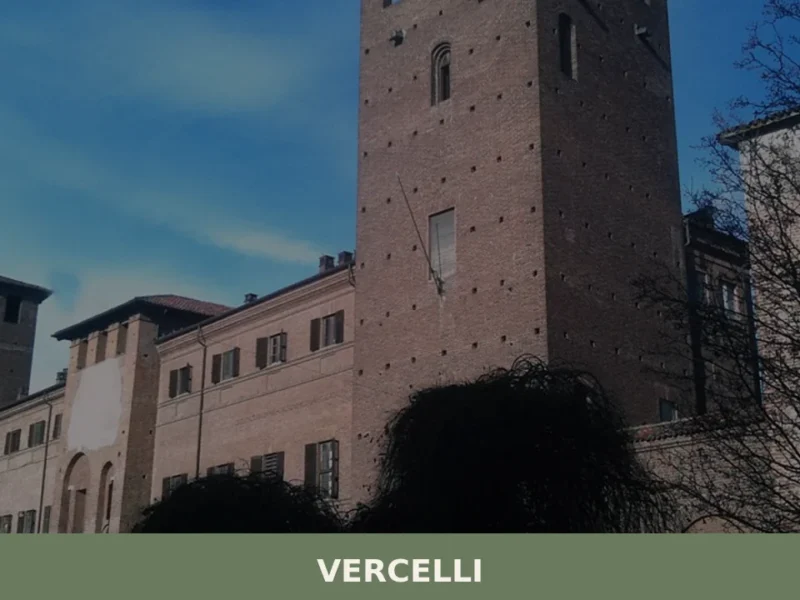
What to see in Vercelli: rice capital at 130 m in Piedmont. Basilica di Sant'Andrea, Museo Borgogna, panissa and flooded paddies. Plan your visit now.
Avigliana
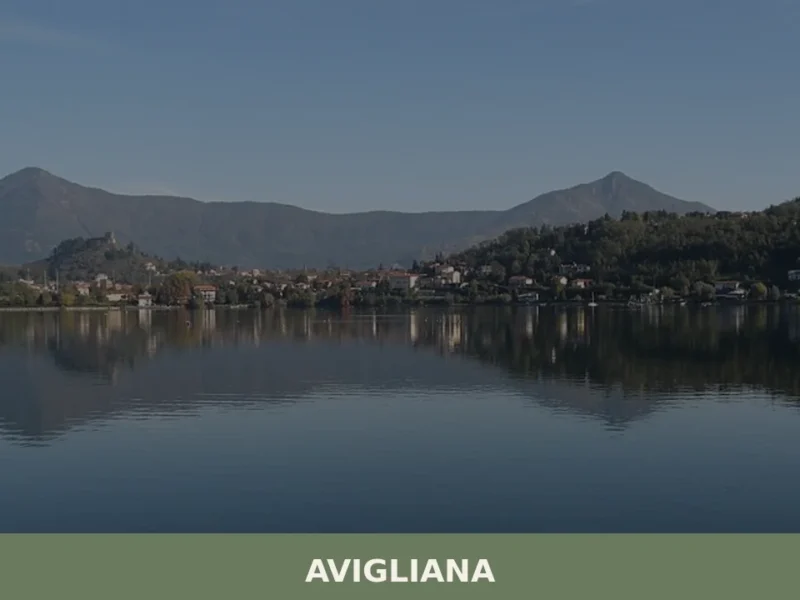
In 1092, a donation charter by Countess Adelaide of Susa mentioned for the first time the castrum Avillianae, a fortified settlement on the hill overlooking two moraine-origin lake basins in the lower Susa Valley. Anyone wondering what to see in Avigliana today will find an urban fabric preserving precise layers of history: thirteenth-century towers, Gothic […]
Novara
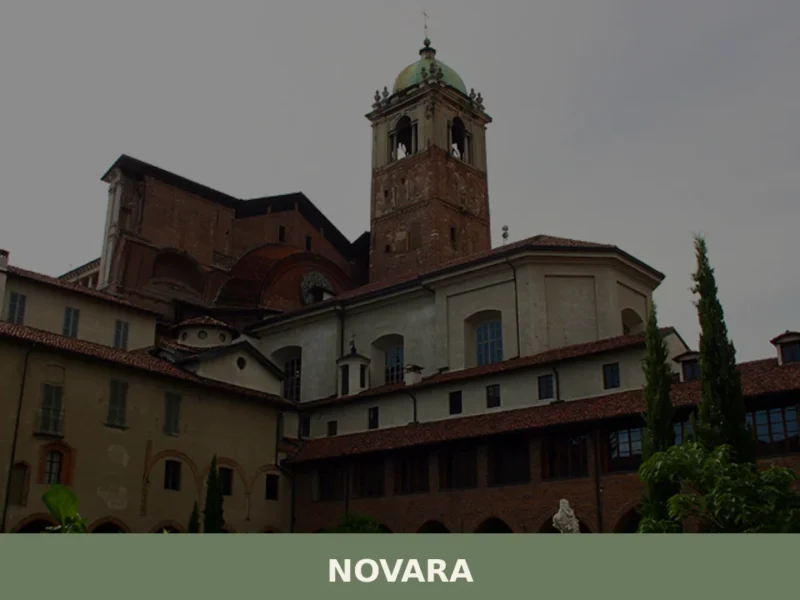
What to see in Novara: city at 162 m with 101,000 residents. Explore the Antonelli dome, 4th-century baptistery, paniscia and Colline Novaresi DOC wines.

📝 Incorrect information or updates?
Help us keep the Cuneo page accurate and up to date.