


Isola del Piano
Discover Isola del Piano, a charming village in Marche, Italy. Explore its rich history, organic traditions, stunning landscapes, and authentic Italian culture.
Discover Isola del Piano
Isola del Piano, a municipality of 543 inhabitants in the province of Pesaro and Urbino, is situated at an altitude of 210 meters above sea level. The town, whose identity is historically linked to agricultural production, particularly organic, offers visitors the opportunity to explore an area defined by the Metauro valley and its productive activities. For those wondering what to see in isola del piano, the village features a compact urban core and a landscape setting that reflects its agrarian focus.
History and Origins of Isola del Piano
The origins of the name “Isola del Piano” can be traced to the geographical configuration of the place. “Isola” probably derives from insula, a Latin term indicating a portion of land surrounded or delimited by waterways, in this case an ancient meander of the Metauro river. The “Piano” refers to the flat environment on which the village develops, in contrast to the surrounding hills of the province of Pesaro and Urbino. Its history is deeply connected to agriculture, an activity that has shaped its development and economy over the centuries.
The territory of Isola del Piano was, for a long time, an integral part of the Duchy of Urbino, following its political and social events. Its location in the Metauro valley favored the settlement of communities dedicated to cultivation, with particular attention to cereals. Historical documents attest to the presence of settlements and rural activities as early as the medieval period, with a progressive consolidation of the inhabited center around the main church. The modern municipal administration manages a territory that has maintained its agricultural calling over time, evolving towards sustainable and organic practices, recognized nationally and internationally.
For more information on local history, you can consult the official website of the Municipality of Isola del Piano or the dedicated page on Wikipedia Italy.
What to see in isola del piano: 5 points of interest
Church of San Cristoforo
The parish church, dedicated to San Cristoforo, the village’s patron saint, is the main place of worship. It features a facade with simple architectural elements and an interior that houses sacred furnishings and some later pictorial works, evidence of local artistic activity over the centuries. The structure is a reference point for the community, especially during the patron saint’s festival on July 25.
Municipal Palace
The building housing the Municipal Palace is located in the historic core. Its architecture reflects the urban transformations of the village, with interventions that have modified its original appearance while maintaining a public function. Inside are the administrative offices and spaces that occasionally host cultural events or temporary exhibitions related to the community.
Piazza della Repubblica
The main square of Isola del Piano, Piazza della Repubblica, represents the social center of the village. Some of the historic and commercial buildings face onto it, and it is the place where the main public events and community gatherings take place. The open space allows observation of the daily life of the village and its urban layout.
Organic Farms
Isola del Piano is recognized for its strong focus on organic agriculture, particularly for the production of spelt. Numerous farms operate in the area with organic certification. It is possible, by prior contact, to visit some of these establishments to observe cultivation techniques and understand the production cycle of cereals and other agricultural products, a distinctive element of the local economic and cultural context.
Paths along the Metauro River
The village is located in the Metauro river valley. The surrounding areas offer the possibility of walks along the banks or on adjacent agricultural paths. These routes allow observation of the river landscape and the cultivated countryside, elements that define the natural environment of Isola del Piano and its interactions with human activity.
Typical Cuisine and Local Products
The cuisine of Isola del Piano is closely linked to the products of its land, with a clear prevalence of cereals and legumes, in line with its agricultural tradition. The most emblematic product is undoubtedly the Isola del Piano Spelt, cultivated with organic methods and used in numerous preparations. It is found in hearty soups, cold salads, but also as an accompaniment to meat or vegetable dishes. Local businesses often offer hulled or pearled spelt, as well as flours for baking and pasta preparation.
In addition to spelt, local gastronomy fits into the broader context of Marche cuisine. Among the dishes, one can appreciate Vincisgrassi, a rich variant of baked lasagna, and Crescia sfogliata, a kind of thicker, layered piadina, often accompanied by local cured meats or cheeses. The Casciotta d’Urbino DOP, a sheep and cow’s milk cheese produced nearby, is a frequent pairing. There are also dishes based on white meats and game, such as Coniglio in porchetta, flavored with wild fennel and garlic.
When to Visit Isola del Piano: The Best Time
The best time to visit Isola del Piano coincides with the warmer months, from late spring to early autumn. During these months, the mild climate allows for full enjoyment of outdoor routes and agricultural activities. The patron saint’s festival of San Cristoforo, held on July 25, represents a significant moment to observe local traditions and community participation, with religious celebrations and social gatherings.
Late summer and early autumn are particularly suitable for those wishing to witness the cereal harvesting phases and taste seasonal products. Non-excessive temperatures and softer light make walks in the surrounding countryside a pleasant experience.
How to Get to Isola del Piano
Isola del Piano is accessible primarily via the road network. From the Adriatic coast, the A14 motorway (Bologna-Taranto) is the reference: exit at Fano and continue on the SS73 bis towards Urbino, then follow the signs for the village. From Urbino, Isola del Piano is reached by traveling approximately 20 km on the SP43.
The nearest train stations are Fano and Pesaro, both on the Bologna-Lecce line. From these stations, it is possible to continue with local bus services or taxis. The nearest airport is Marche Airport “Raffaello Sanzio” (AOI) in Ancona, approximately 70 km away, or Rimini International Airport “Federico Fellini” (RMI), approximately 60 km away.
Other Villages to Discover in Marche
The province of Pesaro and Urbino and the entire Marche region offer a variety of inhabited centers that merit attention for their historical and landscape specificities. Not far from Isola del Piano, you will find Frontone, known for its imposing medieval castle that overlooks the valley and offers an example of well-preserved defensive architecture. A visit to Frontone allows one to observe a different type of settlement, more oriented towards defense and territorial control.
Another nearby locality is Auditore, a small center situated within the Montefeltro context, with a history linked to the events of the Duchy of Urbino. Exploring Auditore offers a perspective on how smaller villages have maintained their characteristics over time, often with a direct link to agricultural activities and local traditions, providing an insight into the rural life of the Marche hinterland.
In Marche More villages to discover
Mercatino Conca
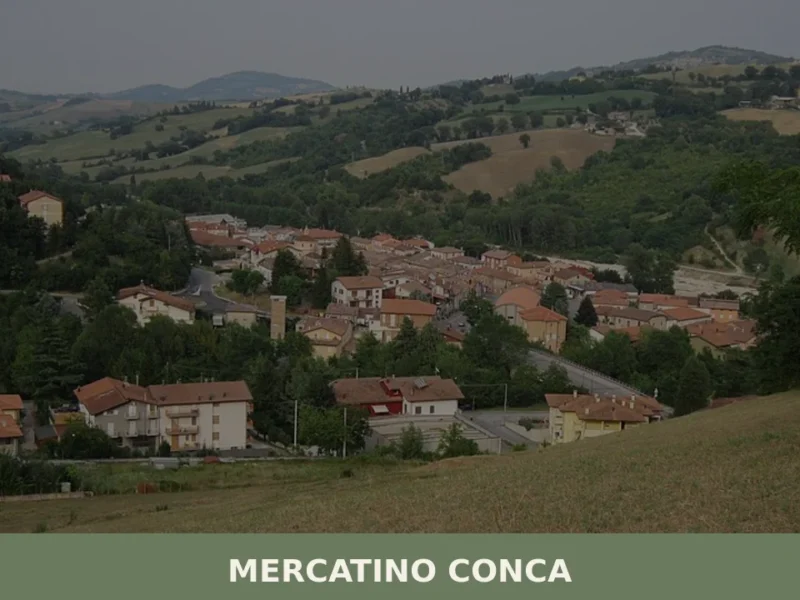
At 275 meters above sea level, in the province of Pesaro and Urbino, lies Mercatino Conca, a settlement with 1,033 residents. The name itself, “Mercatino” (meaning “little market”), suggests a historical commercial function, likely linked to its position in the Conca river valley, a crossroads for trade and activities since ancient times. For those wondering […]
Monteciccardo
Monteciccardo first appears in a document from 1233 under the name Mons Sicardi, referring to a Lombard lord of whom no other trace survives. Standing at 384 metres above sea level, with its 1,643 inhabitants spread between the historic centre and scattered hamlets, the village commands a stretch of the Pesaro hills sloping down towards […]
Apecchio
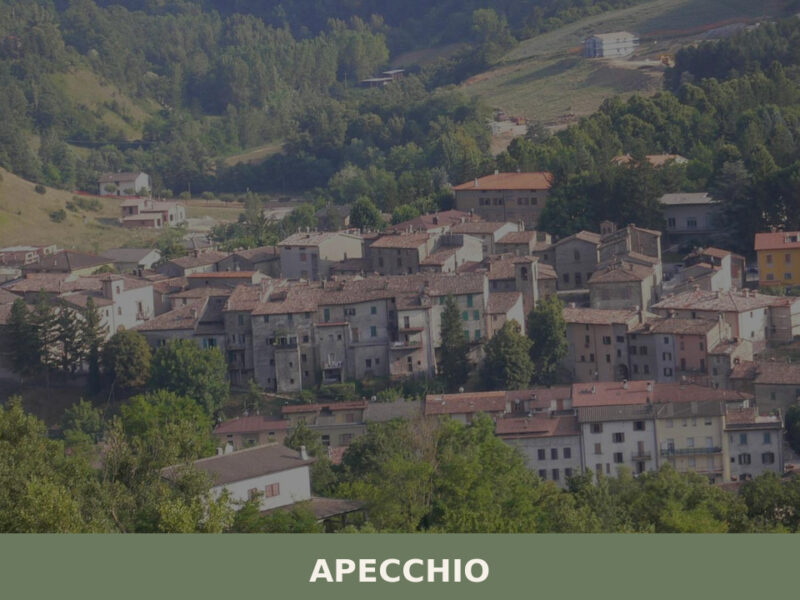
Morning mist lifts off the Biscubio river and the medieval bridge emerges in grey stone, its arches still carrying the weight of six centuries. A bell tower marks the hour above terracotta rooftops, and the smell of woodsmoke mixes with damp earth from the surrounding Apennine slopes. At 493 metres above sea level, this small […]


📝 Incorrect information or updates?
Help us keep the Isola del Piano page accurate and up to date.