


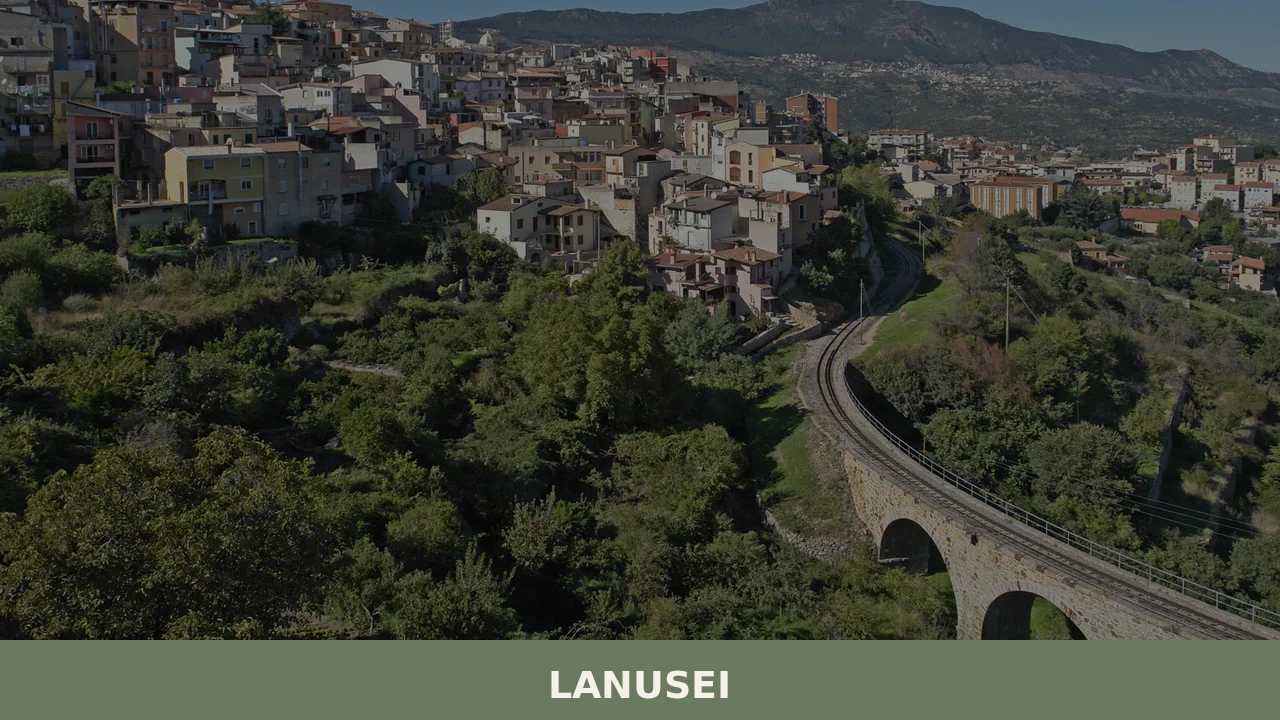
Lanusei
What to see in Lanusei, a Sardinian town at 595 m with 5,468 residents. Visit the Cathedral of Santa Maria Maddalena, the Natural History Museum and Gorropu Gorge. Plan your trip now.
Discover Lanusei
Lanusei sits at 595 metres above sea level on the Ogliastra plateau, in a position that offers sweeping views over a geologically varied landscape of forests, canyons and coastline.
With a population of 5,468, it is the main centre of this Sardinian province and serves as the administrative, commercial and cultural hub for the surrounding municipalities.
Those wondering about what to see in Lanusei will find a layered answer: not a single landmark, but a combination of churches, natural history museums, religious traditions and landscapes that make for a rewarding and content-rich stay.
History and Origins of Lanusei
The earliest traces of human settlement in the Lanusei area date back to the Nuragic period, as evidenced by remains found within the municipal territory.
The name of the town itself has debated origins: some interpretations link it to the Latin lanusei or to pre-Latin roots connected to the landscape, though no definitive etymological derivation has been established in the available historical sources.
What is certain is that the territory was already inhabited before the Romanisation of Sardinia, as confirmed by artefacts preserved in local collections.
In the medieval period, Lanusei became part of the jurisdictional structures of Giudicale Sardinia.
The Ogliastra territory, of which Lanusei was a part, was contested among the island’s various giudicati and subsequently came under Pisan and Aragonese rule from the fourteenth century onwards. Its inland position, far from the coastlines most exposed to raids, supported the continuity of settlement.
During the Spanish period, as in much of central Sardinia, the agrarian and social structure of the town remained tied to pastoral farming and small-scale mountain agriculture. This context was not unlike that of other inland Sardinian centres, such as Nuoro, the capital of the neighbouring province, with which Lanusei shared similar demographic and cultural patterns for centuries.
Following Italian unification and the subsequent organisation of provinces, Lanusei took on the role of capital of Ogliastra, a function it maintained continuously until recent administrative restructuring.
During the twentieth century, the town underwent a gradual modernisation of services and infrastructure, while retaining its historic building fabric in the old centre.
Demographic growth was concentrated mainly in the second half of the last century, and in more recent years the population has stabilised at around 5,468, confirming Lanusei as the main urban centre of reference for the Ogliastra region.
What to See in Lanusei: Main Attractions
Cathedral of Santa Maria Maddalena
The Cathedral of Santa Maria Maddalena is the main church of Lanusei and the seat of the Diocese of Lanusei.
Dedicated to the town’s patron saint, whose feast day falls on 22 July, the building stands in the historic centre and is the most important religious and architectural landmark in the city. The interior preserves sacred artworks and fine wooden furnishings. The façade reflects the architectural conventions of modern-era Sardinian religious building, with an austere composition that integrates naturally into the surrounding urban fabric.
It is well worth going inside to examine the side altars and the paintings housed in the chapels.
Ogliastra Natural History Museum
The Ogliastra Natural History Museum is one of the most significant scientific institutions in eastern Sardinia.
Its collection documents the biodiversity of the Ogliastra through sections dedicated to local geology, fauna and flora. Exhibits illustrate the formation of the territory, the island’s endemic species and the distinctive characteristics of the Ogliastra ecosystem. The museum caters to a wide audience, from curious visitors to researchers, and provides a systematic overview of the territory that helps to make sense of the landscape encountered on excursions in the area.
For anyone exploring what to see in Lanusei, this institution offers a scientific framework for understanding the natural setting.
The Historic Centre and Smaller Churches
The historic core of Lanusei retains a fabric of stone buildings that conveys the character of nineteenth-century settlement.
Walking through the streets of the centre, visitors come across several smaller churches that complement the cathedral in the religious life of the community.
These buildings, constructed in local granite and limestone, display the sober style typical of religious architecture in inland Sardinia. A walk through the historic centre also offers the chance to observe the bourgeois townhouses built between the nineteenth and twentieth centuries, when Lanusei consolidated its role as a provincial capital, with façades that reflect mainland models filtered through local taste.
Viewpoint over the Gulf of Arbatax
From Lanusei’s elevated position at 595 metres above sea level, the view extends across the Ogliastra territory and, on clear days, reaches the Gulf of Arbatax and the coast. This viewpoint is accessible on foot from the town centre and requires no specialist equipment. The panorama takes in the forests covering the hillsides, the cultivated plateaus and, in the distance, the coastline with the distinctive red rocks of the Arbatax shoreline.
It is a useful vantage point for understanding the geography of the Ogliastra before heading down to the sea or venturing further inland.
Surrounding Territory: Gorropu Gorge and the Ogliastra Supramonte
The territory immediately accessible from Lanusei includes some of the most significant natural areas in Sardinia.
The Gorropu Gorge, considered one of the deepest canyons in Europe, can be reached in approximately one hour by car from the town.
The Ogliastra Supramonte offers hiking routes through holm oak forests, limestone formations and springs. Anyone organising a stay with an eye on what to see in Lanusei cannot overlook these natural resources, which represent the primary draw for trekking and nature enthusiasts arriving from across Europe.
Local Food and Products of Lanusei
The cuisine of the Ogliastra, of which Lanusei is the principal centre, reflects the historical conditions of a mountain and pastoral territory, with an economy traditionally based on sheep farming, dairy production and the cultivation of cereals, vegetables and vines.
The influence of the sea is present but mediated by distance from the coast: fish products do feature in the local diet, but meat, cheese and cereal-based foods take precedence.
This cuisine is documented in ethnographic sources on the Ogliastra as one of the most conservative in Sardinia, with recipes passed down orally through generations within families and rural communities.
Among the most representative dishes of the local tradition are culurgiones, a filled pasta specific to the Ogliastra and recognised at regional level, with a filling that in the Ogliastra version includes potato, fresh cheese, mint and garlic, sealed with a distinctive ear-of-wheat stitch that sets it apart from versions made in other parts of Sardinia.
Porceddu, spit-roasted suckling pig, appears on the menus of local restaurants and at festive occasions. Pecorino sardo, made from sheep’s milk and aged to varying degrees, is the area’s reference cheese, consumed both fresh and matured.
Pane carasau, the thin, crisp flatbread found throughout Sardinia, also features on tables in Lanusei and is used both as an accompaniment and as a base in certain traditional preparations.
As regards certified products, the available database shows no DOP, IGP or PAT certifications specifically attributed to the municipality of Lanusei.
However, the entire Ogliastra area participates in the supply chain of traditional Sardinian agri-food products recognised at regional level. Local cheeses, cured meats and wines produced in Ogliastra municipalities follow documented and established production practices.
A similar productive context can be found in other inland Sardinian centres: visitors to Alà dei Sardi will encounter a comparable cheese-making and pastoral tradition, with products that share the same cultural roots in Sardinian sheep farming.
The best opportunities to purchase local products are the weekly markets and fairs held in the Ogliastra capital, particularly around the patron saint’s feast day on 22 July and the autumn food festivals.
On these occasions, local producers display cheeses, honeys, cured meats and traditional sweets such as seadas — pastry parcels filled with cheese and drizzled with honey, widespread throughout Sardinia but made with local variations.
The autumn months are also when seasonal produce from the interior is most readily available: mushrooms, chestnuts and grape must.
Festivals, Events and Traditions of Lanusei
The patron saint’s festival of Lanusei is dedicated to Mary Magdalene and is celebrated on 22 July, the date of the saint’s liturgical feast in the Catholic calendar. The celebrations include a solemn Mass in the cathedral and a procession through the streets of the centre, with community members taking part in traditional dress.
Sardinian processions in honour of patron saints are events of strong identity significance, combining the religious dimension with a reaffirmation of community ties.
The 22 July festival is also an occasion for Lanusei residents who have emigrated to return to their home town during the summer month, concentrating the most lively period of the year around this time.
Beyond the patron saint’s festival, the local events calendar includes occasions tied to the agricultural and pastoral cycle.
The Ogliastra carnival traditions, present in various municipalities in the area, express forms of popular ritual documented in ethnographic studies of Sardinia. Holy Week celebrations are another significant moment in the local religious calendar, with rites that follow Catholic liturgy enriched by elements of Sardinian popular devotion.
Traditional music, performed on instruments such as the launeddas, features at festive occasions and in cultural events organised by the municipality throughout the year.
When to Visit Lanusei and How to Get There
The most favourable period to visit Lanusei runs from spring to early autumn. Between May and June temperatures are mild, vegetation is at its most developed and hiking trails can be walked without the difficulties that come with summer heat. July is the month of the patron saint’s festival, so those wishing to attend the 22 July celebrations should plan their stay accordingly.
Summer brings high temperatures to the interior, but the altitude of 595 metres moderates the heat compared to the coast. September and October offer excellent conditions for trekking and for finding seasonal produce, with smaller crowds than in the summer months.
If you are travelling by car, the main route uses the SS125 Orientale Sarda state road, which connects Lanusei to the coastal centres and the island’s main road network.
From Cagliari the distance is approximately 130 kilometres, covered in just under two hours.
The nearest airport is Cagliari-Elmas, from which Lanusei is reached by taking the SS125 northward. Travellers coming from the north of the island can use Olbia-Costa Smeralda Airport, with a journey of around 200 kilometres. For those who prefer the train, the nearest railway station is Tortolì-Arbatax, served by the Ferrovie della Sardegna line, approximately 20 kilometres from Lanusei.
The Lanusei Municipal Council website provides up-to-date information on services and accessibility.
Those planning a broader itinerary through inland Sardinia can combine a visit to Lanusei with stops at other centres across the island.
Banari, in the Sassari area, and Bonnanaro, in the province of Sassari, are destinations that complement a route through the Sardinian interior, each with its own characteristics rooted in local history and landscape.
Anyone researching what to see in Lanusei with time to spare can build a circular itinerary crossing the island from east to west, taking in very different geographical and cultural environments along the way.
Where to Stay in Lanusei
As the capital of the Ogliastra, Lanusei has an accommodation offer that includes hotels, bed and breakfasts and guesthouses in the town itself.
The predominant type is the small, family-run hotel or B&B, suited to multi-day stays focused on hiking and exploring the territory. In the surrounding countryside, agriturismi offer accommodation and dining based on local produce. For those who prefer greater independence, holiday apartments and short-term rental properties are a widely available alternative. The Lanusei Municipal Council website lists the accommodation facilities registered in the area.
In Sardinia More villages to discover
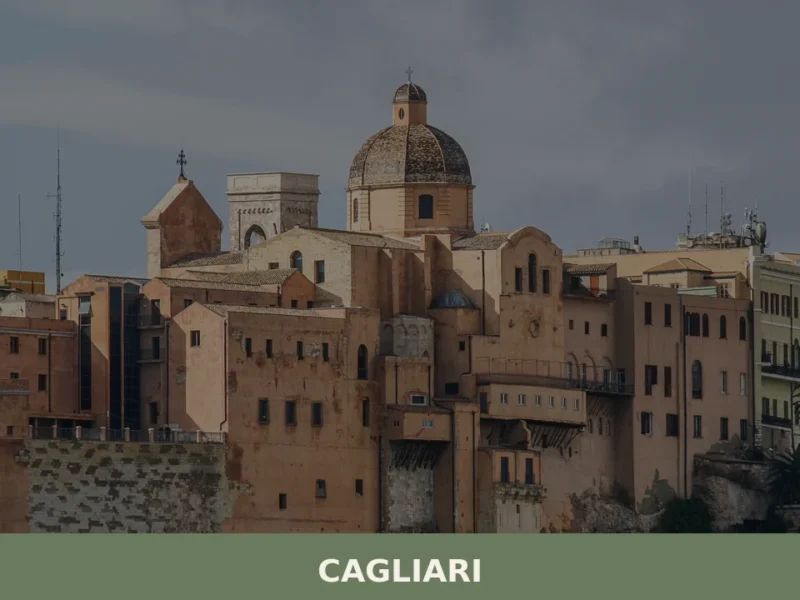
Cagliari
Discover Cagliari, a charming village in Sardegna, Italy. Explore its rich history, stunning landscapes, and local culture in the heart of Sardinia.
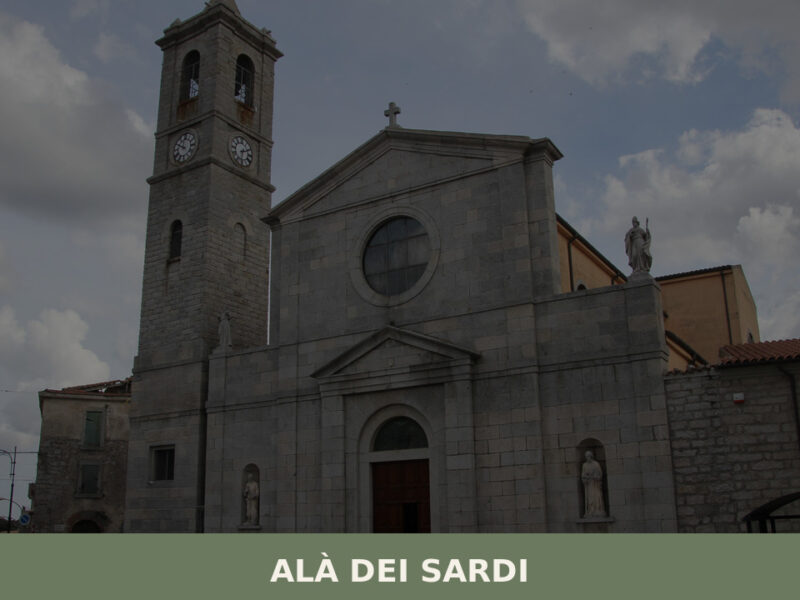
Alà dei Sardi
Morning mist rolls off the granite plateau and settles in the narrow streets, carrying the smell of woodsmoke and fresh bread from a communal oven that has not changed position in two centuries. At 663 metres above sea level, the air here is thinner, cooler, and quieter than on the coast below. Alà dei Sardi […]
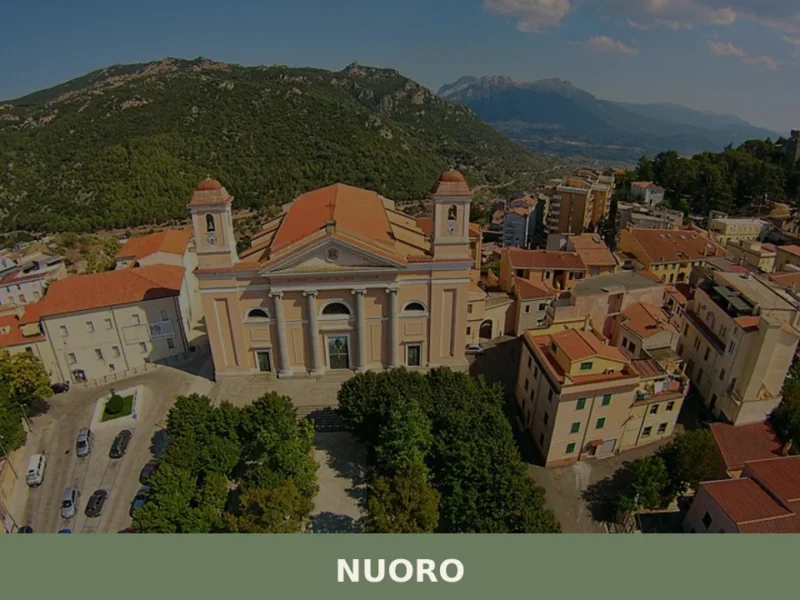
Nuoro
What to see in Nuoro: a city at 547m with 36,379 residents and birthplace of Nobel laureate Grazia Deledda. Explore museums, Monte Ortobene and Barbaricino cuisine. Plan your visit now.



📝 Incorrect information or updates?
Help us keep the Lanusei page accurate and up to date.