


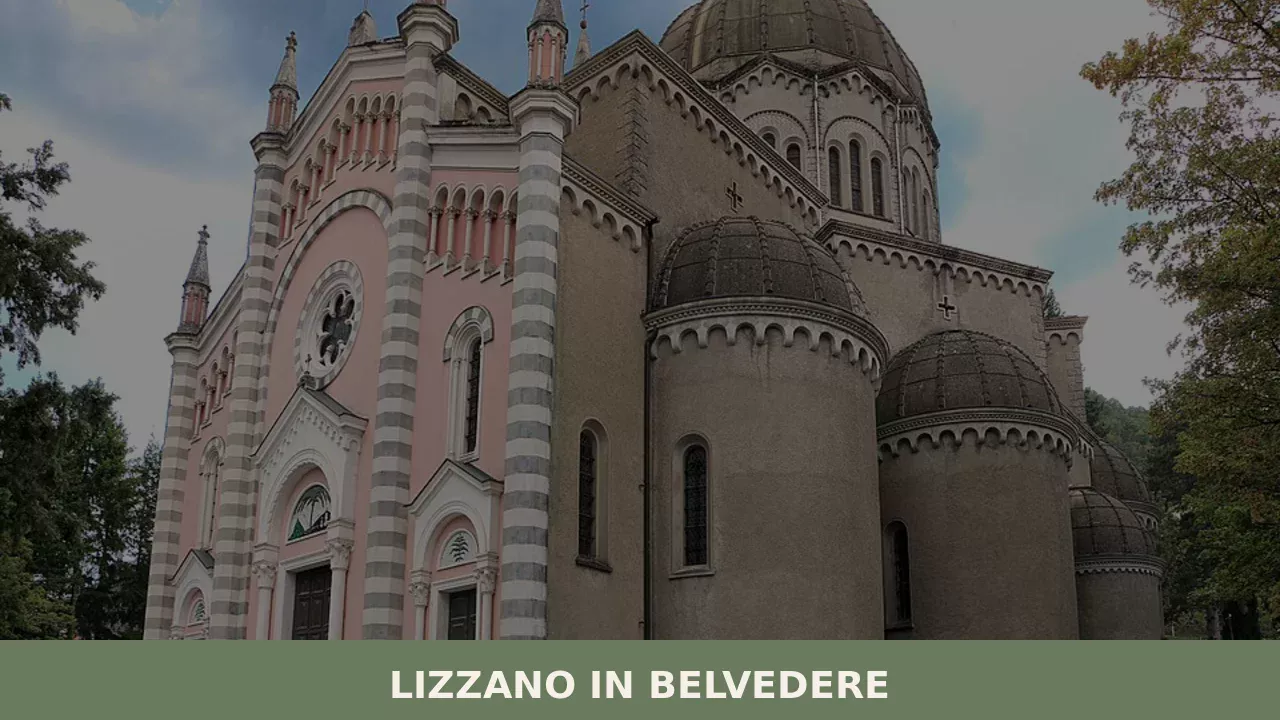
Lizzano in Belvedere
Every year, on 17 August, the procession in honour of Saint Mamante winds its way up the streets of Lizzano in Belvedere to the parish church, following a ritual that has been repeated since at least the 15th century. This municipality of 2,314 inhabitants, situated at 640 metres above sea level on the Bolognese Apennines, […]
Discover Lizzano in Belvedere
Every year, on 17 August, the procession in honour of Saint Mamante winds its way up the streets of Lizzano in Belvedere to the parish church, following a ritual that has been repeated since at least the 15th century. This municipality of 2,314 inhabitants, situated at 640 metres above sea level on the Bolognese Apennines, is the southern gateway of the Province of Bologna towards the Tuscan-Emilian ridge and the slopes of Corno alle Scale.
Asking what to see in Lizzano in Belvedere means engaging with a vast territory — over 80 square kilometres — that encompasses scattered hamlets, dense beech forests, waterfalls, and a history tied to the border between the Papal States and the Grand Duchy of Tuscany.
History and origins of Lizzano in Belvedere
The place name “Lizzano” most likely derives from the Latin licetum, a term indicating a holm oak wood, a tree that once thrived at the lower altitudes of the municipal territory. The qualifier “in Belvedere” was added in 1882 to distinguish the town from other municipalities with the same name across Italy, and refers to the medieval fortress of Belvedere, a fortification documented since the 12th century that commanded the valley of the Dardagna torrent. The area has been inhabited since Roman times, as attested by archaeological finds along the routes that connected the Po Valley with Tuscany through the Apennine passes.
In the Middle Ages, Lizzano fell within the holdings of the Alberti counts of Prato, one of the most powerful feudal families of the Tuscan-Emilian Apennines. In 1219, the territory came under the control of the Commune of Bologna, which turned it into a strategic outpost along the border with Tuscan domains. For centuries, the area was a theatre of disputes between Bologna and Pistoia: the ridge-top position made every castle, every tower, every pass a critical point for controlling trade and military movements. With the consolidation of the Papal States as a territorial entity, Lizzano became firmly part of the Bolognese sphere, while nevertheless maintaining constant economic ties with the Tuscan side.
The demographic evolution of the municipality reflects the transformations of the Italian Apennines during the 20th century.
While in the mid-19th century the population exceeded 5,000 inhabitants, spread across dozens of hamlets devoted to herding and chestnut cultivation, the depopulation of the post-war period drastically reduced the number of residents. The turning point came in the 1960s with the development of tourism linked to Corno alle Scale, a ski resort that transformed the local economy. Today the 2,314 inhabitants are concentrated in the main town and the principal hamlets — Vidiciatico, Pianaccio, Rocca Corneta — while dozens of smaller settlements preserve sandstone architecture that is now largely uninhabited, silent evidence of a vanished agro-pastoral economy.
What to see in Lizzano in Belvedere: 5 top attractions
1. Sanctuary of the Madonna dell’Acero
Located at 1,175 metres above sea level in the hamlet of the same name, the Sanctuary of the Madonna dell’Acero stands on the spot where, according to tradition, two young shepherds had a Marian vision near a large maple tree in 1500. The current building, with a Latin cross plan, dates to the 17th century and houses votive frescoes and numerous ex-votos documenting centuries of popular devotion. Its position, at the edge of a vast beech forest, also makes it a prime starting point for hikes towards Corno alle Scale and Lake Scaffaiolo. The sanctuary is accessible by car from the provincial road 324 and is open during the summer months and major feast days.
2. Dardagna Waterfalls
The Dardagna Waterfalls are a sequence of seven cascades where the torrent drops along a total elevation change of approximately 200 metres, in the stretch between the Sanctuary of the Madonna dell’Acero and the lower slopes of Corno alle Scale. The trail running alongside them — marked by the CAI — takes about an hour to walk and passes through a mixed wood of beech and fir. The best time to see them is between April and June, when snowmelt swells the torrent’s flow. They represent one of the most significant hydrogeological formations in the entire Corno alle Scale Regional Park, established in 1988 by the Emilia-Romagna Region.
3. Corno alle Scale and Lake Scaffaiolo
Corno alle Scale, at 1,945 metres, is the highest peak in the Province of Bologna. The mountain owes its name to the distinctive rock stratifications at the summit, which resemble a natural staircase. In winter it operates as a ski area with lifts accessible from Vidiciatico; in summer the trail network leads to Lake Scaffaiolo, a glacial body of water at 1,775 metres above sea level, one of the highest Apennine lakes, already mentioned by 18th-century travellers. The ascent from Rifugio Cavone takes approximately two and a half hours on a well-marked trail, with views that on clear days extend all the way to the Adriatic coast.
4. Parish Church of San Mamante
Dedicated to the patron saint of the village, the Church of San Mamante dominates the historic core of Lizzano with its façade in local sandstone.
The current building is the result of successive reconstructions — the last major one dates to the 18th century — but the cult of Saint Mamante in this area is documented from at least the 15th century. Inside, wooden furnishings and canvases attest to the patronage of local families between the 17th and 18th centuries. The patron saint’s feast on 17 August is the central moment of community life, with the procession passing through the town centre followed by markets and events in the squares. Up-to-date information on the celebrations can be found on the official website of the Municipality of Lizzano in Belvedere.
5. The village of Rocca Corneta
A hamlet sitting at approximately 800 metres above sea level, Rocca Corneta retains a compact medieval urban layout, with sandstone tower-houses pressed against one another along narrow, steep alleyways. The name refers to a fortification documented as early as the 12th century, traces of which survive in the foundations of some houses. The local church, dedicated to Saint Michael the Archangel, features Romanesque architectural elements visible in the apse. Rocca Corneta can be reached in just a few minutes by car from the main town and serves as a remarkable vantage point over the valley below.
The village represents one of the best-preserved examples of rural Apennine construction in the Bolognese territory, with masonry using local stone cut into regular blocks.
What to eat in Lizzano in Belvedere: local cuisine and regional products
The cuisine of Lizzano in Belvedere is mountain cooking, shaped by long winters and an economy that for centuries revolved around three resources: the chestnut tree, the forest, and the pasture. The high altitude and harsh climate produced a gastronomic tradition built on energy-rich dishes, with slow cooking methods and ingredients that keep well over time. Unlike the Emilian plain, where pork and egg-based pasta dough dominate, here chestnut flour and polenta historically played a central role in everyday diet. The Tuscan influence, owing to the proximity of the regional border, can be detected in certain preparations and in the use of wild herbs gathered in the ridge-top meadows.
Among the dishes still found in the trattorias of the area, crescentine — also known as tigelle — are perhaps the most widespread: small discs of dough cooked between terracotta or iron plates, served with pounded lard, garlic, and rosemary, or with local cheeses. Chestnut polenta, made from flour obtained from fruits dried in traditional drying huts (the “metati”), was the staple food during winter months and is still offered in both sweet and savoury versions. Ricotta tortelloni, a mountain variant of the more famous Bolognese tortellini, use a filling of cow’s milk ricotta and wild spinach, dressed with melted butter and sage rather than the meat broth typical of the plain.
The mountain territory produces porcini mushrooms in significant quantities between late summer and autumn, gathered in the beech forests of the Corno alle Scale Park.
Chestnuts, as already mentioned, remain a defining product: until the mid-20th century, chestnut cultivation was the primary food source for the local population. Cow’s milk semi-cooked cheeses are also produced, aged in the stone cellars of the higher hamlets, along with chestnut honey, with its intense and slightly bitter flavour. There are no DOP or IGP certifications specific to the municipality, but the area falls within the production zone of Parmigiano Reggiano, whose production regulations cover the entire Province of Bologna, including the mountain areas.
The main food event is the Chestnut Festival, held between October and November in the hamlets of the municipality, with roasted chestnuts cooked in open-air braziers and sales of chestnut flour. During the summer months, food fairs in the hamlets offer crescentine, polenta, and grilled meats, often alongside local produce markets.
For direct purchases, the small weekly markets and food shops in the main town and in Vidiciatico stock honey, dried mushrooms, and locally produced cheeses.
The area has no winemaking tradition of its own — the altitude and climate do not favour viticulture — but the proximity to the Bolognese and Modenese hills brings the wines of the Colli Bolognesi DOC to local tables, particularly Pignoletto, a sparkling white that pairs well with crescentine, and Barbera, served with meat dishes and cured meats. On winter evenings, after a day on the slopes or the trails, artisanal liqueurs made from bilberry and gentian can still be found, distilled with herbs gathered at the highest altitudes along the ridge.
When to visit Lizzano in Belvedere: the best time of year
Lizzano in Belvedere has a strongly seasonal character, and each period offers different reasons to visit. Winter, from December to March, is dominated by alpine skiing and cross-country skiing at Corno alle Scale: the slopes are generally operational from mid-December, with natural snowfall often supplemented by snow cannons. Spring, between April and June, is the best time for the Dardagna Waterfalls, swollen with meltwater, and for the wildflower blooms in the high-altitude meadows.
Summer brings the mildest temperatures — rarely exceeding 28°C in the main town — and is the season for hikes to Lake Scaffaiolo and hamlet festivals, with the patron saint’s feast of Saint Mamante on 17 August as the central event.
Autumn, between September and November, is the season of mushrooms and chestnuts: the woods take on their colours and the still-pleasant temperatures make walking enjoyable. Those seeking quieter conditions should aim for May–June or September–October, when tourist numbers drop and accommodation prices fall noticeably compared to the peaks of August and the ski weeks. Families with children will find summer offers the best combination of open facilities, events, and accessible trails, while experienced hikers can take advantage of the long days of June and July for ridge traversals towards Libro Aperto and Abetone.
How to get to Lizzano in Belvedere
From Bologna, the most direct route follows the A1 motorway to the Sasso Marconi exit, then continues on the state road 64 Porrettana to Ponte della Venturina and from there on the provincial road 324 to Lizzano: approximately 85 kilometres, covered in about an hour and a half under normal conditions. From Florence, the distance is around 110 kilometres via the A1 with the Pian del Voglio exit or through the Porrettana from the Tuscan side. From Modena, the town can be reached in about two hours, passing through Fanano and the Passo della Croce Arcana.
The nearest railway station is Porretta Terme, on the Bologna–Porretta line, approximately 18 kilometres away and connected to Bologna by regional trains in about 70 minutes.
From Porretta Terme, a TPER bus service reaches Lizzano and the main hamlets, with reduced frequencies on public holidays and during the winter months — it is advisable to check timetables on the TPER website. The nearest airport is Bologna’s Guglielmo Marconi, approximately 90 kilometres away. In winter, snow chains or winter tyres are mandatory on provincial road 324 and on the access roads to Corno alle Scale.
Other villages to explore in Emilia-Romagna
Those travelling along the Emilian Apennines in search of mountain villages with a character similar to Lizzano can head westward, where the Apennine ridge crosses the provinces of Piacenza and Parma. Cerignale, in the upper Val Trebbia in the Province of Piacenza, is one of the least populated municipalities in Italy and preserves a stone-built core overlooking the confluence of the Trebbia and Aveto rivers. The village, reachable in approximately three hours by car from Lizzano via Bologna and the A21 motorway, offers a radically different landscape: deep gorges, clear waters, and a silence that reflects the extreme demographic decline of the Piacenza mountains.
Further to the south-west, Morfasso, also in the Province of Piacenza, lies in the upper Val d’Arda at approximately 600 metres above sea level.
Its municipal territory includes the Monte Moria Nature Reserve and offers hiking trails less frequented than those of Corno alle Scale, in a geological context marked by the ophiolite outcrops typical of the Ligurian-Emilian Apennines. A multi-day itinerary linking Lizzano, Morfasso, and Cerignale crosses the entire Apennine ridge of Emilia-Romagna, with stages that allow you to observe how vegetation, architecture, and gastronomic tradition change as you move from the Tuscan-Emilian crest towards the Ligurian one. Driving distances between one village and the next range from two to three hours, but the travel time itself — on switchback roads through beech and chestnut woods — is part of the experience.
In Emilia-Romagna More villages to discover
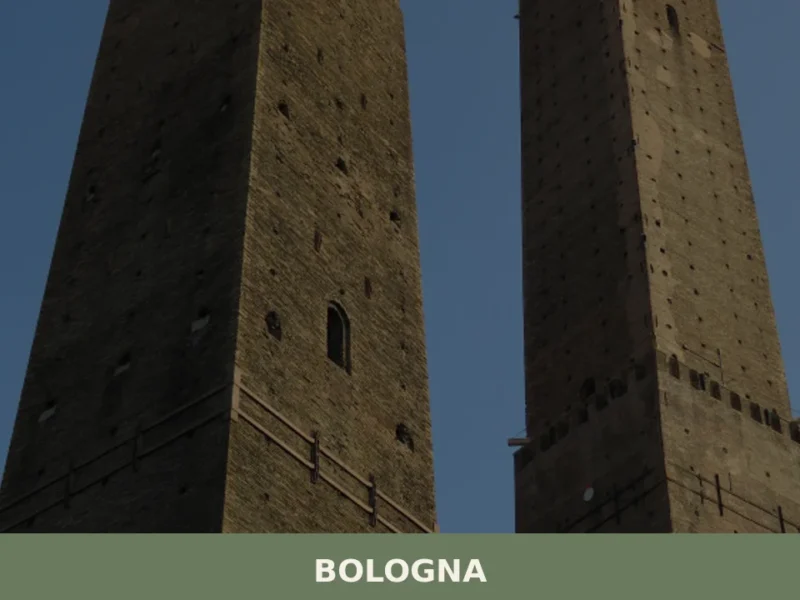
Bologna
What to see in Bologna: 388,000 inhabitants, UNESCO porticoes and the Two Towers. Plan your visit with our guide to tortellini, Mortadella IGP and top museums.
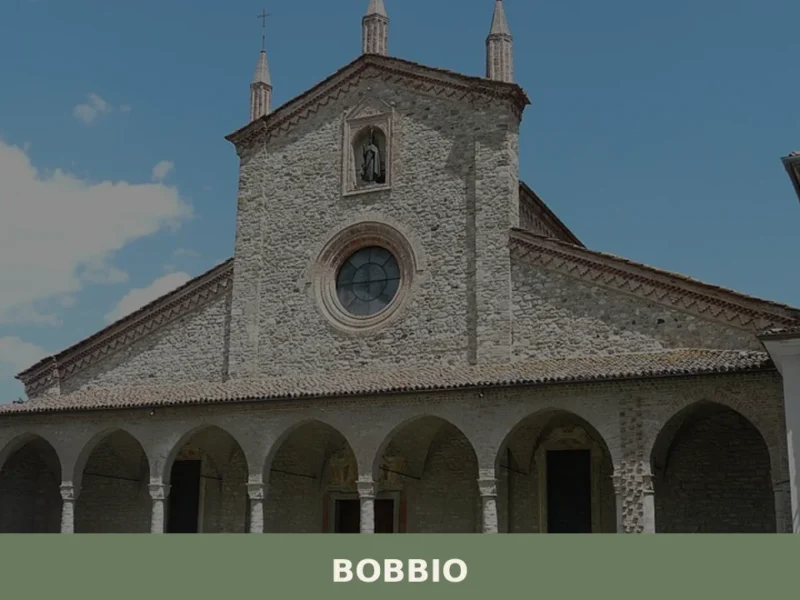
Bobbio
What to see in Bobbio: a town of 3,710 at 272 m in the Trebbia valley, with a 614 AD abbey, the medieval Ponte Gobbo and a hilltop castle. Plan your visit now.
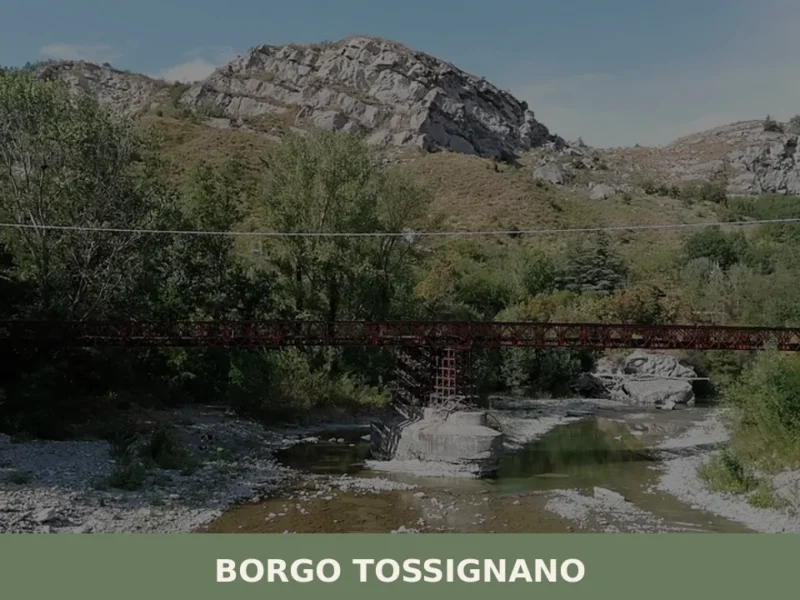
Borgo Tossignano
IN THIS ARTICLEWhat to see in Borgo Tossignano: a complete guide to the village in the Santerno ValleyHistory and origins of Borgo TossignanoWhat to see in Borgo Tossignano: 5 essential attractions3. The ruins of the Castle of Tossignano5. The badlands of the Santerno ValleyWhat to eat in Borgo Tossignano: local cuisine and regional productsWhen to […]



📝 Incorrect information or updates?
Help us keep the Lizzano in Belvedere page accurate and up to date.