


Mompeo
Discover Mompeo, a charming village in Lazio, Italy. Explore its rich history, stunning landscapes, and authentic Italian culture off the beaten path.
Discover Mompeo
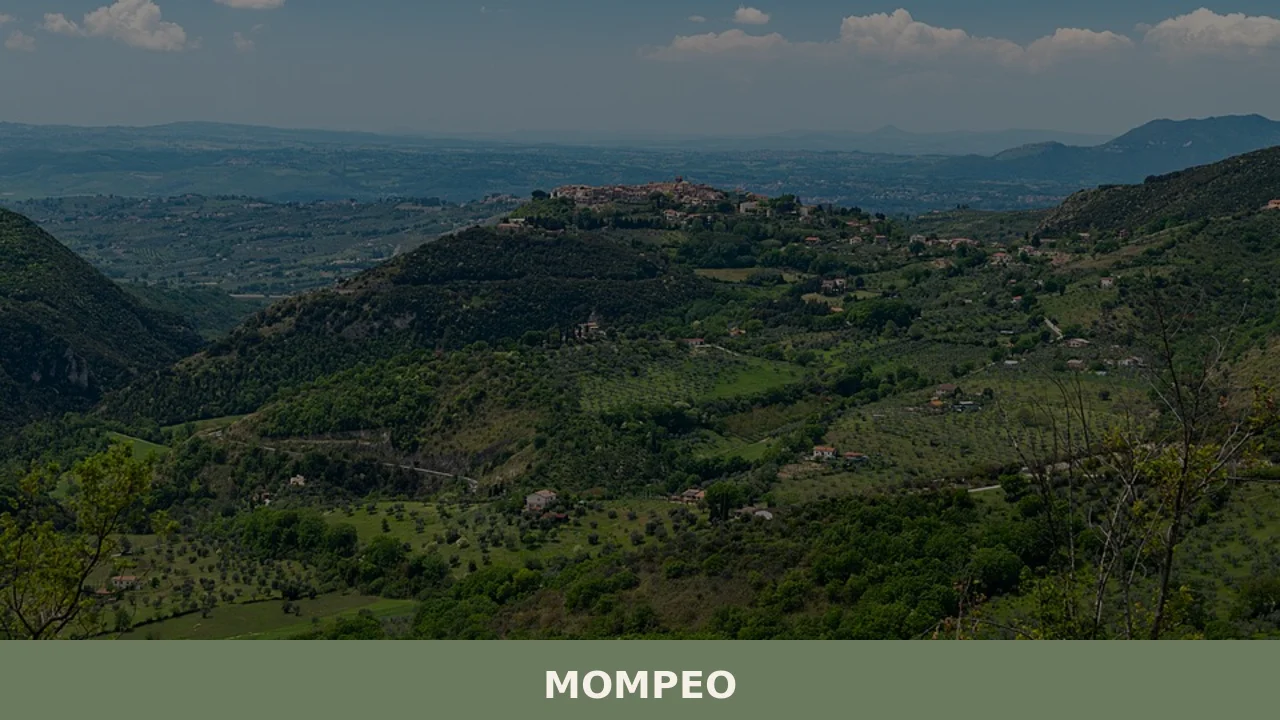
Mompeo sits at 457 metres above sea level in the province of Rieti, along the northern edge of the Lazio Sabina region. The village has a population of around 540 and occupies a compact hilltop site overlooking the valley below.
For anyone wanting to know what to see in Mompeo, the starting point is the layout of the place itself: a historic centre where every building reflects layers of centuries of rural and religious life.
The Sabina is one of the least-visited sub-regions of Lazio, which makes this village a genuine destination for travellers looking for places that have not been overrun by tourism.
History and Origins of Mompeo
The name Mompeo most likely derives from the Latin Mons Pompeii, a reference that some historical sources connect to the presence of Sabine populations in the area long before Roman colonisation.
The Sabina was one of the most active regions in the confrontation — and conflict — with Rome during the Republican era, and the territory around present-day Mompeo fell within that zone of cultural and military transition between the Latin and Oscan-Sabine worlds.
Like many other hilltop settlements in Lazio, the village developed during the medieval period, using its elevated position as a natural defence against the raids that marked centuries of instability.
Throughout the Middle Ages, Mompeo passed under the control of various local lordships, reflecting the feudal dynamics typical of the Sabina.
The area was contested between the papal authority, which held influence over much of central Lazio, and the Roman noble families who sought control of agricultural land and communication routes. The ecclesiastical structure of the village took shape during this period, with the construction of the earliest religious buildings that still serve as landmarks in the historic centre today.
Devotion to Sant’Egidio Abate, the village’s patron saint celebrated on 1 September, has its roots in this phase of medieval community consolidation.
In the modern era, Mompeo followed the administrative fate of the Lazio Sabina, passing first into the orbit of the Papal States and then, following Italian Unification, into the provincial structure that assigned it to the province of Rieti. Like many inland hill villages, the population has been affected by the depopulation processes of the twentieth century, which reduced the number of inhabitants to today’s 540.
Despite these changes, the historic core has retained its architectural coherence, with buildings in local stone and narrow lanes that still follow the original layout of the medieval settlement.
What to See in Mompeo: Main Attractions
Parish Church of Sant’Egidio Abate
The parish church is the religious and architectural centrepiece of the village, dedicated to the patron saint Egidio Abate.
The building occupies the most prominent position in the historic centre and retains structural elements dating back to the medieval layout, even though it was reworked in later centuries in line with the stylistic changes that affected many rural churches in Lazio between the seventeenth and nineteenth centuries. Anyone visiting Mompeo should not overlook this site: the stone façade and interior preserve liturgical furnishings and devotional works that document the community’s religious life across the centuries.
It is worth taking time in the square in front of the church, which provides a broad view over the village as a whole.
Medieval Historic Centre
The old core of Mompeo follows a compact and readable layout, with narrow streets connecting the main civic and religious buildings. The houses are built in local limestone, with doorways and window surrounds that recall the Sabine building tradition.
Walking through the historic centre means following a succession of views and perspectives that shift at every corner, with sudden openings onto the valley below.
The consistency of the built fabric, preserved by the limited development pressure of the post-war decades, makes this one of the finest examples of rural architecture in the Rieti Sabina. For anyone wondering what to see in Mompeo, a free walk through these streets provides the most complete answer.
Views over the Sabina and the Tiber Valley
At 457 metres above sea level, Mompeo offers a privileged vantage point over the Lazio Sabina and, on clear days, towards the Tiber valley. It is well worth climbing to the highest points of the village to get a sense of the surrounding landscape: rolling hills alternate with cultivated valley floors, with olive groves and vineyards that have shaped the land for centuries.
This viewpoint is not just visually rewarding but also geographically informative, as it helps explain why the settlement was established here in the first place — a position that provided visual command over the entire surrounding area.
The agrarian landscape of the Sabina, defined by the presence of the olive tree, is one of the defining features of the entire sub-region.
Tower and Defensive Structures
Like many hilltop villages in the medieval Sabina, Mompeo retains traces of the defensive structures that protected it during the centuries of feudal instability.
Elements of towers and walls, absorbed into the existing built fabric, bear witness to the settlement’s original military function. These structures, often converted into residential buildings over the course of time, are recognisable by the greater solidity of their masonry and by their commanding position relative to the surrounding buildings.
Reading these remains requires a close eye, but it rewards the observer with a direct understanding of how the village was organised around defence, long before comfort became a consideration.
Surrounding Countryside and Hillside Landscape
The municipal territory of Mompeo extends across the hills of the Rieti Sabina, with a landscape that alternates between oak and hornbeam woodland and traditional agricultural land. The minor roads leading out from the village allow for walks or cycle rides through a well-preserved rural environment, with views that shift constantly as the terrain changes elevation.
This natural setting is an integral part of any visit to the village: Mompeo extends well beyond its historic centre into a landscape that has retained pre-industrial characteristics increasingly difficult to find in the more urbanised parts of Lazio.
Local Food and Products of Mompeo
The cuisine of the Rieti Sabina, the territory to which Mompeo belongs, is built on an agricultural and pastoral foundation that has little in common with the more elaborate culinary traditions of regional capitals.
Farming families in this area developed over time a food culture based on preservation, seasonality and the full use of locally available ingredients.
Pig farming, dairy production and the cultivation of vegetables and pulses were for centuries the pillars of the diet in these hill communities. It is not a cuisine of abundance but of precision: every technique answers a practical need, and the results are dishes with a direct, recognisable flavour.
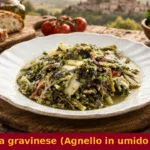
Among the traditional Sabine dishes found in the area around Mompeo, handmade pasta dishes hold a central place, typically dressed with pork-based sauces or seasonal vegetables.
Pasta with guanciale, in various forms and local variations, is one of the most deep-rooted dishes in this area’s cooking, as are pulse soups — lentils, beans, chickpeas — enriched with aromatic herbs gathered from the surrounding fields.
Main courses favour poultry and locally reared animals, with slow cooking methods that reflect the pace of rural life. Local cheeses, made from sheep’s and cow’s milk, appear both as ingredients and as a course in their own right, often accompanied by honey from the Sabine hills.
The territory of Mompeo falls within the production area of several products certified under Italy’s Traditional Agri-Food Heritage register (PAT).
These include Cacio fiore (PAT) — municipalities: Mompeo, Rieti, Poggio Mirteto, Magliano Sabina, Fara in Sabina, Montebuono, Torri in Sabina, Cantalupo in Sabina, Castelnuovo di Farfa — a fresh soft-paste cheese made with vegetable rennet extracted from wild artichoke or thistle flowers, which gives it a delicate, slightly herbaceous flavour.
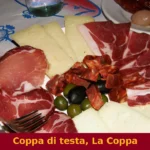
Also certified are Guanciale (PAT) — municipalities: Mompeo, Rieti, Amatrice, Accumoli, Poggio Mirteto, Magliano Sabina, Fara in Sabina — and Guanciale amatriciano (PAT) — municipalities: Amatrice, Accumoli, Mompeo, Rieti — cured meats made from pork cheek, worked with salt, pepper and spices according to techniques passed down through farming families of the Sabina and the Rieti area.
These products are an integral part of the culinary identity of the village and its surrounding territory.
Autumn is the most rewarding season for those who want to engage with local food culture: the olive harvest, the pressing of new oil and the processing of pork products all take place between October and December, when local markets and village festivals offer the best opportunity to buy directly from producers.
Visitors travelling through the Rieti Sabina at this time of year will find artisan workshops and small dairies open to visitors, where it is possible to observe production techniques and purchase cheeses and cured meats sourced locally.
Festivals, Events and Traditions of Mompeo
The most significant event in Mompeo’s civic and religious calendar is the patron saint’s festival in honour of Sant’Egidio Abate, celebrated on 1 September.
Sant’Egidio was a monk who lived between the seventh and eighth centuries, venerated in many rural European communities as the protector of the poor, the disabled and domestic animals. In the villages of the Rieti Sabina, the patron saint’s festival traditionally takes place with a solemn Mass, a procession carrying the statue of the saint through the village streets, and communal gatherings that bring together residents and the many emigrants who return to the village for this occasion.
The date of 1 September, on the cusp of summer and autumn, coincides with the end of the summer’s work and the beginning of the harvest season.
Beyond the patron saint’s festival, Mompeo’s traditional calendar reflects the agrarian rhythms of the Sabina: the recurring events tied to the cycle of the seasons, to sowing and harvesting, have always set the pace of community life, generating forms of conviviality and collective celebration closely linked to work in the fields.
Local culinary traditions come to the fore on these occasions, with the preparation of dishes that require collective effort and are passed down from one generation to the next. These events, even when they lack a formal tourist organisation, give visitors the opportunity to observe a rural community expressing its identity in the most direct way.
When to Visit Mompeo and How to Get There
The best time to visit Mompeo runs from spring through to autumn.
In spring, between April and June, the hillside landscape is at its most lively, with the woodland returning to full colour and the fields still fresh. Autumn, between September and November, is the season with the most activity: the patron saint’s festival on 1 September opens a period rich in events connected to the grape harvest, the olive picking and the processing of local products.
Summer is warm but not oppressive at this altitude, and the village offers cooler temperatures than the Lazio plain.
Visitors looking for quiet and an absence of crowds can come to Mompeo at any time of year, given the consistently modest volume of tourist traffic. For up-to-date information on local events and services, it is worth consulting the Mompeo municipal website.
If you are travelling by car, the most direct route from Rome follows the Via Salaria (SS 4) towards Rieti. After approximately 50 kilometres from the capital you reach the Poggio Mirteto area, from which you turn off into the Sabine hills following local signage.
The total distance from Rome is around 60–65 kilometres, with a journey time of just over an hour.
Travellers coming from Rieti cover approximately 25 kilometres.
The nearest railway station is Poggio Mirteto-Stimigliano, on the Rome–Rieti–L’Aquila line, from which you need to continue by car or taxi to reach the village. The main international airport is Rome Fiumicino Airport, approximately 90 kilometres away, reachable in around an hour and a half via the ring road and then the Via Salaria.
Other Villages to Explore in Lazio
Those who have enjoyed visiting Mompeo and want to explore more of rural Lazio will find the region offers a number of other villages, each with its own distinct character.
In the Viterbo area, Barbarano Romano is a hillside village set in a territory rich in Etruscan necropolises and natural parks, offering a route through archaeology and volcanic landscape that fits well within a broader itinerary through the Lazio Tuscia.
Nearby, Villa San Giovanni in Tuscia presents a compact and well-preserved historic centre that is representative of the medieval architecture of the province of Viterbo.
Moving towards Lake Bolsena, Lubriano occupies a dramatic position on the edge of the tufa plateau above the Tiber valley, with views that extend as far as the Umbrian hills. On the shores of the lake itself, Gradoli is known for its Renaissance fortress that once belonged to the Farnese family and for a culinary tradition centred on lake fish — a gastronomic context that complements the land-based cooking of the Rieti Sabina well. Combining these villages into a multi-day itinerary provides a cross-sectional reading of inland Lazio that goes well beyond the conventional tourist circuit.
In Lazio More villages to discover
Accumoli
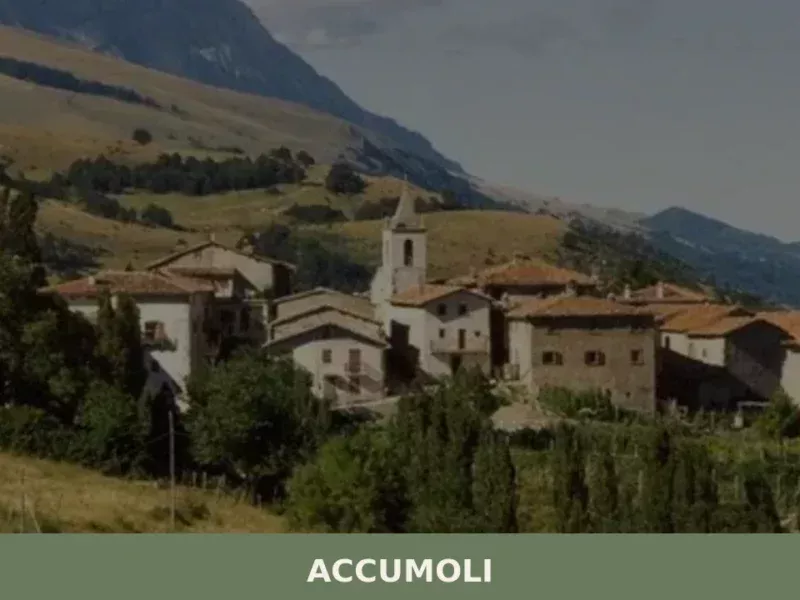
A chill, thin air descends with the late afternoon sun, drawing long shadows across the uneven cobblestones of the piazza. The scent of woodsmoke, faint but persistent, mingles with the dry fragrance of ancient stone. At 855 meters above sea level, the village of Accumoli, nestled within the Rieti province of Lazio, feels like a […]
Morro Reatino
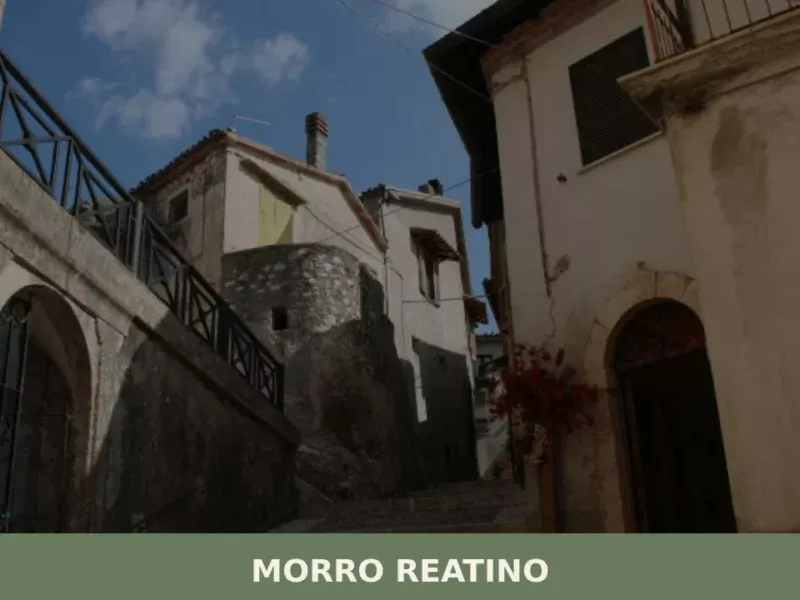
What to see in Morro Reatino: a village at 750 m in Rieti with 353 residents. Visit the medieval church of San Lorenzo, the historic centre, and discover PAT-certified guanciale amatriciano.
Casaprota
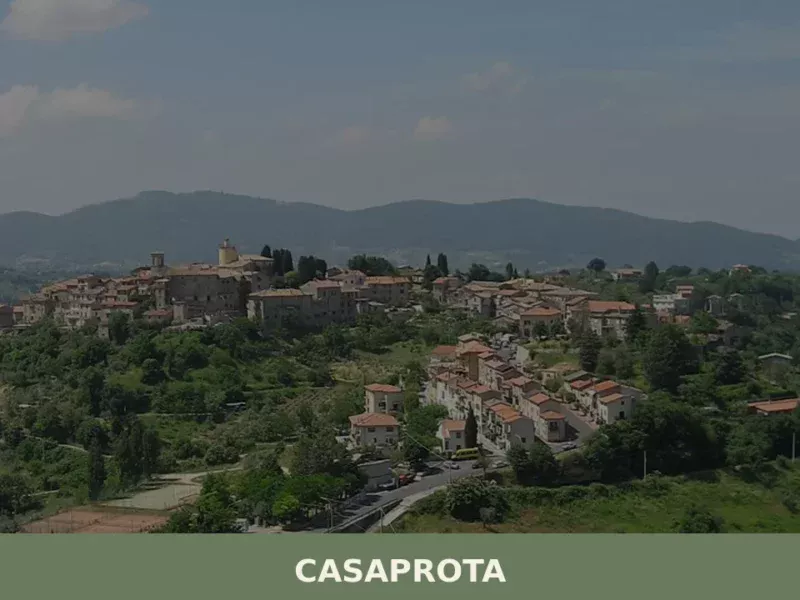
Discover Casaprota, a charming village in Lazio, Italy. Explore its history, culture, and scenic landscapes in the heart of the Italian countryside.




📝 Incorrect information or updates?
Help us keep the Mompeo page accurate and up to date.