


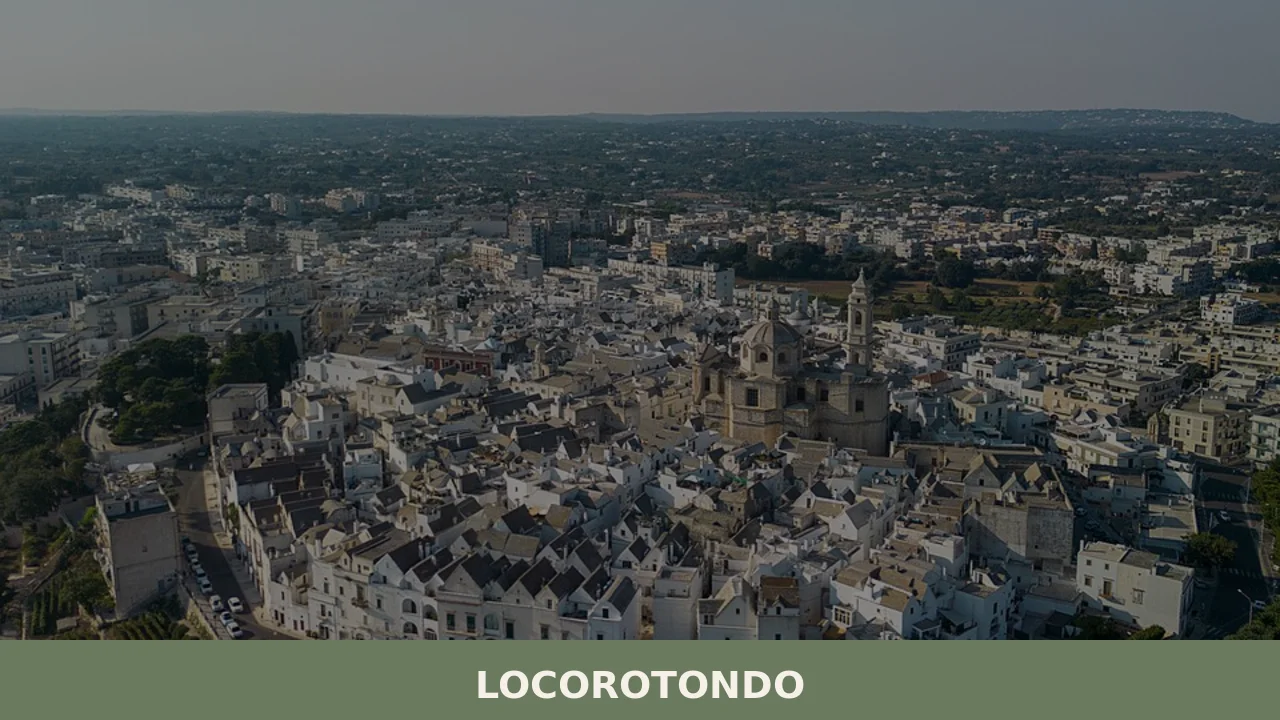
Locorotondo
 Hills
Hills
The toponym Locorotondo, documented as early as the 12th century as “Luogo Rotondo” (Round Place), derives from the concentric configuration of its historic center, an urban feature that still distinguishes it within the Itria Valley landscape. Located 410 meters above sea level, this municipality in the province of Bari has 14,258 inhabitants and presents a […]
Discover Locorotondo
The toponym Locorotondo, documented as early as the 12th century as “Luogo Rotondo” (Round Place), derives from the concentric configuration of its historic center, an urban feature that still distinguishes it within the Itria Valley landscape. Located 410 meters above sea level, this municipality in the province of Bari has 14,258 inhabitants and presents a distinct architectural and cultural overview. For those wondering what to see in Locorotondo, the experience focuses on observing its “cummerse,” houses with sloping roofs covered in chiancarelle (limestone tiles), and on perceiving an urban fabric that has retained its original structure. Its patron saint festival, dedicated to Saint George the Martyr, is celebrated on April 23rd, a time when the village comes alive with rituals and events reflecting local tradition.
History and Origins of Locorotondo
The first records of Locorotondo’s settlement date back to the 10th century, a period when the area was under Benedictine control. The village grew around a castle, likely fortified, which defined its circular layout, giving it its name. Over the centuries, the territory came under various dominations, from the Normans to the Swabians, from the Angevins to the Aragonese, each leaving its mark on the social and architectural fabric. The greatest expansion occurred between the 17th and 18th centuries, when agriculture and viticulture became economic pillars,
Frequently asked questions about Locorotondo
What is the best time to visit Locorotondo?
The ideal period is from April to June and from September to October, when the weather is mild and the Valle d'Itria countryside is at its most scenic. April 23rd is particularly special: the feast of San Giorgio Martire, patron saint of the village, fills the historic center with processions, music and local traditions. Summer (July–August) is lively but crowded and hot. Autumn offers grape harvest atmosphere and quieter streets, perfect for slow tourism. Winter is peaceful and uncrowded, ideal for those who enjoy authentic village life without tourist pressure.
What are the historical origins of Locorotondo?
Locorotondo's origins date to the 10th century, when the area was under Benedictine influence. The settlement developed around a fortified nucleus that shaped its distinctive circular layout, documented from the 12th century under the Latin name 'Luogo Rotondo.' The village passed through Norman, Swabian, Angevin and Aragonese rule, each leaving architectural and cultural traces. Between the 17th and 18th centuries the town expanded significantly, driven by agriculture and viticulture, which became the main pillars of its local economy and shaped much of its existing urban fabric.
What to see in Locorotondo? Main monuments and landmarks
The historic center is itself the main attraction: its concentric streets lined with whitewashed houses featuring characteristic 'cummerse' — structures with pitched roofs covered in chiancarelle limestone tiles — create a unique and photogenic urban landscape. The Chiesa Madre di San Giorgio Martire, the parish church dedicated to the patron saint, stands at the heart of the village. The belvedere terrace offers sweeping views over the Valle d'Itria and its iconic trulli-dotted countryside. Walking the circular perimeter of the old town reveals the geometry that gave Locorotondo its name.
Where to take the best photos in Locorotondo?
The belvedere of Locorotondo, overlooking the Valle d'Itria, is the most celebrated viewpoint: from here the panorama stretches across olive groves, vineyards and clusters of trulli toward Alberobello and Martina Franca. Inside the historic center, Via Nardelli and the narrow whitewashed alleys surrounding the Chiesa Madre offer highly photogenic perspectives, especially in the golden hour light. The rooftops of the cummerse, with their distinctive pitched chiancarelle tiles, are another unmissable visual subject unique to this village.
Are there museums, churches or historic buildings to visit in Locorotondo?
The Chiesa Madre di San Giorgio Martire is the principal religious monument, a baroque-influenced church dedicated to the village's patron saint and centrally located in the historic center. The small church of Santa Maria della Greca is one of the oldest in the area, with documented medieval origins. Locorotondo's historic center itself functions as an open-air architectural museum, where the 'cummerse' buildings represent a typology unique to this town within the Valle d'Itria. Visiting hours for churches generally follow morning and late-afternoon schedules; admission is free.
What can you do in Locorotondo? Activities and experiences
Locorotondo is a hub for wine tourism: the area produces the DOC Locorotondo white wine, and several local wineries and cantinas offer tastings and cellar tours. Cycling and walking routes through the Valle d'Itria connect the village to Alberobello, Martina Franca and Cisternino, making it ideal for active travelers. The village hosts the Locorotondo Festival each summer, a well-known music event. Food experiences focus on local masserie and restaurants serving traditional Pugliese cuisine. The compact historic center is easily explored on foot in a few hours.
Who is Locorotondo suitable for? Families, couples, hikers, solo travelers?
Locorotondo suits couples seeking a romantic, picturesque village with whitewashed architecture and panoramic views over the Valle d'Itria. Food and wine lovers are drawn by the DOC Locorotondo wine and local masseria experiences. It is well suited to cultural travelers interested in vernacular architecture and the distinctive cummerse building tradition. Hikers and cyclists appreciate the surrounding countryside routes connecting nearby Alberobello and Martina Franca. Families with older children will enjoy the safe, walkable historic center. It is less oriented toward beach tourism, given its inland hilltop position at 410 meters.
What to eat in Locorotondo? Local products and specialties
Locorotondo is best known enogastronomically for its DOC white wine — Locorotondo DOC — produced mainly from Verdeca and Bianco d'Alessano grapes, known for its dry, delicate profile and long local tradition. The broader Pugliese table offers orecchiette with cime di rapa, bombette (meat rolls typical of the Valle d'Itria), aged local cheeses and fave e cicoria. Extra virgin olive oil from the Murgia and Valle d'Itria area is a staple. Several restaurants and masserie in and around the village serve these specialties using locally sourced ingredients.
Nearby Villages near Locorotondo
In Apulia More villages to discover
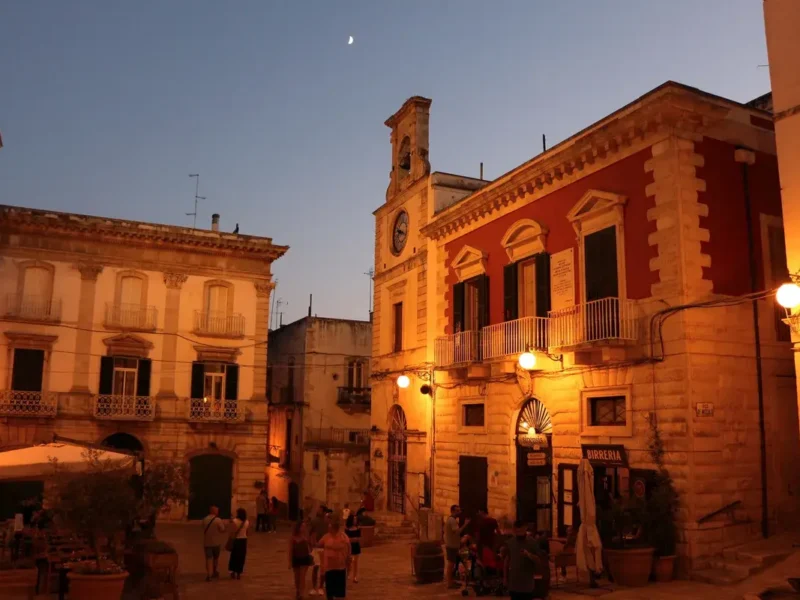
Putignano
Hills
What to see in Putignano: hilltop town at 372m in the Murgia Barese. Grotta del Trullo, 6-century-old Carnival, PAT cuisine. Plan your visit now.
Corsano
 Sea
Sea
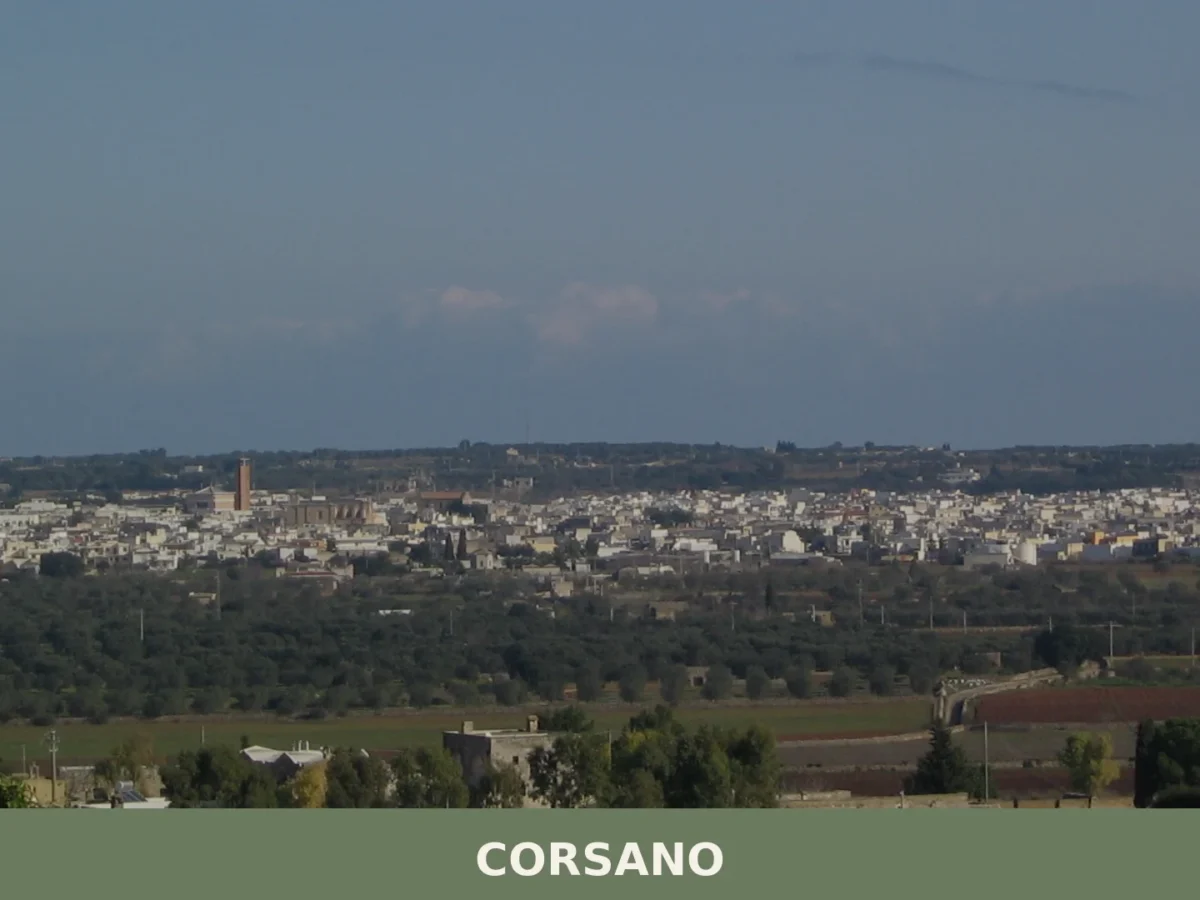
Population 5,077. Medieval feudal stronghold with nine chapels, a 17th-century baronial castle, and distinctive artisanal tie production.
Ascoli Satriano
Hills
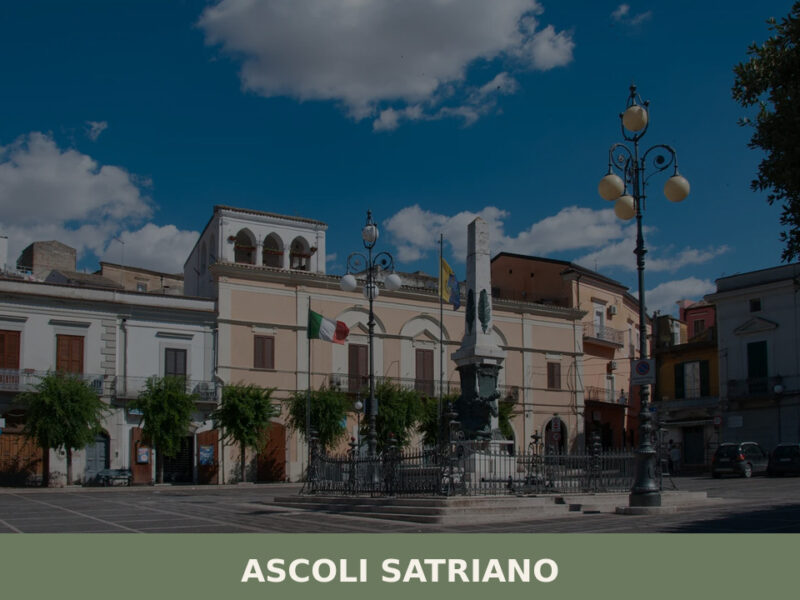
Discover Ascoli Satriano, an ancient hilltop village in Puglia's Daunia hills. From Roman bridges to Daunian treasures, here's your complete guide.
Maglie
 Plains
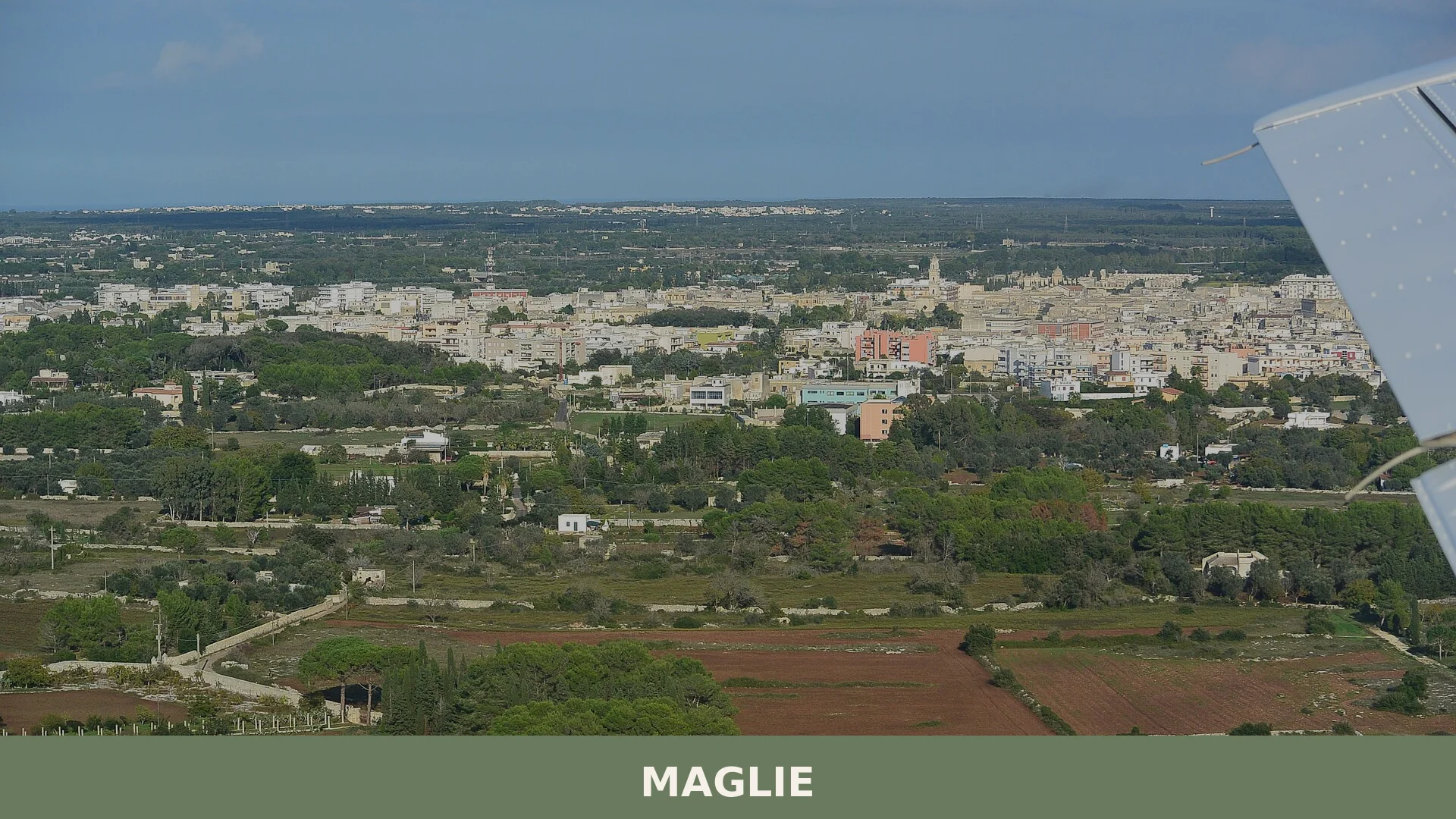
A town of 13,265 inhabitants rooted in medieval feudalism and Baroque art. Maglie sits at the crossroads of Salento's agricultural identity, anchored by its cathedral and a layer of history that reaches back to the Bronze Age.
Gravina in Puglia
Hills
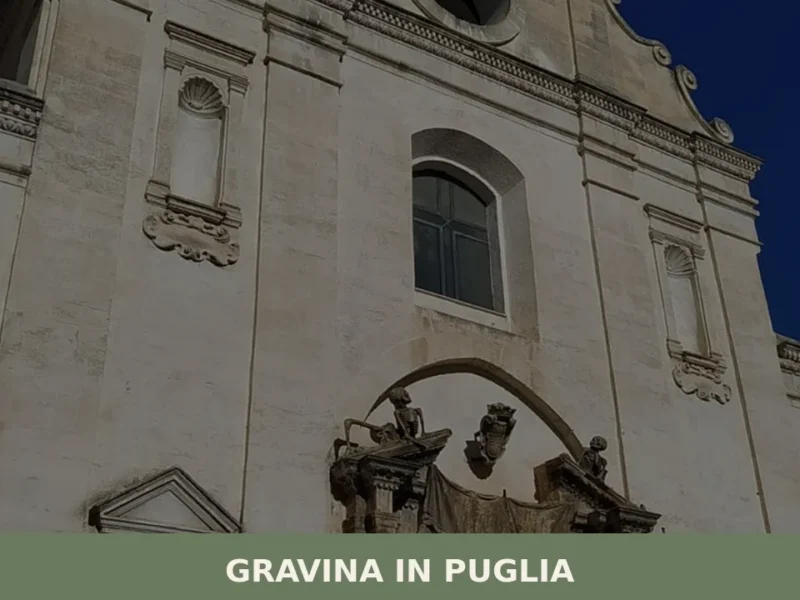
In 1092, Humfred of Hauteville confirmed the privileges of the cathedral dedicated to Santa Maria Assunta, a document that fixes in the historical record the ecclesiastical rank of Gravina in Puglia well before Frederick II chose it as an imperial hunting reserve. Today, anyone walking along the edge of the gravina — the karstic canyon […]
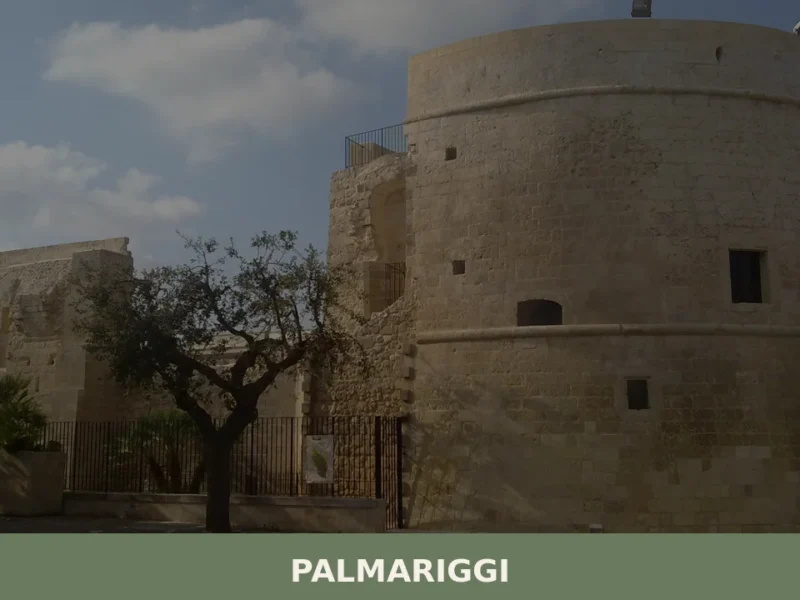
Palmariggi
Plains
What to see in Palmariggi, Puglia, Italy: discover the Aragonese Castle, a prehistoric menhir, and the Sanctuary of Madonna di Montevergine. Population 1,542. Explore now.
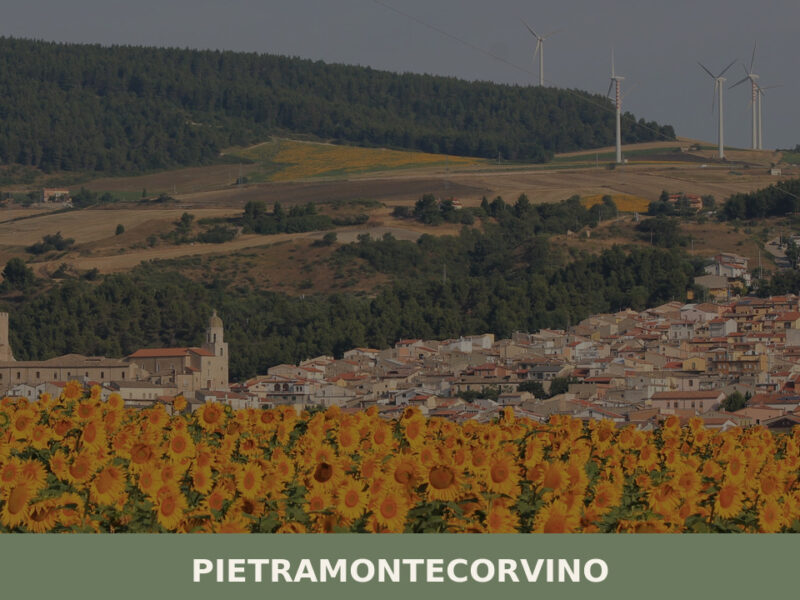
Pietramontecorvino
Hills
A medieval hill village at 456 metres above the Tavoliere plain, Pietramontecorvino preserves a rock-carved old quarter, Norman tower, and the quiet rhythms of Daunia's agricultural past.
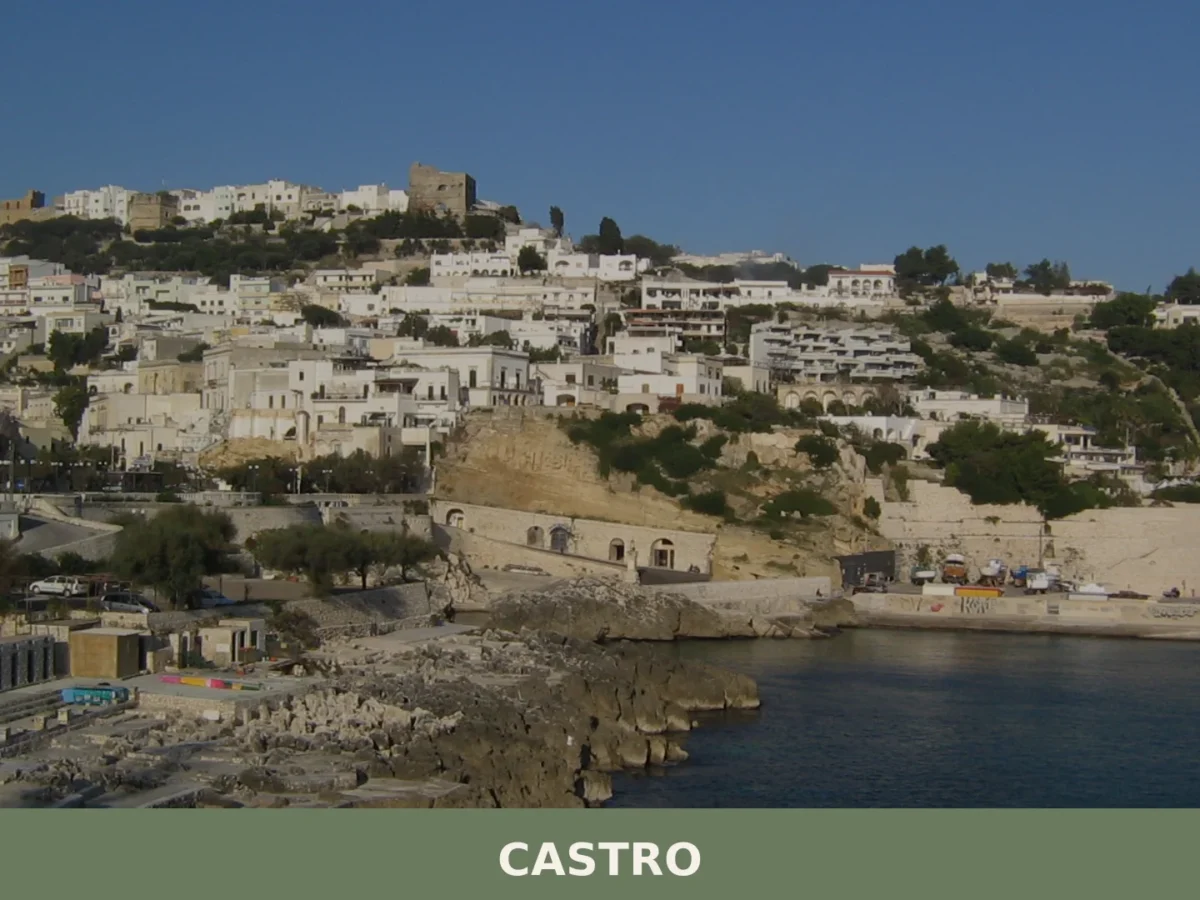
Castro
Sea
Population 2,318 on 4.44 km². Visit for the 12th-century castle, 11th-century church, and Byzantine remains overlooking the Canale d'Otranto.
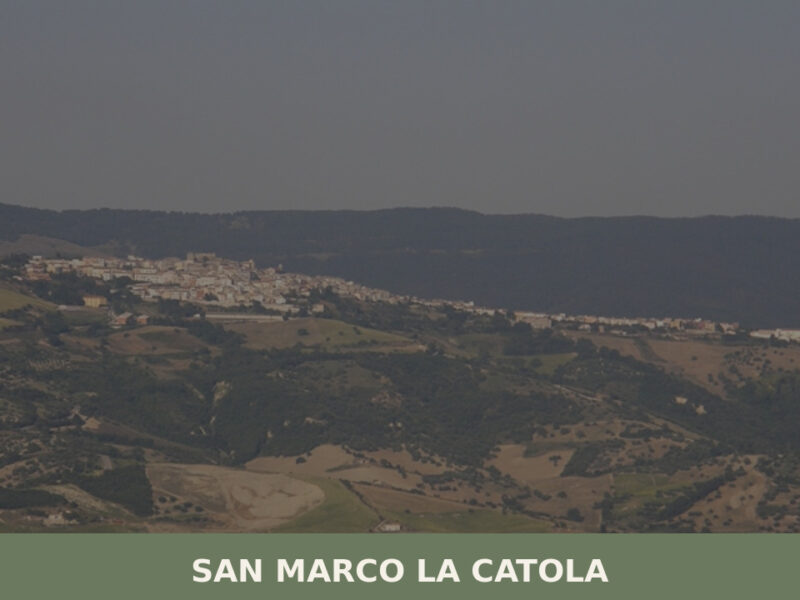
San Marco la Catola
 Mountain
A quiet hill village at 683 metres in the Daunia mountains of Puglia. Discover what to see in San Marco la Catola, from its medieval core to the Fortore valley.
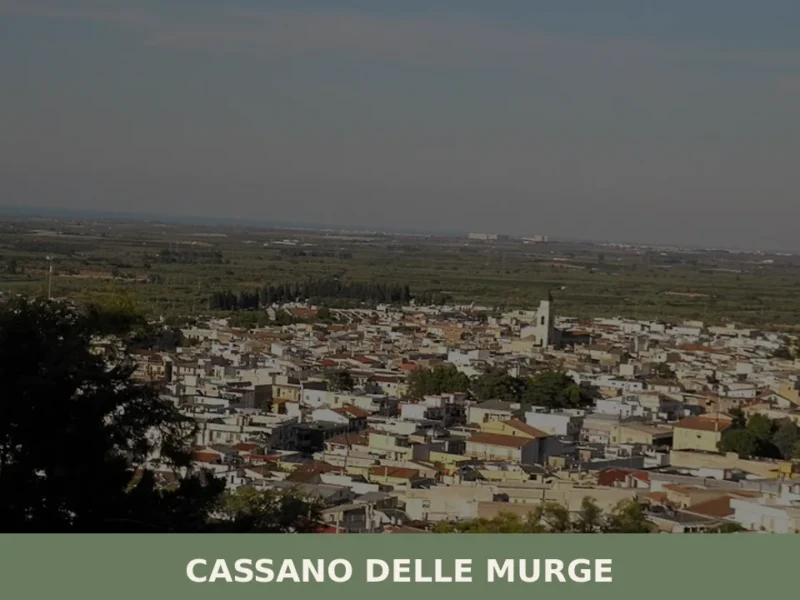
Cassano delle Murge
Hills
Cassano delle Murge, a municipality in Puglia located in the Metropolitan City of Bari, stands at 341 meters above sea level, positioned on the Murge plateau. Its territory, spanning approximately 89 km², includes a significant portion of the Bosco di Mercadante, a forest area important for the local ecosystem. With a population of 14,395 inhabitants, […]
🧀 Italian traditional products



🏡 Know Locorotondo better than we do?
If you’re a local or have been there, your knowledge matters: add what’s missing or fix a detail on this page.