


Monteciccardo
Monteciccardo first appears in a document from 1233 under the name Mons Sicardi, referring to a Lombard lord of whom no other trace survives. Standing at 384 metres above sea level, with its 1,643 inhabitants spread between the historic centre and scattered hamlets, the village commands a stretch of the Pesaro hills sloping down towards […]
Discover Monteciccardo
Monteciccardo first appears in a document from 1233 under the name Mons Sicardi, referring to a Lombard lord of whom no other trace survives. Standing at 384 metres above sea level, with its 1,643 inhabitants spread between the historic centre and scattered hamlets, the village commands a stretch of the Pesaro hills sloping down towards the Foglia valley. Understanding what to see in Monteciccardo means finding your way among fourteenth-century walls, rural churches, and an agricultural landscape still shaped by sharecropping. The province of Pesaro and Urbino counts dozens of municipalities with fewer than two thousand residents: Monteciccardo is one of them, and its compact urban layout reflects that scale.
History and origins of Monteciccardo
The place name Mons Sicardi — later evolving into Monteciccardo — points to a fortified settlement linked to the Lombard presence in the Marche hinterland between the seventh and eighth centuries. The earliest documented mention dates to the thirteenth century, when the castle appears under the jurisdiction of Pesaro. In 1283 the village was caught up in the Guelph–Ghibelline conflicts that swept through the northern Marche, enduring sieges and changing hands among local noble families. The circuit of walls that still defines the historic centre dates largely to the fourteenth century, with later modifications attributed to Malatesta rule.
Under the Malatesta, lords of Rimini and much of the Montefeltro area, Monteciccardo took on the defensive layout it retains today: a walled perimeter with corner towers, a main entrance through an arched gateway, and a dense built fabric within. In 1462, with the fall of Sigismondo Pandolfo Malatesta, the village passed to Federico da Montefeltro and subsequently to the Duchy of Urbino. Annexation by the Papal States in 1631, upon the death of the last Della Rovere duke, marked the beginning of a long period of administrative marginality. Monteciccardo remained an autonomous municipality until 2021, when it was merged into the municipality of Pesaro, formally losing its municipal independence.
The village’s demographic structure reflects the broader dynamics of the Marche hinterland: a steady decline since the post-war period, with an exodus towards the coast and the industrial areas of the lower Foglia valley. Of the 1,643 registered inhabitants, a significant proportion live in the scattered farmhouses on the surrounding hills, a direct legacy of the sharecropping system that shaped the landscape until the 1960s.
What to see in Monteciccardo: 5 main attractions
1. The Malatesta walls and the entrance gate
The fourteenth-century wall circuit preserves continuous stretches along the southern and western sides of the village. The entrance gate, with a round brick arch, bears traces of the original defensive structures — holes for the portcullis and corbels of what was probably a guardhouse. The upper walkway is partly accessible and provides an open view over the hills planted with wheat and sunflowers, extending as far as the profile of Monte Carpegna.
2. Church of San Sebastiano
Built in the fifteenth century within the walled perimeter, the church has a gabled brick façade and a single-nave interior. It holds a wooden crucifix datable to the sixteenth century and remnants of painted decorations on the side walls, attributed to local workshops from the Urbino area. The original terracotta floor was partially replaced during twentieth-century restorations, but some sections along the walls retain their handcrafted tiles.
3. Civic tower
The tower, square in plan, rises above the residential core and is visible from a distance along the surrounding ridgelines. Dating to the Malatesta period, it underwent a rebuilding of its upper section in the eighteenth century, recognisable by the different brickwork. From the base it measures roughly twenty metres in height. The adjacent building housed the administrative functions of the small municipality before its merger with Pesaro.
4. Church of the Madonna delle Grazie
Located along the road connecting the village to the plain, this seventeenth-century rural church preserves a votive image of the Virgin that gave rise to a local devotion documented in pastoral visits of the period. The building, rectangular in plan with a small bell gable, represents the typical Marche country church: functional, free of excessive ornamentation, integrated into the road network that linked the farmhouses to the centre.
5. Panorama from the upper square
The square at the highest point of the village — approximately 384 metres — serves as a natural viewpoint. On clear days, to the east the Adriatic coastline is visible around Fano and Pesaro, while to the west the skyline breaks into the first foothills of the Apennines. The drop between the square and the Foglia valley floor exceeds three hundred metres, and the arrangement of the fields — long parallel strips following the contour lines — is clearly legible from this vantage point.
Food and local products
The table in Monteciccardo reflects the peasant cooking of the Pesaro hinterland, built on a foundation of handmade fresh pasta and farmyard meats. Passatelli in brodo — a dough of breadcrumbs, Parmesan, and eggs pressed through a wide-holed mould — is the most common first course in the cold months, served in chicken or capon broth. Crescia sfogliata, a kind of multi-layered flatbread made with lard, is the Pesaro variant of the better-known crescia of Urbino. It is eaten filled with prosciutto, grilled sausage, or sautéed wild greens. Casciotta d’Urbino DOP, a semi-cooked cheese made from a blend of sheep’s and cow’s milk, is the most representative PDO product of the area and is used both at the table and in the preparation of first courses and fillings. Among cured meats, salame di Montefeltro retains its traditional production method with natural casing and ageing in ventilated cellars.
Olio extravergine d’oliva Cartoceto DOP, produced in the hilly area a few kilometres from Monteciccardo, is obtained predominantly from the Raggiola cultivar by cold pressing. Visciolata, a liqueur of sour cherries (wild cherries) macerated in red wine with added sugar, is a homemade preparation still common among families in the area. As for wines, the territory falls within the Bianchello del Metauro DOC zone, a dry white from Biancame grapes grown on the hills between the Metauro and the Foglia, and within the Colli Pesaresi DOC in its Sangiovese type. Moretta di Fano — coffee laced with anise, rum, and brandy, served with a strip of lemon peel — is the drink that closes meals in bars and trattorias across the entire province. Truffles, in particular the prized white truffle (Tuber magnatum Pico), are hunted in the oak and hornbeam woods of the surrounding hills between October and December.
When to visit Monteciccardo: the best time
The hill climate of the Pesaro hinterland brings hot but breezy summers — temperatures at 384 metres average three to four degrees lower than on the coast — and cold winters with possible frosts between December and February. The months between May and June offer the most favourable conditions for visiting the village: daylight is long, the wheat fields are still green, and daytime temperatures range between 20 and 25 degrees. September and October, with the grape harvest and truffle hunting, bring a particularly active agricultural landscape.
Over the years the village has hosted events linked to rural culture and folk music, generally concentrated in the summer period. Proximity to Pesaro — home since 1980 to the Rossini Opera Festival, held in August — makes it possible to combine a visit to Monteciccardo with the opera programme on the coast. For those travelling by bicycle, the secondary roads connecting the hilltop villages can be ridden safely outside the beach-tourism season, when traffic towards the coast drops considerably.
How to reach Monteciccardo
From the north and south, the A14 Bologna–Taranto motorway is the main link: the Pesaro exit is roughly 15 kilometres from the village, a twenty-minute drive along the SP 30 that climbs the hill via Ginestreto. From Urbino the distance is about 25 kilometres along provincial roads that cross a continuous hilly landscape. The nearest railway station is Pesaro, on the Adriatic line Bologna–Lecce, served by regional trains and Intercity services at high frequency.
Rimini “Federico Fellini” airport is approximately 50 kilometres away and is the closest air hub, though with a limited number of connections. Ancona-Falconara airport is about 75 kilometres away and reachable in an hour by car. Public transport between Pesaro and Monteciccardo is provided by Adriabus inter-urban buses, with limited services especially on public holidays: a car remains the most practical way to reach the village and move between its scattered hamlets.
Other villages to discover in the Marche
Those exploring the Pesaro hinterland from Monteciccardo can extend their itinerary towards Apecchio, about fifty kilometres to the south-west, already in the upper Candigliano valley. Apecchio is home to a craft brewery that since 1996 has been producing beer with Apennine spring water, and its historic centre retains a Della Rovere ducal palace with an arcaded courtyard. The transition from the cereal-growing hills of Monteciccardo to the beech forests of the Apennines takes less than an hour by road.
In the opposite direction, towards the middle Metauro valley, Fratte Rosa is about 30 kilometres away and represents one of the historic centres of ceramic production in the Marche. The village is known for its terrecotte di Fratte Rosa, in particular wheel-thrown kitchen vessels made from local clay, a tradition documented since at least the sixteenth century. Visiting the workshops still active in the historic centre allows you to observe a production technique that uses the same clay quarries exploited by generations of potters.
In Marche More villages to discover
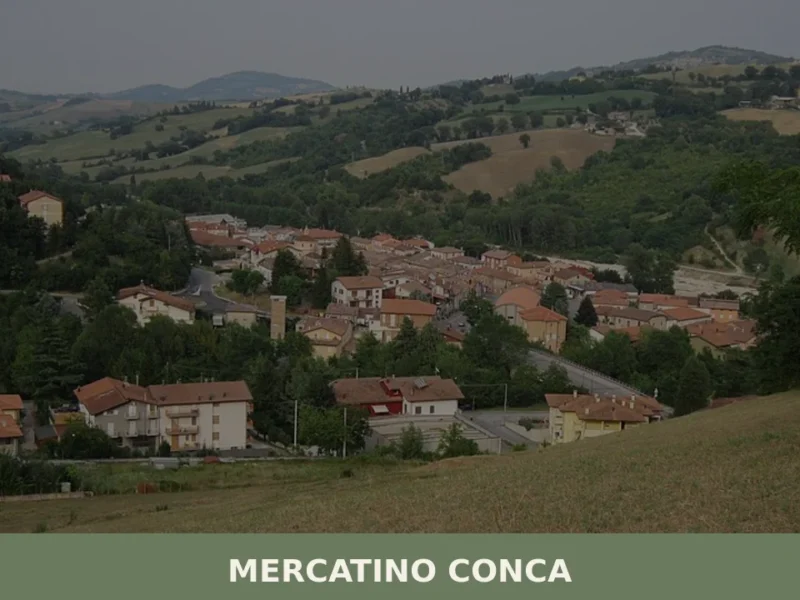
Mercatino Conca
At 275 meters above sea level, in the province of Pesaro and Urbino, lies Mercatino Conca, a settlement with 1,033 residents. The name itself, “Mercatino” (meaning “little market”), suggests a historical commercial function, likely linked to its position in the Conca river valley, a crossroads for trade and activities since ancient times. For those wondering […]
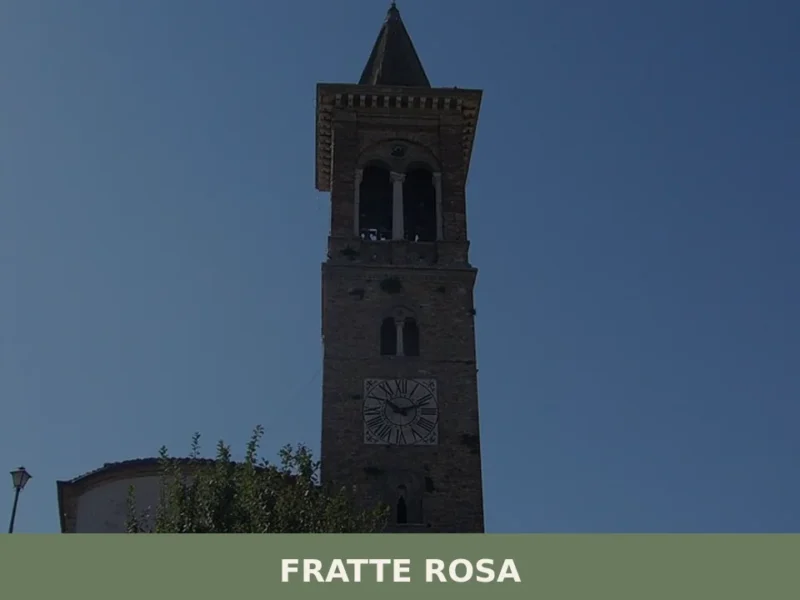
Fratte Rosa
With its 847 inhabitants and an altitude of 419 meters above sea level, Fratte Rosa is located in the province of Pesaro and Urbino, a hilly area of the Marche region. The village’s name “Rosa” is historically linked to the color of a local clay, an essential component for the practice of pottery, documented in […]
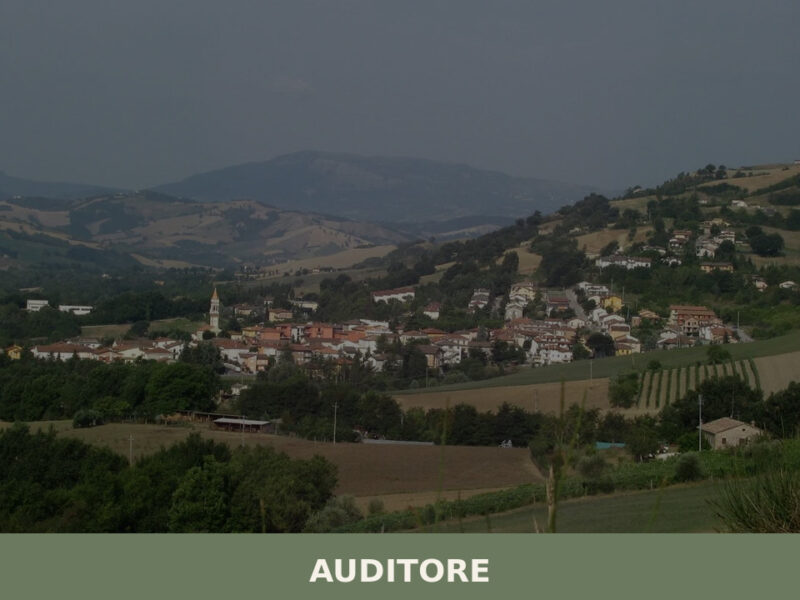
Auditore
Morning light falls across a line of stone houses the colour of dry wheat, and somewhere below the rooftops a church bell marks the hour with a single, unhurried stroke. Auditore sits in the hill country of the province of Pesaro e Urbino, a settlement of 1,631 people where the Foglia river valley opens toward […]

📝 Incorrect information or updates?
Help us keep the Monteciccardo page accurate and up to date.