


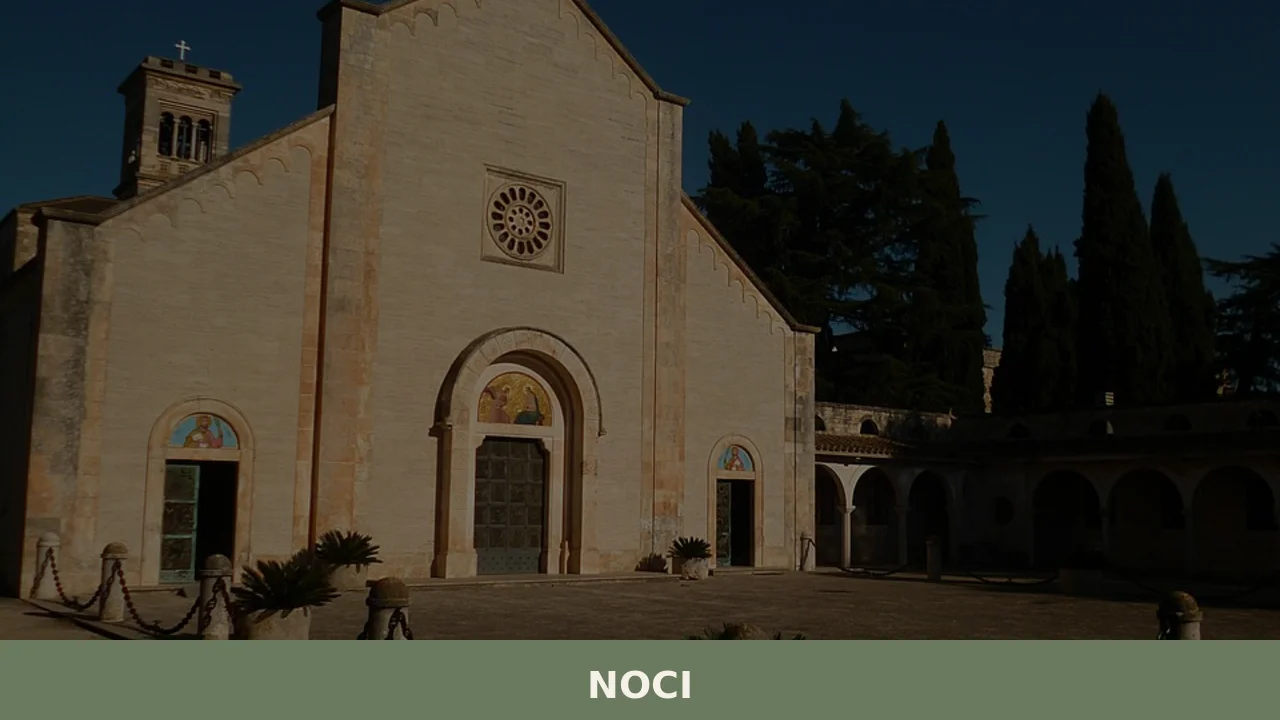
Noci
What to see in Noci, a village at 420 m on the Murge plateau. 5 attractions, medieval gnostre, Acquasale PAT, sagre and patron feasts. Plan your visit now.
Discover Noci
The first thing you notice, heading inland from the Bari coast, is the change in light. At 420 metres above sea level, the air turns drier, the green of the olive groves gives way to the darker tones of the oak woods, and the white of the houses stands out sharply against a sky that seems closer.
Noci appears like this — a cluster of rooftops and bell towers along the ridge of the south-eastern Murge, with its 18,361 inhabitants spread between the old town and the rural contrade dotted with masserie and trulli.
Asking yourself what to see in Noci means preparing for an itinerary that cuts across Norman, Angevin and Baroque layers, but also through agricultural and gastronomic rituals still very much alive, tied to the cycle of the seasons and the karst landscape.
History and origins of Noci
The name “Noci” most likely derives from the Latin nucetum, meaning walnut grove, pointing to the abundance of walnut trees that once characterised this stretch of the Murge.
The earliest documentation dates to the Norman period: a document from around 1100 records the existence of a fortified hamlet that Count Godfrey of Hauteville, nephew of Robert Guiscard, is believed to have helped consolidate as part of the territorial reorganisation of southern Italy.
Before the Normans, however, the area was already inhabited: remains of rock settlements and caves used as dwellings in the surrounding gravine bear witness to a human presence going back at least to the Early Middle Ages, if not to the era of the Peucetians, the Italic people who occupied this part of present-day Puglia.
During the 13th century, under Swabian rule and Frederick II, Noci benefited from its position along the inland routes connecting Bari to the Salento, acquiring a role as a trading hub for products of the Murge plateau — grain, legumes, olive oil, timber. The transition to Angevin and then Aragonese rule brought new fortifications and the strengthening of the ecclesiastical fabric, with the founding of churches and monasteries that still define the silhouette of the old town today.
In 1531, during the Italian Wars, the town was sacked by French troops, an event that left a deep mark on local memory and led to the reinforcement of the town walls in the following decades.
Between the 17th and 18th centuries, Noci experienced a phase of demographic and architectural expansion, with the construction of noble palazzi and the remodelling of the main churches in Baroque forms.
The economy was based on olive cultivation, sheep farming and durum wheat production — activities that shaped the landscape of the surrounding contrade into a mosaic of dry-stone walls, jazzi (sheepfolds) and trulli, the latter serving not only as peasant dwellings but also as functional structures for processing and storing agricultural products. In 1861, at the Unification of Italy, Noci had around 9,000 inhabitants.
The 20th century brought emigration towards the industrial North and the Americas, but the town maintained a cohesive social fabric, bound to religious confraternities and the cycles of patron saint festivals that still mark the community calendar today. For a deeper look at the history of the municipality, see the dedicated Wikipedia entry.
What to see in Noci: 5 top attractions
1. Chiesa Madre di Santa Maria della Natività
Standing at the core of the old town, the Chiesa Madre is Noci’s religious and architectural focal point. The original structure dates to the 12th century, the Norman era, but the building underwent deep transformations in subsequent centuries, with Baroque interventions clearly visible on the façade and side altars. Inside, it preserves 18th-century canvases and a medieval baptismal font carved from local stone.
The bell tower, visible from various angles around the town, serves as a reference point for navigating the maze of lanes in the old nucleus. The church is also the starting point for the processions linked to the feast of the Madonna della Croce, on 3 May, one of the most deeply felt celebrations in the community.
2. Sanctuary of the Madonna della Croce
Just outside the built-up area, along the road leading towards the rural contrade, stands the Sanctuary dedicated to the Madonna della Croce, patron saint of Noci, celebrated on 3 May. The current building, dating to the 17th century with later alterations, houses a sacred image that is the object of intense popular devotion.
According to local tradition, the cult originated after a wooden cross was found in a field, an event that prompted the community to erect a first place of prayer on the spot. The area around the sanctuary offers an open view over the Murge countryside, with rows of olive trees sloping down towards the gravine. In the weeks leading up to the patron saint’s feast, the sanctuary becomes the centre of an intense ritual preparation involving the entire town.
3. The old town and the gnostre
Noci’s old town stands out for a distinctive urban layout: the gnostre, small irregularly shaped piazzas around which clusters of houses are organised. The term, probably derived from the Latin claustrum through the local dialect, refers to these semi-private communal spaces that functioned as shared courtyards, places for collective work and points of social gathering.
Walking through the gnostre means crossing an urban fabric that preserves its medieval settlement logic, with connecting arches between houses, external limestone staircases and balconies with wrought-iron railings. Several gnostre have been restored and during the summer host cultural events and art installations, turning into natural open-air stages.
4. Monastery of Santa Chiara and the Clock Tower
The Monastery of Santa Chiara complex, founded in the 16th century by the Poor Clares, occupies an entire section of the old town and faces onto Piazza Garibaldi, the town’s main gathering place. The monastic structure, today partly converted into cultural and museum spaces, retains an internal cloister of balanced proportions and barrel-vaulted rooms that convey the atmosphere of the cloister.
Beside the monastery rises the Clock Tower, a vertical element that, together with the Chiesa Madre bell tower, defines the town’s profile when seen from a distance. The tower, restored during the 19th century, still marks the hours with a mechanism that the inhabitants consider an integral part of the daily soundscape. From Piazza Garibaldi, on clear days, the view extends all the way to the Adriatic coastline.
5. Masserie and trulli of the contrade
The municipal territory of Noci stretches well beyond the urban perimeter, into a system of rural contrade — Cavallerizza, Casaburo, Grofoleo, among others — where fortified masserie and trulli compose an agrarian landscape of extraordinary coherence. The masserie, some dating to the 16th–17th centuries, were self-sufficient production centres equipped with underground olive presses, ovens, rainwater cisterns and livestock enclosures.
The trulli of Noci, different in size and complexity from the better-known ones in Alberobello, were used mainly as shelters for tools and animals.
Several masserie now operate as agritourisms or guest accommodations, offering the chance to observe traditional dry-stone building techniques up close and their relationship with the surrounding karst terrain. The official website of the Municipality provides updated information on rural itineraries.
What to eat in Noci: local cuisine and traditional products
The cuisine of Noci is a direct expression of the geography and climate of the Murge plateau: a karst territory at 420 metres elevation, with cold, windy winters and dry summers, where durum wheat, legumes, almonds and hardy vegetables are grown, and where sheep farming has deep roots. The local gastronomic tradition belongs to the broader family of Puglian peasant cooking, but with its own accents linked to the altitude and the distance from the sea.
Dishes are built on few ingredients, handled with slow-cooking techniques, oil preservation and drying — the legacy of an economy in which nothing went to waste.
Among the most representative dishes on the Noci table are orecchiette with cime di rapa (turnip tops), made here with a thicker hand-rolled pasta compared to the coastal Bari version, and riso patate e cozze (rice, potatoes and mussels), which in inland variations sometimes replaces the mussels with wild field greens.
Acquasale (PAT) is the dish that best captures the cuisine of necessity: stale bread soaked in hot water, dressed with extra virgin olive oil, tomato, onion and oregano — a meal that farm labourers ate in the fields and that is now served as an appetiser in the trattorias of the old town. Its simplicity is deceptive: the quality of the oil and bread entirely determines the result.
The Noci territory and the wider Murge and Puglia area boast several products listed among the Prodotti Agroalimentari Tradizionali (PAT — Traditional Agri-food Products). Beyond Acquasale, worth noting are the Africani (PAT), small almond-paste and chocolate cakes with a crackled surface, whose enigmatic name has given rise to various etymological theories — the most widely accepted links it to the dark colour of the coating.
Agnello al forno con patate alla leccese (PAT), locally known as Auniceddhru allu furnu, is the celebratory dish, prepared for Easter and family occasions with local lamb, potatoes, cherry tomatoes, pecorino and lampascioni (wild hyacinth bulbs).
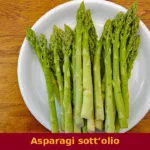
Among the preserves, Asparagi sott’olio (PAT) and Asparagi selvatici (PAT), gathered in the gravine and oak woods between March and April, are recurring ingredients in spring frittatas and side dishes.
The Sagra delle Gnostre, usually held in July, is Noci’s most important food event: the small piazzas of the old town are set up with tables and stoves where families prepare and serve traditional local dishes. Each gnostra offers a different speciality, creating a distributed culinary route through the heart of the town. It is the best opportunity to taste preparations that normally belong to the domestic sphere.
To buy local products outside of festival time, the Wednesday weekly market offers fresh cheeses, dried legumes, extra virgin olive oil from the surrounding masserie and durum wheat bread baked in wood-fired ovens.
On the drinks front, Noci falls within the production area of Gioia del Colle DOC, a denomination that includes a Primitivo red of considerable body, particularly well suited to accompanying the meat dishes and aged cheeses of the territory.
The vines, trained as bush vines on calcareous soils, produce grapes that benefit from the temperature swings typical of the Murge plateau. Anisetta (PAT) is the traditional anise-seed liqueur that closes meals on convivial occasions, served ice-cold or diluted with water. Also worth mentioning is Amaro del Gargano (PAT), an expression of the Puglian herbalist tradition that, although originating in a different area of the region, is easily found in bars and restaurants throughout Puglia.
When to visit Noci: the best time
Its hilltop position makes Noci a pleasant destination from spring to autumn, with optimal conditions between April and June and between September and October.
In spring the Murge countryside bursts into blooms of asphodels, giant fennels and wild orchids, and the harvest of wild asparagus brings the contrade to life. On 3 May, the feast of the Madonna della Croce brings processions, illuminations and market stalls, offering the chance to see the town in its most deeply felt ritual dimension. Summer culminates with the Sagra delle Gnostre in July, but daytime temperatures can exceed 35°C, though these are tempered by the altitude and the evening breeze.
On the first Sunday of September, the feast of San Rocco is celebrated, with a procession through the old town and a programme of civic and religious events lasting several days.
Autumn is the season for the olive and almond harvest: the olive presses open their doors and the air fills with the sharp scent of freshly crushed olives.
Winter, harsh by Puglian standards with temperatures that can drop below zero, is the quietest period, suited to those seeking silence and wanting to explore the town without crowds, perhaps coinciding with the Christmas holidays, when the gnostre are set up with living nativity scenes. For up-to-date event information, it is useful to consult the Touring Club Italiano website.
How to get to Noci
By car, Noci is accessible from the A14 Bologna–Taranto motorway, exiting at Gioia del Colle, from which it is approximately 15 km south-east along provincial road 237. From Bari the journey is about 55 km (50–60 minutes), from Taranto about 50 km (45 minutes), from Brindisi about 80 km (one hour). The inland roads cross the Murge countryside with good surfacing but many curves, so it is advisable not to rush and to watch out for agricultural tractors that frequent these roads, especially during harvest periods.
The nearest railway station is Noci, served by the Ferrovie del Sud-Est (FSE) line connecting Bari to Taranto with intermediate stops.
Regional trains take about an hour and a half from Bari, with a possible change at Putignano.
The reference airport is Karol Wojtyła at Bari-Palese, approximately 65 km away (one hour by car). There are no direct airport-to-Noci bus services, so car hire or a taxi remain the most practical options for those arriving by air. During the summer, some seasonal shuttle services connect the main tourist centres of the Valle d’Itria, but availability should be checked year by year.
Other villages to discover in Puglia
Visitors to Noci find themselves in a strategic position for day trips to the Adriatic coast and the Bari hinterland. About 35 km to the east, reachable in forty minutes by car, Monopoli offers a stark contrast: from the silence of the Murge you move to the fishing harbour, sandy beaches set between rocky coves and an old town looking straight out onto the Adriatic.
The drive from Noci to Monopoli crosses a landscape that shifts rapidly — from the limestone of the plateau to terraced olive groves, then to the blue of the sea — and is in itself an experience worth the trip. Monopoli is ideal for a day at the beach combined with a visit to the Castle of Charles V and the Romanesque Cathedral.
In the opposite direction, heading north-west, Palo del Colle is reached in about forty-five minutes along the back roads of the Province of Bari.
This town, set on the plain north of the Murge, has an identity quite different from Noci’s: more closely tied to the grain-growing tradition and large landed estates, with an imposing Norman-Swabian castle and a cathedral that dominates the urban profile. The combination of the two — Noci with its gnostre and rural trulli, Palo del Colle with its feudal layout — reveals the often underestimated variety of the Bari hinterland, a territory that deserves weeks, not hours. A circular itinerary taking in Noci, Palo del Colle and Monopoli covers about 130 km and can be comfortably driven over two or three days, giving each stop the time needed to walk, eat and observe without haste.
In Apulia More villages to discover
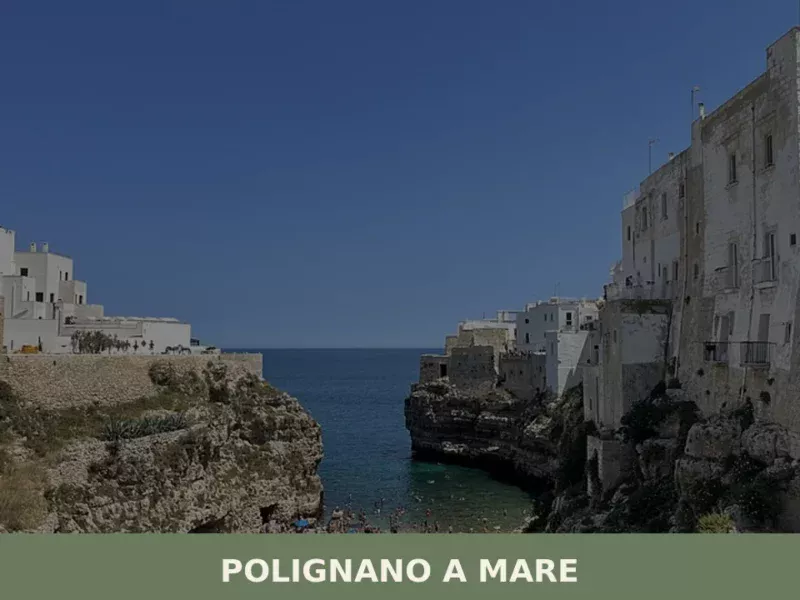
Polignano a Mare
What to see in Polignano a Mare: clifftop town at 24 m, 17,531 residents. Lama Monachile, Grotta Palazzese, PAT Africani. Plan your visit now.
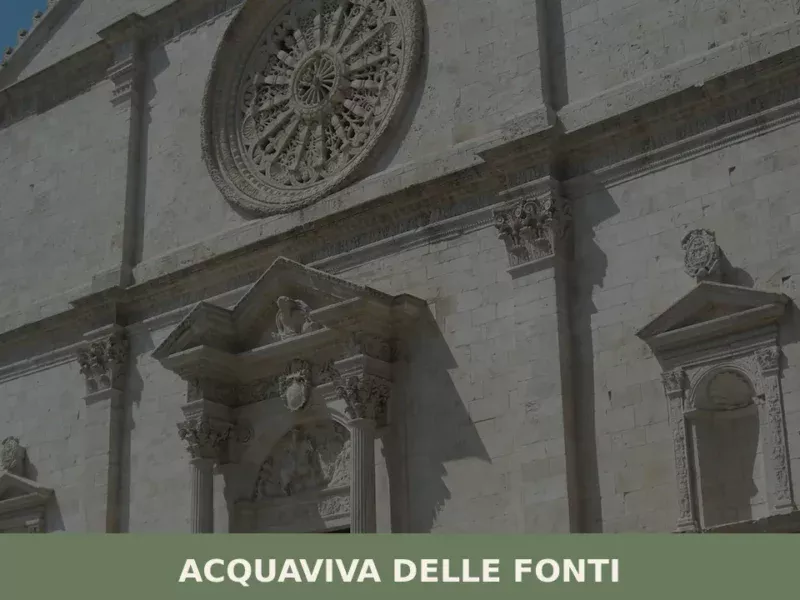
Acquaviva delle Fonti
Beneath the main square of Acquaviva delle Fonti, water still flows. This is not a figure of speech: a network of underground aquifers runs through the limestone subsoil of this town in the Murge hills near Bari, feeding cisterns and wells that for centuries determined both the wealth and the very name of the town. […]
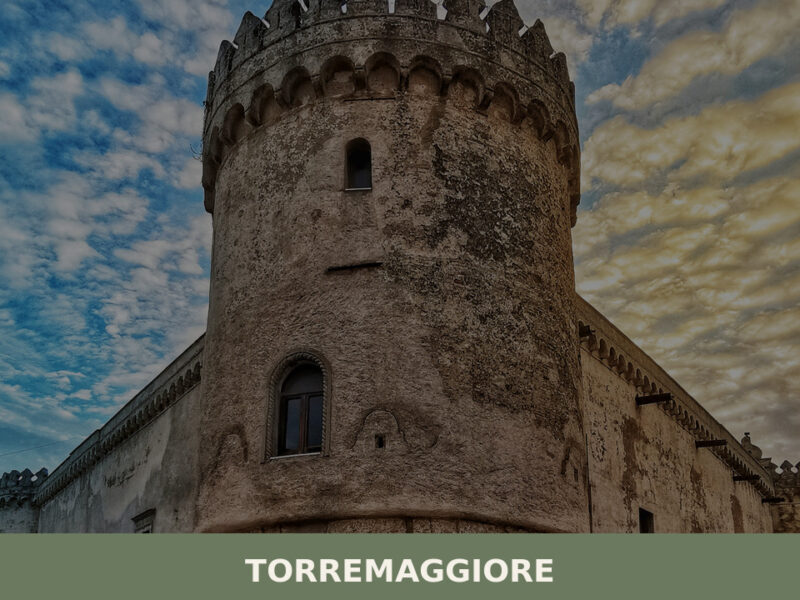
Torremaggiore
A complete guide to Torremaggiore in northern Puglia — its medieval castle, the ruins of Fiorentino, local food traditions, and practical travel information.

📝 Incorrect information or updates?
Help us keep the Noci page accurate and up to date.