


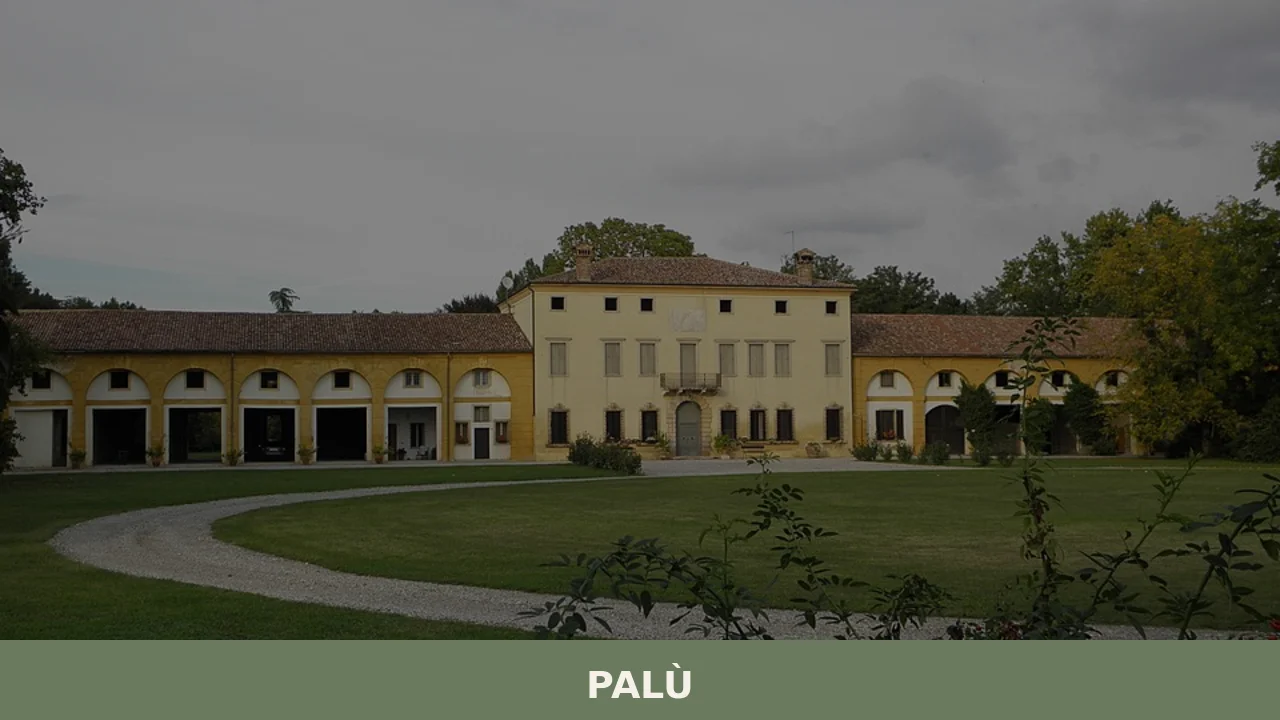
Palù
Palù has 1,266 inhabitants and occupies a stretch of the Veronese plain between the municipalities of Zevio and Ronco all’Adige, roughly fifteen kilometres south-east of the provincial capital. Its territory, covering just 8.5 square kilometres, is crossed by a network of drainage ditches and reclamation canals that still define the geometry of fields planted with […]
Discover Palù
Palù has 1,266 inhabitants and occupies a stretch of the Veronese plain between the municipalities of Zevio and Ronco all’Adige, roughly fifteen kilometres south-east of the provincial capital. Its territory, covering just 8.5 square kilometres, is crossed by a network of drainage ditches and reclamation canals that still define the geometry of fields planted with maize, wheat and vegetables. Anyone looking into what to see in Palù will find a village where the agricultural economy has dictated the shape of every building, courtyard and road, and where the place names themselves preserve the memory of the ancient marshes that existed here before the drainage works.
History and origins of Palù
The name Palù derives from the Latin palus, paludis — marsh. The designation directly documents the waterlogged nature of this strip of alluvial plain, formed by deposits from the River Adige. The earliest recorded uses of the toponym appear in medieval documents linked to the ecclesiastical administration of Verona: the territory fell under the jurisdiction of the Diocese of Verona, and the land was progressively reclaimed by monastic and peasant communities between the 12th and 14th centuries. It was precisely these canalisation works that made the plots cultivable, turning a marshy area into productive farmland.
During the Republic of Venice, Palù belonged to the administrative district of the Veronese territory annexed by the Serenissima in 1405. Water management remained a central issue: the Provveditori ai Beni Inculti, a Venetian magistracy established in 1556, intervened repeatedly to regulate water drainage across the lower plain. With the fall of the Republic in 1797 and the subsequent transition to the Kingdom of Lombardy-Venetia under Austria, the municipality took on the administrative structure that, with later modifications, it still retains today. Italian unification in 1866 brought Palù into the Province of Verona within the new state.
In the 20th century the village maintained a strictly rural vocation. The absence of heavy industrialisation meant that the built fabric remained tied to the typologies of the Veneto farmstead courtyard, with dwellings arranged around threshing floors and functional porticoes serving the work of the fields. For further reading on the municipality’s administrative history, you can consult the dedicated Wikipedia page.
What to see in Palù: 5 places worth knowing
1. Parish church of San Giovanni Battista
The main sacred building in the village stands at the centre of the settlement. The current structure is the result of 18th-century renovations on an earlier layout. Inside, polychrome marble altars and devotional paintings document the patronage of local farming families. The façade, simple and linear, reflects the sobriety of religious architecture across the lower Veronese plain.
2. The historic rural courtyards
Palù preserves several farmstead courtyards built according to the Veneto enclosed-courtyard model: the main house, barchessa (open-sided barn), stable and hayloft arranged to form a quadrilateral around the central threshing floor. Some date back to the 17th and 18th centuries. Exposed-brick walls and depressed-arch porticoes are recurring features, easily observed while walking along the streets of the centre.
3. The reclamation canal network
The system of drainage ditches, collector channels and main canals running through the municipal territory is a hydraulic infrastructure built up over centuries. Walking or cycling along the embankments allows you to observe close-up how an agrarian landscape shaped by water management actually functions. The Consorzio di Bonifica Veronese still maintains this network today.
4. The agrarian landscape of the lower Veronese plain
The open fields surrounding the village offer a flat, unbroken view, interrupted only by rows of Lombardy poplars and the occasional surviving mulberry tree — a legacy of silkworm farming practised until the mid-20th century. In spring and summer the maize and tobacco crops compose a colour map that changes every week. This is a working landscape, not a decorative one.
5. Cycling routes towards the Adige
From Palù, quiet secondary roads lead towards the embankments of the Adige, just a few kilometres to the west. The route is flat and suitable for any type of bicycle. Along the way you will come across isolated rural farmhouses, 1950s concrete bridges and water-regulation sluices — elements of a small-scale yet essential engineering that keeps the territory in balance.
Local cuisine and regional products
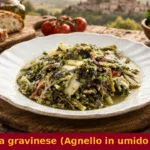
The table in Palù reflects the gastronomic tradition of the lower Veronese plain. Rice takes centre stage, particularly in preparations of risotto all’Isolana, a dish originating from the Isola della Scala area — about twenty kilometres away — which here is made with diced pork and veal, cooked entirely in the oven without ever stirring. Polenta, made from stone-ground maize flour, accompanies dishes such as bollito misto with pearà, a thick Veronese sauce based on stale bread, beef marrow, broth and black pepper. Among the first courses, bigoli — long, thick pasta extruded through a press — are served with duck sauce or with lake sardines. The territory falls within the production area of Riso Nano Vialone Veronese IGP, grown in the paddies of the lower plain, and of Radicchio Rosso di Verona IGP, whose late variety is harvested between December and February.
Wines from the surrounding area belong to the Arcole DOC designation, which covers the plain south-east of Verona and includes whites based on Garganega and reds from Merlot and Corvina. Also worth noting is the proximity to the Soave DOC zone, whose vineyards begin just a few kilometres to the north-east. As for cheese, the area falls within the production district of Monte Veronese DOP, in both the whole-milk and the aged versions. Grana Padano DOP is produced in several dairies across the province. In the autumn months, village festivals across the lower Veronese plain serve dishes based on pumpkin, Lamon beans and cotechino sausage, accompanied during the Christmas season by Pandoro di Verona — a cake with a municipal denomination that, although identified with the city, still has a living domestic tradition in the surrounding countryside. For information on local events, it is useful to consult the official website of the Municipality of Palù.
When to visit Palù: the best time of year
Spring, between April and June, is the most favourable period: temperatures range from 15 to 25 degrees, the days are long and the fields display the early stages of cultivation, with the geometry of freshly marked rows. Autumn — from September to November — offers a second interesting window, when the rice and maize harvests transform the landscape and village festivals punctuate the calendar across the hamlets of the lower Veronese plain.
Winter brings thick, frequent fogs that reduce visibility but restore the territory’s original character as a damp plain, a condition documented by the very name of the village. Summer can be hot and muggy, with peaks above 35 degrees and plentiful mosquitoes, typical of formerly marshy areas. Those travelling by bicycle will find the best conditions in the intermediate seasons, when the north wind keeps the air dry and the unpaved roads along the canals are passable without mud.
How to reach Palù
By car, from the A4 Milan–Venice motorway take the Verona Est exit and continue on the SP19 heading south towards Zevio and then Palù: the route is about 20 kilometres, roughly twenty minutes under normal traffic conditions. From Verona city centre the distance is 15 kilometres along the same road. The nearest railway station is Verona Porta Nuova, connected to the Milan–Venice high-speed lines and to the regional Brenner line. From Verona-Villafranca Airport (Valerio Catullo), approximately 30 kilometres away, the village can be reached in just over half an hour via the southern ring road. Venice Marco Polo Airport is 120 kilometres away. There is no frequent public transport service in the area: a private or rental car remains the most practical option. For those arriving by bicycle from Verona, the route along the Adige and then eastward through the countryside is entirely flat. Further information on regional road connections is available on the Veneto Region portal.
Other villages to discover in Veneto
North-west of Palù, heading up towards the first hills of the eastern Valpolicella, you reach Cazzano di Tramigna, a municipality in the Val di Tramigna where the landscape changes dramatically: vineyards of Soave and Valpolicella replace the maize fields, the terrain tilts upward and the local stone — the calcareous tuff of the Lessini Mountains — appears in the walls of the rural hamlets. The transition from the irrigated plain to the vine-clad hillside takes place in less than thirty kilometres, and allows you to compare two very different agricultural and architectural models within the same province.
To the west, on the lower plain between Nogara and Cerea, lies Concamarise, another small municipality on the Veronese plain that shares with Palù the marshy origin of both its name and its territory. Here too, land reclamation has defined the landscape, and the rural courtyards display similar structures: porticoes, dovecote towers, haylofts with clay-tile roofs. Visiting both villages allows you to read the history of Veronese land reclamation as a widespread phenomenon, not an isolated one, which reshaped hundreds of square kilometres between the Middle Ages and the early modern period.
In Veneto More villages to discover
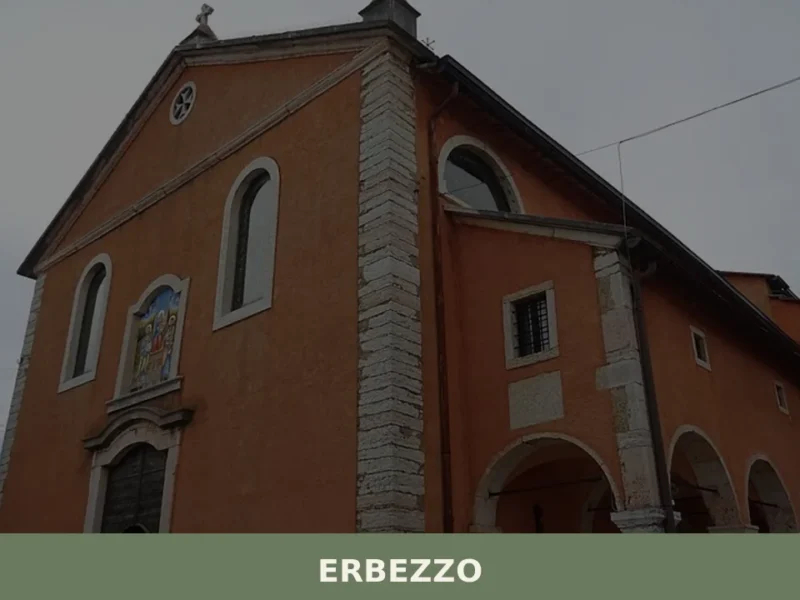
Erbezzo
At 1,118 metres above sea level, on the eastern edge of the Veronese Lessinia, Erbezzo has 756 inhabitants spread between the municipal centre and a handful of hamlets scattered across the pastures. It is the highest municipality in the province of Verona and one of the few where the pastoral economy has never fully given […]
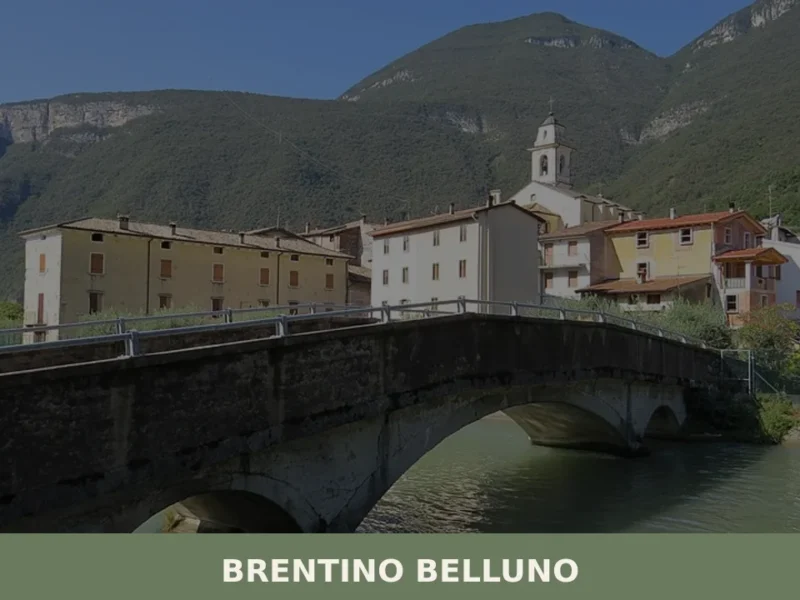
Brentino Belluno
At 137 metres above sea level, where the Adige Valley narrows between Monte Baldo and the Lessini Mountains, Brentino Belluno is a municipality of 1,363 inhabitants created in 1929 through the administrative merger of two distinct settlements: Brentino, on the left bank of the Adige, and Belluno Veronese, clinging to the eastern slope of Monte […]
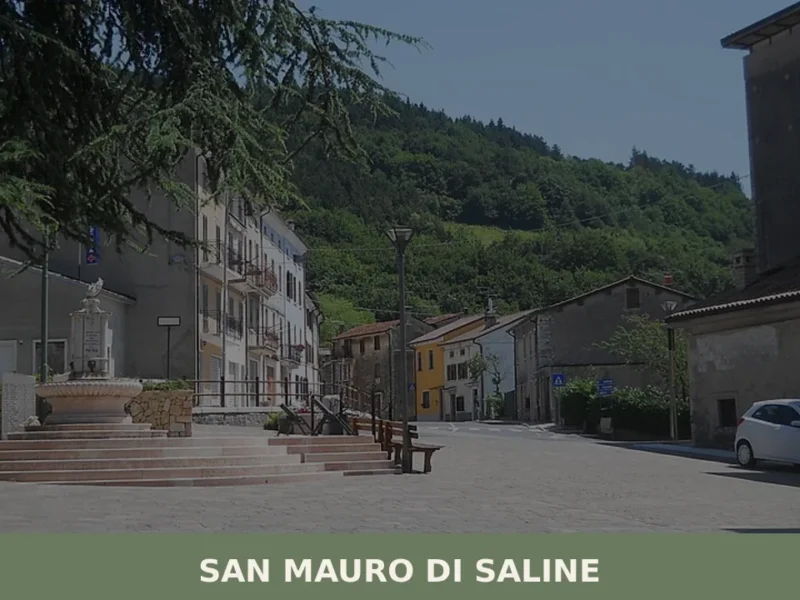
San Mauro di Saline
At 804 metres above sea level, on the eastern slope of the Veronese Lessini Mountains, San Mauro di Saline has a current population of 558 inhabitants spread between the municipal centre and the scattered hamlets along the pastures. The village’s name derives from the saline — the brackish water pools that historically surfaced in this […]
📝 Incorrect information or updates?
Help us keep the Palù page accurate and up to date.