


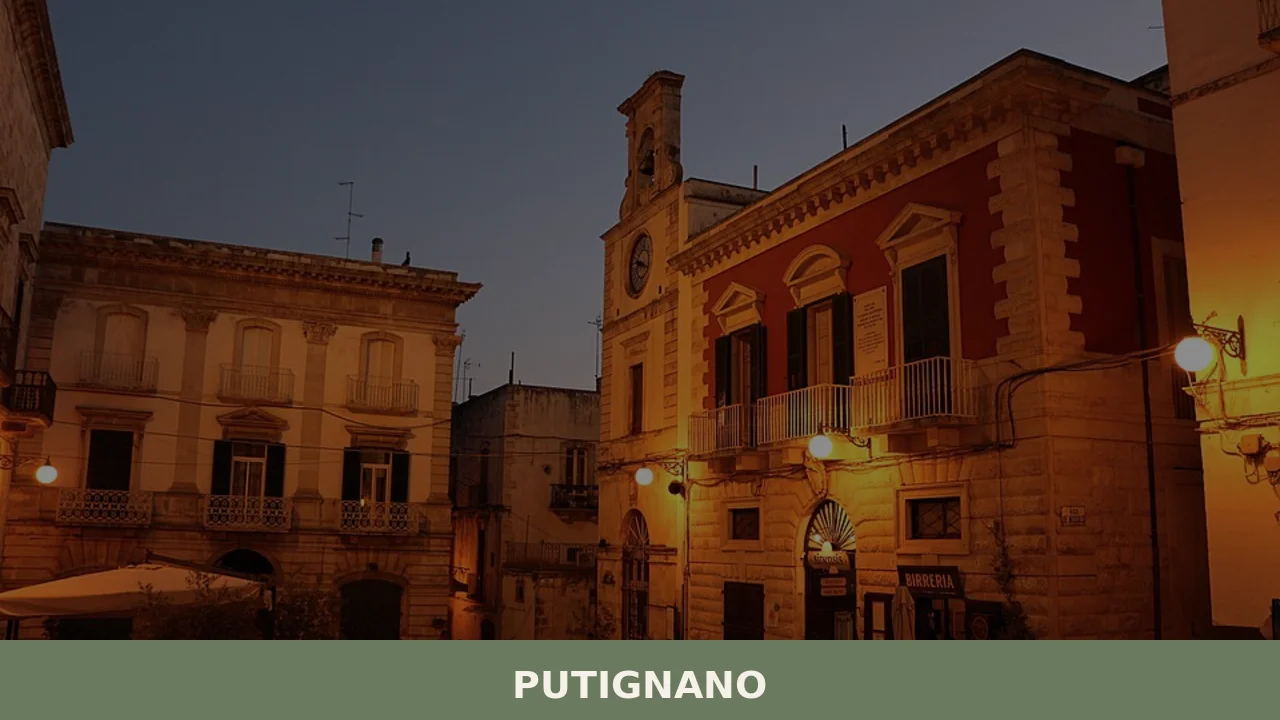
Putignano
What to see in Putignano: hilltop town at 372m in the Murgia Barese. Grotta del Trullo, 6-century-old Carnival, PAT cuisine. Plan your visit now.
Discover Putignano
In February 1394, the Knights of Malta received the relics of Saint Stephen the Protomartyr, transferred from Monopoli to Putignano to protect them from Saracen raids along the coast. That solemn procession, greeted by the townspeople with improvised dancing and singing, gave rise to one of the oldest carnivals in Europe, documented without interruption for over six centuries.
Today Putignano, a hilltop town of 25,935 inhabitants at 372 metres above sea level in the province of Bari, preserves that core of festive energy within an urban fabric that alternates noble palazzi, rock-hewn churches and papier-mâché artisan workshops.
Anyone wondering what to see in Putignano will find a layered answer: sacred art, carnival traditions and a land-based gastronomy that deserves a chapter of its own all coexist here.
History and origins of Putignano
The etymology of the name remains a matter of debate among historians. The most widely accepted hypothesis traces it to the Latin Putinianum, derived from the Roman gentile name Putinius, indicating a fundus — an agricultural estate — belonging to a family of settlers during the late Republican period.
Another reading, less widely shared but present in local literature, links it to the Latin word puteus (well), owing to the numerous karst cavities and natural wells in the territory’s subsoil.
The earliest traces of human settlement in the area date back to the Neolithic, as evidenced by finds of ceramics and lithic tools in the caves of the surrounding Murgia. However, it was only under Norman rule, between the 11th and 12th centuries, that Putignano acquired a defined urban form, with the construction of an initial fortified nucleus around the mother church.
The most significant passage in the town’s medieval history came in 1317, when Robert of Anjou granted Putignano to the Order of the Knights of Saint John of Jerusalem, known as the Knights of Malta.
This affiliation lasted nearly five centuries, until 1806, and profoundly shaped the architecture, social organisation and religious identity of the town.
The Knights promoted the construction of sacred buildings, financed defences against Turkish raids — particularly frequent in the 15th and 16th centuries — and governed with a degree of autonomy relative to the feudal power structures of mainland southern Italy. In 1463, during the wars between the Angevins and Aragonese, Putignano endured a siege that damaged part of its walls, which were rebuilt in the following decades with direct support from the Order.
By the time of Italian Unification, Putignano had approximately 10,000 inhabitants and based its economy on agriculture — olive, almond and vine cultivation — and on the working of local limestone. The 20th century brought two decisive transformations. The first was the industrialisation of the textile and clothing sector, particularly in the production of wedding dresses, which made Putignano one of the most prominent districts in southern Italy for this trade.
The second was the structured organisation of the Carnival, with the founding of the Carnival Foundation in 1954 and the construction of increasingly monumental papier-mâché allegorical floats, now reaching heights of up to sixteen metres.
Among Putignano’s notable citizens is the painter Paolo Finoglio, active in the 17th century, whose canvases are displayed in the Metropolitan Art Gallery of Bari, and the jurist Vitangelo Bisceglia, a key figure in the Neapolitan reformist movement of the late 18th century.
What to see in Putignano: 5 top attractions
1. Chiesa Matrice di San Pietro Apostolo
Located at the core of the old town, on Piazza Plebiscito, the Chiesa Matrice di San Pietro Apostolo is Putignano’s principal religious building. The current structure dates to the 14th century, with later Baroque interventions that reshaped the three-nave interior, enriching it with lateral altars in carved stone and 17th-century paintings.
The main portal, in Apulian Romanesque style, features a lunette with a bas-relief depicting Christ in benediction. Inside, the church houses a polyptych attributed to the school of Vivarini and a still-functioning 18th-century organ. The church hosts the celebrations for the feast of Saint Stephen and serves as the ideal starting point for exploring the network of lanes and courtyards in the ancient nucleus.
2. Grotta del Trullo
Discovered by chance in 1931 during excavation work for a cistern, the Grotta del Trullo lies a short distance from the town centre, along the road to Castellana. It is a karst cavity extending for approximately one kilometre of equipped pathway, with a maximum depth of around thirty metres. The calcareous formations — stalactites, stalagmites, columns and draperies — are distinguished by hues ranging from bright white to ferruginous red. The cave can be visited with specialist guides and maintains a constant temperature of around 15°C, a useful detail for those planning a visit during the summer months.
This cavity represents a less crowded alternative to the nearby Castellana Caves, just twelve kilometres away.
3. Museo Civico Principe Ferrante Ferrara Dentice di Accadia
Housed in the 17th-century Palazzo del Balì, formerly the seat of the governor of the Order of Malta, the civic museum holds archaeological finds from the municipal territory, dating from the Neolithic to the medieval period. The most significant sections include Messapian ceramics, Peucetian funerary items and early medieval sculptural fragments recovered from abandoned rural churches.
The palazzo itself warrants attention: the internal courtyard with a two-level loggia, the double-flight stone staircase and the heraldic coats of arms of the Order carved into the portals document the long Hospitaller presence in Putignano. The museum is managed by the Municipality and keeps variable hours depending on the season, available on the official municipal website.
4. Chiesa di Santa Maria la Greca
Built in the 13th century over the remains of a Byzantine place of worship, Santa Maria la Greca stands in the highest part of the old town, just steps from the Chiesa Matrice.
The sober, compact façade retains a central rose window and a pointed-arch portal with phytomorphic decorations of Romanesque workmanship. The single-nave interior holds fragmentary frescoes of Byzantine school, rediscovered during restorations in the 1980s, and an icon of the Virgin that local tradition claims originated in the East. The building documents the cultural layering of the territory, where Greek and Latin rites coexisted for centuries, and offers one of the most open panoramic views over the surrounding countryside, towards the olive plain that slopes down to the sea.
5. Old town and civil architecture
The old town of Putignano preserves a medieval urban layout still legible in the tight grid of streets, shared courtyards and subarches linking the buildings. Along Via Roma and the surrounding streets, noble palazzi display wrought-iron balconies, rusticated portals and family crests — traces of the minor landed aristocracy linked to the Order of Malta.
Piazza Plebiscito, the focal point of civic life, is framed by the civic Clock Tower, built in the 18th century, and the Sedile, the ancient meeting place of local government. During the Carnival of Putignano, these same streets become the stage for the papier-mâché float parades, transforming the permanent architecture into a theatrical backdrop for a festival that draws tens of thousands of visitors each year.
What to eat in Putignano: local cuisine and traditional products
The cuisine of Putignano belongs to the gastronomic tradition of the Murgia Barese, a hilly area where olive, almond and durum wheat farming has dictated the repertoire of ingredients and techniques for centuries. The distance from the sea — roughly twenty-five kilometres from the Adriatic coast — has favoured a predominantly land-based cuisine, centred on legumes, vegetables, sheep meat and handmade pasta. Extra virgin olive oil, produced from the Ogliarola and Cima di Mola cultivars, is the base fat for every preparation, from frying to preserving.
Bread, still baked in wood-fired ovens by several bakeries in the centre, accompanies every meal and becomes the main ingredient in numerous leftover-based recipes.
Among the dishes that define the Putignano table, Acquasale (PAT) holds a primary place: it is a peasant preparation based on stale bread soaked in water, dressed with fresh tomato, raw onion, oregano, salt and a generous drizzle of raw olive oil.
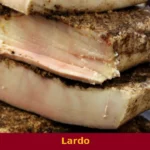
Originally a quick meal for farm labourers in the fields, acquasale is eaten mainly during the warm months, when tomatoes reach full ripeness. Orecchiette with cime di rapa remains the signature first course across the entire province, handmade with durum wheat semolina and shaped with the thumb on a wooden board, but in Putignano you will also find brasciole — horse meat rolls stuffed with garlic, parsley, pecorino and lard, slow-cooked in the Sunday tomato sauce.
The territory of the province of Bari and the Murgia contributes several products recognised as Traditional Agri-Food Products (PAT) by the Puglia Region. Agnello al forno con patate alla leccese (PAT), known in dialect as Auniceddhru allu furnu, involves the slow baking of lamb with potatoes, cherry tomatoes, lampascioni (wild hyacinth bulbs) and grated pecorino in a terracotta dish.
Agnello alla gravinese (PAT), a braised variant, uses a soffritto of onion and celery with the addition of white wine and cardoncelli mushrooms, typical of the Murgia.
Among the desserts, Africani (PAT) are a pastry product composed of two hemispheres of cocoa sponge cake filled with pastry cream and coated in dark chocolate, widespread across several Apulian towns and a constant presence in the display cases of Putignano’s bars.
The most opportune moment to explore the local gastronomy coincides with the Carnival season, between January and February, when the streets fill with stalls selling fritters, cartellate and stuffed focaccias. In spring, wild asparagus (PAT) — gathered in the countryside between March and April — appear in frittatas, soups and preserved in oil, another certified preparation known as Asparagi sott’olio (PAT).
The weekly Saturday market, in Piazza Aldo Moro, is the most direct place to buy fresh produce from the surrounding farmland: cheeses, seasonal vegetables, taralli and loose extra virgin olive oil.
Puglia is a land of great wines, and Putignano falls within the production area of the Gioia del Colle DOC, a denomination that includes reds based on Primitivo — an indigenous grape variety capable of expressing, on the calcareous soils of the Murgia, notes of dark fruit, spice and a firm tannic structure.
Primitivo di Gioia del Colle, in its Riserva version, requires a minimum ageing of two years. Several wineries in the area offer tastings by appointment, which can be combined with visits to the vineyards that dot the hilly landscape between Putignano and Gioia del Colle, just fifteen kilometres apart.
When to visit Putignano: the best time
The peak period coincides with the Carnival of Putignano, which runs between January and February — with the allegorical float parades concentrated on the four Sundays preceding Shrove Tuesday. It is an event of regional and national scale, featuring papier-mâché floats up to sixteen metres tall, costumed groups and musical performances. Those wishing to attend should book accommodation well in advance, as local capacity fills up quickly.
The patron saint’s feast on 3 August, dedicated to Saint Stephen and accompanied by processions, illuminated decorations and open-air concerts, represents a second major draw, set within the summer calendar when daytime temperatures range between 28 and 34°C.
For those who prefer a more relaxed pace, spring — from mid-April to June — offers ideal conditions: the climate is mild, the countryside is at the height of its bloom, and the Grotta del Trullo can be visited without queues.
Autumn, between October and November, brings the days of olive and cardoncelli mushroom harvesting, with raking light that enhances the golden tones of the old town’s limestone. Winter outside of Carnival is the quietest season, suited to those looking to explore churches and museum without crowds, taking advantage of lower prices and a local restaurant scene that serves the heartiest dishes in the repertoire — legume soups, oven-baked lamb, brasciole in tomato sauce.
How to reach Putignano
By car, Putignano is reached from the A14 Bologna–Taranto motorway by exiting at the Gioia del Colle junction, then continuing for approximately 15 kilometres along the provincial road SP61.
From Bari the drive is 45 kilometres (around 45 minutes), from Taranto 55 kilometres (50 minutes), and from Lecce 150 kilometres (just under two hours). The state road SS172, known as the “Road of the Trulli”, connects Putignano to Casamassima to the north and Alberobello to the south, offering a scenic route through the Murgia countryside.
The nearest airport is Karol Wojtyła Bari-Palese, approximately 55 kilometres away and reachable in one hour by car.
Putignano’s railway station is served by Ferrovie del Sud Est (FSE), with direct connections to Bari Centrale (journey time approximately 70 minutes with stops) and to Martina Franca and Taranto. Train frequency varies between weekdays and holidays — it is advisable to check updated timetables on the FSE website.
A regional bus service also connects Putignano to Alberobello, Castellana Grotte, Monopoli and the main towns of the Valle d’Itria, as documented on the Wikipedia page dedicated to Putignano.
Other villages to discover in Puglia
Puglia is a region where the distances between places of great interest often amount to just a few dozen kilometres, and Putignano can serve as a starting point for itineraries reaching villages that vary widely in landscape and character. To the north, in the province of Bari, Noicattaro offers a compact old town where Norman and Baroque traces overlap, with an Easter tradition of great intensity — the nocturnal processions of the Mysteries draw worshippers and visitors from across the region every year.
The distance from Putignano is approximately 25 kilometres, drivable in half an hour, making a combined visit to both towns entirely feasible in a single day.
For those wishing to extend their exploration to the Gargano, radically changing the scenery — from the limestone of the Murgia to the Mediterranean scrubland of the promontory — a stop at Ischitella is well worthwhile, a hilltop village overlooking Lake Varano, where the convent of San Francesco and the citrus groves create a sharp contrast with the more familiar Apulian landscape.
Ischitella lies approximately 250 kilometres from Putignano (three hours’ drive), a distance that suggests spending at least one night to appreciate the slow rhythm of the Gargano. The route connecting the two villages crosses the entire Tavoliere plain, and can include stops at Castel del Monte or at Trani, adding further historical depth to the trip. For detailed planning, the Touring Club Italiano publishes up-to-date guides with detailed itineraries covering all of Puglia.
In Apulia More villages to discover
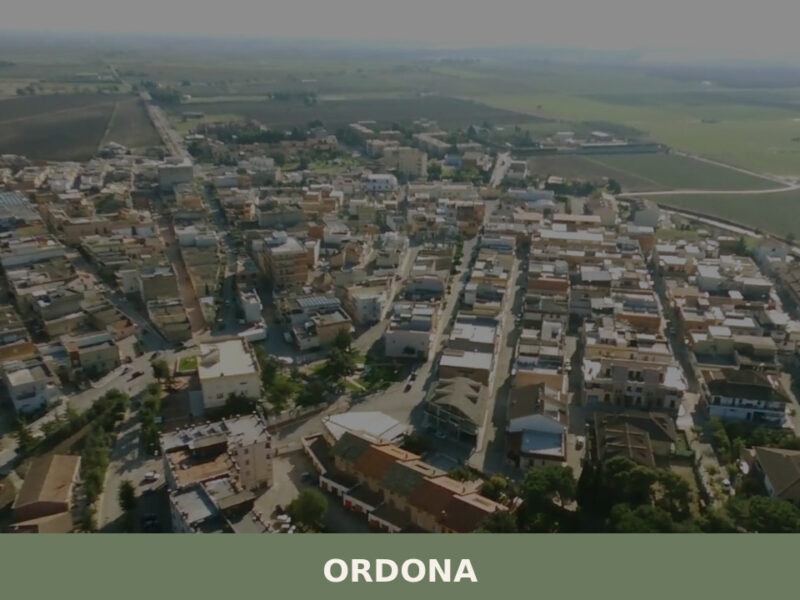
Ordona
Ordona sits on the Tavoliere plain near Foggia, above the ancient Daunian-Roman city of Herdonia. A guide to its archaeology, food, and surroundings.
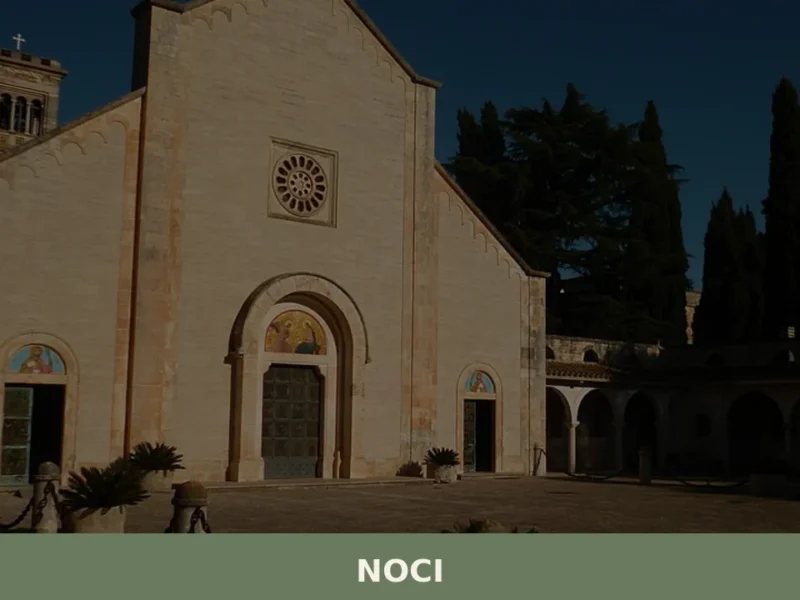
Noci
What to see in Noci, a village at 420 m on the Murge plateau. 5 attractions, medieval gnostre, Acquasale PAT, sagre and patron feasts. Plan your visit now.
Motta Montecorvino
A 651-inhabitant hilltop village in Puglia's Daunia hills, Motta Montecorvino rewards slow visitors with medieval lanes, long views over the Tavoliere plain, and robust mountain cooking.
📝 Incorrect information or updates?
Help us keep the Putignano page accurate and up to date.