


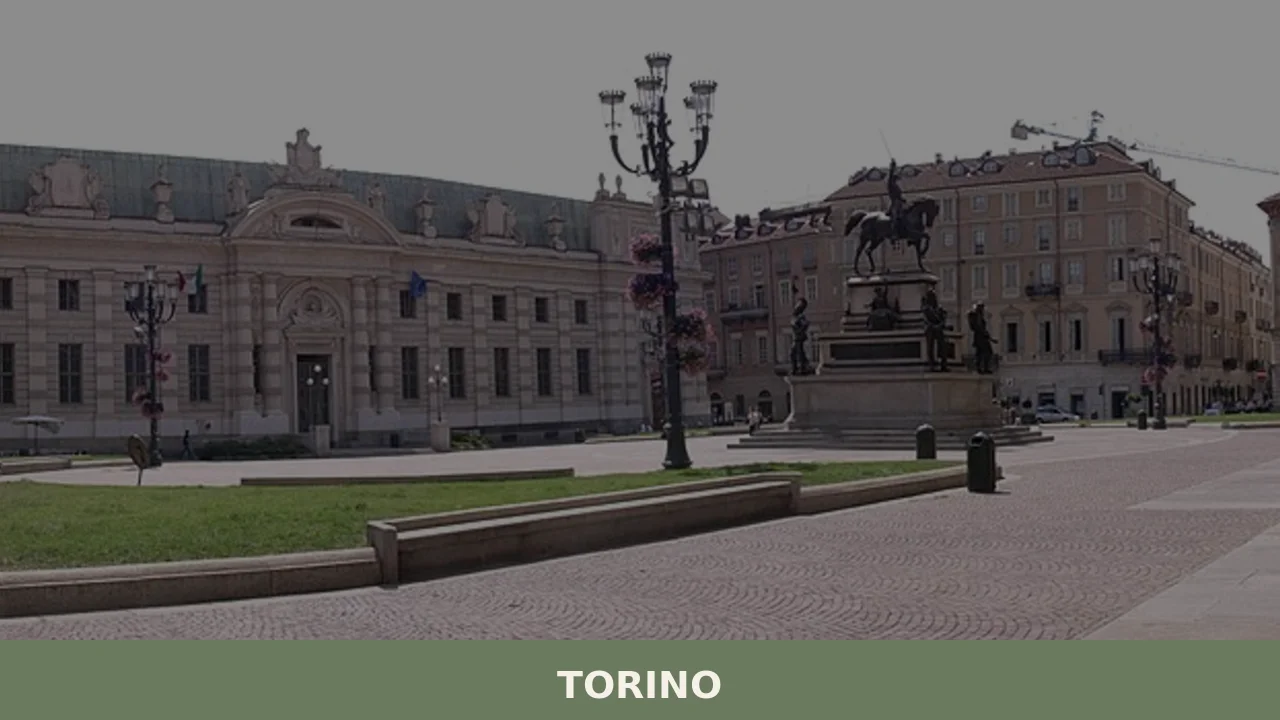
Torino
What to see in Torino: the city at 239m altitude with 841,600 residents. Explore 5 key attractions and Piedmontese cuisine. Read the full guide now.
Discover Torino
On arrival, the profile of Torino takes shape with unexpected geometry against the backdrop of the Alps, an urban silhouette emerging from the Piedmontese plain at 239 metres above sea level. This is not a village preserved unchanged in a mountain bend, but a city that reveals its history through the logic of its layout, its long straight roads and its measured piazzas. The Po flows calmly, reflecting the buildings that line its banks, while the air sometimes carries the scent of historic cafés or the metallic smell of the river. For those wondering what to see in Torino, this first impression suggests deep layers of history, from Roman remains to the grand Savoyard past, right through to the city’s industrial and contemporary identity.
History and Origins of Torino
The founding of Torino
has its roots in a Roman past, when in the 1st century BC it was established as a military colony under the name Augusta Taurinorum. This settlement, commissioned by Emperor Augustus, was superimposed on a pre-existing village of the Taurini, a Celtic-Ligurian people, and was designed according to the strict urban plan of a Roman castrum, with an orthogonal grid of streets still recognisable in the historic centre today. The two main roads, the decumanus maximus and the cardo maximus, intersected at the forum, the centre of public and commercial life, outlining a structure that has withstood centuries of urban evolution. After the fall of the Western Roman Empire, the territory of Torino was subject to various dominations, including those of the Lombards and the Franks, which brought a period of fragmentation and decline common to many urban centres of the era. It was only from the 11th century onwards that the town began to regain a degree of centrality, consolidating its strategic position between the Alps and the Po Valley. The County of Torino then passed under the control of the Marquises of Susa and subsequently the House of Savoy, who would bind their destiny inseparably to that of the city. The true period of flourishing for Torino began with the rise of the Savoy dynasty. In 1563, Emmanuel Philibert I of Savoy transferred the capital of the duchy from Chambéry to Torino, launching a phase of major urban and cultural expansion. The city became a political and military centre of significance, enriched with palaces, churches and fortifications that bore witness to its growing importance. This process culminated in the 19th century, when Torino served as capital of the Kingdom of Sardinia and, from 1861 to 1865, the first capital of the Kingdom of Italy — a role that cemented its prestige and national identity. The current population stands at 841,600 inhabitants, a figure that reflects its evolution from a Roman settlement to a major modern metropolis. For further reading on the history, you can consult the Wikipedia page dedicated to Torino.
What to See in Torino: 5 Essential Attractions
1. Mole Antonelliana and the National Museum of Cinema
The Mole Antonelliana, the iconic symbol of Torino, rises above the city skyline with its distinctive dome and slender spire, reaching a height of 167.5 metres. Construction began in 1863 under architect Alessandro Antonelli, and the building was originally intended to serve as a synagogue, but the project, due to its ambitious scale, exceeded the expectations and resources of the Jewish community, and was eventually acquired by the Municipality of Torino. Today it houses the National Museum of Cinema, one of the most important of its kind in the world. A visit allows you to explore the history and art of filmmaking through interactive displays and collections of rare artefacts, culminating with a ride in the panoramic lift that offers a 360-degree view over the city and the surrounding Alpine arc.
2. Royal Palace and Royal Museums
The Royal Palace of Torino, the historic residence of the Savoy family for over two centuries, forms the centrepiece of the Royal Museums complex, a UNESCO site of exceptional value. Built from the 16th century onwards and expanded over subsequent centuries with contributions from architects such as Amedeo di Castellamonte and Filippo Juvarra, the palace attests to the magnificence of the Savoyard court. Inside, the royal apartments preserve period furnishings, tapestries and works of art that illustrate the daily life and ceremonies of the dynasty. The complex also includes the Royal Armoury, the Sabauda Gallery, the Museum of Antiquities and the Royal Library, where Leonardo da Vinci’s Self-Portrait is kept, providing a journey through European history and art.
3. Egyptian Museum
The Egyptian Museum of Torino
is considered the oldest museum in the world dedicated entirely to the civilisation of ancient Egypt, second in importance only to the one in Cairo. Its collection, numbering over 30,000 pieces, was largely acquired in the 19th century and includes sarcophagi, mummies, papyri, statues and everyday objects that provide a comprehensive overview of Egyptian culture. The visit winds through modern and interactive exhibition halls that illustrate the millennia-long history of this civilisation, from its origins to the Roman period, with particular focus on funerary practices and religious beliefs. The museum is an essential stop for anyone wishing to understand the depth and complexity of ancient Egypt.
4. Cathedral of Torino and the Chapel of the Holy Shroud
The Cathedral of Torino, dedicated to Saint John the Baptist, is the only example of Renaissance architecture in the city and was built between 1491 and 1498 to a design by Meo del Caprino. Its white marble façade, with a large central rose window, is notable for its restrained elegance. Adjacent to the Cathedral stands the celebrated Chapel of the Holy Shroud, a Baroque masterpiece designed by Guarino Guarini in the 17th century to house the sacred relic. Following the devastating fire of 1997, the Chapel underwent a long and meticulous restoration that returned its architectural complexity and dramatic play of light. The Shroud, though displayed only on extraordinary occasions, remains a spiritual focal point for millions of the faithful.
5. Valentino Park and the Medieval Village
Valentino Park, one of the largest and oldest public parks in Torino, stretches along the banks of the Po and offers extensive green spaces for walks and outdoor activities. Within the park, alongside the Rock Garden and the Fountain of the Twelve Months, stands the Medieval Village, a faithful reconstruction of a 15th-century settlement. Built for the Italian General Exhibition of 1884, the Village reproduces architecture and environments typical of medieval Piedmont, complete with artisan workshops, a fortress and a drawbridge. This historical reproduction allows visitors to immerse themselves in the atmosphere of a bygone era, observing at close hand the construction techniques and ways of life of the period, all within a riverside landscape setting.
What to Eat in Torino: Traditional Cuisine and Local Products
The cuisine of Torino and Piedmont in general is the result of a complex history, influenced by proximity to France and by the opulence of the Savoyard court, which elevated gastronomy to a true art form. This culinary tradition stands out for the richness of its ingredients, often linked to the mountainous and riverine territory, and for a refined craftsmanship that favours bold flavours and structured preparations. The region’s climate, with cold winters and mild summers, has encouraged the development of hearty, warming dishes, but also elegant and innovative preparations that still characterise the Torinese table today. Among the signature dishes of the Piedmontese tradition, bagna càuda holds a place of honour. It is a hot sauce made from garlic, anchovies and olive oil, into which raw and cooked seasonal vegetables are dipped — such as cardoons, peppers, Jerusalem artichokes and cauliflower. Another distinctive preparation is vitello tonnato, a cold dish of lean veal loin, cooked and thinly sliced, accompanied by a creamy sauce of tuna, capers, eggs and mayonnaise.
Agnolotti del plin, small ravioli filled with roast meat, are an indispensable first course, traditionally served with roast meat juices or with butter and sage, and represent a hallmark of local filled fresh pasta. As for local products, the Torinese and Piedmontese tradition offers several specialities that need no specific certifications to be recognised for what they are. The gianduiotto, for example, is a chocolate with a characteristic inverted-boat shape, created in Torino in the 19th century by combining cocoa, sugar and toasted hazelnuts from the Langhe — an ingredient abundant in the region. Another historic product is the bicerin, a hot, non-alcoholic drink made from espresso coffee, chocolate and milk cream, served in layers in a small glass. These products speak to the ingenuity and ability to make the most of local resources, and have become ambassadors of Torinese taste. For those wishing to buy local products or experience the atmosphere of the markets, the Porta Palazzo neighbourhood hosts one of the largest open-air markets in Europe, where you can find fruit, vegetables, cheeses and local cured meats. Although Torino does not have food festivals dedicated exclusively to its signature dishes in the strictest sense, the city is a key hub for internationally renowned food and wine events, such as the Salone del Gusto and Terra Madre, organised by Slow Food. These events, usually held in autumn, offer the opportunity to discover and taste products from around the world, with particular attention to Piedmontese excellence. The Piedmont region is renowned for its high-quality wine production, with numerous wines that have obtained the Controlled and Guaranteed Designation of Origin (DOCG) recognition. Among the most celebrated are Barolo and Barbaresco, both produced from Nebbiolo grapes and known for their complex structure and ageing potential. Other important wines include Nebbiolo d’Alba, Dolcetto d’Alba and Barbera d’Asti, which offer a wide range of flavours and aromas, perfectly suited to accompany the rich local cuisine.
When to Visit Torino: The Best Time
The best time to visit Torino
depends on the traveller’s interests, but spring (April to June) and autumn (September to November) generally offer the most favourable weather conditions. During these months, temperatures are mild and days are sunny, ideal for exploring the city on foot, enjoying the parks and attending outdoor cultural events. The patron saint’s feast of San Giovanni Battista, which falls on 24 June, is a special occasion, with religious celebrations, historical parades and fireworks over the Po that light up the city in a festive setting. Summer in Torino, though it can bring hot days, is enlivened by concerts, festivals and cultural initiatives that take advantage of outdoor spaces such as gardens and piazzas. This period can be quieter for those seeking a less crowded visit, especially in August, when many Torinese head to holiday destinations. Winter, from December to March, is characterised by colder temperatures and occasional snowfall, but offers an evocative atmosphere with Christmas markets and the possibility of reaching the nearby ski resorts of the Piedmontese Alps in a short time. For those who enjoy cultural events, the official website of the Municipality of Torino provides an updated calendar of events.
How to Get to Torino
Reaching Torino is straightforward thanks to its strategic position and well-developed transport infrastructure. For those travelling by car, the city is served by several motorways: the A4 connects it to Milan (approximately 140 km), the A6 to Savona (approximately 170 km), the A21 to Piacenza and Brescia, while the A32 links it to the Fréjus tunnel and France. The main exits for the city centre are “Corso Regina Margherita” or “Corso Giulio Cesare”, depending on the direction of approach, which lead directly into the urban road network. The main railway station is Torino Porta Nuova, located in the heart of the city, served by high-speed trains connecting Torino with Rome (approximately 4 hours), Milan (approximately 1 hour) and Naples. Another important station is Torino Porta Susa, also well connected and a point of arrival for many regional and international trains. The nearest airport is Turin-Caselle Airport (TRN), named after Sandro Pertini, which is approximately 16 kilometres from the city centre. From here, you can reach Torino via the direct “Dora Express” rail service or by shuttle buses that take approximately 30–45 minutes to reach the main stations. The city also has an efficient public transport network, with a metro, trams and buses, allowing you to move conveniently between the various attractions.
Other Villages to Discover in Piedmont
Piedmont, a land of great cities and imposing mountains, also holds numerous smaller centres that deserve a visit for their history and distinctive features. Not far from Torino, you can explore the village of Agliè, in the Canavese area, known for its imposing Ducal Castle, one of the Savoy Residences listed as a UNESCO World Heritage Site. This building, with its frescoed halls and Italian-style gardens, offers a window into the aristocratic life of the past and can be reached from Torino in approximately 45 minutes by car, covering around forty kilometres. Its architecture and history make it an ideal complement for those who have appreciated Torino’s royal residences. Another interesting destination, set within a very different natural landscape, is Ala di Stura, located in the Lanzo Valleys, approximately an hour and a half by car from Torino. This mountain village, at an altitude of around 1,070 metres, offers a different experience, focused on Alpine nature and local traditions linked to mountain life. Its stone houses, hiking trails and proximity to striking peaks make it a fitting destination for those seeking an escape from the city who wish to explore the Piedmontese Alpine landscape, perhaps combining the visit with hikes and tastings of dairy products typical of the valleys.
In Piedmont More villages to discover
Albiano d’Ivrea
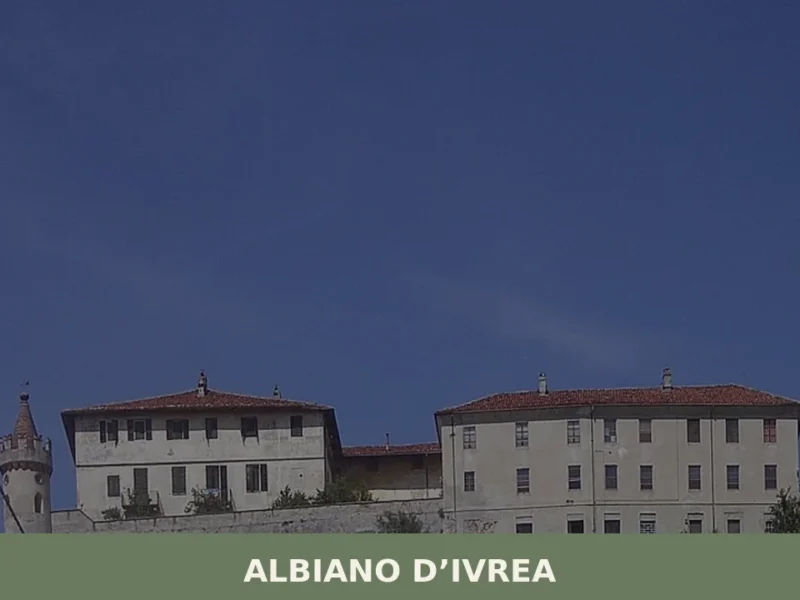
At an elevation of 230 metres, on the left bank of the Dora Baltea, Albiano d’Ivrea has 1,628 inhabitants spread between the main settlement and the hamlets scattered across the Canavese countryside. The municipal territory extends over a hilly strip that slopes down towards the plain, shaped by the moraine deposits of the Ivrea Morainic […]
Agliè
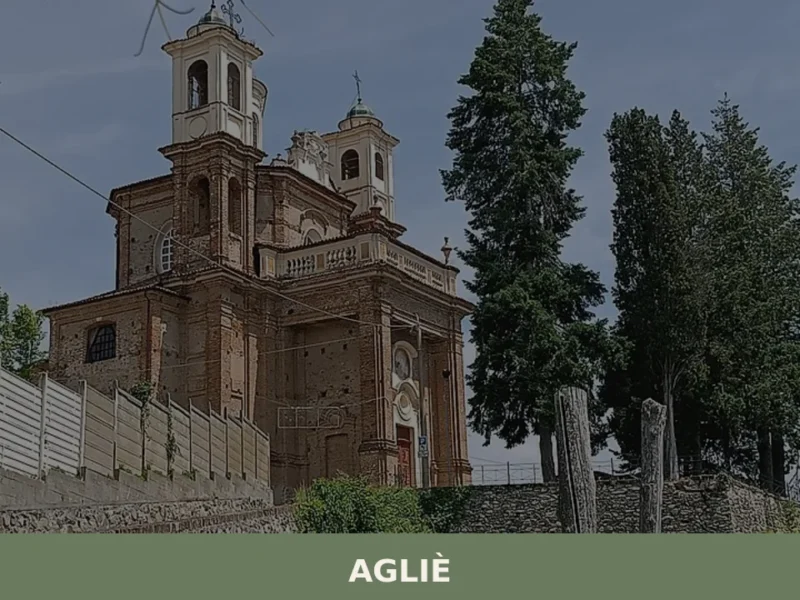
In 1646, Count Filippo San Martino d’Agliè — diplomat, poet, choreographer at the court of Christine of France — danced in the great hall of the castle that bears his name, directing baroque festivities destined to reshape Savoyard court ceremony. That castle still dominates the village’s skyline today with its eighteenth-century façade stretching over one […]
Vercelli
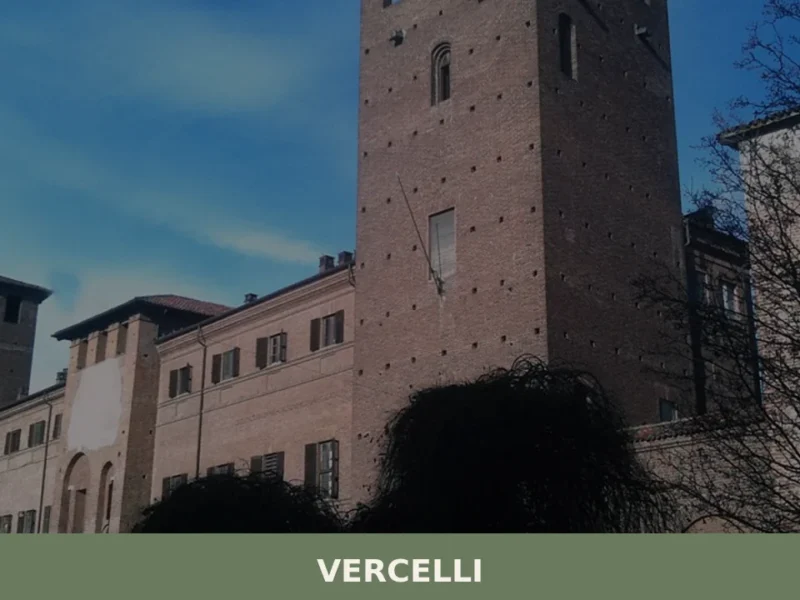
What to see in Vercelli: rice capital at 130 m in Piedmont. Basilica di Sant'Andrea, Museo Borgogna, panissa and flooded paddies. Plan your visit now.
📝 Incorrect information or updates?
Help us keep the Torino page accurate and up to date.