


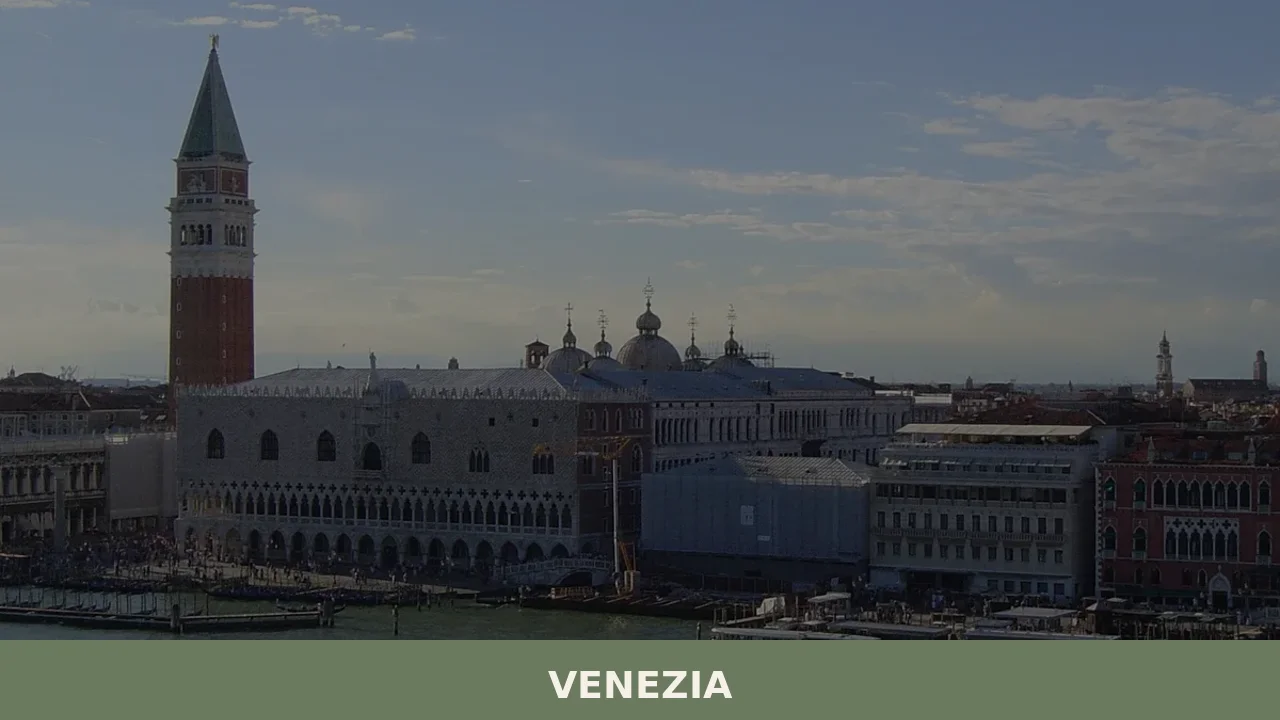
Venezia
With its 259,263 inhabitants, Venice stands out as one of the most significant centers in Veneto, presenting an altitude of 256 meters above sea level. This city, included in the Hill Villages category according to the classification provided, offers an invaluable historical, artistic, and cultural heritage. In this article History and Origins of Venice What […]
Discover Venezia
With its 259,263 inhabitants, Venice stands out as one of the most significant centers in Veneto, presenting an altitude of 256 meters above sea level.
This city, included in the Hill Villages category according to the classification provided, offers an invaluable historical, artistic, and cultural heritage.
Many visitors wonder exactly what to see in Venezia to fully grasp its unique essence.
Its location, traditions, and famous architecture make it a globally appealing destination, capable of captivating anyone who explores it.
Every corner of the city tells centuries of history and cultural exchange, making it a place where past and present merge into a travel experience rich with discoveries.
History and Origins of Venice
The origins of Venice are rooted in a period of great geopolitical movements and changes, when inland populations sought refuge in the lagoon islands to escape barbarian invasions, particularly those of the Huns and Lombards, between the 5th and 7th centuries.
Initially a cluster of separate settlements, the need for defense and organization led to the formation of a more structured community. The first Doge, Orso Ipato, was elected in 726, marking the beginning of the Republic of Venice, which would dominate the seas and trade for over a millennium.
The Republic of Venice, also known as the Serenissima, developed a sophisticated political and commercial system, based on skillful diplomacy and a powerful naval fleet.
Its influence extended over much of the Eastern Mediterranean, establishing outposts and colonies that contributed to its wealth and prestige.
The trade in spices, silk, and other precious goods made Venice a cultural and financial crossroads, whose riches were invested in works of art and architecture that still define its urban profile today.
This expansion brought it into contact with diverse cultures, profoundly influencing its identity.
The decline of the Republic began with the expansion of the Ottoman Empire and the discovery of Atlantic routes, which shifted the center of global trade.
Its independence ended in 1797, with its conquest by Napoleon Bonaparte, who ceded the city to Austria with the Treaty of Campoformio.
After a period under Habsburg rule, Venice was annexed to the Kingdom of Italy in 1866, at the end of the Third War of Independence. Despite political changes, the city has preserved its extraordinary heritage, attracting visitors from all over the world, drawn by its millennial history and timeless beauty.
What to see in Venezia: main attractions
St. Mark’s Basilica
St. Mark’s Basilica represents the spiritual and civic heart of Venezia, a masterpiece of Byzantine architecture that dominates the square of the same name. Its construction began in the 9th century to house the relics of St.
Mark the Evangelist, stolen from Alexandria, Egypt.
The current building, dating mainly from the 11th century, features a Greek cross plan and five domes, inspired by Oriental models.
The facade is richly decorated with gilded mosaics, sculptures, and reliefs that narrate biblical episodes and the city’s history, while the four bronze horses on the loggia, copies of the originals preserved inside, are a symbol of power and prestige.
The interior of the Basilica is a triumph of mosaics covering over 8,000 square meters, created between the 11th and 13th centuries on a gold background, creating an atmosphere of great charm.
Among the most precious works are the Pala d’Oro, a high altar made of gold, silver, and precious stones, and the Treasury of St. Mark, which houses liturgical objects and reliquaries of inestimable value. Climbing to the Loggia dei Cavalli allows visitors to admire the famous bronzes up close and enjoy a privileged view of St. Mark’s Square.
A visit to the Basilica requires respectful attire, and during high season, it is advisable to book tickets in advance to avoid long queues and fully appreciate this wonder.
Doge’s Palace
The Doge’s Palace, adjacent to St.
Mark’s Basilica, was for centuries the seat of the Doge and the magistracies of the Republic of Venice, a symbol of the political and judicial power of the Serenissima.
Its Venetian Gothic architecture, with its perforated loggias and sculpted capitals, represents a unique example of the fusion of elegance and monumentality.
The construction of the palace began in the 9th century, but its current appearance is the result of successive modifications and enlargements, especially between the 14th and 15th centuries, which gave it its iconic and globally recognizable form.
Inside, visitors can explore the sumptuous institutional halls, decorated with works by artists such as Tintoretto, Veronese, and Titian, which narrate the history and glories of the Republic.
The Hall of the Great Council, with its imposing painting “Paradise” by Tintoretto, is one of the largest and most evocative spaces.
The visitor’s route also includes the Doge’s apartments and the infamous prisons, connected to the palace by the famous Bridge of Sighs, crossed by condemned prisoners before reaching their cells.
The Bridge of Sighs, built in the 17th century, offers a glimpse of the lagoon and surrounding canals, evoking the history of the prisoners who traversed it.
Rialto Bridge
The Rialto Bridge is one of the four bridges crossing the Grand Canal in Venezia and represents an icon of the city, famous for its architecture and commercial history.
The first wooden bridge was built in the 12th century, but the current stone structure, a bold and innovative work for its time, was built between 1588 and 1591 based on a design by Antonio da Ponte. Its single arch, with a span of 28 meters, is supported by 12,000 wooden piles driven into the seabed.
The bridge houses two rows of shops selling jewelry, souvenirs, and local products, perpetuating its original commercial function.
Crossing the Rialto Bridge offers a privileged perspective on the Grand Canal, with the coming and going of gondolas, vaporettos, and boats that enliven Venezia’s main waterway.
From here, one can observe the historic palaces overlooking the canal and the intense city life unfolding at its feet.
In the immediate vicinity of the bridge is the Rialto Market, a lively place where Venetians and tourists buy fresh fish, fruit, and vegetables.
This market, active since the Middle Ages, helps make the Rialto area a focal point for what to see in Venezia, combining history, commerce, and daily life in one place.
Grand Canal
The Grand Canal is Venezia’s main waterway, a majestic watercourse approximately 3,800 meters long and between 30 and 90 meters wide, dividing the city into two parts.
Since its origins, the canal has been the privileged route for transport and trade, along whose banks stand over 170 historic palaces, built between the 12th and 18th centuries by the most influential noble and merchant families of the Republic.
These buildings, with their richly decorated facades in styles ranging from Byzantine to Gothic, from Renaissance to Baroque, reflect the wealth and power of the Venetian dynasties.
A gondola or vaporetto ride along the Grand Canal offers a unique perspective on Venezia’s architectural grandeur and history.
One can admire up close masterpieces such as Ca’ d’Oro, Palazzo Grassi, and Palazzo Rezzonico, each with its own peculiarities and stories to tell.
The canal ?
what to see in VeneziaSt. Mark’s Square
St.
Mark’s Square is the social, political, and religious heart of Venezia, the city’s only “piazza,” while other open spaces are defined as “campi” or “campielli.” This vast monumental space is surrounded by some of Venezia’s most iconic and historic buildings, including St. Mark’s Basilica, the Doge’s Palace, the Clock Tower, and the Old and New Procuratie.
Its irregular shape and herringbone paving contribute to its uniqueness, making it an unmissable landmark for anyone visiting the city.
For centuries, the square has been the stage for important events, celebrations, and public ceremonies, and continues to be a meeting point for residents and visitors.
St.
Mark’s Campanile, with its 98.6 meters in height, offers a spectacular panoramic view of the city, the lagoon, and the surrounding islands, making it one of the main attractions for those who want to admire Venezia from above.
The Clock Tower, with its Renaissance mechanism and the two Moors striking the hours, adds another element of charm to this extraordinary space. Walking through St. Mark’s Square means immersing oneself in the history and elegance of Venezia, a fundamental experience to fully understand what to see in Venezia.
Typical Cuisine and Products of Venice
Venetian cuisine is the result of centuries of trade and cultural influences, which have led to the creation of unique and flavorful dishes, strongly linked to the sea and the products of the lagoon.
Venice’s strategic position allowed for the encounter between Mediterranean and Oriental flavors, giving rise to a rich and varied gastronomic tradition.
Spices, imported from trade routes, have always played an important role, as have fresh fish and seafood, the undisputed protagonists of many local dishes.
Among the most famous dishes of Venetian tradition are the Sarde in saor, an appetizer made from fried sardines marinated with onions, pine nuts, and raisins, combining sweet and sour flavors.
Another classic is Risi e Bisi, a creamy risotto with peas and pancetta, traditionally prepared for the Feast of Saint Mark.
Fegato alla veneziana (Venetian-style liver), with stewed onions, represents a robust and flavorful main course, while Baccalà mantecato, a spreadable cream made from dried cod and olive oil, is often served as an appetizer or snack on bread croutons.
These preparations reflect the ingenuity of Venetians in enhancing simple ingredients and transforming them into true culinary delights.
Despite the absence of specific DOP, IGP, or PAT certified products for this area in the provided database, Venetian cuisine relies on fresh, high-quality ingredients sourced from the lagoon and the Veneto hinterland.
Fish and seafood are purchased daily at the Rialto Market, ensuring the freshness of the raw materials. Local restaurants and trattorias offer a wide variety of dishes that follow traditional recipes, allowing visitors to discover the true flavors of Venice.
Even if not certified, local products are appreciated for their authenticity and their connection to the territory.
For those wishing to purchase local food products, the Rialto Market remains the main reference point, where one can find fresh catch, seasonal vegetables, and other specialties.
This market, active from early morning, is a lively place where the authentic atmosphere of the city can be felt.
Throughout the year, various gastronomic events, despite not having specific festivals in the database, celebrate the products of the lagoon and the land, offering the opportunity to taste seasonal specialties and local wines.
Festivals, Events, and Traditions of Venice
Venice is a city that intensely lives its traditions and celebrates events rooted in its millennial history.
The city’s patron saint is Mark the Evangelist, and the patronal feast falls on November 21st, a date that, according to tradition, coincides with the dedication of St. Mark’s Basilica. Although the Feast of St.
Mark is on April 25th, Liberation Day, the most heartfelt celebration linked to the Patron Saint in Venice is on November 21st, which often includes solemn religious ceremonies and civil events involving the community. This day is an opportunity to reflect on the city’s history and identity.
Among the most internationally renowned events, the Carnival of Venice is undoubtedly the most famous, with its elaborate masks, lavish costumes, and parties that animate the city for several weeks between February and March.
Another tradition of great importance is the Feast of the Redeemer (Festa del Redentore), held on the third Sunday of July to commemorate the end of the plague in 1576.
During this festival, a votive bridge of boats is built across the Giudecca Canal, connecting the island to the mainland, and the evening concludes with a magnificent fireworks display over the lagoon.
The Historical Regatta (Regata Storica), which takes place on the first Sunday of September, celebrates ancient Venetian rowing traditions with a parade of historical boats and races between gondoliers, offering a vibrant spectacle of colors and competition along the Grand Canal.
When to visit Venice and how to get there
The best time to visit Venice depends on the traveler’s personal preferences, but generally, spring (April-May) and autumn (September-October) offer a mild climate and less crowding compared to the high summer season.
During these months, temperatures are pleasant, ideal for strolling through calli and campielli or exploring the lagoon islands.
Summer (June-August) is characterized by high temperatures and a greater tourist influx, but offers the opportunity to participate in events like the Festa del Redentore.
Winter, although colder, offers an evocative atmosphere, especially during Carnival.
To get to Venice, there are several options.
Those traveling by car can reach Piazzale Roma or Tronchetto, where paid parking is available. From here, it is necessary to continue on foot or by public vaporetti, as the historic center is completely pedestrian. For those who prefer the train, Venezia Santa Lucia station, located at the entrance to the historic center, is well connected to major Italian and European cities via Trenitalia.
The nearest airport is Venice Marco Polo Airport (VCE), approximately 13 kilometers from the city.
From the airport, you can reach Venice by public buses, water taxis, or the Alilaguna service, which offers sea connections directly to the city.
For those coming from other locations in Veneto, Venice is also easily reachable from villages like Cazzano di Tramigna, which offers a panoramic route through the Venetian countryside.
Similarly, a trip from Cortina d’Ampezzo allows you to cross mountain landscapes before reaching the lagoon.
For those wishing to further explore the region, it is possible to consider an itinerary that also includes San Mauro di Saline, a village in the same province that offers a different, but equally interesting, context linked to local traditions.
For more information on transport and timetables, it is advisable to consult the official website of the Municipality of Venice.
| Starting Point | Distance | Estimated Time |
|---|---|---|
| Marco Polo Airport (VCE) | 13 km | 20-30 min (bus/water taxi) |
| Venezia Santa Lucia Station | 0 km (historic center) | On foot or vaporetto |
| Piazzale Roma (Parking) | 0 km (historic center) | On foot or vaporetto |
Where to stay in Venice
Venice offers a wide range of accommodation solutions, suitable for every need and budget, ranging from luxury hotels overlooking the Grand Canal to more intimate boutique hotels, as well as bed & breakfasts and holiday apartments located in quieter, more residential areas.
It is possible to find accommodation in the heart of the historic center, a few steps from the main attractions such as St.
Mark’s Square and the Rialto Bridge, or opt for lodging in the Cannaregio or Castello areas, which offer a more authentic and less touristy atmosphere.
Many hotels are housed in ancient noble palaces, retaining their original architectural features and offering a unique stay experience, immersed in the city’s history.
Those looking for a more economical alternative can consider the numerous guesthouses and B&Bs, which often offer personalized service and a warm welcome. It is always advisable to book well in advance, especially during high season or for important events such as Carnival, to ensure availability and the best rates.
In Veneto More villages to discover
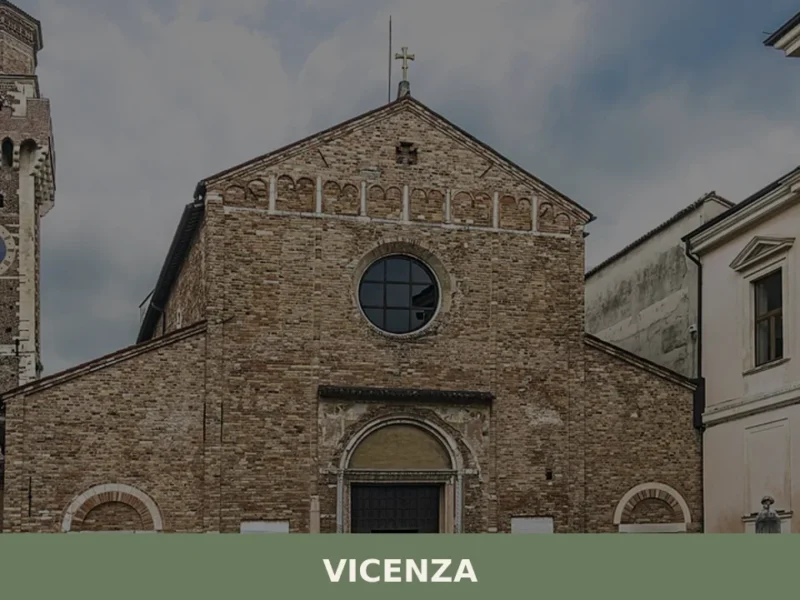
Vicenza
Village of Vicenza: Explore 1 architectural masterpiece, the Olympic Theatre, and taste traditional baccalà. Plan your Italy trip now!
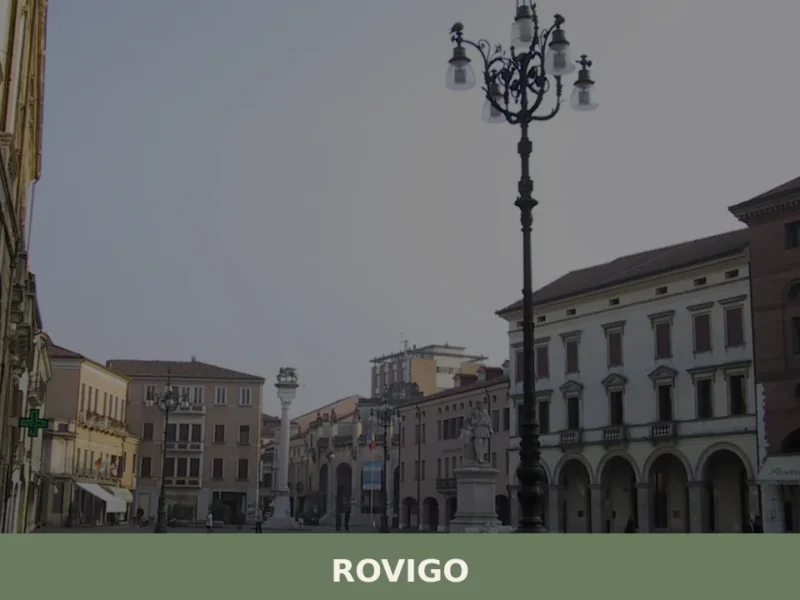
Rovigo
what to see in rovigo? Discover 5 top attractions in this city of 50,000 residents, from Rovigo Castle to La Rotonda. Explore the Polesine region.
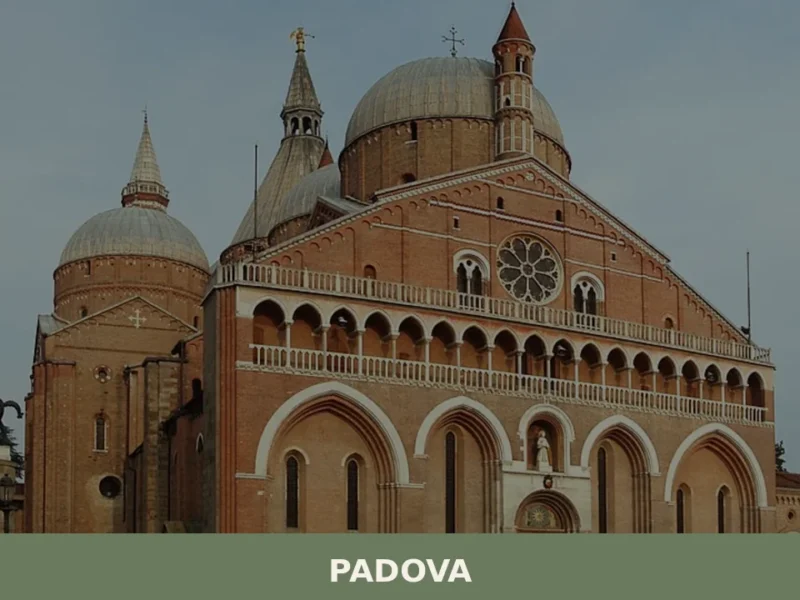
Padova
Padova, Italy: Explore 1 historic university city. Discover Giotto's frescoes at Scrovegni Chapel & the vast Prato della Valle. Plan your trip now!





📝 Incorrect information or updates?
Help us keep the Venezia page accurate and up to date.